
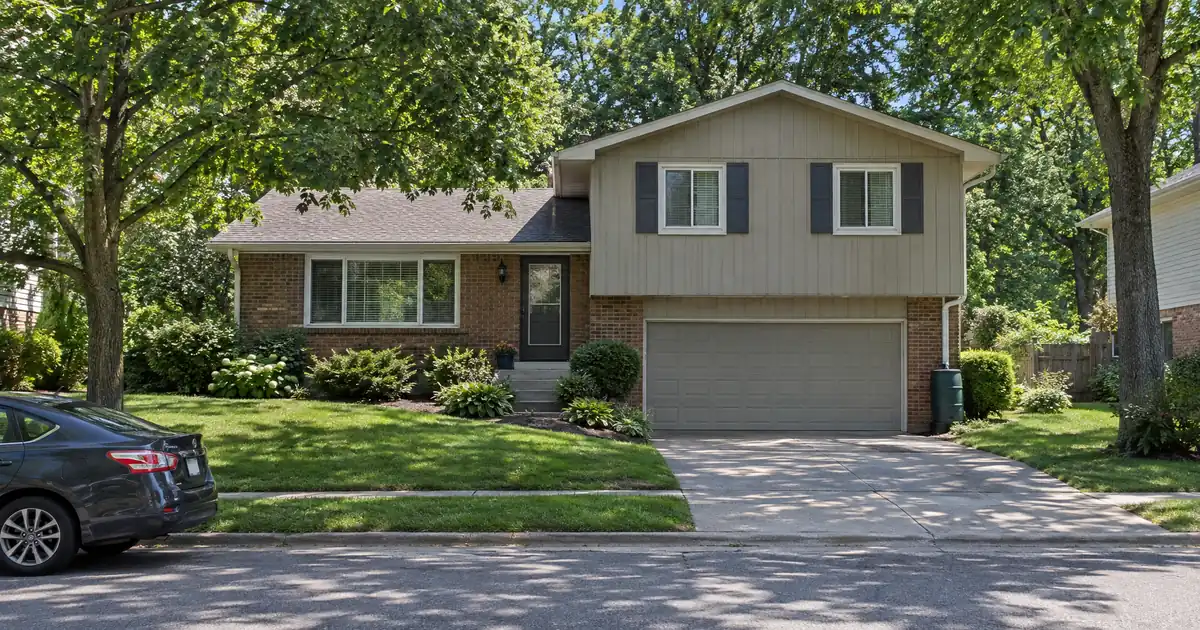
The Quick Read: Usually, yes, on income-based alt-doc loans, where the self-employed borrower’s income is documented one way, the spouse’s wages are documented another way, and the two are added together. Each income is proven with its own paperwork, and the combined total is measured against the household’s debts. A DSCR loan sidesteps the question, because it qualifies primarily on property-level rental income covering the payment, subject to lender guidelines.
- Both incomes can sit on one file when both spouses are on the loan, subject to the program.
- The self-employed spouse’s income comes from bank statements or a P&L. The spouse’s income comes from pay stubs and a W-2.
- Adding a spouse also adds their credit and their debts.
- Shared accounts are the most common place these files get messy.
- On a rental purchase, a DSCR loan may remove the need to blend at all.
Can You Really Combine the Two Incomes?
Yes, in most income-based programs, and the logic is simple. A lender needs one qualifying income number for the household. It does not care that the number has two parts.
What your deposits qualify you for.
Alt-doc programs read 12 months of business or personal bank deposits instead of tax returns. Enter your average monthly deposits and see the income a lender would credit you.
The expense factor is set by the lender from your business type and profit-and-loss statement; it is not a number you choose. This widget quotes no rate and no payment.
Program parameters shown update from Lendmire’s centralized guideline source.
Estimate
Illustrative estimate only — not a quote, Loan Estimate, approval, or commitment to lend. Deposit average, expense factor, and housing ratio are editable assumptions; the expense factor a lender applies is set from your business type and documentation. No interest rate or monthly payment is quoted here. Purchase capacity is a simplified illustration and does not account for taxes, insurance, HOA dues, or other debts. Alt-doc income documentation is available on consumer mortgages in the states where Lendmire is licensed for consumer lending; actual terms vary by lender, borrower, and property.
Across our wholesale network, the typical pattern is this. The self-employed spouse is reviewed on documented income under the applicable program. That usually means 12 months of business or personal bank statements, with lender-specific expense factors applied to the deposits. The W-2 spouse qualifies the conventional way. The underwriter then adds the two monthly figures and compares the total against the monthly debts.
One caution on terms. A pure P&L program is a different product from a bank statement program. P&L-only terms are generally tighter than terms where bank statements back up the P&L. Our verified program guidelines are built on bank statements, so the rest of this article uses that path as the model. If a P&L is the better fit for your business, the same blending logic applies, but the details come from the individual lender’s program sheet.
How Is Each Spouse’s Income Documented?
Each spouse proves income with the paperwork that fits their work. Nothing about the self-employed side needs to look like a paycheck, and nothing about the wage side needs to look like a business.
| Item | Self-employed spouse | W-2 spouse |
|---|---|---|
| Income proof | Bank statements or P&L | Pay stubs and W-2s |
| Work verification | Business ownership evidence | Employer verification |
| Credit | Pulled if on the loan | Pulled if on the loan |
| Debts | Counted if on the loan | Counted if on the loan |
The last two rows matter most. When both spouses are on the application, both credit profiles and both sets of monthly debts come along. That can help the file or hurt it.
How Does an Underwriter Build One Combined Household Income Figure?
The underwriter builds it in four steps. The steps below describe the usual sequence, though each program sheet sets its own details.
1. Calculate the self-employed income. For a bank statement file, the lender averages qualifying deposits over the statement period and applies an expense factor. The factor varies by lender, so never assume one.
2. Calculate the wage income. The W-2 spouse’s pay stubs, W-2s and employment verification produce a monthly figure.
3. Add them. The two monthly figures become one household income.
4. Compare to debts. The lender totals the monthly obligations of everyone on the loan, including the new housing payment, and measures them against the combined income.
This process follows the general framework that lenders on consumer loans must work within. The CFPB’s Ability-to-Repay compliance guide requires lenders to consider eight factors, including current or expected income or assets, and to verify the income they rely on with reasonably reliable third-party records. It does not prescribe how to combine two spouses’ income types. That is why program sheets differ.
A Worked Example With Ratios, Not Dollars
Picture a couple buying a primary residence. The self-employed spouse owns a landscaping business with healthy deposits, but heavy write-offs keep the traditional personal-income documentation thin. On a conventional file, that thin return income pushes the debt-to-income ratio too high. Call it well past what the lender will accept.
On a bank statement file, the story changes. The deposits are averaged and an expense factor is applied. The result is usually a higher qualifying income than the traditional personal-income documentation showed, because it reflects cash flow rather than after-deduction profit. Add the W-2 spouse’s steady wages, and the combined income may bring the ratio back into range.
Nothing about that outcome is promised. The expense factor could be heavy. The spouse could carry car and student debt that eats the gain. Still, the shape of the example explains why couples with one self-employed spouse look at alt-doc programs at all. Leverage on a primary residence can reach up to 90% LTV on a purchase or rate-term refinance through select lenders, and stronger files earn the top of that range. Loan sizes in our network run roughly $125,000 to $3,500,000, and reserves are commonly around six months of the housing payment.
Where Mixed-Income Files Go Wrong
Most failures trace to a handful of avoidable problems. Knowing them in advance saves a file.
Shared accounts. If the business deposits land in a joint account with the W-2 spouse’s paycheck, the underwriter has to separate them. Paychecks mixed into business deposits are generally excluded from the self-employed income, or the account is not usable as is. The CFPB’s compliance guide points the same direction: when a lender relies on account inflows, it has to confirm they are the consumer’s personal income. Clean separation before you apply is the simplest fix.
Double counting. The spouse’s wages cannot be counted once as a paycheck and again as a deposit in the business analysis. Keep the streams in separate accounts.
A declining trend. Underwriters look at direction, not only averages. Deposits that fall month over month get more scrutiny than steady ones.
The spouse’s baggage. Adding a spouse adds their credit score and their debts. The combined file can end up weaker than the self-employed borrower applying alone, so run both versions.
Spouse off the loan. Whether a non-borrowing spouse’s income can count depends on the program and on state law, including community property rules. There is no universal answer here, so the lender’s program sheet decides.
Blend, Use One Income, or Switch Programs?
The right move depends on which income is stronger and what you are buying.
| Situation | Likely best fit |
|---|---|
| Business strong, spouse’s wages modest | Bank statement file, spouse optional |
| Business new, spouse has steady wages | Wages carry the file, business supports |
| Heavy write-offs, both incomes needed | Blended alt-doc file |
| Buying a rental, rent covers the payment | DSCR loan, no blending needed |
| Rent falls short of the payment | Alt-doc or DSCR with adjusted terms |
This is a genuine judgment call in the middle rows. A spouse’s stable wages can make a newer business a supporting factor instead of the headline. A strong business can make the spouse’s income unnecessary. Test both on paper.
Does the DSCR Route Make the Whole Question Moot?
On a rental, often yes. DSCR loans are designed for non-owner-occupied investment properties. Because they are business-purpose investor loans, they are reviewed differently from a standard owner-occupied mortgage. The lender divides the property’s rent by its full monthly obligation, and neither a P&L nor a spouse’s W-2 is the qualifying income. Our complete DSCR loans guide walks through the full mechanics.
The catch is that the property must carry itself. Strong household income does not rescue weak rent. Programs below 1.00 coverage are available through select lenders in the network, but leverage and terms adjust when coverage is thin. Credit and reserves still matter on every DSCR file.
Occupancy decides which regime you are in. A primary residence or second home is a consumer mortgage, and the disclosure rules that come with it apply. A bank statement loan on a non-owner-occupied rental, including a short-term rental, is business-purpose and exempt from those consumer rules. Pick the product by what the property will be.
For cash-out, the numbers are tighter than purchase leverage. Owner-occupied cash-out on a primary residence or second home goes up to 80% LTV with a fixed expense ratio, or 75% with an accountant-prepared ratio, depending on loan size and credit. Investment-property cash-out tops out around 75% LTV. Investment purchase leverage on bank statement documentation varies by lender.
The P&L Itself: Who Prepares It and Why It Matters
A profit-and-loss statement summarizes a business’s revenue and expenses over a period. Lenders care less about the format and more about who stands behind it. A statement prepared by an independent accountant carries more weight than one you built yourself. Some programs accept only accountant-prepared versions, and some pair the P&L with a couple of months of bank statements to confirm it.
If your P&L and your deposits disagree, expect questions. The deposits are real money. The P&L is a claim about it. Reconcile the two before you submit, because an underwriter will find the gap.
A related option uses assets instead of income. Asset-depletion qualification, which turns liquid assets into qualifying income, runs up to about 80% LTV on a primary residence. Leverage, reserves, and pricing vary by lender and program; the final terms follow the full file review.
Document Checklist for a Mixed-Income File
Gather these before you apply.
- Self-employed spouse: 12 months of business or personal bank statements, proof of business ownership, and a P&L if the program uses one.
- W-2 spouse: recent pay stubs, W-2s and employer contact for verification.
- Both, if on the loan: ID, credit authorization, and a list of monthly debts.
- Reserves: statements showing liquid funds, commonly around six months of the housing payment.
Tax treatment can depend on how the funds are used and how the property is held; investors should keep clear records and speak with a qualified tax professional before relying on any deduction.
Frequently Asked Questions
Does my spouse have to be on the loan?
Not always. Whether a spouse’s income counts without being a borrower depends on the program and on state law. If the spouse is on the loan, their income helps, but their credit and debts come too. Run the file both ways.
Do the spouse’s debts count?
Yes, when the spouse is on the loan. Their monthly obligations join the debt total measured against the combined income. A spouse with a car payment and student loans can offset some of the income they add.
What if my business is new?
A newer business is the classic case where the W-2 spouse carries the file. Many programs want a track record of self-employment, and the length required differs by lender. When the business is young, the steady wages can qualify the loan while the business income plays a supporting role.
Can the P&L be self-prepared?
It depends on the program. Many lenders prefer or require an independent accountant to prepare it. A self-prepared statement faces more scrutiny and may not be accepted at all. Check the program sheet before you pay for one.
Do all lenders allow this mix?
No. Some programs forbid pairing a P&L with full-documentation income, and others welcome it. Because our network spans many lenders, the practical step is matching your documents to a program that accepts them. Every file is underwritten individually. This is not a commitment to lend.
Consumer mortgage availability covers 16 states.
For current guidelines and terms, see Lendmire’s DSCR loan programs page.
About Lendmire
Lendmire is a non-QM mortgage brokerage (NMLS# 2371349) arranging DSCR investor loans in 41 markets, including Washington, D.C., through wholesale and investor-lending channels. DSCR loans are evaluated by the lender on rental income rather than personal income, subject to lender guidelines — a fit for LLC-owned portfolios, self-employed investors, and operators scaling beyond conventional loan caps. Recognized as a Scotsman Guide Top Mortgage Workplace in 2025 and 2026.
Investors who want the broader program framework can review how DSCR loans work.
Get Started
Ready to find the right loan for you?
In about 30 seconds you can review financing options available for your home or investment property. No commitment required.
Informational only. Not a Loan Estimate, approval, or commitment to lend. Program availability and eligibility are subject to lender guidelines, credit approval, property review, and underwriting.
References
1. CFPB ATR/QM Small Entity Compliance Guide
2. CFPB ATR/QM Small Entity Compliance Guide, account inflows
This article is part of Lendmire’s self-employed mortgage guides — full qualification details, guidelines, and scenarios live on the program page.
Related reading: How to Document an S-Corp or LLC for a Self-Employed Mortgage · How to Qualify When Your Newly Self-Employed Spouse Has No Returns Yet · How to Get a Mortgage in Washington When You’re Self-Employed
Brandon Miller
Founder & CEO, Mortgage Loan Originator, Lendmire LLC
- Mortgage Loan Originator · NMLS# 1129696 · Verify on NMLS Consumer Access
- North Carolina Real Estate Broker · License# 343312 · Verify on NCREC
- North Carolina Insurance Producer · License# 19053198 · Property, Casualty, Life, Health · Verify on NAIC SBS
- Lendmire LLC · Firm NMLS# 2371349 · Verify firm licensure
Legal disclosures. Lendmire (NMLS# 2371349) is a state-licensed mortgage brokerage that arranges financing through wholesale lender relationships. Lendmire is not a direct lender, depository institution, or registered financial advisor. The discussion above is general informational content about real estate financing — it is not financial, legal, or tax advice, and readers should consult licensed professionals for guidance on their individual circumstances. Loan inquiries are subject to lender underwriting; this article does not represent a commitment to lend. Loan terms, rates, and qualification standards vary by borrower, property, and state, and are subject to change at any time. Equal Housing Opportunity. NMLS Consumer Access: nmlsconsumeraccess.org.