
The Quick Read: An FHA loan on a 2-4 unit home costs more mainly because the loan is bigger, not because FHA charges a higher fee schedule. Every percentage-based charge, including the mortgage insurance premiums, lands on a larger balance. Three- and four-unit homes add a rent test and cash reserves on top.
Key Takeaways
- HUD’s published premium percentages do not change with unit count. The dollars rise because the balance rises.
- Duplexes are underwritten on the borrower’s income plus allowed rent. Triplexes and fourplexes must also pass a self-sufficiency test and show reserves.
- The minimum investment stays at 3.5% from a 580 decision score, whether the home has one unit or four.
- Appraisals on 2-4 units are more involved, so that line on the Loan Estimate may run higher.
- Rental income helps you qualify, but lenders discount it heavily.
What Does “2-4 Unit FHA” Actually Mean?
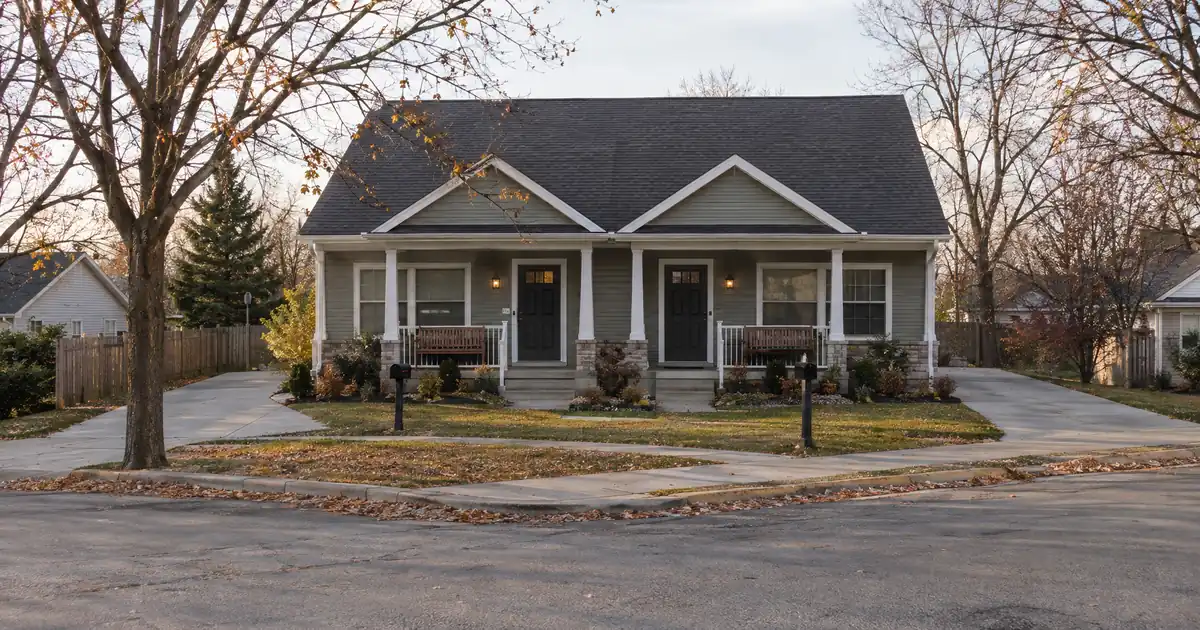
It means a home with two to four dwelling units where you live in one of them. FHA single-family programs cover one- to four-unit owner-occupied principal residences, according to HUD’s Handbook 4000.1 knowledge base. Occupancy is the deciding variable. You must live in the property as your primary home.
FHA payment estimate
Starting assumptions reflect an example price and the FHA minimum investment. Replace them with your own figures.
Editable benchmark: 7.32% as of October 22, 2026 · Freddie Mac 30-year average via FRED®. A conventional market reference, not an FHA loan quote.
Illustrative starting assumptions: a $350,000 price, the FHA minimum investment as the down payment, a thirty-year term at the current Freddie Mac benchmark, and property taxes and insurance estimated at typical national rates. Every field is editable.
Illustrative estimate only — not a Loan Estimate, approval, quote, or commitment to lend. The rate field carries the weekly Freddie Mac thirty-year conventional benchmark, a market reference and not an FHA loan quote; your rate is set by the lender at lock. FHA mortgage insurance follows HUD’s published schedule for the term, leverage and loan size entered; taxes, insurance and dues are editable estimates; closing costs are not included; county loan limits are not checked here. Licensed in sixteen states for consumer mortgages. Lendmire is not affiliated with or acting on behalf of FHA, HUD, or the federal government.
Unit counting has a twist. A three- or four-unit property can be three or four individual dwellings. It can also be two units plus an accessory dwelling unit (ADU), or three units plus an ADU. A one-unit home with a single ADU stays a one-unit property, per HUD Mortgagee Letter 2023-17. Add an ADU to a duplex, though, and the file is underwritten as a three-unit.
Across the wholesale programs Lendmire places FHA files with, the program tracks that HUD framework. If you want the full program picture, Lendmire’s FHA loan programs page covers the basics before you dig into multi-unit mechanics.
Where Does the Extra Cost Come From?
The extra cost comes from four places: a larger balance, a different appraisal, extra cash and paperwork on 3-4 units, and lender pricing. None of these is a surcharge written into HUD’s rules.
The bigger balance. Say you compare a single-family purchase with a fourplex. Same borrower, same 3.5% minimum investment, same 96.5% maximum financing. The percentages match. The dollars don’t, because the price is higher. A 3.5% down payment on a fourplex is simply a larger check than 3.5% on a starter house. Exact terms depend on the lender’s guidelines, property type, leverage, and a full review of the borrower’s file.
Mortgage insurance. The upfront premium is 1.75% of the base loan, and most borrowers finance it into the loan. HUD Mortgagee Letter 2023-05 sets that figure for all mortgages, with narrow exceptions for certain streamline and simple refinances of older FHA loans. The annual premium runs between 0.15% and 0.75% of the balance, depending on term, loan amount and LTV. As far as HUD’s schedule is organized, unit count is not one of the variables. A 2-4 unit loan pays the same percentages as a one-unit loan at the same term, LTV and loan tier. It just pays them on more money.
Financing the upfront premium nudges the loan balance up, which nudges the monthly principal and interest up too. That’s a mechanical effect, not a price.
The appraisal. For 2-4 units with no rental history on the subject, HUD requires an appraisal that shows fair market rent, using the small residential income property report form. It’s a longer, more detailed report than a single-family appraisal. Expect the appraisal charge on your Loan Estimate to reflect that. No official figure exists for it, so compare it against the estimate you receive.
Lender pricing. HUD sets the insurance premiums. It does not set how lenders and investors price 2-4 unit loans. Some may price them differently from one-unit loans. That part varies by lender, and Lendmire doesn’t quote it here.
How Is a 2-4 Unit FHA Loan Underwritten, Step by Step?
Underwriting runs in a set order: occupancy, appraisal, rental income, the self-sufficiency test for 3-4 units, then reserves. Here is each step.
1. Occupancy and unit count. You occupy one unit as your principal residence. The lender counts ADUs correctly, since that decides which tests apply.
2. Appraisal. The appraiser reports market rents on the income report form. Those rents drive everything after this.
3. Rental income for qualifying. With limited or no rental history, the lender uses 75% of the lesser of the appraiser’s fair market rent or the lease-based figure. The lender also may not simply subtract net rental income from your mortgage payment. The income is set by the appraisal, not by your own estimate. HUD lays this out in Mortgagee Letter 2023-17.
4. Self-sufficiency test (3-4 units only). Net rental income is built from the appraiser’s market rent for all units, including yours. HUD subtracts the greater of the appraiser’s vacancy and maintenance estimate or 25% of market rent. Your full payment (principal, interest, taxes and insurance) divided by that net income may not exceed 100%. The lender also collects HUD’s hotel and transient use contract, form HUD-92561.
5. Reserves. On 3-4 unit properties, the lender must verify and document reserves equal to three months of the full payment after closing.
6. Standard ratios. The usual qualifying ratios still apply. The base pair is 31/43 (housing and total) with no compensating factors. Documented compensating factors can reach 40/50 at the top tier. The automated finding governs most files.
Notice what the test does. A three- or four-unit file needs the building’s rent to carry the entire payment, even when your own income is strong. Strong income does not fix a failed rent test.
What Do the Loan Limits Do?
County loan limits cap the base loan, and they rise with unit count. They change every year and differ by county, so Lendmire doesn’t quote a county figure here. Use HUD’s county lookup for your address.
One national fact helps. FHA’s floor is tied to 65% of the conforming limit, and its ceiling to 150%. In standard-cost counties, FHA’s multi-unit limits sit below conventional ones. FHFA’s published conforming loan limit values set the baseline, and special exception areas such as Alaska, Hawaii, Guam and the U.S. Virgin Islands carry higher limits. If the price you’re considering pushes against the county limit, the loan gets capped and the cash you bring goes up.
What Does It Look Like in Closing Costs and Cash?
Closing costs are the upfront costs of getting the loan and transferring the property. The CFPB’s Loan Estimate explainer shows how they appear alongside Estimated Cash to Close.
Several lines tend to scale with the deal. Percentage-based charges grow with price. The appraisal may cost more. Prepaids like insurance and tax escrows are tied to a larger building. On 3-4 units, you also need the reserves described above. They aren’t a closing cost, but they are cash you must show, so budget for them.
Here’s a simple way to compare. Ask for a Loan Estimate on a single-family home and one on the multi-unit property you’re considering. Look at three lines side by side: estimated cash to close, the appraisal charge, and the total monthly payment shown. The gap is your real “how much more,” and it will be specific to your price and county.
Where the General Rule Breaks
The rule “same percentages, bigger dollars” holds, but several edge cases change the picture.
Duplex versus triplex. The self-sufficiency test and the reserve requirement apply to 3-4 units. A duplex does not face them. Some online posts claim reserves apply to every 2-4 unit file. HUD’s own entry says 3-4. Follow HUD. Every figure here varies by lender and program — guidelines, property type, leverage, and credit profile all apply.
Duplex plus an ADU. It counts as a three-unit, which triggers the test and the reserves.
Single-family plus one ADU. It stays a one-unit property.
Two different rent haircuts. The qualifying-income rule uses 75% of the lesser of the appraiser’s rent or the lease figure. The self-sufficiency test subtracts the greater of the appraiser’s vacancy and maintenance estimate or 25%. They aren’t the same math. A mid-file change in the appraiser’s rent estimate can flip a three- or four-unit deal.
Boarders. Boarder income follows its own rules, revised in HUD Mortgagee Letter 2025-04, including a cap tied to total effective income. Keep it separate from unit rent.
Premium exceptions. The upfront premium has narrow exceptions for certain streamline and simple refinances of older FHA loans. That doesn’t change a purchase.
Premium duration. On a thirty-year loan above 90% LTV, the annual premium lasts for the term. At or below 90% LTV, it ends after eleven years. A larger down payment changes how long you pay it, not just how much. Final terms depend on lender guidelines, property type, leverage, and the borrower’s complete credit picture.
Credit events. HUD’s waiting periods apply: two years from a chapter 7 discharge and three years from a foreclosure. These are HUD rules, not a promise from any one lender.
How Does the Borrower Decision Look in Practice?
Picture a buyer who is reviewed on one-unit FHA and is weighing a duplex against a fourplex. The duplex path asks for the borrower’s income and allowed rent. The fourplex path asks for all of that, plus a passing rent test and three months of reserves. If the building’s appraised rents can’t carry the payment after the vacancy haircut, the fourplex fails regardless of salary.
A rough decision frame:
| Question | Duplex | Triplex / Fourplex |
|---|---|---|
| Self-sufficiency test | No | Yes |
| Post-closing reserves | Not required by HUD’s 3-4 unit rule | Three months of payment |
| Rent counted to qualify | 75% of lesser measure | 75% for income; test uses appraiser’s rent less haircut |
| Minimum investment | 3.5% from 580 score | 3.5% from 580 score |
Worth stating plainly: FHA isn’t always a more affordable tool. If the rent test fails, a different structure or a different property may serve you better. Qualification is subject to lender guidelines and full file review. Nothing here is a commitment to lend.
Rental income helps, but never count on 100% of it. Lenders use the appraiser’s market rent, discounted, and not the number you hope to charge.
Key Terms Defined
Base loan amount: the loan before the financed upfront premium is added.
Upfront premium: a one-time mortgage insurance charge of 1.75% of the base loan, usually financed.
Annual premium: mortgage insurance collected monthly, between 0.15% and 0.75% of the balance depending on term, amount and LTV.
Self-sufficiency test: the 3-4 unit rule that requires the building’s net rent to cover the full payment.
Accessory dwelling unit (ADU): a separate additional living unit on the property that can change the unit count.
Minimum required investment: the least cash you put in, 3.5% of the lesser of price or appraised value.
Frequently Asked Questions
Does FHA charge a higher mortgage insurance percentage on a duplex, triplex or fourplex?
No. HUD’s published schedule is organized by loan term, base loan amount and LTV, not unit count. The dollar cost is higher because the balance is larger. Lender pricing is a separate matter and varies.
Does a duplex need the self-sufficiency test?
No. The test and the reserve requirement apply to three- and four-unit properties. A duplex is underwritten on your qualifying income plus allowed rental income. The exception is a duplex with an ADU, which counts as three units. Terms depend on the lender’s guidelines, the property type, the leverage, and a full review of the credit profile.
Can I count the rent from my own unit?
For the self-sufficiency test, yes: the appraiser’s market rent for all units, including yours, goes into the calculation. For qualifying income, the lender uses 75% of the lesser of the appraiser’s rent or the lease-based figure. The appraisal, not your estimate, sets the number.
Is the down payment different on a 2-4 unit home?
The percentage is the same: 3.5% minimum investment with a 580 or higher decision score, for maximum financing of 96.5%. The dollar amount is larger because the price is higher. Seller or interested-party contributions can reach 6% of the price.
Can I use FHA if I plan to rent out the whole building?
No. FHA requires that you occupy one unit as your principal residence. Occupancy decides the leverage and the program.
If you are buying a home and want to see whether an FHA loan fits your file, Lendmire can help you compare the options and what each one asks of the file.
For your own numbers, request a scenario review with Lendmire.
About Lendmire
Lendmire (NMLS# 2371349) is a mortgage brokerage serving homeowners and home buyers in 16 states. FHA, VA, conventional and jumbo purchase and refinance loans are arranged through wholesale lending channels; Lendmire brokers the financing and the lender underwrites each application. Scotsman Guide named Lendmire a Top Mortgage Workplace in both 2025 and 2026.
Get Started
Ready to find the right loan for you?
In about 30 seconds you can review financing options available for your home or investment property. No commitment required.
Informational only. Not a Loan Estimate, approval, or commitment to lend. Program availability and eligibility are subject to lender guidelines, credit approval, property review, and underwriting.
References
1. HUD Handbook 4000.1 Glossary
2. HUD Mortgagee Letter 2023-17
3. HUD Mortgagee Letter 2023-05
4. FHFA 2026 conforming loan limit values
5. CFPB Loan Estimate explainer
6. HUD Mortgagee Letter 2025-04
This article is part of Lendmire’s FHA loan program — full qualification details, guidelines, and scenarios live on the program page.
Related reading: Can a Buyer on Gift Funds Finance Closing Costs in an FHA Loan? · VA Loan vs FHA Loan for a Veteran House Hacking a 2-4 Unit · FHA Non-Occupant Co-Borrower Rules on a 2-4 Unit Home
Brandon Miller
Founder & CEO, Mortgage Loan Originator, Lendmire LLC
- Mortgage Loan Originator · NMLS# 1129696 · Verify on NMLS Consumer Access
- North Carolina Real Estate Broker · License# 343312 · Verify on NCREC
- North Carolina Insurance Producer · License# 19053198 · Property, Casualty, Life, Health · Verify on NAIC SBS
- Lendmire LLC · Firm NMLS# 2371349 · Verify firm licensure
Compliance and disclosures. Lendmire (NMLS# 2371349) is a licensed mortgage broker and is not a direct lender, depository institution, financial advisor, or tax professional. Content in this article is general market analysis and educational information — not financial, legal, or tax advice for any specific situation. Lendmire does not guarantee loan approval; every transaction is subject to underwriting by the funding lender. Mortgage pricing and loan program guidelines are subject to change at any time without notice and vary by borrower characteristics, property type, and state regulations. Lendmire complies with Equal Housing Opportunity. Licensure verification: NMLS Consumer Access.