
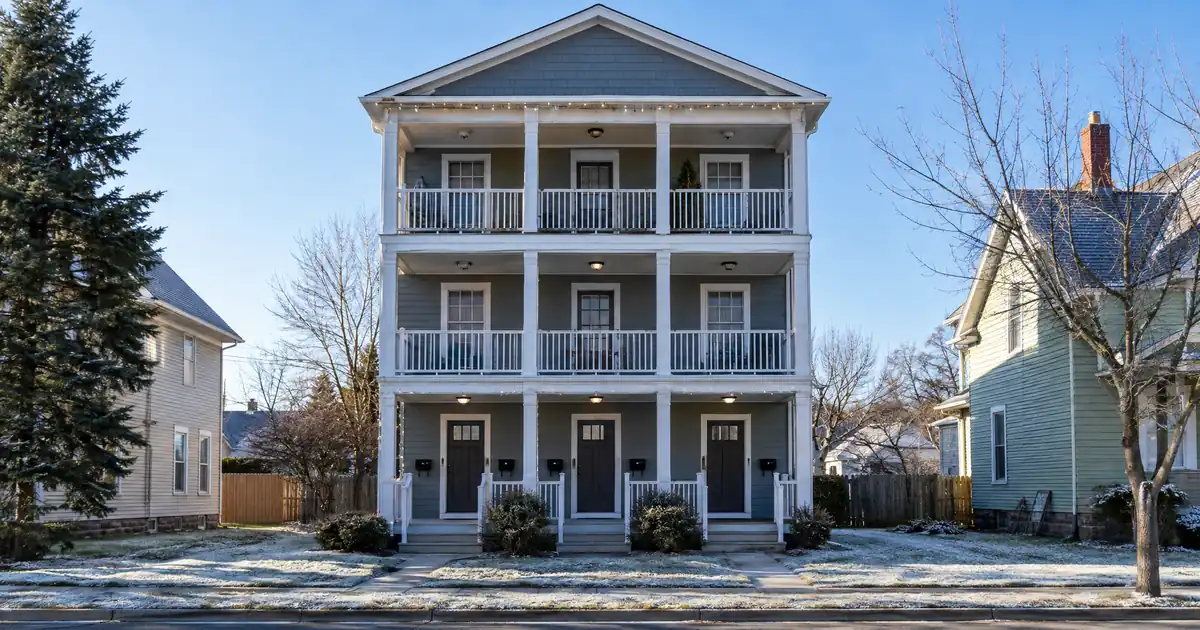
The Quick Read: A newly self-employed buyer can purchase a 2-4 unit home with low down by using a bank statement loan. It is reviewed on documented income under the applicable program, subject to lender guidelines, so the file does not need two years of traditional personal-income documentation. On a primary residence, select lenders in Lendmire’s wholesale network go up to 90% LTV on a purchase.
- Occupancy picks the product. Live in one unit and a bank statement loan fits. Rent out every unit and the path is a DSCR loan instead.
- Twelve months of statements replace the two-year history. Business or personal statements work, and income comes from deposit averages.
- Leverage tops out near 90% LTV on a primary-residence purchase. The asset-depletion alternative runs to about 80% LTV on a primary residence.
- Expect about six months of reserves, and loan sizes of roughly $125,000 to $3,500,000, subject to lender guidelines.
- The unit count, your credit and the appraisal can all lower the ceiling. Stronger files earn the top of the range.
Why a Short Business History Blocks Most Buyers
A new business owner usually can’t document income the way a standard mortgage wants. Conventional underwriting generally wants a two-year record of self-employment earnings, shown on filed traditional personal-income documentation. If you left a W-2 job last year, you may have one partial return, or none that cover the business.
What your deposits qualify you for.
Alt-doc programs read 12 months of business or personal bank deposits instead of tax returns. Enter your average monthly deposits and see the income a lender would credit you.
The expense factor is set by the lender from your business type and profit-and-loss statement; it is not a number you choose. This widget quotes no rate and no payment.
Program parameters shown update from Lendmire’s centralized guideline source.
Estimate
Illustrative estimate only — not a quote, Loan Estimate, approval, or commitment to lend. Deposit average, expense factor, and housing ratio are editable assumptions; the expense factor a lender applies is set from your business type and documentation. No interest rate or monthly payment is quoted here. Purchase capacity is a simplified illustration and does not account for taxes, insurance, HOA dues, or other debts. Alt-doc income documentation is available on consumer mortgages in the states where Lendmire is licensed for consumer lending; actual terms vary by lender, borrower, and property.
Government-backed low-down loans run into the same wall. FHA is the federal program that allows very small down payments on an owner-occupied home. It also expects a documented work history, and it adds a self-sufficiency test on three- and four-unit buildings. Lendmire’s piece FHA Cash-Out Self-Sufficiency Requirements on a 2-4 Unit Primary Home covers that test in detail.
Traditional personal-income documentation creates a second problem. Self-employed people write off expenses, and that is smart tax planning. It also shrinks the net income a return-based lender sees. A buyer with strong deposits can look weak on paper.
That gap is exactly what bank statement lending was built to close. The lender looks at what actually landed in your account over twelve months instead.
What Does “Low Down” Mean on a 2-4 Unit?
Low down depends on whether you will live in the building. Owner-occupied buyers can use leverage up to 90% LTV on a purchase through select lenders. Investors who will not live there use a different loan type, and their down payments run higher than owner-occupied buyers see. The exact numbers vary by lender and program and follow a full review of property, leverage, and credit.
LTV, or loan-to-value, is the loan amount divided by the lesser of the price or the appraised value. At 90% LTV you put down about 10%. You also need cash for closing costs and reserves, which are months of housing payments held in the bank after closing. Final terms depend on the lender’s guidelines, the property type, and the borrower’s complete credit picture.
Here is how the main paths compare for a buyer with a short business history.
| Path | Occupancy | Income basis | Fit for a new business |
|---|---|---|---|
| Conventional | Owner or investor | traditional income documentation, usually two years | Weak |
| FHA | Owner-occupied | Work history and returns | Weak |
| Bank statement loan | Owner-occupied | 12 months of deposits | Strong |
| DSCR loan | Rental only | Property rent vs. payment | Strong, but no living there |
Most buyers asking this question want to live in one unit and rent the others. That is called house hacking: the other tenants help pay your housing cost. For that plan, the bank statement row is the one that fits.
How a Bank Statement Loan Reads Your Income
The lender averages your deposits and then subtracts an expense factor. Across the wholesale network Lendmire works with, the steps look like this.
1. Choose the statements. You submit twelve months of business or personal statements. Business statements show the company’s revenue. Personal statements work when the business pays you directly into your own account.
2. Total the qualifying deposits. The underwriter removes transfers between your own accounts, loan proceeds and one-off items that are not income.
3. Apply an expense factor. Business statements include money that went to costs, so the lender counts only part of the deposits as your income. The factor differs by lender and program, and no universal formula exists. Some programs use an accountant-prepared ratio when one is available.
4. Average over the period. The result is a monthly qualifying income figure.
5. Check credit, assets and reserves. Your credit is verified, and your funds must cover the down payment, closing costs and reserves.
6. Appraise the property. LTV applies to the lesser of price or appraised value.
Notice what is missing: a two-year clock. A buyer with twelve clean months can be reviewed. A buyer with nine months generally cannot.
Bank statement lending still involves full documentation. It is reviewed on documented income under the applicable program, subject to lender guidelines. It is not a no-doc product.
Credit, assets, the appraisal and the property all stay in the file. You also need to explain large or unusual deposits.
Where the Two-Year Rule Comes From
The two-year history is a conventional underwriting habit, not a law of physics. Fannie Mae’s Selling Guide generally has lenders obtain a two-year history of self-employment earnings. It allows a shorter history only when the most recent signed personal and business returns show a full twelve months from the current business. The file must also document prior income at the same or a greater level.
That exception helps some buyers, such as a stylist who opens her own salon and keeps the same clientele. It does not help a buyer who changed fields or who has not yet filed a full year of business returns.
That is one brief contrast, and the rest of this article stays on non-agency paths. Bank statement programs have their own guidelines, and agency rules never govern them.
Structures and Variations That Exist
A few variations change the math on a 2-4 unit purchase.
Business versus personal statements. Business statements suit owners whose company runs through its own account. Personal statements suit sole proprietors and contractors who deposit client payments directly. Either way, mixing personal spending into a business account makes the review harder.
Asset depletion. Some programs review your file on liquid assets instead of deposits. The lender spreads your eligible balances over a set period to create income. This runs to about 80% LTV on a primary residence. It suits a buyer who sold a business or a home and holds a large cash balance but has thin deposit history. Each figure is subject to lender guidelines and a complete review of property type, leverage, and credit.
Rental income from the other units. On an owner-occupied 2-4 unit, the other units’ rent can matter. How much credit the lender gives, and what documents it needs, varies by program. Treat rent as support for your file rather than a replacement for your own documented income. A rent opinion usually comes from the appraiser. The appraisal form for two- to four-unit properties is Form 1025, and a companion rent schedule is Form 1007.
Loan size. The programs run from roughly $125,000 to $3,500,000. Most 2-4 unit purchases sit comfortably inside that range.
Term length. Alt-doc terms follow each lender’s program sheet. Don’t assume extended or interest-only options carry over from the DSCR side.
A Worked Example: The Former Employee, 14 Months In
Picture a graphic designer who left a salaried job fourteen months ago. She has filed one partial-year business return, so the two-year test fails. Her business account shows twelve full months of steady client deposits.
She wants a duplex, will live in one unit and rent the other. She has saved enough for the down payment and about six months of housing payments in reserve.
A bank statement lender averages her deposits and applies its expense factor. If her qualifying income supports the full housing payment with room to spare, the deal works forward at up to 90% LTV on a purchase. Stronger credit and larger reserves help her land near the top of that range. A thinner file may be offered a lower ceiling.
Now change one variable. Suppose she wants a fourplex instead. A larger building can lower the maximum LTV on some programs. It also raises the loan size and the reserve amount, so the cash needed rises faster than the unit count suggests. The underwriter also wants the rental estimate on the appraisal to hold up.
Change another. If her deposits are uneven, one huge client payment can distort the average. Lenders typically treat the spike carefully, and the file may use a lower average than she expected.
Where the General Rule Breaks
The bank statement route is strong, but a few edge cases deserve a straight answer.
You have fewer than twelve months of deposits. Most programs want a full year. Waiting a few extra months of clean statements beats applying with a short file and getting a lower ceiling.
You plan to rent every unit. Then the property is an investment, and an owner-occupied program does not apply. Move to the DSCR lane described below.
Your accounts are commingled. When personal groceries and business income share one account, the underwriter has to sort them. Separate accounts now save explanations later.
The unit count is three or four. Reserves and appraisal scrutiny can get tougher, and the property’s income carries added weight. Lenders also look harder at the rent estimate.
You want a second loan for the down payment. A second lien behind a first mortgage needs both lenders’ approval, and many programs restrict borrowed down payment funds. Raise this early, before you sign a contract.
The building is vacant. The appraiser’s market rent is the only rent number on file. One vacant unit also moves the ratio on an investor loan.
The property is a short-term rental. Lenders review income that swings with the season more carefully. Short-term rental rules can vary by city, county, HOA and property type, so investors should confirm local rules before relying on projected rental income.
A thin file with rent as the rescue. A buyer who needs the other units’ rent to make the numbers work should ask whether the program counts rent at all. Never build a purchase on rent a lender may not credit.
When You Won’t Live There: The DSCR Lane
DSCR loans are designed for non-owner-occupied investment properties. Because they are business-purpose investor loans, they are reviewed differently from a standard owner-occupied mortgage. A DSCR loan is reviewed primarily on property-level rental income covering the payment, subject to lender guidelines. Your conventional personal-income paperwork does not drive the decision.
DSCR stands for debt service coverage ratio. On a 1-4 unit residential loan, it is typically the gross monthly rent from all units divided by the full monthly payment, including principal, interest, taxes, insurance and any HOA dues. Wikipedia’s entry notes that investor-focused non-QM lenders may permit lower ratios than the roughly 1.20 banks have traditionally required. Many programs look for rent that at least covers the payment. Select lenders in the network also review ratios below that mark, with LTV and terms adjusting accordingly.
A 2-4 unit helps here, because every unit’s rent sits against one payment. Leverage on investment purchases varies by lender, and it generally runs lower than owner-occupied leverage. If you will not live there, plan for a larger down payment than the 90% LTV owner-occupied figure implies.
DSCR does not replace the personal file. Credit, assets, reserves and the appraisal still count. If you want the full picture, the complete DSCR loans guide walks through requirements. Lendmire’s explainer DSCR Loan for Self-Employed Real Estate Investors covers the investor side in more depth.
The disclosure regime also differs by occupancy. An owner-occupied bank statement purchase is a consumer mortgage, so standard consumer disclosures apply. A rental purchase on a DSCR loan is business-purpose and exempt from TRID.
How to Keep the Cash Needed Low
Cash to close is the real constraint on a low-down purchase. A few moves help without cutting corners.
- Use the full leverage the file earns. Strong credit and clean deposits are what unlock the top of the 90% LTV range on a primary-residence purchase.
- Protect your reserves. Six months of housing payments is a common requirement. Spending the cushion on the down payment can sink the file.
- Check gift fund rules before you ask. Programs differ on who can give and what paperwork proves it.
- Ask about seller concessions. A seller credit toward closing costs can lower cash needed, though programs cap how much they allow.
- Price the trade-off. A lower down payment means a larger loan and a higher monthly obligation. The calculator on this site gives an illustrative estimate, so you can compare scenarios side by side. Leverage, reserves, and pricing vary by lender and program; the final terms follow the full file review.
A self-employed buyer should hold more cushion than a salaried one. Your income swings, and the building’s costs do not.
A Roadmap From Planning to Closing
Think in phases rather than dates.
Phase one: build the file. Keep business and personal money in separate accounts. Pay yourself on a consistent pattern. Avoid large unexplained deposits and new debt. Count your clean months of statements.
Phase two: choose the occupancy plan and the property. Decide whether you will live in a unit. Run the rent against the full payment. Stress-test the deal with one unit empty and with rent below the estimate.
Phase three: talk to a broker before you make offers. A broker who sees many lenders’ guidelines can tell you which programs fit your deposits, your credit and the unit count. Programs differ on expense factors, reserves and LTV caps by property type.
Phase four: underwriting. Respond to document requests in full. Do not change jobs, open accounts or move money between banks without telling your broker.
Readiness Checklist
- Twelve months of statements, with large deposits explained.
- Credit that fits the program you are targeting.
- Reserves of about six months of housing payments.
- A rent plan that survives one vacant unit.
- A realistic view of landlording while you run a business. Tenants call at inconvenient times, and local landlord rules vary by city.
Tax treatment can depend on how the funds are used and how the property is held; investors should keep clear records and speak with a qualified tax professional before relying on any deduction.
Key Terms Defined
Bank statement loan: A mortgage that is reviewed around average deposits over twelve months of statements instead of standard personal-income documentation.
LTV (loan-to-value): The loan amount as a percentage of the lesser of the purchase price or the appraised value.
Reserves: Money left in your accounts after closing, counted in months of housing payments.
Expense factor: The share of business deposits a lender subtracts for costs before counting the rest as your income.
House hacking: Buying a small multi-unit building, living in one unit and renting out the others.
DSCR: Debt service coverage ratio, meaning rent divided by the full monthly payment on a rental property.
Asset depletion: A way to qualify using eligible liquid assets, spread over a set period, as stand-in income.
Frequently Asked Questions
Can I buy a duplex with a bank statement loan if I have been self-employed for less than two years?
Usually yes, provided you have about twelve months of statements and the file meets the program’s other guidelines. The two-year history is a tax-return rule, and bank statement programs use deposits instead. Fewer than twelve months of statements generally falls short.
How much down payment does a self-employed buyer need on a 2-4 unit?
On a primary-residence purchase, select lenders go up to 90% LTV, which means roughly 10% down on stronger files. Weaker credit, a larger building or a thin appraisal can lower that ceiling. Closing costs and reserves are separate from the down payment.
Does the rent from the other units count toward qualifying?
It depends on the program. Some lenders give partial credit for rent supported by the appraisal or a lease, and others rely mainly on your documented income. A broker can tell you which approach a given lender takes before you apply.
What if I don’t plan to live in the building?
Then it is an investment property, and the right product is a DSCR loan. It qualifies primarily on property-level rental income covering the payment, subject to lender guidelines. Down payments are higher than owner-occupied buyers face, and leverage varies by lender.
Is a bank statement loan available everywhere?
No. Lendmire offers its owner-occupied bank statement lending in 16 states, so availability depends on where the property sits. Programs also differ by lender, so every file is reviewed individually.
About Lendmire
Lendmire, NMLS# 2371349, is a non-QM mortgage broker serving real estate investors in 41 markets, including Washington, D.C., through DSCR investor loan programs. Qualification is generally reviewed around the subject property’s rental income, not the borrower’s W-2 history — a practical fit for LLC-titled portfolios and self-employed investors. All scenarios remain subject to lender review and program guidelines. Two consecutive Scotsman Guide Top Mortgage Workplace recognitions (2025, 2026).
Get Started
Ready to find the right loan for you?
In about 30 seconds you can review financing options available for your home or investment property. No commitment required.
Informational only. Not a Loan Estimate, approval, or commitment to lend. Program availability and eligibility are subject to lender guidelines, credit approval, property review, and underwriting.
References
1. Fannie Mae Selling Guide: Underwriting Factors and Documentation for a Self-Employed Borrower
2. Form 1025
3. Wikipedia: Debt service coverage ratio
This article is part of Lendmire’s bank statement loan program — full qualification details, guidelines, and scenarios live on the program page.
Related reading: How to Refinance Your Home When You’re Self-Employed · Self-Employed vs W-2: What Changes in Mortgage Approval? · Should a Self-Employed Veteran Use a Broker for a VA Cash-Out?
Brandon Miller
Founder & CEO, Mortgage Loan Originator, Lendmire LLC
- Mortgage Loan Originator · NMLS# 1129696 · Verify on NMLS Consumer Access
- North Carolina Real Estate Broker · License# 343312 · Verify on NCREC
- North Carolina Insurance Producer · License# 19053198 · Property, Casualty, Life, Health · Verify on NAIC SBS
- Lendmire LLC · Firm NMLS# 2371349 · Verify firm licensure
Important disclosures. Lendmire (NMLS# 2371349) is a licensed mortgage brokerage. Lendmire is not a direct lender, depository institution, or financial advisor. All loan inquiries are subject to lender underwriting; this article does not constitute a commitment to lend. Rates, terms, and program guidelines are subject to change without notice and vary by borrower profile, property type, and state. Information in this article is general in nature and is not financial, legal, or tax advice. Equal Housing Opportunity. NMLS Consumer Access: nmlsconsumeraccess.org.