
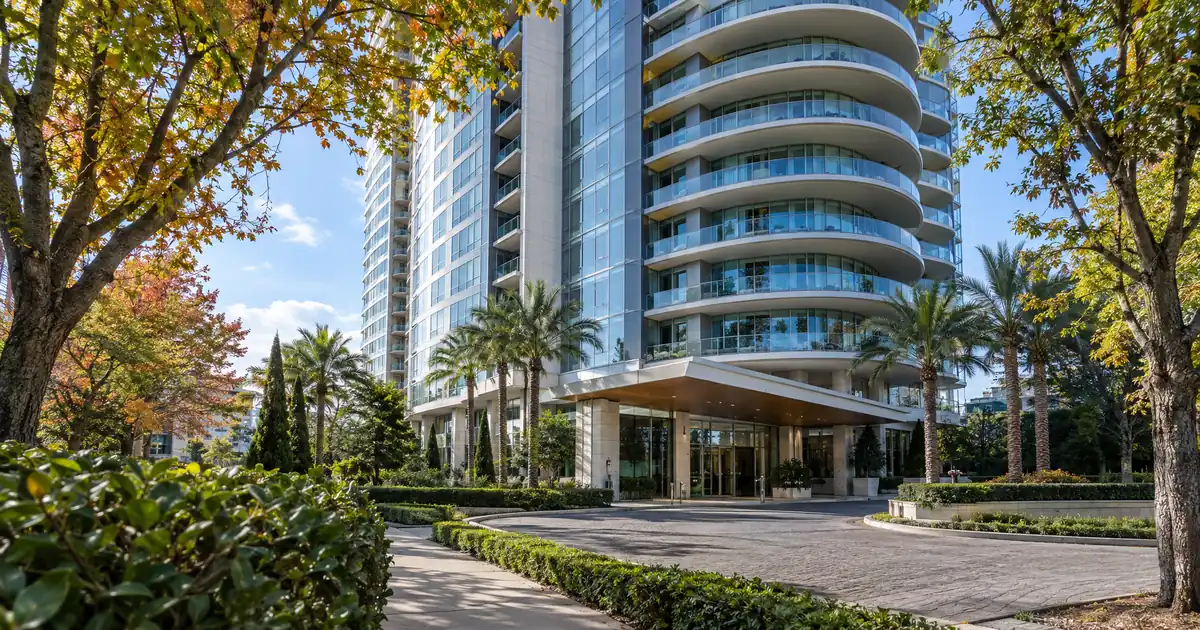
The Quick Read: A bank statement loan is reviewed around deposits and a DSCR loan is reviewed for the property on rent, so the better path for a non-warrantable luxury condo over $1.5M depends on whether your income or the unit’s rent carries the full monthly obligation, including the association dues, and on whether you will live in it.
- A bank statement loan turns 12 or 24 months of deposits into income, then tests your debt-to-income ratio (DTI, your monthly debts divided by your monthly income).
- A DSCR loan, short for debt service coverage ratio, divides the unit’s rent by its full monthly housing cost.
- DSCR is for investment units only. A condo you will live in or use as a second home points to the bank statement path.
- Luxury buildings often carry heavy dues, and heavy dues can sink DSCR coverage while barely touching a bank statement file.
- Both paths still review the building, because a non-warrantable project is a risk to any lender.
Here is the honest answer. If you are self-employed with strong deposits and plan to live in the unit or use it yourself, bank statement is usually your path. If you are an investor who holds rentals and the unit’s rent covers its carrying costs, DSCR is usually cleaner. If the rent falls short of the payment, a bank statement file can carry the deal, provided you are self-employed and your deposits are strong. Loan outcomes are subject to lender guidelines and full underwriting on either path.
Side-by-Side
The table shows published industry norms for DSCR and the network’s bank statement figures, available through select wholesale programs, subject to full underwriting.
| Factor | Bank Statement | DSCR (industry norms) |
|---|---|---|
| What is tested | Your deposits, after an expense ratio | The unit’s rent against its full obligation |
| Personal income docs | 12 or 24 months of statements | Generally not used to size the loan |
| Occupancy | Primary, second home, investment | Investment only |
| Entity vesting | Generally a person; varies by program | LLC closing is common |
| Reserves | 3, 6 or 9 months by loan size | Commonly asked; varies by program |
| Dues impact | Counted in DTI | Counted in the coverage ratio |
| Building review | Yes | Yes |
Entity rules vary, and a DSCR loan can close in an LLC subject to lender program eligibility. Bank statement programs are income programs, so most expect the borrower to be a natural person.
Key Terms Defined
Non-warrantable condo: a unit in a project that fails the eligibility rules used for agency-backed loans. It describes the building, not you or the unit.
Bank statement loan: a mortgage that is reviewed around documented income drawn from your bank deposits instead of traditional personal-income documentation.
DSCR: the unit’s monthly rent divided by its monthly housing obligation. Qualification runs primarily on property-level rental income covering the payment, subject to lender guidelines.
PITIA: principal, interest, taxes, insurance and association dues. It is the full monthly obligation on a condo.
Expense ratio: the share of business deposits a lender treats as operating cost before counting the rest as income.
What Changes on a Non-Warrantable Luxury Condo Over $1.5M
Size and property type both matter at this price. Across the wholesale network, leverage steps down as the loan grows. A non-warrantable condo also carries its own ceiling of 80% through select wholesale programs, subject to full underwriting.
On an investment property purchase, the ladder looks like this:
- Loan in the $1.5M–$2M band: 80% on a purchase, with credit of 700 or higher for that leverage.
- $2M–$2.5M: 80% on a purchase, with credit of 720 or higher for that leverage.
- $2.5M–$3M: 75% on a purchase, with credit of 720 or higher for that leverage.
- $3M–$4M: 60% on a purchase through the bank portfolio program, with the 700 credit floor from the super-jumbo overlays below applying at this size.
The 85% cells on a primary residence do not apply to a non-warrantable unit. Its property cap is 80%.
Above $3,000,000 on an investment property, super-jumbo overlays apply. They include a 700 credit floor, a 0x30x24 housing history, 48-month seasoning after any credit event, and U.S. citizen or permanent resident status. Any loan above $4,000,000 is reviewed case by case before submission, so treat leverage figures at that size as a conversation, not a promise.
Credit floors are 660 on the portfolio non-QM program and 680 on the bank portfolio program. Pricing and available terms vary by lender, borrower profile, property type, and full underwriting review. Below those floors, a lower score usually means a lower leverage cell, not a closed door.
Reserves run 3 months of payments up to $500,000, 6 months up to $1,500,000, and 9 months above that. Each additional financed property adds 2 months, up to a 12-month maximum. First-time investors are asked for 12 months.
When Bank Statement Is the Better Fit
Bank statement wins when your income is stronger than the unit’s rent. That is common in luxury buildings, where rent often trails a high price plus high dues.
It also wins when you will occupy the unit. DSCR is built for non-owner-occupied investment property, so a primary residence or second home needs an income-based program. Second homes are limited to one-unit properties, which a condo is.
The documentation is specific. You supply 12 or 24 consecutive months of personal or business statements. Business accounts need at least 25% ownership. The underwriter divides eligible deposits by the number of months, after an expense ratio of 20% for a service business with no employees, 40% for one to five employees, or 50% for six or more employees or any product business. An accountant-provided ratio can replace the fixed one, and a profit-and-loss method is capped at 80%.
Transfers from your own business account into your personal account count at 100%. That matters for founders who pay themselves through transfers. Statements must be consecutive, and a transaction history is not a substitute.
DTI can run up to 50%. The whole payment, dues included, must fit inside qualifying income. A borrower with many other debts can find DTI tighter than expected, even with big deposits.
Two asset-based paths exist for primary and second homes only. Asset allowance divides liquid assets by 36, 60 or 84 months to add income. An assets-only file needs U.S. liquid assets equal to the loan plus closing costs. Neither applies to an investment unit. For a deeper walk-through, see Lendmire’s guide How to Qualify for a Bank Statement Loan for a Non-Warrantable Condo.
When DSCR Is the Better Fit
DSCR wins when the unit is a true rental and the rent covers the full obligation. You skip the income calculation, and the loan does not sit in your personal DTI, so it does not crowd out your next purchase. That helps a portfolio investor who is adding units.
DSCR loans are designed for non-owner-occupied investment properties. Because they are business-purpose investor loans, they are reviewed differently from a standard owner-occupied mortgage. The CFPB’s Truth in Lending reference treats credit to acquire non-owner-occupied rental property as business-purpose credit.
Different documentation does not mean no documentation. Expect ID, a credit review, asset statements for reserves, entity papers if you close in an LLC, title, insurance, and the building’s financials. The lender sets rent from a lease or the appraiser’s market-rent analysis.
The weak spot is dues. A luxury building’s amenity fees go straight into the denominator. Picture a unit whose rent looks fine against taxes and insurance, then falls short of 1.00 coverage once the dues are added. Same property, same tenant, different answer.
Coverage below 1.00 is not always the end. Select lenders in the network offer programs below 1.00, though leverage and terms adjust. A short-term rental plan may help the numbers, but short-term rental rules can vary by city, county, HOA, and property type, so confirm local rules before relying on projected rental income.
Where the Building Can Sink Either Path
A non-warrantable label tells a lender the project fails agency eligibility. Fannie Mae’s project status materials list triggers such as more than 15% of units being 60 or more days past due on HOA assessments. Critical repairs, deed or resale restrictions, and priority-lien issues also appear.
Neither path here is an agency loan, so those rules do not bind it. Each wholesale program sets its own project overlays. That is why a building one lender declines can fit another’s guidelines.
Some building problems are hard to work around on any path. Developer control of the association and active construction are examples. Rental pooling and hotel-style operation can also be a separate eligibility problem. A rental ban in the HOA documents is a hard stop for a DSCR file and a concern for any investment use.
Request the HOA questionnaire, budget, reserve study, insurance certificate and litigation disclosure before you make an offer. Those documents decide more files than the income method does.
DSCR vs. conventional financing
There are two common ways to finance an investment property, and they qualify you differently — here’s how investors weigh them.
Why investors choose it
- Qualifies on the property’s rental income — no personal tax returns, W-2s, or pay stubs needed to document income.
- No personal debt-to-income ceiling to clear, so existing mortgages and obligations don’t cap your borrowing the same way.
- Can be closed in an LLC, keeping the property inside a business entity.
- Built for scaling — not held to the limit on number of financed properties that conventional financing applies.
- Underwriting centers on the deal: generally qualifies when the rent covers the payment, a 1.00x coverage ratio being a common baseline (confirmed in underwriting).
- Designed specifically for investment property, including long-term and, where the program allows, short-term rentals.
Where it’s strong
- Often the lowest ongoing financing cost for a buyer who fully qualifies on personal income — a fit for a first property or a cost-first purchase.
Trade-offs for investors
- Requires full personal income documentation and must fit within a debt-to-income limit — salary, existing debts, and other mortgages all count.
- Typically held in your personal name rather than a business entity.
- Caps how many financed properties you can carry, which can become a ceiling as a portfolio grows.
- Evaluates you as a borrower as much as the property, which usually means more paperwork.
How investors usually choose: a first or single property often optimizes for the lowest financing cost; portfolio builders often optimize for leverage, vesting in an LLC, and scaling past conventional caps. The right answer depends on your goals, the property, and current guidelines — both paths run through select lenders in Lendmire’s wholesale network, with eligibility and terms confirmed in underwriting.
A Side-by-Side Scenario
Run the numbers on a modeled unit where the loan lands in the $1.5M–$2M band, bought as an investment at 80%. These are assumptions, not quotes.
Building A has modest dues. Rent clears the full obligation with room to spare, so coverage lands comfortably above 1.00x. DSCR is the simpler file, and your personal DTI stays untouched.
Building B has heavy dues. Rent covers taxes, insurance and the loan but falls short once the dues join the formula, so coverage sits below 1.00x. DSCR still has paths through a sub-1.00 program with adjusted terms. Bank statement may be cleaner if your deposits are strong and your other debts are low.
You carry heavy personal debt. Bank statement DTI tightens even when deposits look large. If the unit’s rent is strong, DSCR sidesteps that problem.
This one is a toss-up in Building B. Coverage math favors bank statement, while the DTI math favors DSCR if you already carry other debt. Run both before choosing.
Which Path Fits You
- Self-employed, strong deposits, buying to live in it or use it: bank statement.
- Investor with several rentals, unit rents well: DSCR.
- Investor, rent below the payment, strong personal deposits: bank statement may carry the file, subject to program rules for investment property.
- LLC vesting matters to you: DSCR is the more common fit.
- Cash-out on an existing unit: see Lendmire’s piece How to Cash-Out Refinance a Non-Warrantable Luxury Condo on Bank Statements.
Tax treatment can depend on how the funds are used and how the property is held; borrowers should keep clear records and speak with a qualified tax professional before relying on any deduction.
The Balanced Verdict
Pick bank statement when income is your strength or the unit is for you. Pick DSCR when the property is your strength and you want it kept off your personal DTI. At this price, dues often decide which side wins, and the building’s own health can override both.
The wholesale network exists so you do not have to guess. Our complete DSCR loans guide covers the investor side in more depth.
Frequently Asked Questions
Can a DSCR loan finance a non-warrantable luxury condo?
Yes, through select programs, when the unit is a true investment and the rent supports the full obligation. The lender still reviews the building. Leverage typically steps down as loan size rises, and a non-warrantable condo carries an 80% purchase cap on the programs described here, subject to full underwriting.
Can I use a bank statement loan to buy this condo as a second home?
Yes, on programs that allow second homes, which are limited to one-unit properties. On a second-home purchase, a loan in the $1.5M–$2M band typically takes up to 80% with credit of 700 or higher for that leverage. The $2M–$2.5M band also allows 80% at 720 or higher, and $2.5M–$3M allows 75% at 720 or higher. From $3M to $4M the cell is 65% at 760 or higher through the portfolio program with super-jumbo overlays. Loans above $4,000,000 are reviewed case by case before submission, and everything is subject to full underwriting.
Do association dues count against me?
Yes on both paths. They sit in the DSCR denominator and in the DTI test for a bank statement file. Heavy dues hurt DSCR coverage most when rent is only moderate.
Can a first-time investor qualify?
Possibly. First-time investors are asked for 12 months of reserves on the programs described here, and credit and leverage requirements still apply. Qualification is subject to lender guidelines.
Does a non-warrantable label mean the condo is a bad building?
No. It means the project fails agency eligibility rules. Some failures are fixable, and some do not matter to a non-agency program. Others, such as rental pooling or developer control, can stop a file on any path.
If you are financing a high-balance property on business or personal bank statements and want to see how the numbers work, Lendmire can help you compare super jumbo bank statement loan options based on your deposits, the property, credit profile, leverage, and your goals. Lendmire is a broker, not the lender, and consumer mortgage lending is licensed in 16 states. Nothing here is a commitment to lend.
Luxury condos will keep testing both income methods, because the buildings that carry the highest dues are the ones where rent and deposits tell different stories.
Lendmire’s self-employed mortgages page presents both super jumbo programs, bank statement and DSCR, side by side.
About Lendmire
Lendmire (NMLS# 2371349) is a mortgage brokerage serving self-employed and high-net-worth borrowers in 16 states. Bank statement, P&L-only, 1099-only and asset-based mortgages are arranged through wholesale lending channels; Lendmire brokers the financing and the lender underwrites each application. Scotsman Guide named Lendmire a Top Mortgage Workplace in both 2025 and 2026.
Get Started
Ready to find the right loan for you?
In about 30 seconds you can review financing options available for your home or investment property. No commitment required.
Informational only. Not a Loan Estimate, approval, or commitment to lend. Program availability and eligibility are subject to lender guidelines, credit approval, property review, and underwriting.
References
1. CFPB – Truth in Lending Act reference
2. Fannie Mae – Condo project status materials
This article is part of Lendmire’s super jumbo bank statement loan program — full qualification details, guidelines, and scenarios live on the program page.
Related reading: Super Jumbo DSCR for Trust Vesting vs Bank Statement for Individual Title · How a Bank Statement Jumbo Loan Works in Bellevue · How Super Jumbo Bank Statement Loan Valuation Checks Work on a Non-Warrantable Condo
Brandon Miller
Founder & CEO, Mortgage Loan Originator, Lendmire LLC
- Mortgage Loan Originator · NMLS# 1129696 · Verify on NMLS Consumer Access
- North Carolina Real Estate Broker · License# 343312 · Verify on NCREC
- North Carolina Insurance Producer · License# 19053198 · Property, Casualty, Life, Health · Verify on NAIC SBS
- Lendmire LLC · Firm NMLS# 2371349 · Verify firm licensure
Compliance and disclosures. Lendmire (NMLS# 2371349) is a licensed mortgage broker and is not a direct lender, depository institution, financial advisor, or tax professional. Content in this article is general market analysis and educational information — not financial, legal, or tax advice for any specific situation. Lendmire does not guarantee loan approval; every transaction is subject to underwriting by the funding lender. Mortgage pricing and loan program guidelines are subject to change at any time without notice and vary by borrower characteristics, property type, and state regulations. Lendmire complies with Equal Housing Opportunity. Licensure verification: NMLS Consumer Access.