
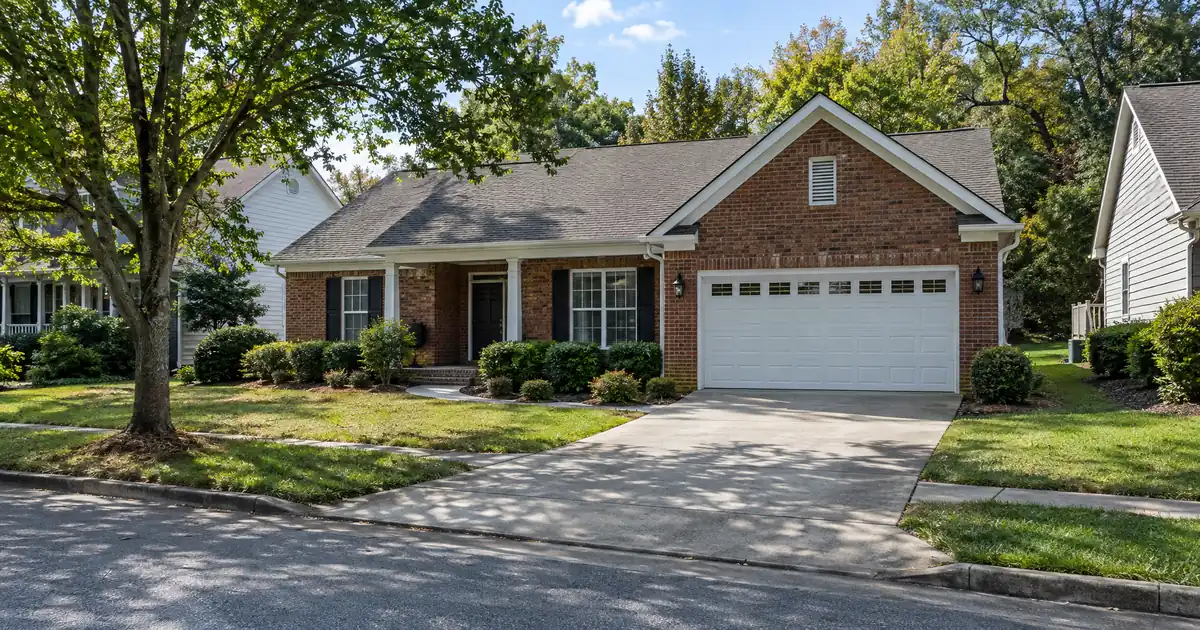
The Quick Read: Yes, if savings alone means paying all cash, or if the buyer’s balances are large enough that an asset-based mortgage can qualify the loan on those balances without documented income. Most snowbirds with savings and little paycheck income fit one of two paths, and a winter home the buyer lives in is a second home, not a rental. That puts it outside the DSCR lane.
- All cash typically involves no lender underwriting, though sellers and title companies usually still ask for proof of funds.
- An asset-based second-home loan can use eligible assets in place of income, through select programs and subject to underwriting.
- A DSCR loan generally cannot finance a home you plan to live in.
- Savings alone typically does not carry a conventional second-home file, since income and debts are generally tested too.
What Does “On Savings Alone” Really Mean?
It means one of three things, and each one runs through a different rulebook. The buyer pays all cash. The buyer uses savings for the down payment and finances the rest on income. Or the buyer lets the savings themselves qualify the loan.
Cash is common with this buyer type. NAR’s Economists’ Outlook reports that over a ten-month window, 57% of vacation-home buyers and 56% of investment buyers paid all cash. Those are national figures for a broad vacation category, not North Carolina figures and not snowbird-specific. A financed offer in a vacation market often competes against cash.
The third path is the one most retirees miss. A retiree with a large portfolio and a small pension has plenty of wealth and little documented income. A conventional second-home file reads that as a weak borrower. An asset-based program reads it as a strong one.
Second Home or Investment Property: Why Cash Buyers Should Care
A winter home you personally use is a second home. A home you buy to rent to someone else is an investment property. The label drives the loan, the paperwork, and the tax treatment, even when no lender is involved.
Federal rules draw the line at 14 days. Under CFPB Regulation Z, section 1026.3, credit to buy a non-owner-occupied rental is treated as business-purpose. A home the owner expects to occupy for more than 14 days in the coming year cannot be treated that way. A snowbird who stays three to five months is far past that line.
| Factor | Second home | Investment property |
|---|---|---|
| Who lives there | The owner, part of the year | A tenant |
| How the loan is judged | Borrower income, assets, debts | Rent against the payment |
| Typical loan type | Conventional, jumbo, asset-based | DSCR |
| Rental use | Occasional only | The point of the purchase |
An LLC does not change the answer. Putting title in an entity changes the consumer-rule treatment, not the occupancy facts. A personal-use home held in an LLC is still a personal-use home. Calling a winter home an investment to get friendlier terms is a misrepresentation, and it puts the loan and the borrower at risk.
DSCR loans are designed for non-owner-occupied investment properties. Because they are business-purpose investor loans, they are reviewed differently from a standard owner-occupied mortgage. For the full picture, see the complete DSCR loans guide.
What Does a Cash Purchase Actually Require?
A cash purchase typically involves no lender underwriting. The seller usually wants proof of funds for the contract and again for the settlement. Title work, insurance, and inspection still generally apply, and the buyer still has to clear title and reconcile the settlement statement.
The friction is in where the cash comes from. A seller’s agent will want a bank or brokerage letter that matches the contract amount. Funds sitting in a retirement account are not cash until they are withdrawn. A withdrawal can carry tax consequences, so a snowbird planning to draw from tax-deferred accounts should talk to a qualified tax professional before wiring anything. Tax treatment varies; consult a qualified professional.
The bigger issue is liquidity after the check clears. Real estate does not convert back to cash on demand. A retiree who puts most of a portfolio into a winter home has fewer dollars for healthcare, repairs, and the primary home back in North Carolina. Mortgage-free is not cost-free. Insurance, HOA dues, utilities, travel, and upkeep on two households continue.
Savings as a Down Payment: Why It Usually Falls Short
If savings alone means a down payment, the answer is usually no. A conventional or jumbo second-home loan tests the borrower’s income and debts. Nolo notes that both second-home and investment-property loans demand stronger credit and larger down payments than primary-residence loans, and that lenders may require reserves covering payments for up to six months.
Rental income generally can’t be used to qualify a second home. Both the winter-home payment and the primary-home payment count against income. FHA and VA loans are generally not available for second homes, according to Yahoo Finance. Large retail lenders usually keep the second-home label only if rental use stays minimal.
So the savings do not carry the file. For a retiree with a big portfolio and modest pension income, that is the wall. The balances are real. The documented income is thin.
The Asset-Based Route: Savings That Qualify the Loan
This is where the savings can do the work. Across the wholesale network, asset-based mortgages are placed through select lenders for principal residences and second homes. They run on two paths. A borrower is on one path at a time.
Asset qualifier path. Eligible assets, after credit percentages, must equal or exceed the entire loan amount. No employment or income is documented. Subject to underwriting, leverage reaches 80% on a purchase and 75% on a refinance, for loans up to $4,000,000. The minimum credit score is 600. Reserves are not required at or below 75% loan-to-value; above that, the lender sets them.
Asset depletion path. Eligible assets, after haircuts, are divided by 60 months to produce a monthly qualifying income. That income carries the housing payment and other debts through the debt-to-income test. On a principal residence or second home, leverage reaches 80% on a purchase or rate-and-term refinance and 60% on a cash-out refinance. Loans run from $125,000 to $3,500,000. Credit follows the lender’s score and loan-amount matrix.
Here is how each type of asset counts.
| Asset | Qualifier path | Depletion path |
|---|---|---|
| Savings, money market | 100% | 100% (cash accounts) |
| Certificates of deposit | 100% | 100% |
| Brokerage accounts | 100% | 80% (securities) |
| Retirement accounts | 90% under 59½, 100% at 59½+ | 70% at any age |
| Real-estate equity | Not listed | 60% |
Run the numbers on a sample file. Say a borrower seeks an $800,000 loan and holds $330,000 in brokerage accounts, $300,000 in a 401(k) while under 59½, and $200,000 in savings. Brokerage counts at 100%, or $330,000. The 401(k) counts at 90%, or $270,000. Savings count at 100%, or $200,000. That totals $800,000 of usable assets, which covers the loan on assets alone. The lender’s own calculation governs, and this is illustrative only.
The depletion path works differently. Take $1,500,000 in securities, which count at 80% for $1,200,000, plus $300,000 in cash at 100%. Usable assets are $1,500,000. Divided by 60 months, that is $25,000 of monthly qualifying income, which then has to carry the housing payment and other debts.
This path has its own floors. Qualified assets must be at least the lesser of $1,000,000 or 1.25 times the loan balance. When asset depletion is the only income source, liquid assets can never fall below $250,000. Asset-derived income can also supplement documented income, up to a 45% debt-to-income ratio, and the minimum-assets rule is waived in that case.
Where Asset Files Get Stuck
Seasoning and documentation. These are the failure points, and they are mechanical.
On the qualifier path, funds need 60 days of seasoning, with two months of statements for each qualifying account. On the depletion path, statements must be at least 120 days old at application, plus the most recent statement within 45 days. Sale-of-business, inheritance, and legal-settlement funds are excused from that seasoning. Cash moved in last month from another account is the usual snag. Large deposits need a paper trail.
Some asset classes don’t count at all on either path. Cryptocurrency, precious metals, collectibles, and pledged or borrowed funds are not published as eligible. The documented route is converting them into a seasoned cash balance in a regulated account, with the source reviewed by the lender. Cash on hand, stock options, and non-vested restricted stock units are excluded on the depletion path.
Two more points trip people up. “No income documentation” never means “no documentation.” The assets are documented on both paths. And these are consumer mortgages, so consumer disclosure rules apply, unlike DSCR loans, which are business-purpose.
Credit still matters. Housing history is held to 0x30x12, with one 30-day late in the last twelve months considered case by case. A housing event needs four years of seasoning on the depletion path. Multiple bankruptcies are not eligible. All of this is subject to underwriting and not a commitment to lend. Lendmire’s piece How a Luxury Home Bank Statement Loan Works in North Carolina covers the other non-QM route, for borrowers who document income through deposits.
Rent It Sometimes? The Mixed-Use Trap
Second-home rules typically allow occasional rental but not primary rental. Yahoo Finance reports that lenders usually keep the second-home classification when the property is rented 14 days or fewer a year, and that some conventional lenders allow longer rental periods if the rent isn’t used to qualify. Jumbo lenders are typically stricter. Rental-day caps vary by lender.
Second homes must also be one-unit properties. DSCR commonly covers one to four units.
A snowbird who wants the home to earn real rent has to choose. Second-home financing gives up using rent to qualify. DSCR gives up personal use. A property that can’t do both has to be sorted into one lane before anyone applies. Short-term rental rules vary by city, county, HOA, and property type, so investors should confirm local rules before relying on projected rental income.
If the plan is a true rental, the loan is reviewed primarily on property-level rental income covering the payment, subject to lender guidelines. Programs below 1.00 coverage exist through select lenders in the network, though leverage and terms adjust. The borrower signs an occupancy and business-purpose certification stating they won’t live there.
Cash, Financing, or a Mix?
A buyer with enough savings can still choose to finance. The choice is about liquidity, not ability.
| Approach | Strength | Trade-off |
|---|---|---|
| All cash | Typically no lender underwriting, strong offer | Drains liquidity |
| Conventional or jumbo | Keeps savings invested | Income and debts tested |
| Asset-based loan | Savings qualify the loan | Seasoning and documentation |
| Home equity draw | Uses primary-home equity | Adds a payment to the primary file |
Many buyers tap primary-home equity through a HELOC or cash-out refinance, and that payment counts against income on a second-home file. Investor opinion on paying cash versus financing is split, as a Bogleheads discussion thread shows. Treat that as sentiment, not guidance.
A practical sequence for a retiree considering a purchase:
1. Decide the use. Personal winter use or rental. This sets the loan lane.
2. Total the liquid assets. Separate cash, brokerage, and retirement balances.
3. Decide what stays liquid. Set aside an emergency and healthcare buffer first.
4. Compare cash against an asset-based loan. Weigh what each leaves in the portfolio.
5. Gather statements early. Seasoning is where files slow down.
Condo or House When You Pay Cash
Condo purchases carry risks even without a lender. Special assessments and the health of the HOA reserve matter to a cash buyer too. When financing is involved, the lender’s condo review adds a step, and incomplete HOA questionnaires delay files. A single-family house avoids that layer but adds maintenance you handle from a distance.
Key Terms Defined
Second home: A one-unit property the owner uses personally for part of the year, financed on the owner’s income and assets.
Investment property: A property bought to rent to others, financed on its rental income under a DSCR loan.
Asset qualifier path: An asset-based program where eligible assets must cover the whole loan and no income is documented.
Asset depletion path: An asset-based program that divides usable assets by 60 months to create qualifying income.
Seasoning: The period funds must sit in an account before they count toward qualifying.
Debt-to-income ratio: Monthly debts divided by monthly income, used to test whether a borrower can carry a payment.
Frequently Asked Questions
Can I buy a winter home with only my savings?
Yes, if you pay all cash. You need proof of funds and nothing else from an underwriter. If you want to finance, savings alone usually will not carry a conventional file, because the lender tests income and debts. An asset-based mortgage can use your balances to qualify, subject to underwriting.
Can I use a DSCR loan for a winter home I live in?
Generally no. DSCR is a business-purpose, non-owner-occupied product, and a home you occupy for months is a second home. Putting title in an LLC does not change that.
Do retirement accounts count toward an asset-based loan?
Yes, at a reduced share. On the qualifier path they count at 90% under age 59½ and 100% at 59½ or older. On the depletion path they count at 70% at any age. Programs and balances are reviewed individually.
How long must my money sit in an account?
On the qualifier path, funds need 60 days of seasoning and two months of statements per account. On the depletion path, statements must be at least 120 days old, with a recent one within 45 days. Inheritance, business-sale, and settlement funds are excused from the seasoning.
Can I rent my winter home to cover costs?
Occasionally, yes. Lenders usually keep the second-home label when rental use is minimal, and rent generally can’t be used to qualify. Regular rental use makes it an investment property.
If you are qualifying on assets rather than income and want to see how the numbers work, Lendmire can help you compare asset-based mortgage options based on your statements, the property, credit profile, leverage, and your goals. This is a consumer-purpose program available through Lendmire’s North Carolina consumer lending license, and the brokerage arranges it through select lenders.
Winter-home buyers who sort the use question first, before counting a single dollar, tend to save themselves the most rework.
Lendmire’s asset-based mortgage in North Carolina page presents the program for North Carolina borrowers.
About Lendmire
Lendmire — NMLS# 2371349 — is a mortgage broker that arranges bank statement, P&L-only, 1099-only and asset-based home financing in 16 states through wholesale lenders, on primary residences, second homes and investment properties. Every option is subject to the lender’s guidelines and full underwriting. Scotsman Guide named Lendmire a Top Mortgage Workplace in both 2025 and 2026.
Get Started
Ready to find the right loan for you?
In about 30 seconds you can review financing options available for your home or investment property. No commitment required.
Informational only. Not a Loan Estimate, approval, or commitment to lend. Program availability and eligibility are subject to lender guidelines, credit approval, property review, and underwriting.
References
1. NAR Economists’ Outlook: The Cash Buyer and the Waltz of the Rising Rates
2. CFPB Regulation Z, §1026.3 with official interpretations
3. Nolo: Investment Property vs. Second Home
4. Yahoo Finance: Buying a Second Home
5. Bogleheads forum thread on cash versus mortgage
This article is part of Lendmire’s asset-based mortgage program — full qualification details, guidelines, and scenarios live on the program page.
Related reading: HELOC Documentation for Retirees Qualifying on Assets Alone · Asset Depletion Mortgage vs HELOC on a Paid-Off Home · Asset Qualifier vs Asset Depletion for a Snowbird
Guides: Asset-Based Mortgage in North Carolina
Brandon Miller
Founder & CEO, Mortgage Loan Originator, Lendmire LLC
- Mortgage Loan Originator · NMLS# 1129696 · Verify on NMLS Consumer Access
- North Carolina Real Estate Broker · License# 343312 · Verify on NCREC
- North Carolina Insurance Producer · License# 19053198 · Property, Casualty, Life, Health · Verify on NAIC SBS
- Lendmire LLC · Firm NMLS# 2371349 · Verify firm licensure
Compliance and disclosures. Lendmire (NMLS# 2371349) is a licensed mortgage broker and is not a direct lender, depository institution, financial advisor, or tax professional. Content in this article is general market analysis and educational information — not financial, legal, or tax advice for any specific situation. Lendmire does not guarantee loan approval; every transaction is subject to underwriting by the funding lender. Mortgage pricing and loan program guidelines are subject to change at any time without notice and vary by borrower characteristics, property type, and state regulations. Lendmire complies with Equal Housing Opportunity. Licensure verification: NMLS Consumer Access.