
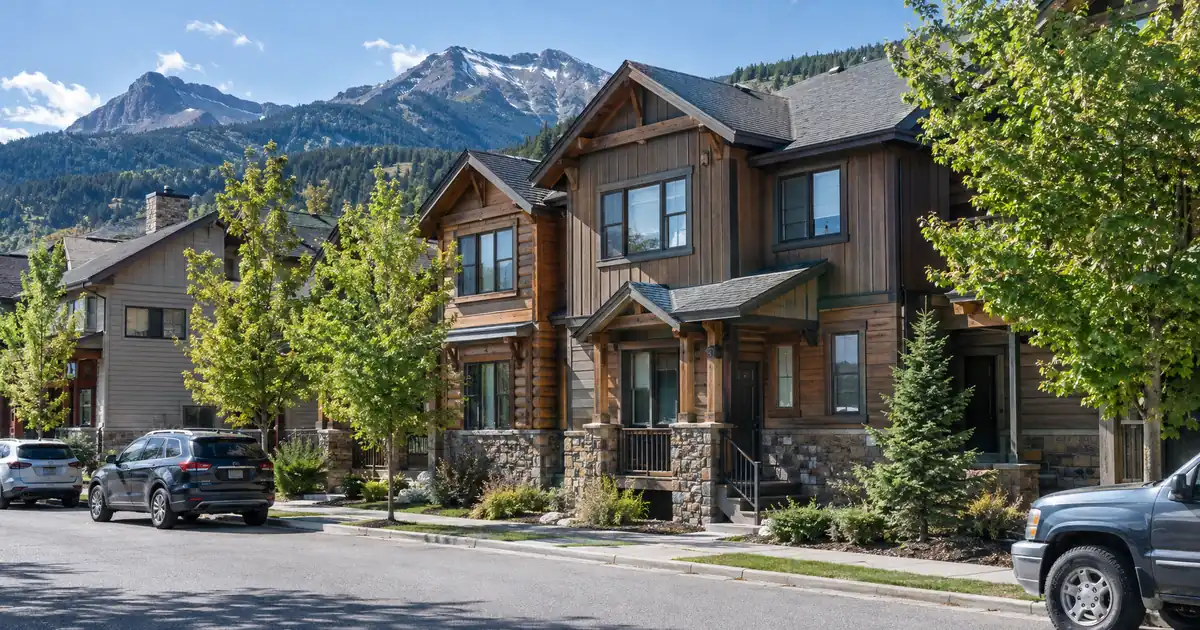
The Quick Read: Yes, a buyer who lives outside Montana can usually finance a Montana second home on assets, because your home state is not a test on either asset-based path. What decides the file is your verified assets, your credit, the property, and whether the lender is licensed where the property sits. Montana is one of the 16 states where Lendmire’s consumer mortgage lending is licensed.
- The asset qualifier path counts your eligible assets against the whole loan. No employment or income is documented.
- The asset depletion path turns assets into monthly qualifying income, which then runs through a debt-to-income test.
- Both paths allow second homes. Only the depletion path allows investment property.
- A second home needs real personal use. A property you plan to rent full time usually belongs in a rental-investor program.
- Everything below is subject to underwriting and is not a commitment to lend.
Does Living Out of State Change Anything?
No. Residency is not part of the program rules. A lender looks at what you own, how long you have held it, your credit history, and the property you want to buy.
The real out-of-state question is practical. Does the lender’s network lend in the state where the house sits? Here the answer is yes, because Montana is on Lendmire’s consumer licensing list. Your home state never enters the program math.
Out-of-state buyers are also a smaller slice of Montana ownership than many people assume. SFGate reports, using Montana Department of Revenue data, that residents hold about 77% of taxable residential real estate when ownership is judged by mailing address. So you are not an oddity to the market.
Two things do change when you live elsewhere. First, your existing home loan and other debts still matter on the depletion path, because the housing payment on the new property is added to them in the debt-to-income test. Second, your assets may sit in several states or institutions. That is fine, as long as each account is documented.
The Two Asset-Based Paths, Side by Side
Across Lendmire’s wholesale network, asset-based mortgages come in two forms. A borrower is qualified on one path at a time, never a blend of the two. Here is how they compare for a second home, subject to underwriting and through select programs.
| Factor | Asset qualifier | Asset depletion |
|---|---|---|
| How assets are used | Must cover the entire loan | Converted to monthly income |
| Income documented | None | Derived from assets |
| Second-home leverage | 80% purchase, 75% refinance | 80% purchase or rate-and-term, 60% cash-out |
| Investment property | Not available | 65% purchase or rate-and-term, 60% cash-out |
| Loan amounts | Up to $4,000,000 | $125,000 to $3,500,000 |
| Credit | 600 minimum score | The lender’s matrix |
| Statements | 60 days seasoning, two months each | One 120+ days old, one within 45 days |
Cash-out proceeds never count as qualifying assets on the depletion path. Whether the qualifier path allows cash-out at all is set by the lender and is not published, so do not plan around it.
The qualifier path suits a buyer whose balances are large enough to cover the whole loan outright. The depletion path suits a buyer who wants a larger loan against a more modest portfolio, or one who wants to add portfolio income on top of documented income.
What Counts as a Montana Second Home?
A second home is a property you use yourself for part of the year. You keep exclusive control of it, and no rental management agreement dictates who occupies it. A cabin near Flathead Lake that you visit in summer and ski season fits. A condo you list for rent most of the year does not.
ValuePenguin draws the same basic line between a second home and an investment property. Lenders treat the two differently on leverage, credit, and reserves.
Some lenders also add a distance overlay between your primary residence and the second home. That is a lender choice, not a federal rule, and it varies across programs. Ask your loan officer which overlay applies before you write an offer.
Be honest about occupancy. Calling a rental a second home to get better terms is misrepresentation, and lenders can check how you actually use the property.
Short-term rental plans deserve a plain conversation. Short-term rental rules can vary by city, county, HOA, and property type, so investors should confirm local rules before relying on projected rental income. If renting is the point of the purchase, the property may fit an investment-property path better than a second-home path.
How Your Assets Get Counted
Only part of some balances counts, and the share depends on the path.
On the asset qualifier path, these shares of the balance count:
- Brokerage accounts, certificates of deposit, money market, and savings: 100%.
- 401(k) and IRA balances: 90% under age 59½ and 100% at 59½ or older.
- Accounts combine, so you can mix them.
On the asset depletion path, the haircuts are steeper:
- Cash accounts and certificates of deposit: 100%.
- Securities: 80%.
- Private stock: 75%.
- Retirement accounts: 70% at any age.
- Real-estate equity: 60%.
Several holdings are not eligible on the depletion path. These include custodial accounts, deferred compensation, escrow accounts, foreign funds, cash on hand, stock options, and non-vested restricted stock units. Funds from non-regulated financial companies are also out.
Cryptocurrency, precious metals, collectibles, and borrowed or pledged funds are not published as eligible on either path. The documented route is to convert them into a seasoned cash balance in a regulated account. The lender then reviews the source.
Seasoning and statements matter as much as balances. These loans skip income documentation, not asset documentation. Every qualifying dollar is traced.
Depletion also has minimums. Qualified assets must be at least the lesser of $1,000,000 or 1.25 times the loan balance. Where asset depletion is your only income source, you also need at least $250,000 in liquid assets. If assets only supplement documented income, up to a 45% debt-to-income ratio, the minimum-assets rule is waived.
A Worked Example for an Out-of-State Buyer
These figures are illustrative. The lender’s own calculation governs.
Picture a retiree who lives in another state and wants a Montana lake cabin. Their documented income is small because they live on a portfolio. They want an $800,000 loan on the qualifier path.
Their eligible assets look like this:
- $330,000 in brokerage accounts, counted at 100%, is $330,000.
- $300,000 in a 401(k) while under 59½, counted at 90%, is $270,000.
- $200,000 in savings, counted at 100%, is $200,000.
That adds up to $800,000 of usable assets. It equals the loan amount, so the file can qualify on assets alone, subject to underwriting, credit, and the property. Each account needs two months of statements and 60 days of seasoning. The 600 minimum score applies.
Now take a second buyer on the depletion path. They hold $1,500,000 in securities and $300,000 in cash.
- Securities count at 80%, which is $1,200,000.
- Cash counts at 100%, which is $300,000.
- Usable assets total $1,500,000.
- Dividing by 60 months gives $25,000 of monthly qualifying income.
That income must then carry the new housing payment and other debts through the debt-to-income test. This is where the Montana property carrying costs and your existing home loan show up.
Does Skipping Income Mean Skipping Underwriting?
No. A lender still has to show it reviewed your ability to repay. The CFPB’s ability-to-repay compliance guide explains that a non-QM lender must consider and verify the factors it relies on. It also says the rule sets no fixed debt-to-income threshold for these loans.
For you, that means the lender builds the file around your assets. Statements, sourcing, credit, and the appraisal all get reviewed. A weak file does not become a strong one because the product is asset-based.
Why FHA, VA, and Montana Housing Programs Rarely Fit
Government-backed loans are built mainly for primary residences. FHA, VA, and USDA loans generally do not cover a vacation home. Montana’s state housing programs target resident first-time buyers.
If you are buying a second home, the realistic lanes are conventional, jumbo, portfolio, and non-QM programs. The asset-based paths are one non-QM option for borrowers whose balances are large and whose documented income is not.
Montana Property Realities
Montana properties raise questions that a suburban condo does not. Acreage, wells, septic systems, seasonal road access, and forested surroundings can all add underwriting and insurance questions. Ask early how the lender handles a rural appraisal. A standard single-family appraisal (Form 1004) works for a one-unit second home. A rented property adds a rent schedule (Form 1007).
Ownership costs also changed for second homes. Montana’s SB 542 and HB 231 lowered residential rates for enrolled primary residences and long-term rentals. NPR covered the shift toward heavier taxation of non-homestead residential property.
Two cautions apply. That rate converts market value into taxable value, and local mill levies set the final bill. The Montana Department of Revenue’s legislative presentation analyzes the effects of both bills.
Why does this matter to a loan? On the depletion path, a higher property tax estimate raises the housing payment in your debt-to-income test. That can reduce the loan size your assets support. On the qualifier path, no income is documented, so there is no debt-to-income test, but a high carrying cost still matters to your own budget. Tax treatment can depend on how the funds are used and how the property is held; borrowers should keep clear records and speak with a qualified tax professional before relying on any deduction.
When This Is Not the Right Fit
This path is wrong in a few situations. Each has a clear alternative.
- You plan to rent the property full time. Rental purchases are business-purpose investor loans, which are reviewed differently from a standard owner-occupied mortgage. DSCR loans are designed for non-owner-occupied investment properties, and Lendmire’s complete DSCR loans guide explains how rent coverage drives that file.
- You document income with deposits. A bank statement program may fit better, because it is reviewed around deposits rather than assets.
- Your wealth sits in unlisted holdings. Crypto, collectibles, foreign funds, and business accounts are not published as eligible. You would need to convert them to seasoned cash first.
- Your credit is below the program floor. The qualifier path starts at a 600 minimum score. The depletion path follows the lender’s matrix, and a first-time investor on that path needs 700.
Honestly, this is a close call for many buyers between asset depletion and simply paying cash. Cash keeps the file simple. Financing keeps your portfolio invested and liquid. The right answer depends on what your assets earn and how much liquidity you want to keep.
Key Terms Defined
Asset qualifier: A loan path where eligible assets, after the credit percentages, must equal or exceed the whole loan, and no income is documented.
Asset depletion: A loan path that divides usable assets by 60 months to create monthly qualifying income.
Seasoning: The time your money must sit in an account before a lender counts it.
Debt-to-income (DTI): Your monthly debts, including the new housing payment, compared with your monthly income.
Second home: A property you use personally for part of the year, with no rental management agreement controlling its occupancy.
Non-QM: A mortgage that does not follow standard agency documentation rules and is underwritten to its own guidelines.
Frequently Asked Questions
Do I need a Montana address or Montana bank account to qualify?
No. Neither path asks where you live or bank. The assets must be documented with statements, and the lender must be licensed where the property sits.
Can I rent the Montana home out part of the year?
Light, occasional rental may be reviewed differently from full-time rental, and lenders set their own limits. If the plan is to rent most of the year, expect an investment-property review instead. Investment property is available only on the asset depletion path, at up to 65% on a purchase or rate-and-term refinance and 60% on a cash-out.
Is my retirement account counted in full?
It depends on the path. On the qualifier path, a 401(k) or IRA counts at 90% under age 59½ and 100% at 59½ or older. On the depletion path, retirement accounts count at 70% at any age.
Does buying with an asset-based loan mean less paperwork?
It means no income paperwork on the qualifier path, not less documentation overall. Statements, sourcing, credit, and the appraisal are all reviewed. Expect more attention to your accounts, not less.
What if my assets are in crypto or held abroad?
Neither is published as eligible. Foreign funds are specifically ineligible on the depletion path. The documented route is to move funds into a seasoned cash balance in a regulated account, with the source reviewed by the lender.
Next Step
If you are qualifying on assets rather than income and want to see how the numbers work, Lendmire can help you compare asset-based mortgage options based on your statements, the property, credit profile, leverage, and your goals. Programs change and every file is underwritten individually. You can also reach the team at 828-256-2183.
Montana’s second-home market now rewards buyers who plan occupancy and carrying costs carefully, so decide how you will use the property before you choose the loan.
Lendmire’s asset-based mortgage in Montana page presents the program for Montana borrowers.
About Lendmire
Lendmire is a mortgage brokerage (NMLS# 2371349) licensed for consumer mortgage lending in 16 states, arranging bank statement and other alternative-documentation mortgages — P&L-only, 1099-only and asset-based paths — through a wholesale lending network. Eligibility is determined by the lender on each file. Scotsman Guide named Lendmire a Top Mortgage Workplace in both 2025 and 2026.
Get Started
Ready to find the right loan for you?
In about 30 seconds you can review financing options available for your home or investment property. No commitment required.
Informational only. Not a Loan Estimate, approval, or commitment to lend. Program availability and eligibility are subject to lender guidelines, credit approval, property review, and underwriting.
References
1. SFGate: Montana second-home tax
2. ValuePenguin: Second homes vs. investment properties
3. CFPB Ability-to-Repay and Qualified Mortgage Small Entity Compliance Guide
4. NPR: Montana taxing out-of-state homeowners
5. Montana Department of Revenue slides, Montana Legislature archive
This article is part of Lendmire’s asset-based mortgage program — full qualification details, guidelines, and scenarios live on the program page.
Related reading: Asset Qualifier vs Asset Depletion for a Snowbird · Is an Asset Qualifier Mortgage Harder to Get Than an Asset Depletion Loan? · Dividend Income vs Asset Depletion for a Second Home Jumbo Loan
Guides: Asset-Based Mortgage in Montana
Brandon Miller
Founder & CEO, Mortgage Loan Originator, Lendmire LLC
- Mortgage Loan Originator · NMLS# 1129696 · Verify on NMLS Consumer Access
- North Carolina Real Estate Broker · License# 343312 · Verify on NCREC
- North Carolina Insurance Producer · License# 19053198 · Property, Casualty, Life, Health · Verify on NAIC SBS
- Lendmire LLC · Firm NMLS# 2371349 · Verify firm licensure
Disclosure information. Lendmire is a state-licensed mortgage brokerage under NMLS# 2371349. Lendmire is not a depository institution, direct lender, or financial advisor — all loans referenced are placed through wholesale lender partners and are subject to each lender's underwriting standards. This article is provided for general informational purposes and is not a commitment to lend, nor does it constitute financial, legal, or tax advice. Loan programs, terms, rates, and qualification standards change without notice and depend on borrower profile, property type, and the state in which the subject property is located. Equal Housing Opportunity provider. NMLS Consumer Access: nmlsconsumeraccess.org.