
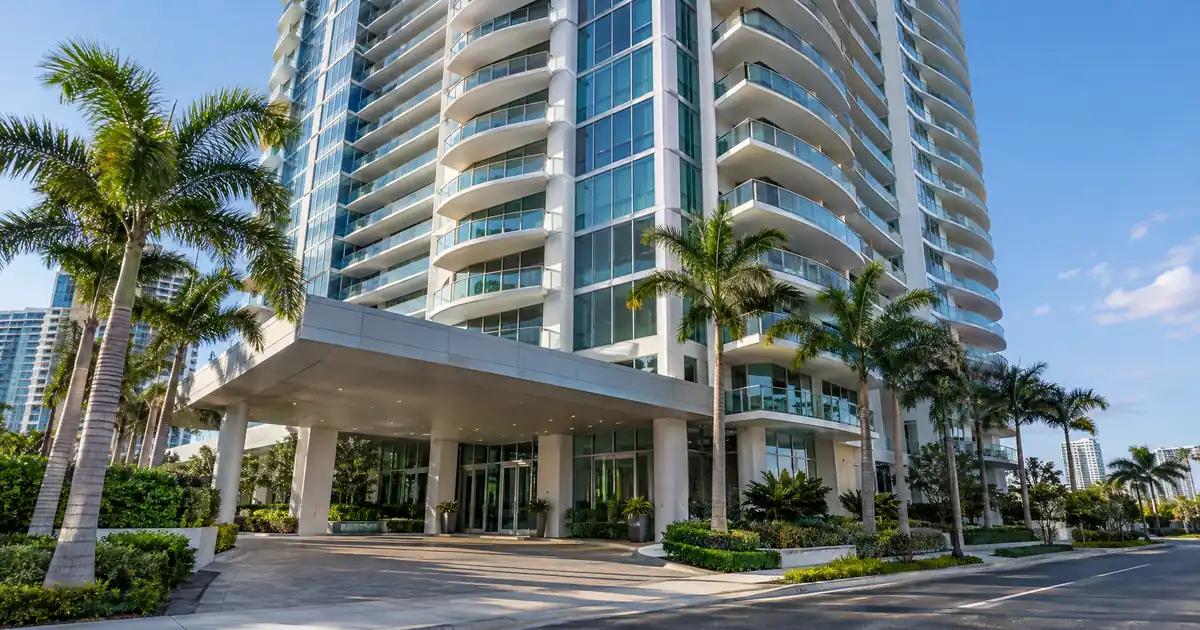
How A P&L Loan Treats Condo And Condotel Eligibility — The Quick Read: A P&L loan doesn’t sort condos by agency rules — it sorts them by what the building itself looks like on paper. Warrantable condos, non-warrantable condos, and condotels each land in a different leverage bracket, typically 85%, 80%, and 75% purchase (65% cash-out) respectively, subject to lender guidelines. The HOA questionnaire and the appraisal, not the borrower’s traditional personal-income documentation, decide which bucket a property falls into.
That’s the short version. The longer version is worth understanding before an investor puts an offer on a beachfront unit or a downtown high-rise, because the classification isn’t cosmetic. It changes the down payment, the reserve requirement, and sometimes whether a lender in the network will touch the file at all. Final terms depend on lender guidelines, property type, leverage, and the borrower’s complete credit picture.
Why Doesn’t A P&L Loan Follow Agency Condo Rules?
Because a P&L loan is a business-purpose, non-agency product. Instead, each lender in Lendmire’s wholesale network sets its own condo and condotel guidelines, and those guidelines get applied file by file.
That distinction matters because most investors’ mental model of “condo financing” comes from agency lending. Fannie Mae maintains a list of conditions that make a project ineligible for agency purchase, and one of the clearest is the hotel exclusion: a project can’t be operated like a hotel, motel, or similar commercial entity, evidenced by things like the HOA being licensed as a hospitality entity or legal documents that restrict an owner’s ability to occupy the unit year-round, per the Fannie Mae Selling Guide. That rule is exactly why condotels exist outside conventional lending — and exactly why P&L and other non-QM programs were built to serve that gap.
DSCR and bank-statement loans are designed for non-owner-occupied investment properties. Because they’re business-purpose loans, they’re reviewed differently from a standard owner-occupied mortgage — property income and building condition carry the file, not a W-2.
Key Terms Defined
Warrantable condo — a condo project that meets standard lending criteria for owner-occupancy, reserves, insurance, and single-entity ownership concentration, making it the easiest classification for a lender to finance.
Non-warrantable condo — a condo project flagged for one or more issues (too many rental units, pending litigation, commercial space, low owner-occupancy), which routes the file to a specialty underwriting track rather than an automatic decline.
Condotel — a unit that looks like a condo but operates like a hotel: short-term rental pooling, daily housekeeping, front-desk check-in, and resort-style amenities.
HOA questionnaire (condo questionnaire) — the form the HOA board or manager completes disclosing reserve funding, delinquency rates, litigation, insurance, and rental/ownership percentages; underwriters use it to classify the project.
P&L loan — a bank-statement or profit-and-loss-based non-QM loan that qualifies a self-employed borrower on business cash flow instead of tax-return income.
How Does A P&L Lender Actually Classify A Condo?
The property classification comes from the appraisal and the HOA questionnaire. It does not come from the borrower’s income file. Underwriters check owner-occupancy percentage, single-entity ownership concentration, litigation status, insurance coverage, and rental activity. These same data points also drive the leverage decision.
Individual condo units are typically appraised on Form 1073, the standard condo appraisal form that includes project-level analysis beyond a normal valuation — owner-occupancy percentage, single-entity concentration limits, pending litigation, and master insurance coverage all get captured there. For 2-4 unit income properties, appraisers use the small residential income property report instead. And for rent estimation on a single-unit investment file, Form 1007 supplies the market rent comparables that feed the DSCR calculation.
The HOA questionnaire is arguably the single most important document in the whole transaction. It tells the lender what percentage of units are owner-occupied, whether any lawsuits are pending, how much is in reserves, and whether the building has a rental pool or hotel-style operation. A slow or incomplete questionnaire is one of the most common friction points on a condo file — get it started with the HOA management company as soon as the property goes under contract.
Warrantable, Non-Warrantable, Or Condotel — What Does Each Get?
Property type sets the leverage ceiling before anything else in the file gets underwritten. Across select lenders in Lendmire’s network, warrantable condos typically run to 85% LTV, non-warrantable condos to 80%, and condotels to 75% on a purchase and 65% on a cash-out (50% on the bank portfolio program) — all subject to lender guidelines and full underwriting.
| Classification | Typical Purchase LTV | Typical Cash-Out LTV |
|---|---|---|
| Warrantable condo | Up to 85% | Lower, per program |
| Non-warrantable condo | Up to 80% | Lower, per program |
| Condotel | Up to 75% | Up to 65% (50% on bank program) |
Two-to-four unit properties typically run to 85% leverage too, whether they’re structured as condo, PUD, or standalone. This sits closer to the warrantable condo ceiling than the condotel one. That’s because the occupancy and rental-pool concerns that drag a condotel down simply don’t apply to a duplex or fourplex.
These figures are ceilings, not promises. A file with a 660 credit score, a first-time investor purchase, or a loan size above roughly $3.5 million on an investment property gets a lower cap and closer review — the leverage ladder steps down as loan size climbs, and every file above $4,000,000 gets reviewed case by case before it’s even submitted. These specifics are subject to lender guidelines and a full review of property, leverage, and credit.
What Makes A Condo “Non-Warrantable” In The First Place?
Non-warrantable status comes from a handful of independent triggers, and lenders in the network don’t treat them all the same way. Some conditions are timing problems that resolve themselves; others are structural red flags that persist.
Common triggers include:
- Too high a percentage of units held as rentals rather than owner-occupied
- Active litigation involving the HOA or developer
- Commercial space taking up too much of the building
- A new-construction project where the developer still controls the HOA
- Excessive delinquency in HOA dues across the project
Not every one of these is treated equally. A presale shortfall — a new project that hasn’t sold enough units yet — is a timing condition, not a collateral problem. Once the project crosses the threshold, the issue disappears on its own. Litigation gets weighed differently depending on what’s being litigated: a minor HOA collection suit against a delinquent owner or a fully-insured slip-and-fall claim is generally not disqualifying, while active litigation over major structural defects or material financial exposure typically is. It’s a common misconception that any lawsuit kills a condo file — it doesn’t. The type of lawsuit is what matters.
Mixed-use buildings — residential over ground-floor retail, for example — are generally accepted as long as residential use is the majority of the building.
Why Do Condotels Get Their Own Track?
Condotels sit outside agency lending because their operating model doesn’t fit a standard residential mortgage. Hotel-style management, rental pooling, and restricted owner occupancy push these properties into a non-QM lane with tighter leverage and larger down payments — but “tighter” doesn’t mean “off the table.”
A condotel unit works less like a home and more like a hospitality asset with an individual owner attached. That’s the main reason condotels commonly fail agency eligibility tests. Mandatory rental pool participation and hotel-style operations don’t fit conventional underwriting. Across the P&L lending world, lenders typically treat condotels as their own property tier. Purchase leverage runs in the mid-70s, cash-out leverage runs in the mid-60s or lower, and reserve requirements lean toward the higher end of the file’s overall bracket. Investment-property reserve minimums on the portfolio program run 3 months up to $500,000, 6 months up to $1,500,000, and 9 months above that, plus 2 months for every additional financed property, up to a 12-month cap. Condotel files often sit at the higher end of that range given the property risk.
Even when a lender’s own program has waived a deeper project review on a given file, the investor still carries the building risk personally. A poorly managed HOA or one facing litigation can produce a special assessment or a decline in property value regardless of what the loan file required.
How Do P&L Lenders Treat Litigation, Delinquency, And Building Age?
Litigation gets a case-by-case read, delinquency gets a threshold check, and older high-rise condos — especially in coastal states — increasingly carry structural documentation that shows up in underwriting whether or not agency rules apply.
Florida shows this shift most clearly. Condominiums three stories or taller must now complete structural integrity reserve studies (SIRS) at least every ten years. Boards can no longer vote to waive reserves for the structural components covered by SIRS, according to Henderson Franklin Starnes & Holt. For a P&L file, this means an underwriter will want to see a Florida condo’s SIRS and milestone-inspection status. This matters as a collateral-risk item, separate from whatever agency eligibility might or might not apply. If the building’s SIRS shows a large deferred-maintenance number or a looming special assessment, expect it to factor into the leverage decision — even on a non-warrantable or condotel file.
On the agency side — mentioned here only for contrast, since it never governs a P&L file directly — two issues most often make a project show up as ineligible in Fannie Mae’s screening tool. These are insufficient master property insurance and unresolved critical repair issues, including failure to meet state or local inspection requirements, according to Fannie Mae’s Condo Status Finder. Those same two issues — inadequate master insurance and deferred structural repairs — also tend to push a P&L lender toward a harder look or a lower leverage cap, agency rulebook or not.
Does A P&L Lender Care How Income Is Verified On A Condotel?
On a P&L file, income documentation and property classification are two separate questions. The property classification decides leverage first. Across the network, bank-statement qualification runs on 12 or 24 consecutive months of statements. Lenders divide eligible deposits by the statement count after applying an expense ratio. That ratio is 20% for a service business with no employees, 40% for one with a handful of staff, and 50% for larger or product-based operations. Lenders may also use a profit-and-loss-based method, capped at 80% of qualifying income. Transfers from the borrower’s own business account into a personal account count in full.
None of that changes because the collateral is a condotel instead of a single-family rental. What changes is the leverage ceiling and the reserve requirement that sit on top of the income calculation — and, on files above the super-jumbo overlay threshold, a 700 credit floor plus 48-month seasoning on any credit event and no non-occupant co-borrowers. Lendmire’s complete DSCR loans guide walks through how property-income qualification works more broadly for investors weighing DSCR against a P&L structure. Terms vary by lender guidelines, property type, leverage, credit profile, and full file review.
Asset-based paths exist too, for borrowers who’d rather not document cash flow at all. The asset allowance divides liquid assets by 36, 60, or 84 months depending on DTI and loan size, while an assets-only path requires liquidity equal to the loan amount plus closing costs with no DTI calculation — though both are limited to primary and second homes at up to 80% LTV, not investment condotels. Exact terms depend on the lender’s guidelines, property type, leverage, and a full review of the borrower’s file.
What Should An Investor Confirm Before Making An Offer?
Get the HOA questionnaire request moving the day the property goes under contract — it’s the single biggest source of closing delay on a condo or condotel file. Beyond that, a few practical checks:
- Ask the HOA directly whether the project has any mandatory rental-pool participation or hotel licensing — that’s what triggers condotel classification, not the marketing name.
- Ask about pending litigation and get specifics, not just a yes/no — structural or financial litigation is a different conversation than a routine collection suit.
- In coastal states, ask for the most recent milestone inspection and SIRS report if the building is three stories or older.
- Confirm the delinquency rate on HOA dues; a high percentage of units past due is a red flag regardless of what triggers a formal threshold.
For reserve documentation specifics on a P&L file, Lendmire’s breakdown of reserve requirements on a CPA, P&L, or 1099 file covers how those months get calculated and sourced. And because condo appraisals sometimes trigger a second opinion of value on higher-leverage files, the second appraisal rule on a P&L loan is worth reading before ordering the report. Every figure here varies by lender and program — guidelines, property type, leverage, and credit profile all apply.
Tax treatment can depend on how loan proceeds are used and how the property is held; investors should keep clear records and speak with a qualified tax professional before relying on any deduction.
Frequently Asked Questions
Does a P&L loan require the condo project to be warrantable?
No. Non-warrantable condos and condotels are eligible for P&L financing through select lenders in the wholesale network, just at lower leverage — typically 80% for non-warrantable and 75% purchase / 65% cash-out for condotels, subject to underwriting.
Can a single pending lawsuit disqualify a condo project?
Not automatically. Routine litigation, like an HOA collection suit against a delinquent owner or a fully-insured slip-and-fall claim, is generally not disqualifying. Litigation involving major structural defects or significant financial exposure to the HOA is far more likely to affect the decision.
How is a condotel different from a regular condo for underwriting purposes?
The distinction is operational, not cosmetic — mandatory rental-pool participation, hotel-style daily rentals, and restrictions on owner occupancy are what define a condotel. A unit that’s simply marketed near a resort but has no rental pool and normal occupancy rights is usually treated as a standard condo.
Does the P&L income documentation change based on property type?
No. Bank-statement or P&L-based income qualification runs the same regardless of whether the collateral is a single-family rental, a warrantable condo, or a condotel. What changes with property type is the leverage ceiling and reserve requirement, not the income method.
Why does building age matter more in coastal states like Florida?
Older high-rise condos in coastal states increasingly carry mandatory structural integrity reserve studies and milestone inspections. A building’s SIRS results and any related special assessment exposure can factor into underwriting even on a non-agency file, separate from whatever agency rules might apply.
Suppose an investor is weighing a condo, non-warrantable condo, or condotel purchase. They may want to see how the property’s classification affects leverage and structure. Lendmire can help compare options based on the property, credit profile, and income documentation path. Reach the team at 828-256-2183 or request a quote to start the review.
For current guidelines and terms, see Lendmire’s super jumbo bank statement loan programs page.
Self-employed borrowers can compare both super jumbo programs on Lendmire’s self-employed mortgages page.
About Lendmire
Lendmire (NMLS# 2371349) is a mortgage brokerage focused on DSCR investor financing, helping arrange programs through wholesale and investor-lending channels in 40 markets, including Washington, D.C. DSCR loans are evaluated by the lender on property cash flow rather than personal income, subject to lender guidelines, supporting LLC closings and accommodating investors with four or more financed properties. Scotsman Guide Top Mortgage Workplace in both 2025 and 2026.
Get Started
Ready to find the right loan for you?
In about 30 seconds you can review financing options available for your home or investment property. No commitment required.
Informational only. Not a Loan Estimate, approval, or commitment to lend. Program availability and eligibility are subject to lender guidelines, credit approval, property review, and underwriting.
References
1. Fannie Mae Selling Guide — Ineligible Projects
2. Henderson Franklin Starnes & Holt — SIRS Explainer
3. Fannie Mae Condo Status Finder
Brandon Miller
Founder & CEO, Mortgage Loan Originator, Lendmire LLC
- Mortgage Loan Originator · NMLS# 1129696 · Verify on NMLS Consumer Access
- North Carolina Real Estate Broker · License# 343312 · Verify on NCREC
- North Carolina Insurance Producer · License# 19053198 · Property, Casualty, Life, Health · Verify on NAIC SBS
- Lendmire LLC · Firm NMLS# 2371349 · Verify firm licensure
Disclosure information. Lendmire is a state-licensed mortgage brokerage under NMLS# 2371349. Lendmire is not a depository institution, direct lender, or financial advisor — all loans referenced are placed through wholesale lender partners and are subject to each lender's underwriting standards. This article is provided for general informational purposes and is not a commitment to lend, nor does it constitute financial, legal, or tax advice. Loan programs, terms, rates, and qualification standards change without notice and depend on borrower profile, property type, and the state in which the subject property is located. Equal Housing Opportunity provider. NMLS Consumer Access: nmlsconsumeraccess.org.


