
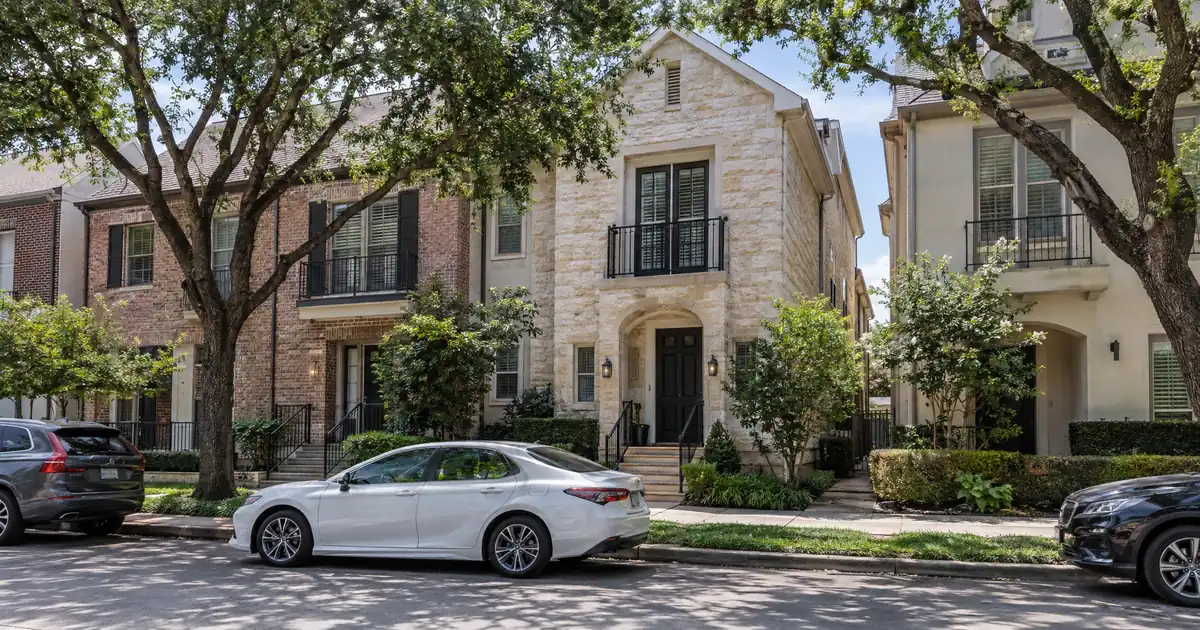
The Quick Read: A Texas bank statement HELOC can sit on a primary residence, a second home, or a rental, but the rules differ sharply by occupancy: a primary residence is a constitutional homestead capped at 80% combined loan-to-value, while second homes and investment properties are ordinary non-homestead loans that follow the lender’s program tables. Bank statements prove how you earn. They never change what the property is.
- Primary residence: eligible, but it carries the full Texas homestead rules, including the 80% cap.
- Second home: eligible as a non-homestead loan, with a 640 minimum score on this network.
- Rental: eligible as a non-homestead loan, with a 700 minimum score and a 70% CLTV ceiling on this network.
- Property type: single-family, 2-4 units, townhomes, PUDs, and condos (including non-warrantable) are eligible. Manufactured homes, co-ops, condotels, and log homes are not offered.
- Title: an individual or a revocable living trust only, never an LLC.
All figures here are typical guidance from select wholesale lenders, subject to lender guidelines and full file review.
How large a line the equity supports in Texas.
An equity line is sized by combined loan-to-value, occupancy, and credit — not by rental coverage. Switch the occupancy or the credit band and the ceiling moves with it.
Investment-property lines require a 700 minimum credit score; second-home lines start at a 640 minimum and primary-residence lines at 600, and the combined-LTV ceiling steps down as the credit band drops on primary-residence and second-home lines and holds on investment-property lines; the line cap steps down on primary-residence lines and holds at every tier on investment-property and second-home lines.
A debt-to-income ratio above 45% requires 680+ credit. Profiles under 640 are limited to single-family homes. At least 75% of the approved line is drawn at closing. Ceilings, floors, and caps update from Lendmire’s centralized guideline source.
Line estimate
Illustrative estimate only — not a quote, Loan Estimate, approval, or commitment to lend. The rate is an editable assumption; equity-line pricing is variable through both the draw and repayment periods and never converts to fixed. Occupancy and credit drive the ceiling together: an investment property tops out at 70% combined LTV (minimum credit 700, line cap $500,000); a second home tops out at 90% combined LTV (minimum credit 640, line cap $500,000), with the ceiling stepping down as the credit band drops (the cap holds at every tier); a primary residence tops out at 80% combined LTV (minimum credit 600), and its $750,000 maximum line is available only at 75% combined LTV or below with a 700-or-better credit profile (720 on the longer-runway program) and a full appraisal. Lines above $500,000 require a full appraisal. Credit, debt-to-income, property type, and full underwriting review all affect the final line.
The Two Tests Every File Runs
A bank statement HELOC runs an income test and a property test, and they work independently. The income test asks whether your deposits support the payment. The property test asks whether the collateral is eligible, how much leverage it allows, and who holds title. Strong deposits can’t rescue an ineligible property.
Here is the income side in plain terms. The borrower supplies 12 to 24 months of personal or business statements. The underwriter screens the deposits and removes transfers, loan proceeds, and one-off lumps. On business accounts, the lender usually applies an expense factor that it sets itself. That is a lender choice, not a federal rule. The file then is reviewed on documented income under the applicable program, subject to lender guidelines.
Why do self-employed investors take this route? Scotsman Guide’s non-QM coverage describes the audience as freelancers, entrepreneurs, and investors who lack conventional W-2 paperwork. Traditional personal-income documentation often shows income after heavy write-offs, which shrinks what a conventional underwriter will count.
The property side is where Texas gets interesting. Occupancy decides which legal regime attaches, and that choice drives everything else.
Does Occupancy Decide Everything in Texas?
Almost. Occupancy sorts the property into one of two legal regimes. A primary residence is a Texas homestead, and the state constitution governs equity lending against it. A second home or rental is a non-homestead property, and the lender’s program sets the terms.
The Texas Real Estate Research Center at Texas A&M explains that Article XVI, Section 50 of the Texas Constitution covers equity loans on the homestead. It states that these loans may not be taken out on a secondary residence or on a rental or investment property. That wording is the source of a common myth, so it helps to be exact about it. Texas does not ban equity lines on rentals. The homestead framework simply isn’t the vehicle for them.
| Occupancy | Texas homestead rules? | Ceiling on this network |
|---|---|---|
| Primary residence | Yes, in full | 80% CLTV in Texas |
| Second home | No, non-homestead | Up to 80% CLTV at 720+; lower below |
| Investment property | No, non-homestead | 70% CLTV, 700 minimum score |
Notice what the table says about leverage. On a Texas primary residence, the 80% combined cap sits on top of any program tier. A tier that would otherwise run higher never applies. On the network Lendmire works with, the 80% second-home ceiling exists only at a 720 or better credit profile. Scores of 700, 680, 660, and 640 step down to lower ceilings. Investment lines never go above 70%.
Many sources quote higher CLTV figures for equity lines. Those describe the broader market, not the network Lendmire places files with, so use the table above for planning.
What the Homestead Path Adds
A homestead file takes on four extra constraints. These bind primary residences only, and none of them follow you to a rental.
1. The 80% combined cap. The new line plus all other debt secured by the home can’t exceed 80% of fair market value, so the owner keeps at least 20% equity, per the Texas A&M research center.
2. A 12-day waiting period. The constitutional text, mirrored on Justia, bars closing before the 12th day after the lender gives the owner the required written notice.
3. One lien of this type at a time. A homestead can’t hold a HELOC and a cash-out lien together. Lendmire’s piece Can a Texas Homestead Hold a Bank Statement HELOC and a Cash-Out Lien? walks through that conflict.
4. 12-month seasoning. Homestead files carry a seasoning requirement that rental files don’t.
The collateral also can’t extend beyond the homestead. Texas homestead protection itself comes from the same constitutional section. A Texas Attorney General opinion places that protection principally in Article XVI, Section 50, and quotes subsection (c): no lien on a homestead is valid unless it secures a debt the section describes. In practice, a homestead line is the most regulated asset in a Texas investor’s portfolio.
Which Property Types Qualify?
Single-family homes, 2-4 unit properties, townhomes, PUDs, and condominiums (including non-warrantable condos) are eligible across the network. Property type matters separately from occupancy.
| Property type | Verdict | Note |
|---|---|---|
| Single-family | Yes | The cleanest file |
| 2-4 units | Yes | One wholesale program sets a 640 minimum score |
| Townhome / PUD | Yes | Standard review |
| Condo, warrantable | Yes | Project review applies |
| Condo, non-warrantable | Yes | Project review still applies |
| Modular factory-built | Depends | Only one of the two wholesale programs accepts it |
| Manufactured home | Not offered | Single- and double-wide alike |
| Co-op, condotel, log home | Not offered | Outside the programs |
| Commercial, mixed-use, agricultural | Not offered | Zoning disqualifies |
Barndominiums fall outside these programs too. The network does not accept that property type, so don’t plan around it.
Condos deserve a note. Eligibility is not automatic, because the project gets its own review, but a non-warrantable label doesn’t end the conversation the way it does with many conventional lenders. Lendmire’s piece on a bank statement HELOC on a condo covers that review.
Title and Ownership: Where Rentals Stall
Title must be held by the individual borrower or an inter vivos revocable living trust, either fee simple or leasehold. LLCs, corporations, partnerships, and irrevocable, blind, or land trusts cannot hold title. This is the sharpest structural gap between a HELOC and a DSCR loan.
Texas law doesn’t forbid an LLC-owned rental from borrowing. The limit comes from how these lines are built. They are personal-credit loans. A rental already deeded to an LLC therefore needs one of two fixes: a vesting change back to the individual or a trust, or a different product. The usual different product is a DSCR cash-out refinance, subject to lender program eligibility.
The irony is worth noticing. The homestead concept excludes entities entirely. As a Texas attorney’s overview explains, homestead protection is available only to natural persons, and corporations, limited partnerships, and LLCs don’t qualify. So an LLC can never hold a homestead, and it can’t hold title on this kind of line either. The two facts are separate, but they point the same direction.
Title companies often want more than the deed. Even on a rental, they commonly ask for statements that the property is neither homestead nor community property.
Texas Property Flags That Knock Files Out
Four property-level flags matter in Texas, and each one is binary.
- Acreage. Texas properties are limited to 10 acres. A 12-acre place with a home on it fails on size alone.
- Listing status. A property listed for sale, or listed within the past 60 days, is ineligible. Taking a listing down doesn’t reset the clock.
- Lien position on a homestead. A standalone line can sit in first or second position, but the one-lien rule still applies to a Texas primary.
- Zoning. Agricultural zoning is not offered, even where the structure looks residential.
These are the flags that quietly stall a file after the borrower assumed the deposits did the heavy lifting. Check them before ordering anything.
Gray Zones: Moved Out, House-Hacking, Second Homes
The borderline cases come down to one question: is this property your homestead today, or was it one in the past?
You just moved out. A property that carried a homestead equity lien may stay under homestead-law treatment for payoff and refinance. Treat this as practitioner guidance rather than settled law. Confirm with title counsel before you apply.
You live in one unit of a duplex. The owner-occupied property is your primary residence, so the homestead regime attaches. A 2-4 unit home is an eligible property type, but the 80% cap, the 12-day period, and the one-lien rule come with it.
You own a second home. It is a non-homestead transaction. Texas second homes avoid the homestead rules, and leverage is set by credit score, with the highest ceilings reserved for borrowers at the top of the score range. Below that, leverage steps down by score.
You rent it short term. Short-term rental rules can vary by city, county, HOA, and property type, so investors should confirm local rules before relying on projected rental income.
Four Scenarios, Walked Through
Picture an investor who owns a Texas condo as a rental and holds title personally. The property is a non-homestead rental, and a condo is an eligible type. Leverage tops out at 70% CLTV with a 700 minimum score. The project review is the main variable, and the line can’t exceed $500,000.
Say a contractor lives in a duplex and wants equity for a down payment on a rental. The duplex is a homestead, so the 80% combined cap and one-lien rule apply. If the cash-out lien already exists, the HELOC question is moot until that lien changes. The honest answer may be to pull equity from a different property.
Consider an investor whose rental sits in a single-member LLC. The property type is fine, but title isn’t. Two paths exist: re-vest in the individual or a trust, then apply, or skip the HELOC and use a DSCR cash-out. A DSCR cash-out on a standard rental generally tops out around 75% LTV across most of the network.
Run the case of a rural Texas home on 14 acres. The documented income may be excellent, but the acreage limit kills the file. No amount of deposit strength fixes it.
When the Property Doesn’t Qualify
Pick the next product by the failing test. If the property fails on title or type, a DSCR cash-out may fit. If the income fails, other alternative-documentation programs exist.
DSCR compares monthly rent to the full monthly housing obligation, including principal, interest, taxes, insurance, and any HOA dues. For rentals, 1.00 is where many select programs start, and a separate select-lender path goes below 1.00 with leverage and terms adjusted. Clearing 1.00 isn’t the same as positive cash flow. Repairs, vacancy, management, and utilities sit outside the calculation.
| Situation | Better fit | Why |
|---|---|---|
| Strong deposits, thin rent | Bank statement HELOC | Tests the borrower’s income |
| Strong rent, messy income | DSCR cash-out | Tests the property’s rent |
| Rental titled in an LLC | DSCR cash-out | HELOC title rules exclude entities |
| Texas homestead with a lien | A different property | One-lien rule blocks a second |
For the full framework behind these loans, see the complete DSCR loans guide.
Key Terms Defined
Homestead: the Texas property a natural person lives in, which the state constitution protects and restricts for equity lending.
CLTV: combined loan-to-value, meaning every loan secured by the property divided by its value.
Non-homestead: any Texas property that isn’t the borrower’s primary residence, such as a rental or second home.
Vesting: how title is held, whether by an individual, a trust, or an entity.
Non-warrantable condo: a condo project that fails standard conventional project rules but may still qualify under select programs.
Frequently Asked Questions
Can I use a bank statement HELOC on a Texas rental property?
Yes, as a non-homestead transaction. The Texas homestead rules don’t attach to rentals. On this network the line carries a 700 minimum score, a 70% CLTV ceiling, and a $500,000 maximum, with a 5-year draw and 25-year repayment structure only.
Does Texas’ 80% cap apply to my rental?
No. The cap applies to the homestead, meaning your primary residence. A rental follows the lender’s program tables, which on this network is 70% CLTV for an investment property.
Can an LLC borrow on a bank statement HELOC?
No, not on these programs. Title must be an individual or a revocable living trust. An LLC-owned rental needs a vesting change or a DSCR cash-out instead, subject to lender program eligibility.
What property types are ineligible?
Manufactured homes, co-ops, condotels, log homes, commercial, mixed-use, and agricultural-zoned properties are not offered. Barndominiums fall outside these programs too. Some condos are eligible, including non-warrantable ones.
Do bank statements change which properties qualify?
No. They change how income is proven, not the property test. Occupancy, type, title, acreage, and listing status all apply the same way regardless of documentation.
Lendmire places these lines in 16 states, Texas included, as a broker working with select wholesale lenders. If you are considering a home equity line and want to see how the numbers work, Lendmire can help you compare HELOC options based on the property, the equity available, credit profile, combined leverage, and your goals. Tax treatment can depend on how the funds are used and how the property is held; investors should keep clear records and speak with a qualified tax professional before relying on any deduction.
About Lendmire
Lendmire (NMLS# 2371349) is a mortgage brokerage serving homeowners and real estate investors in its 16 full-service states. Home equity lines of credit are arranged through wholesale lending channels; Lendmire brokers the line and the lender underwrites each application under its occupancy-based guidelines. Scotsman Guide named Lendmire a Top Mortgage Workplace in both 2025 and 2026.
Get Started
Ready to find the right loan for you?
In about 30 seconds you can review financing options available for your home or investment property. No commitment required.
Informational only. Not a Loan Estimate, approval, or commitment to lend. Program availability and eligibility are subject to lender guidelines, credit approval, property review, and underwriting.
References
2. Texas Real Estate Research Center, Texas A&M
3. Texas Constitution Art. XVI §50
4. Texas Attorney General Opinion GA-0279
This article is part of Lendmire’s bank statement HELOC program — full qualification details, guidelines, and scenarios live on the program page.
Related reading: Can a Founder Use a Super Jumbo Bank Statement Cash-Out to Invest? · Bank Statement HELOC for a 2-4 Unit Home and Your Low First Mortgage · How to Time a Super Jumbo Cash-Out as a Loan-Out Company Entertainer
Guides: Bank Statement HELOC in Texas
Brandon Miller
Founder & CEO, Mortgage Loan Originator, Lendmire LLC
- Mortgage Loan Originator · NMLS# 1129696 · Verify on NMLS Consumer Access
- North Carolina Real Estate Broker · License# 343312 · Verify on NCREC
- North Carolina Insurance Producer · License# 19053198 · Property, Casualty, Life, Health · Verify on NAIC SBS
- Lendmire LLC · Firm NMLS# 2371349 · Verify firm licensure
Disclosures. The information presented in this article is general market commentary, not financial, legal, or tax advice. Lendmire is a mortgage brokerage (NMLS# 2371349) — not a direct lender or depository institution — and loan placement is subject to lender underwriting. Nothing in this content represents a commitment to lend. Loan terms, pricing, and program availability vary based on borrower qualifications, property characteristics, and state of subject property, and are subject to change at any time. Lendmire complies with Equal Housing Opportunity requirements. Consumer access: nmlsconsumeraccess.org.