
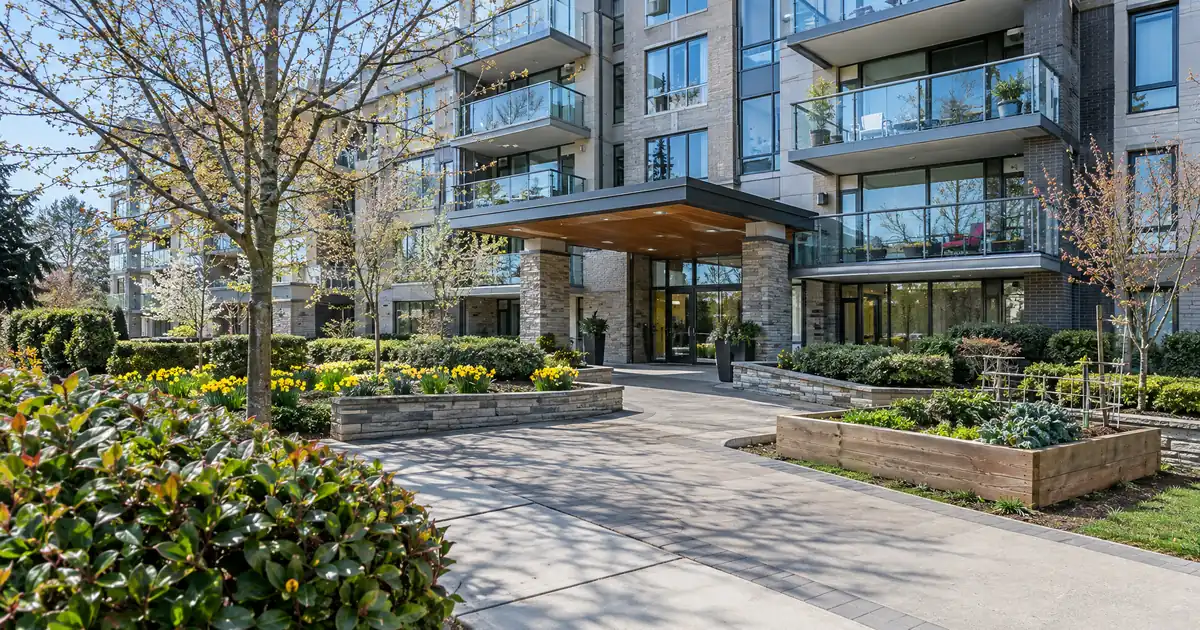
The Quick Read: A 1099-only condo loan is approved at two separate gates: your documented income and the condo project itself. A self-employed borrower is reviewed on documented income under the applicable program, subject to lender guidelines, and the building must also pass the lender’s project review. Failing either gate stops the file, even when the other is strong.
- Income is usually built from 12 months of bank statements, with lender-specific expense factors applied to deposits.
- Primary-residence purchase and rate-term leverage can reach 90% LTV on select programs. Owner-occupied cash-out tops out near 80% LTV.
- Investment-property cash-out generally tops out around 75% LTV.
- The condo project (reserves, litigation, investor concentration, rental rules) can cap leverage or end the file.
- Loan sizes typically run from $125,000 to $3,500,000, with reserves commonly near six months of the housing payment.
Self-employed buyers hit a familiar wall. Traditional personal-income documentation shows heavy deductions, so net income looks thin, even when real cash flow is strong. Condos add a second wall, because the lender is also judging the building. This guide walks through how both gates work, step by step, so you can fix problems before you make an offer.
What your deposits qualify you for.
Alt-doc programs read 12 months of business or personal bank deposits instead of tax returns. Enter your average monthly deposits and see the income a lender would credit you.
The expense factor is set by the lender from your business type and profit-and-loss statement; it is not a number you choose. This widget quotes no rate and no payment.
Program parameters shown update from Lendmire’s centralized guideline source.
Estimate
Illustrative estimate only — not a quote, Loan Estimate, approval, or commitment to lend. Deposit average, expense factor, and housing ratio are editable assumptions; the expense factor a lender applies is set from your business type and documentation. No interest rate or monthly payment is quoted here. Purchase capacity is a simplified illustration and does not account for taxes, insurance, HOA dues, or other debts. Alt-doc income documentation is available on consumer mortgages in the states where Lendmire is licensed for consumer lending; actual terms vary by lender, borrower, and property.
What Is a 1099-Only Loan?
A 1099-only loan is an alternative-documentation mortgage for borrowers paid as contractors. “1099 loan” is an industry nickname, not a formal loan category. In practice it means the file is reviewed on documented income under the applicable program, subject to lender guidelines, instead of on W-2s and net tax-return income.
The 1099 itself is the form businesses use to report nonemployee compensation, per the IRS guidance on Form 1099-NEC. Tax-prep sources report that the reporting threshold is changing, so small clients may never issue you a form. That matters later when your paper trail has gaps.
Across Lendmire’s wholesale network, most programs that serve these borrowers lean on bank statements as the core proof. Twelve months of business or personal statements are the typical documentation basis. The lender averages your deposits, applies an expense factor, and arrives at qualifying income. Expense factors differ by lender, so no one formula applies everywhere.
How It Differs From Other Options
| Factor | 1099 / Bank-Statement Loan | DSCR Loan | Full-Doc Loan |
|---|---|---|---|
| Reviewed on | Documented borrower income | Property rent vs. payment | W-2s and net tax income |
| Best fit | Self-employed, owner-occupied | Pure investment rentals | Steady W-2 earners |
| Debt-to-income | Reviewed | Not the basis | Reviewed |
| Condo review | Yes | Yes | Yes |
If the condo is a pure rental, the complete DSCR loans guide explains the property-income path. DSCR qualifies primarily on property-level rental income covering the payment, subject to lender guidelines, and keeps your personal income out of the file. A 1099-only program fits when you plan to live in the condo, or when you want your personal income to carry the file.
Which Rules Apply: Occupancy Decides Everything
Occupancy decides the paperwork regime. A condo you will live in, as a primary residence or second home, is a consumer mortgage. TRID disclosures apply, and the lender must reasonably confirm you can repay. The CFPB’s ability-to-repay compliance guide lists the factors a lender weighs, including income or assets, other debts, and mortgage-related obligations such as HOA fees.
A bank-statement loan on a non-owner-occupied rental, including a short-term rental, is business-purpose and exempt from TRID. Know which one applies to your condo before you shop. The two are not interchangeable.
Here is what that means in practice. “Non-QM” never meant “no documentation.” The documents are different, but the lender still has to be satisfied you can carry the loan.
Gate One: How Underwriting Treats Your Income
Underwriting converts 12 months of deposits into a monthly qualifying income, then compares that to your housing costs and debts. The steps run in a predictable order.
1. Collect statements. Twelve months of business or personal accounts, consistently titled to you or your business.
2. Average deposits. The lender totals eligible deposits and divides by the months reviewed. Transfers between your own accounts and one-time windfalls are generally stripped out.
3. Apply the expense factor. A fixed or accountant-prepared ratio reduces gross deposits to usable income. On owner-occupied cash-out, a fixed ratio is common, and an accountant-prepared ratio can earn a better treatment.
4. Add the full housing obligation. Principal, interest, taxes, insurance and HOA dues all count. On a condo, dues are a real line item, not a footnote.
5. Check credit and reserves. Reserves commonly run around six months of the housing payment.
An Illustrative Walk-Through
Picture a self-employed contractor buying a primary-residence condo. Her statements show steady deposits all year, and a few large transfers from her own savings account. Underwriting removes the transfers, averages the rest, and applies the expense factor. Her HOA dues then sit inside the housing obligation next to taxes and insurance. If the resulting debt-to-income ratio fits the program, the income gate is cleared. If her dues are unusually high, the ratio tightens, and the answer may be a lower price, more down, or a different building.
Alternative: Asset Depletion
Some borrowers with large liquid balances and uneven income qualify through asset depletion instead. On a primary residence this path can reach about 80% LTV. It suits retirees, or business owners who park cash rather than draw it. Final terms depend on the lender’s guidelines, the property type, and the borrower’s complete credit picture.
Gate Two: The Condo Project Review
The condo gate evaluates the whole building, not only your unit. Most lenders ask the HOA to complete a project questionnaire. It covers reserves, owner-occupancy mix, single-entity ownership concentration, pending litigation, insurance, commercial space and rental policy.
Fannie Mae’s appraiser and underwriting resources name the individual condominium appraisal form (Form 1073) used for unit valuation. Agencies also use a “warrantable” label to describe projects that meet their rules. Your loan is not an agency loan, so each lender in the network sets its own condo guidelines. A building that fails agency rules is called non-warrantable, and that is a financing category, not a verdict on the building.
| Project Risk Factor | Why a Lender Cares | What You Can Do |
|---|---|---|
| Thin HOA reserves | Repairs may trigger assessments | Request the budget early |
| Pending litigation | Can threaten values and insurance | Ask if any suit exists before offering |
| High investor ownership | Weakens owner-occupant base | Check the owner mix |
| Commercial space | Raises project risk | Review building use |
| Short-term rental activity | Changes the risk profile | Read the HOA rental rules |
| Condotel status | Treated as its own restricted tier | Confirm status up front |
Not All Non-Warrantable Problems Are Equal
Some issues only block certain lenders. Others, such as active litigation or serious building safety findings, can stop nearly every program. Select lenders in the network will review non-warrantable condos with tighter leverage, so the price of a weak project usually shows up as lower maximum LTV rather than a different income calculation.
Be accurate on the questionnaire. Lenders rely on it as submitted, and false disclosures create serious problems.
Where the General Rule Breaks
The two-gate model is clean until it isn’t. Five edge cases deserve attention.
Investment condos and personal income. Leverage on an investment purchase using bank-statement documentation varies by lender, so treat any figure you hear as a starting point for conversation. Investment-property cash-out tops out around 75% LTV. For a rental, investors often find that the DSCR side carries the clearer leverage guidance.
Rental-restricted buildings. When the HOA limits leasing, rent becomes uncertain, and a DSCR file gets harder to underwrite. A personal-income path can be cleaner in that case, because it does not depend on the unit’s rent.
Short-term rental condos. Short-term rental rules can vary by city, county, HOA, and property type, so investors should confirm local rules before relying on projected rental income. Many condo associations prohibit them outright. Read the governing documents before you structure a file around nightly income.
Condotels. These are a separate, more restricted category than ordinary non-warrantable condos. Many programs exclude them altogether, so confirm status early.
Mixed-income borrowers. If you have both 1099 income and rental property, you may be able to choose between a personal-income path and DSCR. Use whichever supports the deal better. Lendmire’s piece How to Qualify on Commission Income With a 1099-Only Loan covers how variable earnings are treated.
What Trips Files Up
Experience across many files shows the same failure points repeating.
- Deposits that don’t match 1099s. Large unexplained deposits invite questions. Keep business and personal funds separate.
- Thin history. Programs typically want an established self-employment record.
- Commingled accounts. Mixed personal and business activity makes averaging unreliable.
- A weak building. A condo with litigation or thin reserves can be declined for reasons that have nothing to do with you. The fix is usually a different project, not a different borrower.
- Ignored HOA dues. Dues and special assessments raise the housing obligation, which tightens debt-to-income.
Because small payments may not generate a 1099 at all, borrowers with many small clients should expect statements to carry more of the weight. Mid-year, year-to-date evidence usually fills the gap.
The Investor Decision in Practice
Order matters. Screen the building before you spend money on an appraisal.
1. Choose the path. Living in it? Bank-statement or asset-depletion. Renting it? Compare DSCR against personal income.
2. Ask the HOA early. Request the questionnaire, budget, insurance certificate and meeting minutes before making an offer.
3. Run your income. Average your own deposits first, so you know your approximate qualifying range.
4. Match leverage to the file. Stronger credit and cleaner projects earn the top of the leverage range. Weaker ones get less.
5. Plan reserves. Roughly six months of the housing payment is common.
If you want a rental condo and your traditional personal-income documentation shows heavy write-offs, DSCR frequently avoids the income argument entirely. If you plan to occupy the unit, a bank-statement program is the more natural fit. Where a program offers coverage below 1.00 on a rental, select lenders in the network may allow it, but LTV and terms adjust. For an existing condo, Lendmire’s guide to 1099-only condo loans goes deeper on file structure.
Extended 40-year and interest-only terms belong to the DSCR side.
Key Terms Defined
1099-NEC: The IRS form a business files to report payments to a contractor who is not an employee.
Bank-statement loan: A mortgage that is reviewed on documented income drawn from 12 months of deposits.
Expense factor: The percentage a lender subtracts from gross deposits to estimate usable income.
Warrantable condo: A project that meets agency standards for reserves, ownership mix and litigation.
Non-warrantable condo: A project that falls outside those standards but may still be financed by lenders.
Condo questionnaire: The form the HOA completes so the lender can review the whole project.
Asset depletion: A method that turns liquid assets into qualifying monthly income.
As a mortgage broker, Lendmire arranges financing through select lenders in its wholesale network. Consumer mortgage licensing for this lane covers 16 states, and every file is underwritten individually, subject to lender guidelines. This is not a commitment to lend.
This article is general education, not legal or tax advice. Tax treatment varies, so consult a qualified professional such as an attorney or CPA about your own situation.
Frequently Asked Questions
Can I use a 1099-only loan to buy an investment condo?
Sometimes. Leverage for an investment purchase on bank-statement documentation varies by lender, and investment-property cash-out generally tops out around 75% LTV. Many investors compare it against DSCR, which qualifies primarily on property-level rental income covering the payment, subject to lender guidelines.
Does the condo have to be warrantable?
No. Select lenders in the network review non-warrantable condos, though leverage is typically tighter. Active litigation or building safety problems can still stop a file, and condotels are a separate restricted tier.
What documents do most programs ask for?
Twelve months of business or personal bank statements are the usual core. Many lenders also ask for proof of self-employment, 1099 forms, a credit report and a completed HOA questionnaire. Each lender sets its own list.
How much leverage is possible on a primary-residence condo?
Purchase and rate-term loans on a primary residence can reach up to 90% LTV through select lenders, with stronger files earning the top of the range. Owner-occupied cash-out is lower, up to 80% LTV, depending on loan size and credit.
Why was my condo declined when my income was fine?
The project gate is separate. Thin reserves, litigation, investor concentration or rental rules can fail a building regardless of your income. The usual fix is switching to a different project.
For current guidelines and terms, see Lendmire’s DSCR loan programs page.
About Lendmire
Lendmire — NMLS# 2371349 — is a DSCR and non-QM mortgage brokerage with investor loan programs in 41 markets, including Washington, D.C. DSCR eligibility is commonly reviewed by the lender around property-level rent rather than personal income documentation, subject to lender guidelines, and the brokerage helps arrange financing for LLC-owned portfolios beyond conventional financed-property limits. Recognized by Scotsman Guide as a Top Mortgage Workplace in 2025 and 2026.
Get Started
Ready to find the right loan for you?
In about 30 seconds you can review financing options available for your home or investment property. No commitment required.
Informational only. Not a Loan Estimate, approval, or commitment to lend. Program availability and eligibility are subject to lender guidelines, credit approval, property review, and underwriting.
References
1. IRS: Reporting Nonemployee Compensation on Form 1099-NEC
2. CFPB ATR/QM Small Entity Compliance Guide
This article is part of Lendmire’s self-employed mortgage guides — full qualification details, guidelines, and scenarios live on the program page.
Related reading: Can You Qualify With Business Bank Statements Only? · Can You Get a Bank Statement Loan With Only 12 Months of Statements? · How to Qualify for a Bank Statement Loan on Assets After Retiring
Brandon Miller
Founder & CEO, Mortgage Loan Originator, Lendmire LLC
- Mortgage Loan Originator · NMLS# 1129696 · Verify on NMLS Consumer Access
- North Carolina Real Estate Broker · License# 343312 · Verify on NCREC
- North Carolina Insurance Producer · License# 19053198 · Property, Casualty, Life, Health · Verify on NAIC SBS
- Lendmire LLC · Firm NMLS# 2371349 · Verify firm licensure
Important disclosures. Lendmire (NMLS# 2371349) is a licensed mortgage brokerage. Lendmire is not a direct lender, depository institution, or financial advisor. All loan inquiries are subject to lender underwriting; this article does not constitute a commitment to lend. Rates, terms, and program guidelines are subject to change without notice and vary by borrower profile, property type, and state. Information in this article is general in nature and is not financial, legal, or tax advice. Equal Housing Opportunity. NMLS Consumer Access: nmlsconsumeraccess.org.