
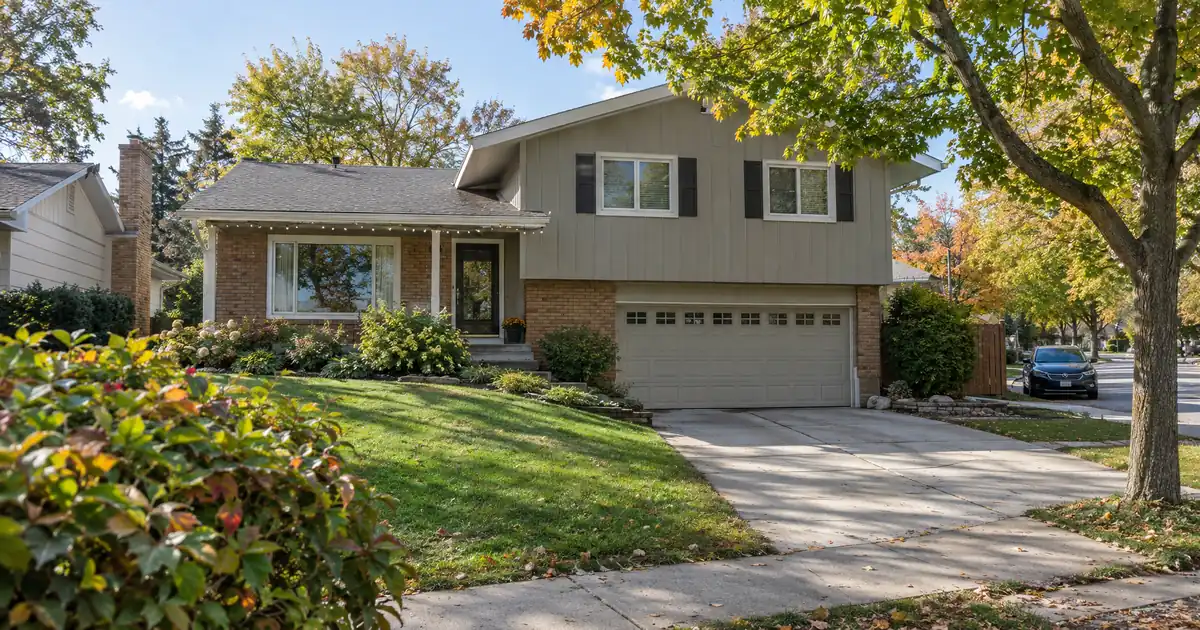
The Quick Read: Living in another state changes the logistics of your loan, not the income test. The lender reads twelve months of your deposits, screens out money that is not earned income, applies an expense factor, and checks credit, reserves, and the property. The file is reviewed on documented income under the applicable program, subject to lender guidelines.
- Your home state does not change how deposits become qualifying income. Your property’s state decides which lenders can make the loan.
- Business deposits take an expense factor. A CPA-prepared expense statement or profit-and-loss (P&L) statement can improve it.
- Occupancy sets the rules. A rental you will not live in is a business-purpose loan, and leverage is tighter than on a primary residence.
- Clean statements win files. Transfers, loan proceeds, and unexplained lump sums are what slow them down.
What a 12-Month Bank Statement Loan Actually Is
A 12-month bank statement loan is a non-QM mortgage that is reviewed against deposits instead of your traditional personal-income documentation. Non-QM means the loan sits outside the standard rules for conventional mortgages, so lenders set their own documentation methods.
What your deposits qualify you for.
Alt-doc programs read 12 months of business or personal bank deposits instead of tax returns. Enter your average monthly deposits and see the income a lender would credit you.
The expense factor is set by the lender from your business type and profit-and-loss statement; it is not a number you choose. This widget quotes no rate and no payment.
Program parameters shown update from Lendmire’s centralized guideline source.
Estimate
Illustrative estimate only — not a quote, Loan Estimate, approval, or commitment to lend. Deposit average, expense factor, and housing ratio are editable assumptions; the expense factor a lender applies is set from your business type and documentation. No interest rate or monthly payment is quoted here. Purchase capacity is a simplified illustration and does not account for taxes, insurance, HOA dues, or other debts. Alt-doc income documentation is available on consumer mortgages in the states where Lendmire is licensed for consumer lending; actual terms vary by lender, borrower, and property.
It exists because traditional personal-income documentation punishes the self-employed. Write-offs shrink the income on paper while cash flow stays strong. Trade press describes the product the same way. Scotsman Guide explains that a self-employed borrower without a W-2 can provide 12 to 24 months of personal or business bank statements. The lender then calculates qualifying income using an expense factor, with 50% given as an example.
Two details in that description matter. The 12-to-24-month window is a market norm, not a rule. And the 50% figure is an example, not a standard. Across the lenders Lendmire works with, the expense factor lives in each program sheet and changes with the documents you supply.
The 12-month version is the shorter lookback. It suits an investor whose business grew recently, because twelve strong months are not dragged down by a weak stretch two years back.
Key Terms Defined
Bank statement loan: A mortgage that is reviewed around average monthly deposits over a set lookback instead of traditional personal-income documentation.
Expense factor: The share of business deposits the lender treats as operating costs. The lender sets it, and a CPA letter or P&L can change it.
Qualifying income: The monthly figure left after the lender screens deposits, subtracts expenses, and adjusts for your ownership share.
Lookback: The number of consecutive months of statements the lender reviews. Here, twelve.
Non-owner-occupied: A property you will not live in, such as a rental. Lenders treat these loans as business-purpose.
DTI (debt-to-income ratio): Your monthly debts divided by your qualifying income. Personal DTI is part of the test on bank statement loans.
DSCR loan: A debt service coverage ratio loan. It qualifies primarily on property-level rental income covering the payment, subject to lender guidelines.
Reserves: Liquid savings the lender wants you to hold after closing, with the required amount varying by lender and by file.
Does Living Out of State Change Anything?
Not the income math. A bank statement underwriter reads your deposits, your credit, and your reserves. Where you sleep at night is not an input.
The property’s location matters in different places. It decides which lenders can make the loan, how the appraisal is ordered, and which title company handles the file. Lendmire’s consumer mortgage licensing covers 16 states, so check your target property’s state against that list before you build a file.
| Factor | Changes if you’re out of state? |
|---|---|
| Income test | No |
| Credit and DTI | No |
| Reserves | No |
| Lender coverage | Yes, follows the property’s state |
| Appraisal and valuation | Yes, ordered in the property’s market |
| Signing and title | Yes, coordinated remotely |
One more point. Nothing in the program parameters Lendmire places files under imposes a separate rule on out-of-state borrowers. Anyone who tells you that you need a different loan product just because of your address should show you the guideline.
The Step-by-Step Qualification Path
Here is how a file moves, from first check to closing table.
1. Confirm coverage in the property’s state. Do this before you gather anything. A great file is useless if no lender in the network serves that state.
2. Pick your statements. Use business accounts, personal accounts, or both, covering twelve consecutive months. Every page, no gaps.
3. Clean the deposits. Mark transfers between your own accounts, loan proceeds, refunds, and one-time sale proceeds. Underwriters will remove them anyway.
4. Choose your expense documentation. Accept the lender’s default factor, or hire a CPA to prepare an expense letter or P&L.
5. Submit the file. That means statements, ID, credit authorization, application, and business verification.
6. Underwriting reviews credit, DTI, reserves, and the property. Each lender applies its own overlays.
7. Appraisal, title, and signing happen remotely. Ask early how your signing will work if you will not be in the property’s state.
How Your Deposits Become Qualifying Income
The formula runs in order. Take eligible deposits. Subtract the expense factor. Multiply by your ownership share. Divide by the number of months.
Run it with a modeled example. Say eligible deposits average out to 100 units a month. At a 50% expense factor and 100% ownership, qualifying income is 50 units. At 60% ownership, it drops to 30 units. Same statements, very different result.
That is why the expense factor and ownership share carry so much weight. A lender-default factor on a low-expense business can understate your income. A CPA-prepared expense statement may show costs well below the default, which can lift the number. The lender decides whether to accept it.
| Deposit type | Usually treated as |
|---|---|
| Customer payments and sales | Counts |
| Rent received through your business | Counts, often with documentation |
| Transfers between your accounts | Removed |
| Loan proceeds | Removed |
| Refunds and reimbursements | Removed |
| Large one-time lump sums | Needs a written explanation |
Deposit hygiene is the investor’s special problem. Rent receipts, security deposits, sale proceeds, and money moved between LLCs all pass through the same accounts. Mixed together, they look like one muddy stream. Separate them before you apply. Not after.
Personal or Business Accounts?
It depends on where your money actually lands. Business deposits take an expense factor. Personal deposits are treated differently, because the expenses were already paid before the money reached you.
If you own your operating business outright, business statements often tell the cleaner story. If you pay yourself regularly from the business into a personal account, personal statements can be simpler. Many files use whichever account shows steadier deposits.
A few investor-specific cases come up often:
- Rental portfolio held in an LLC. Rent deposits can show income, but the lender will want to see them separated from sale proceeds and capital moves.
- Partial ownership. Your qualifying income is prorated to your ownership share.
- Business in one place, property in another. The lender documents the account that holds the income. The property’s location does not enter the calculation.
- Vesting in an LLC or trust. This is program-dependent, so ask before you sign a purchase contract.
(Yes, that last one trips up more investors than the income math does.)
Leverage, Reserves, and Loan Size by Occupancy
Occupancy sets the ceiling. Leverage figures only make sense when you attach them to the transaction.
Across select lenders in Lendmire’s wholesale network, a bank statement loan on a primary residence typically reaches up to 90% LTV on a purchase or rate-and-term refinance. LTV means loan-to-value, the loan amount as a share of the property’s value. Stronger files earn the top of that range. Owner-occupied cash-out, on a primary residence or second home, typically tops out around 80% LTV. An investment property cash-out typically reaches up to 75% LTV.
Investment purchase leverage on bank statement documentation varies by lender. Do not assume the primary-residence figure carries over. Investor-focused leverage guidance usually sits on the DSCR side.
Loan sizes generally run from $125,000 to $3,500,000. Reserves commonly run around six months of the housing payment. All of this is subject to lender guidelines and credit review, and none of it is a commitment to lend.
Here is the one regulatory point that matters. A loan to buy a non-owner-occupied rental is generally a business-purpose loan, and business-purpose loans are exempt from consumer mortgage disclosure rules. The CFPB’s Regulation Z business-purpose page says the lender must decide, transaction by transaction, whether the primary purpose is exempt. The official interpretations at eCFR add that business-purpose loans are not covered transactions under the ability-to-repay rule. A home you will occupy is a consumer mortgage, with consumer disclosures.
Tax treatment can depend on how the funds are used and how the property is held; investors should keep clear records and speak with a qualified tax professional before relying on any deduction.
Another practitioner observation: existing mortgages on your other rentals show up in your personal DTI on a bank statement loan. Every additional loan adds to it. That is the structural reason investors with many properties shift toward DSCR.
Bank Statement Loan or DSCR for an Out-of-State Purchase?
Pick the loan that matches what your file does best.
| Item | Bank statement loan | DSCR loan |
|---|---|---|
| What is tested | Your deposits and DTI | The property’s rent |
| Existing rental debt | Counts toward DTI | Each property stands alone |
| Best for | Strong income, few debts | Strong rent, many properties |
| Pick this if | Deposits are your best asset | The rent clears the payment |
DSCR is the other route: the loan is reviewed primarily on property-level rental income covering the payment, subject to lender guidelines. Lendmire’s piece DSCR Loan Vs Bank Statement Loan For Investors walks through that trade-off in more depth. Lendmire’s complete DSCR loans guide covers the full DSCR side.
Here is the thinking out loud: for a first out-of-state rental with a strong business and few debts, the bank statement route can make sense. For a fifth or sixth rental, the DTI pileup usually points to DSCR. Neither is wrong. They answer different questions.
When This Is Not the Right Loan
Skip the 12-month bank statement route when your deposits are thin, irregular, or mostly pass-through money. Also skip it when your personal DTI is already stretched by existing mortgages. Lenders cannot fix a number that is not there.
Fallbacks exist:
- A CPA expense statement or P&L. Trade press, including the Scotsman Guide, names a third-party tax professional’s statement as the alternative when statements are messy.
- A 24-month lookback. If your last twelve months were weaker than the twelve before them, a longer window can help. If the recent months are your strongest, stay with twelve.
- Asset depletion. Qualifying from liquid assets reaches about 80% LTV on a primary residence. It does not apply to a rental purchase.
- DSCR. If the rent clears the payment, the property can carry the file instead of your deposits. Program terms, including leverage, vary by lender, and sub-1.00 coverage programs exist through select lenders with adjusted LTV and terms.
- Lower leverage. A bigger down payment strengthens almost any weak file.
Documents and Prep Checklist
- Twelve consecutive months of statements, every page
- Government ID and credit authorization
- Completed application
- Business verification, such as a license or EIN
- A CPA expense letter or P&L, if you want to improve on the default factor
- Proof of reserves
Start prep a few statement cycles before you apply. Stop mixing accounts. Move personal spending out of the business account. Write down the source of every large deposit while you still remember it. Pull your own credit and clear small errors. And line up a title contact in the property’s state.
Prep is boring. It also decides whether the file reads like a business or a puzzle.
Frequently Asked Questions
Do I need to live in the same state as the property?
No. Your residence does not enter the income calculation. What matters is whether a lender in the network serves the property’s state, which is a coverage question, not a qualification question. Confirm that first.
Should I choose 12 months or 24 months of statements?
Choose twelve when your recent months are your strongest, because the average rises. Choose 24 when the recent year was weaker than the one before it. Some lenders offer both, and your file will often look better under one than the other.
Can I use rent deposits from my other properties as income?
Often, yes, if the deposits are clean and documented. Underwriters want to see rent separated from security deposits, sale proceeds, and transfers between entities. Messy accounts can lead to those deposits being excluded.
Can I use this loan to buy a rental I won’t live in?
It is possible, but investment purchase leverage on bank statement documentation varies by lender. Many investors find that DSCR fits a pure rental purchase better, because the property’s rent carries the qualification instead of your personal DTI.
What if my deposits don’t produce enough qualifying income?
Try a CPA-prepared expense statement or P&L, switch the lookback window, lower the loan amount, or compare a DSCR structure. The right fix depends on why the number came up short.
Next Step
Call 828-256-2183 or request a quote through Lendmire’s quote page.
About Lendmire
Lendmire, NMLS# 2371349, is a non-QM mortgage broker serving real estate investors in 41 markets, including Washington, D.C., through DSCR investor loan programs. Qualification is generally reviewed around the subject property’s rental income, not the borrower’s W-2 history — a practical fit for LLC-titled portfolios and self-employed investors. All scenarios remain subject to lender review and program guidelines. Two consecutive Scotsman Guide Top Mortgage Workplace recognitions (2025, 2026).
Get Started
Ready to find the right loan for you?
In about 30 seconds you can review financing options available for your home or investment property. No commitment required.
Informational only. Not a Loan Estimate, approval, or commitment to lend. Program availability and eligibility are subject to lender guidelines, credit approval, property review, and underwriting.
References
1. Scotsman Guide, Rev Up the Engine for Non-QM Lending
2. CFPB, Regulation Z § 1026.3
3. eCFR, Supplement I to Part 1026
This article is part of Lendmire’s bank statement loan program — full qualification details, guidelines, and scenarios live on the program page.
Related reading: How to Qualify on a Bank Statement Loan With Multiple Business Accounts · How to Meet the Same-Account Rule on a 12 or 24 Month Bank Statement Loan · How to Qualify for a Bank Statement Loan With One Account
Brandon Miller
Founder & CEO, Mortgage Loan Originator, Lendmire LLC
- Mortgage Loan Originator · NMLS# 1129696 · Verify on NMLS Consumer Access
- North Carolina Real Estate Broker · License# 343312 · Verify on NCREC
- North Carolina Insurance Producer · License# 19053198 · Property, Casualty, Life, Health · Verify on NAIC SBS
- Lendmire LLC · Firm NMLS# 2371349 · Verify firm licensure
Compliance and disclosures. Lendmire (NMLS# 2371349) is a licensed mortgage broker and is not a direct lender, depository institution, financial advisor, or tax professional. Content in this article is general market analysis and educational information — not financial, legal, or tax advice for any specific situation. Lendmire does not guarantee loan approval; every transaction is subject to underwriting by the funding lender. Mortgage pricing and loan program guidelines are subject to change at any time without notice and vary by borrower characteristics, property type, and state regulations. Lendmire complies with Equal Housing Opportunity. Licensure verification: NMLS Consumer Access.