
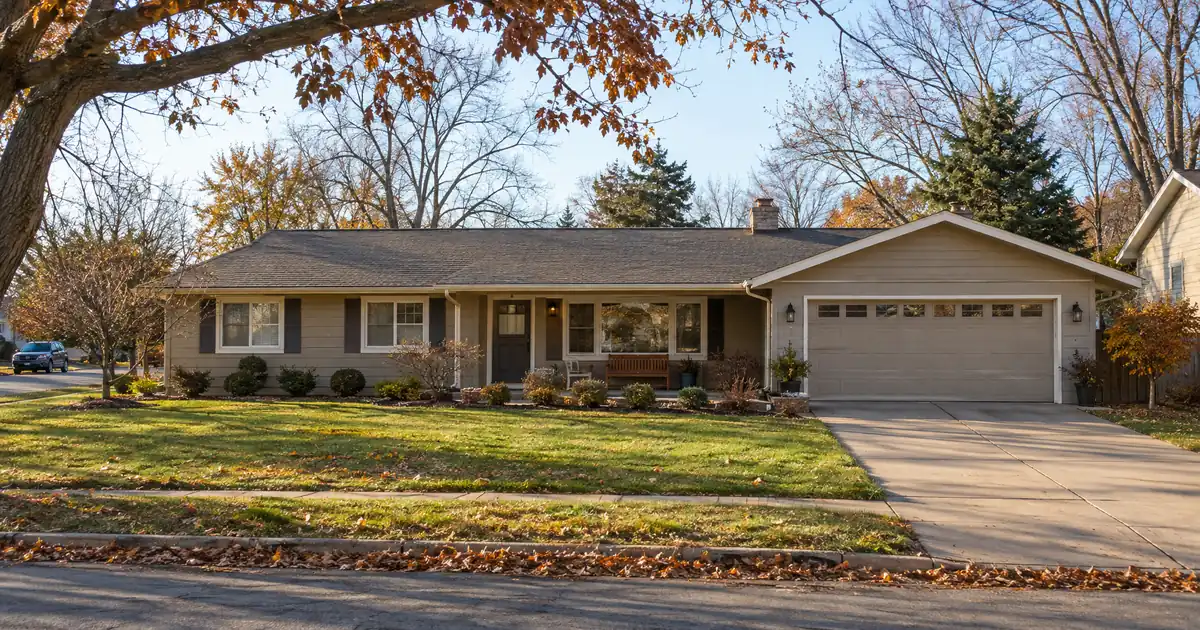
The Quick Read: A widowed homeowner qualifies for a bank statement HELOC the same way any self-employed borrower does. The lender reads a year or more of deposits, removes anything that is not earned income, and tests whether that one income can carry the first mortgage, the new line, and your other debts. Grief does not change the method, but it does change the paperwork.
- Bank statement documentation is built for self-employed or 1099 income. Pension, Social Security, and wages are usually documented with award letters and pay records.
- A life insurance payout or inheritance is an asset. It does not count as income, and it gets sourced separately.
- Title comes first. The lender needs to see you as the owner of record before a new lien can go on the home.
- On a primary residence, the network’s highest ceiling is 90% combined loan-to-value, and it exists only at a 720 credit profile. Every file is subject to lender guidelines.
- Your own credit score drives the file, because the score model keys to the primary wage earner.
Key Terms Defined
Bank statement HELOC: a home equity line where the lender reads personal or business bank statements to establish income instead of tax returns. It is reviewed on documented income under the applicable program, subject to lender guidelines.
CLTV (combined loan-to-value): your first mortgage balance plus the new line, divided by the home’s value.
DTI (debt-to-income): your monthly debt payments divided by your monthly qualifying income.
Qualifying income: the figure a lender actually counts after it removes non-income deposits and applies any expense factor.
Expense factor: the share of business deposits a lender treats as operating costs rather than income.
Interest-only draw period: the early years of a line when your required payment covers interest only, before repayment begins.
How large a line the equity supports.
An equity line is sized by combined loan-to-value, occupancy, and credit — not by rental coverage. Switch the occupancy or the credit band and the ceiling moves with it.
Investment-property lines require a 700 minimum credit score; second-home lines start at a 640 minimum and primary-residence lines at 600, and the combined-LTV ceiling steps down as the credit band drops on primary-residence and second-home lines and holds on investment-property lines; the line cap steps down on primary-residence lines and holds at every tier on investment-property and second-home lines.
A debt-to-income ratio above 45% requires 680+ credit. Profiles under 640 are limited to single-family homes. At least 75% of the approved line is drawn at closing. Ceilings, floors, and caps update from Lendmire’s centralized guideline source.
Line estimate
Illustrative estimate only — not a quote, Loan Estimate, approval, or commitment to lend. The rate is an editable assumption; equity-line pricing is variable through both the draw and repayment periods and never converts to fixed. Occupancy and credit drive the ceiling together: an investment property tops out at 70% combined LTV (minimum credit 700, line cap $500,000); a second home tops out at 90% combined LTV (minimum credit 640, line cap $500,000), with the ceiling stepping down as the credit band drops (the cap holds at every tier); a primary residence tops out at 90% combined LTV (minimum credit 600), and its $750,000 maximum line is available only at 75% combined LTV or below with a 700-or-better credit profile (720 on the longer-runway program) and a full appraisal. Lines above $500,000 require a full appraisal. Credit, debt-to-income, property type, and full underwriting review all affect the final line.
What Is a Bank Statement HELOC, and Does Widowhood Change It?
A bank statement HELOC is a documentation method, not a widow’s program. It swaps tax returns for statements, usually a year or two of them, depending on the lender. The lender then turns deposits into a monthly income figure.
Widowhood changes three things around that method. Your household now has one income, so every ratio gets tighter. Your title and mortgage records may still carry your spouse’s name. Your bank accounts may hold deposits that are not income at all.
Across the wholesale network Lendmire works with, these lines are placed by mortgage brokers who shop several lenders and match the file to a program. Lendmire is a broker, not the lender. Its HELOC placements run in 16 full-service states, which is narrower than its DSCR footprint.
Are You the Right Borrower?
You are the right borrower for bank statements when your income arrives as business or contract deposits. If it arrives as a benefit check, a pension, or a paycheck, a different documentation path usually fits better.
| Income type | Bank statements fit? | Usual documentation |
|---|---|---|
| Self-employment or consulting | Yes | 12-24 months of statements |
| 1099 contract work | Yes | Statements plus 1099s |
| Social Security survivor benefit | Rarely | Award letter, deposits |
| Pension or annuity | Rarely | Award letter, deposits |
| Wages from your own job | Usually no | Pay stubs, W-2s |
| Rental income | Sometimes | Leases, statements |
Mixed income is common after a loss. A widow might have survivor benefits, a small pension, and part-time consulting. Each stream gets documented on its own terms, and the lender adds up what it can verify.
Survivor benefits deserve a closer look. AARP’s survivor benefits checklist says benefits can start as early as age 60, or 50 if you are disabled, and at any age if you care for a child under 16. You receive 100% of your late spouse’s benefit only at your own full retirement age. Claiming earlier pays less. The Congressional Research Service overview of survivors benefits lays out the same eligibility structure.
How a given lender counts those benefits varies. Some count them fully when the award letter and deposits match. Others want a track record. That is a program-level question, and it is exactly what a broker checks before a file is placed.
Title and the Existing Mortgage Come First
Before any lender orders a valuation, it wants to know who owns the home. If your spouse is still on the deed, you will need to clear that first.
The usual paperwork looks like this:
- A certified death certificate.
- Proof of how title passed to you, such as a survivorship deed, a probate order, or letters testamentary.
- A confirmation from your mortgage servicer that you are recognized as the successor on the loan.
- Homeowner’s insurance updated into your name.
The good news is that your existing first mortgage can generally stay in place. A federal law generally stops a lender from demanding payoff just because a spouse inherits the home. That matters because the line described here can sit in second position behind your current first mortgage, so you do not have to give up the mortgage you already have.
Vesting matters too. On this network, the home must be held by you as an individual or by a revocable living trust. LLCs, corporations, and irrevocable trusts cannot hold title for these lines. If the home was retitled into an estate or an irrevocable trust, the line has to wait until title sits in an eligible name.
How Deposits Become Qualifying Income
A lender never counts every deposit. It scrubs the statements, averages what is left, and applies a haircut where the account is a business account. The steps run in a fixed order.
1. Collect the statements. Personal or business accounts, depending on how you get paid. A year or two is common.
2. Remove non-income deposits. Transfers between your own accounts, loan proceeds, refunds, and large unexplained deposits come out.
3. Apply an expense factor. On business accounts, the program sheet sets the share of deposits treated as costs. Personal-account programs usually count more of each deposit.
4. Average the result. The adjusted total is spread across the months, adjusted for your ownership share.
5. Test the file. The lender checks credit, existing debts, the first mortgage payment, combined leverage, and property eligibility.
Third-party records have to back up whatever income the lender relies on. The federal ability-to-repay rule says a creditor verifies the income or assets it counts, and only that income. On a one-income file, that is simple: the lender counts what is documented for you.
Bank statements are the record here. They do not skip verification. They are the verification.
Joint Accounts and Large Deposits After a Loss
This is where widowed files get stuck. A joint account may hold deposits from both spouses. After a death, the lender wants to see your income alone.
Handle it in this order:
- Retitle the account into your name, and keep the statements from before and after the change.
- Separate your deposits from your late spouse’s wages, pension, or business receipts.
- Document the deceased’s business, if there was one. If your spouse owned it, you cannot borrow against its history unless ownership passed to you.
- Source any large deposit. Life insurance proceeds, estate distributions, and retirement rollovers are assets. A lender may use them to show reserves or strength, but they do not become monthly income.
A life insurance payout landing in your checking account can make deposits look huge. That is a trap, not an advantage. A lender who sees a spike will strip it out and may ask for the claim letter. Keep that paperwork together before you apply.
What the Network’s Programs Allow
Lendmire places HELOCs through select wholesale partners. Its network has two draw structures, and each figure below applies only within its own terms.
The 3-year draw structure is interest-only for 3 years, then fully amortizing for 17. Investment lines run on the 5-year structure only. The price on both floats and never converts to fixed. At least 75% of the line is drawn at closing, which matters on one income, because you cannot count on borrowing only what you need.
Ceilings depend on how you use the home:
| Occupancy | Max CLTV | Minimum credit | Line cap |
|---|---|---|---|
| Primary residence | Up to 90% at 720+ | 600 | $500,000 at 90% CLTV; $750,000 at 75% CLTV, 700+ (720 on the longer-runway program) |
| Second home | Up to 90% at 720+ | 640 | $500,000 |
| Investment property | 70% | 700 | $500,000 |
On a primary residence, 90% CLTV applies only to lines up to $500,000. A line above $500,000 is primary-residence only, needs a 700 credit profile or better (720 on the 5-year draw structure), caps at 75% CLTV, and requires a full appraisal. Lines at or below $500,000 ordinarily use an automated valuation, though a borrower can ask for a full appraisal.
The rest of the file works like this:
- DTI: 50% maximum. It drops to 45% for credit profiles from 600 to 679, and any ratio above 45% requires at least a 680 score.
- Credit: a 600 program floor, scored on a single bureau keyed to the primary wage earner. The report can be no more than 90 days old at closing.
- Property: single-family, 2-4 units, townhomes, PUDs, and condos, including non-warrantable condos. Manufactured homes, co-ops, and log homes are not offered.
- Exposure: a borrower is limited to three lines, and owning more than 15 financed properties makes you ineligible.
A larger CLTV is never automatic. It depends on credit, line size, occupancy, and the full file. All of these figures are guidance, not a commitment to lend.
A One-Income Example
Run the numbers on a hypothetical widow with a primary residence and a score in the high 600s. These percentages are modeled assumptions, not market data.
Say her documented self-employment income supports a 38% debt-to-income ratio with just the first mortgage and a car payment. The new line is qualified on its interest-only payment at the maximum draw, and that adds 9 points. The file lands at 47%.
At a score of 680 or higher, a ratio above 45% can work, since the rule is a 680 minimum above 45%. At 670, the file is capped at 45% and stalls. The same income, two scores, two different answers.
Now look at what the test leaves out. The qualifying payment is interest-only on the full line, but the repayment phase later adds principal. On a single income, that step-up is the number to plan around, not the number the file was approved on.
Where the General Rule Breaks
The general rule is that statements plus a clean title plus enough income gets a file reviewed. These edge cases bend it.
Your income is not self-employment. If you live on benefits and a pension, bank statements are probably the wrong tool. Full documentation or an asset-based approach is likely a better fit.
A gap before benefits begin. A younger widow without a child under 16 may have no survivor benefit until 60, or 50 if disabled. A lender may see a thin income history.
Remarriage. AARP’s guide on Social Security when a spouse dies notes that remarrying before 60 ends survivor benefits, with a later age if disabled. That changes the income the file relies on.
The home is rental property. An investment line caps at 70% CLTV, needs at least a 700 credit profile, and runs the 5-year draw structure only. The home must be in your name or a revocable trust, so a property already deeded to an LLC needs a vesting change first.
Recent derogatory credit. A bankruptcy needs 4 years of seasoning from discharge or dismissal. Foreclosure history splits by program, and one declines it entirely.
Your late spouse was the earner. If the household’s qualifying income was theirs, it does not follow you. The lender counts only income that is documented for you.
When a Rental Is the Better Route
If the real strength of your file is a rental property, a different loan can fit better. A DSCR cash-out refinance qualifies primarily on property-level rental income covering the payment, subject to lender guidelines, and not on your deposits. Lendmire’s complete DSCR loans guide covers how that works.
Across most of the network, cash-out refinances top out around 75% LTV, with about 6 months of seasoning as the common expectation. Coverage of 1.00 is where select programs start. A separate select-lender path takes coverage below 1.00, with leverage and terms adjusted. Clearing 1.00 does not mean positive cash flow, since repairs, vacancy, and management sit outside the ratio. The exact numbers vary by lender and program and follow a full review of property, leverage, and credit.
Prep Checklist Before You Apply
1. Confirm title is in your name or a revocable trust.
2. Get the servicer’s confirmation that you are the successor on the mortgage.
3. Retitle joint accounts and keep before-and-after statements.
4. Pull your own credit and fix errors, since your score drives the file.
5. Gather award letters for any survivor benefit or pension.
6. Collect a year or two of statements for self-employment income.
7. Set aside the insurance or estate paperwork for any large deposit.
8. Decide how much you truly need, remembering that 75% of the line is drawn at closing.
Frequently Asked Questions
Can I use my late husband’s life insurance payout to qualify?
Not as income. A lender treats it as an asset and may use it to show reserves or strength. You will usually need to document where it came from and how it moved.
Do survivor benefits count on a bank statement HELOC?
It depends on the lender. Benefits are normally documented with an award letter and matching deposits rather than a statement average. Some programs count them fully, and others want a track record.
What if my spouse is still on the deed?
Clear title first. The lender needs to see you as the owner of record, usually through a survivorship deed, probate order, or letters testamentary.
Does my score matter more now that I have one income?
Yes. The network’s score model keys to the primary wage earner, and a DTI above 45% requires at least a 680. One income leaves less room for a weak score.
Is a bank statement HELOC often a strong option on one income?
No. Full documentation, an asset-based review, or a DSCR cash-out on a rental may fit better. The right program depends on your income type, property, credit profile, and leverage need.
Next Step
If you are considering a home equity line and want to see how the numbers work, Lendmire can help you compare HELOC options based on the property, the equity available, credit profile, combined leverage, and your goals. A good first call covers your income type and title status, because those two answers decide which path to price.
About Lendmire
As a mortgage broker (NMLS# 2371349), Lendmire helps homeowners and real estate investors in its 16 full-service states open home equity lines of credit arranged through wholesale lenders. Lendmire is never the lender; line amounts, ceilings and terms are set by the lender under its guidelines. Scotsman Guide named Lendmire a Top Mortgage Workplace in both 2025 and 2026.
Investors who want the broader program framework can review how DSCR loans work.
Get Started
Ready to find the right loan for you?
See your offer in seconds. No credit pull, no obligation.
Informational only. Not a Loan Estimate, approval, or commitment to lend. Program availability and eligibility are subject to lender guidelines, credit approval, property review, and underwriting.
References
1. AARP – Survivor benefits eligibility checklist
2. Congressional Research Service – Social Security Survivors Benefits
4. AARP – Social Security when a spouse dies
This article is part of Lendmire’s bank statement HELOC program — full qualification details, guidelines, and scenarios live on the program page.
Related reading: How to Qualify for a Bank Statement HELOC for North Carolina Rental Owners · How to Qualify for a Bank Statement HELOC for Out-of-State Investors and Equity Needed · How to Qualify for a Bank Statement HELOC on a New Build After Completion
Brandon Miller
Founder & CEO, Mortgage Loan Originator, Lendmire LLC
- Mortgage Loan Originator · NMLS# 1129696 · Verify on NMLS Consumer Access
- North Carolina Real Estate Broker · License# 343312 · Verify on NCREC
- North Carolina Insurance Producer · License# 19053198 · Property, Casualty, Life, Health · Verify on NAIC SBS
- Lendmire LLC · Firm NMLS# 2371349 · Verify firm licensure
Disclosures. The information presented in this article is general market commentary, not financial, legal, or tax advice. Lendmire is a mortgage brokerage (NMLS# 2371349) — not a direct lender or depository institution — and loan placement is subject to lender underwriting. Nothing in this content represents a commitment to lend. Loan terms, pricing, and program availability vary based on borrower qualifications, property characteristics, and state of subject property, and are subject to change at any time. Lendmire complies with Equal Housing Opportunity requirements. Consumer access: nmlsconsumeraccess.org.