
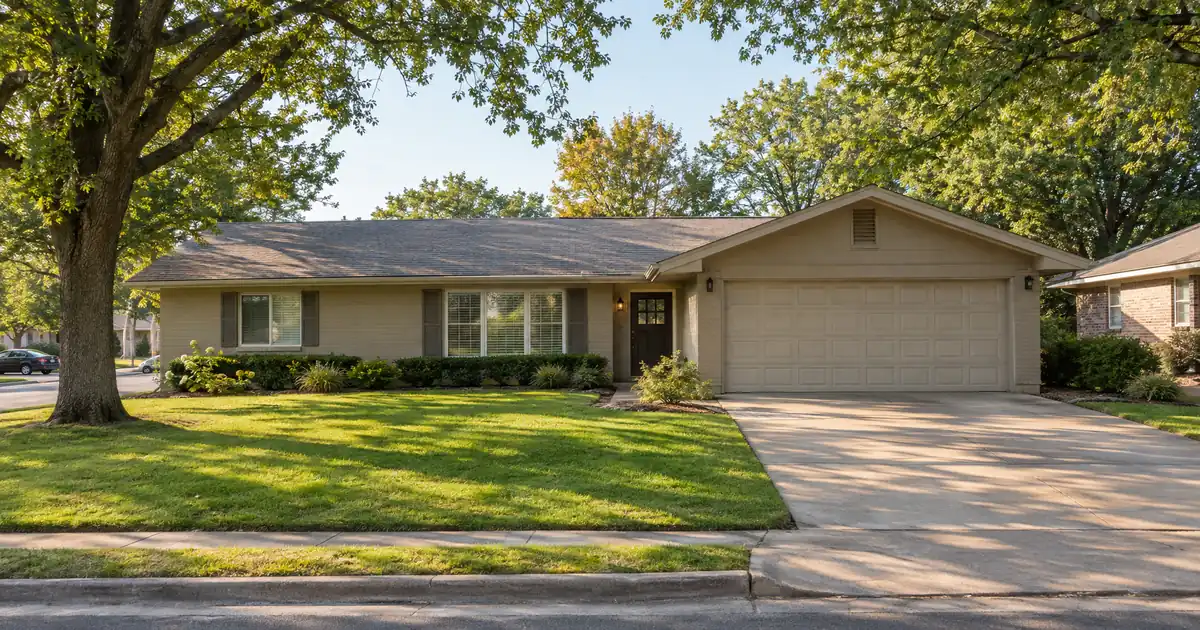
The Quick Read: Bank statements change how your income is documented. They do not change whether your credit, equity, property and debts get reviewed. A lender still checks the full file, and on an investment property the line is tighter than most people expect.
- Deposits are sorted and trimmed before they count as income, so a big balance does not automatically mean big qualifying income.
- The borrower’s personal profile still matters, because this is not a DSCR loan where rent does the heavy lifting.
- On an investment property, this network’s ceiling is 70% CLTV with a 700 minimum credit score and a $500,000 maximum line.
- Title matters: the line is generally held by an individual or a revocable living trust, not an LLC.
Key Terms Defined
Bank statement qualification means a lender calculates your income from deposits in your bank accounts instead of from traditional personal-income documentation. It is reviewed on documented income under the applicable program, subject to lender guidelines.
Expense factor is the percentage of business deposits a lender treats as operating costs. A 50% factor means about half of eligible business deposits counts as income.
CLTV (combined loan-to-value) is your total debt secured by the property, including the new line, divided by the property’s value.
DTI (debt-to-income) compares your monthly debt payments to your qualifying monthly income.
Draw period is the stretch when you can borrow from the line, usually paying interest only. A repayment period follows, when the balance amortizes.
Vesting is how title to the property is held: in your own name, a trust, or an entity such as an LLC.
How large a line the equity supports.
An equity line is sized by combined loan-to-value, occupancy, and credit — not by rental coverage. Switch the occupancy or the credit band and the ceiling moves with it.
Investment-property lines require a 700 minimum credit score; second-home lines start at a 640 minimum and primary-residence lines at 600, and the combined-LTV ceiling steps down as the credit band drops on primary-residence and second-home lines and holds on investment-property lines; the line cap steps down on primary-residence lines and holds at every tier on investment-property and second-home lines.
A debt-to-income ratio above 45% requires 680+ credit. Profiles under 640 are limited to single-family homes. At least 75% of the approved line is drawn at closing. Ceilings, floors, and caps update from Lendmire’s centralized guideline source.
Line estimate
Illustrative estimate only — not a quote, Loan Estimate, approval, or commitment to lend. The rate is an editable assumption; equity-line pricing is variable through both the draw and repayment periods and never converts to fixed. Occupancy and credit drive the ceiling together: an investment property tops out at 70% combined LTV (minimum credit 700, line cap $500,000); a second home tops out at 90% combined LTV (minimum credit 640, line cap $500,000), with the ceiling stepping down as the credit band drops (the cap holds at every tier); a primary residence tops out at 90% combined LTV (minimum credit 600), and its $750,000 maximum line is available only at 75% combined LTV or below with a 700-or-better credit profile (720 on the longer-runway program) and a full appraisal. Lines above $500,000 require a full appraisal. Credit, debt-to-income, property type, and full underwriting review all affect the final line.
The Myth: “Bank Statement Means Nobody Checks Anything”
Plenty of investors hear “no tax returns” and picture a loan with no real review. The phrase comes from marketing shorthand, and it also borrows from the loose lending of the past.
The Reality: Different Paper, Same Scrutiny
The tax return gets swapped out. The review does not. Across the wholesale network Lendmire works with, a bank statement line is still reviewed for credit score, available equity, debt load and property type.
Trade coverage describes the standard scenario as 12 to 24 months of personal or business statements, with income calculated after a standard expense factor. That same Scotsman Guide piece notes that non-QM lenders must still confirm ability to repay. They just have more flexibility in how they get there.
Here is what the file still has to carry on this network:
- A credit profile that clears the program floor. The overall floor is 600. Pricing and available terms vary by lender, borrower profile, property type, and full underwriting review.
- Enough equity to fit under the CLTV cap for the occupancy type.
- A DTI at or under 50%, calculated on the interest-only payment at the maximum draw.
- An eligible property and eligible vesting.
Bank statements settle the income question. Everything else on that list still has to pass.
The Myth: “Every Dollar Deposited Counts as Income”
This one comes from the shorthand “we qualify you on your deposits.” It sounds like the lender adds up the account and divides by twelve.
The Reality: Deposits Get Sorted, Then Trimmed
Lenders strip out deposits that are not income. Transfers between your own accounts, loan proceeds, refunds, insurance payouts and one-time windfalls generally come out. Business deposits are also gross revenue, so the expense factor trims them again.
The factor is program-specific. Scotsman Guide cites 50% as a standard example, and some programs use a lower factor when a licensed preparer documents the actual expenses. Personal-account deposits are often treated with no expense haircut, so a high-overhead business can sometimes show more usable income on personal statements than on business ones.
| Deposit type | Typical treatment |
|---|---|
| Customer or client payments | Usually counts |
| Transfers between your accounts | Usually removed |
| Loan proceeds or refunds | Usually removed |
| Large one-time deposit | May need a written explanation |
Picture an investor who runs a contracting business and also owns a few rentals. Business deposits look strong. Some are client payments, some are transfers from a savings account, and one is a refund from a supplier. After the lender removes the transfers and refund and applies the expense factor, qualifying income lands well below the account’s headline activity.
Rent is its own question. Rent collected through an LLC or property-management account is not automatically counted as personal income for this purpose, and programs treat it differently. A broker can see how a given lender handles it before you apply.
Account hygiene helps. Separating personal and business funds well before you apply makes the sorting cleaner, and a short written note on any large deposit can keep a file from stalling.
The Myth: “It Works Like a DSCR Loan, So My Profile Barely Matters”
Investors who know DSCR loans often assume every investor product skips the borrower. Bank statement HELOCs get lumped in with them because both avoid traditional personal-income documentation.
The Reality: One Reads You, the Other Reads the Property
A DSCR loan is reviewed primarily on property-level rental income covering the payment, subject to lender guidelines. DSCR (debt service coverage ratio) is rent divided by the full monthly housing payment. Clearing it says nothing about repairs, vacancy, management or other costs, so it is not the same thing as positive cash flow. HousingWire’s plain-English non-QM guide draws the same line: bank statement loans verify the borrower’s income from deposits, while DSCR loans compare property rent to the monthly housing expense.
| Factor | Bank statement HELOC | DSCR loan |
|---|---|---|
| What gets tested | Your deposits and DTI | The property’s rent vs. payment |
| Your credit | Reviewed | Reviewed |
| Structure | Revolving line, first or second lien | Closed-end loan |
| Title | Individual or revocable trust | LLC possible, subject to program terms |
DSCR floors vary by program. Many select programs start at 1.00, and a separate select-lender path goes below 1.00 with leverage and terms adjusted. A bank statement line has no rent-coverage test of that kind.
This is also where the products split on purpose. If the rental carries itself on paper but your personal income is hard to document, the DSCR route often fits better. Lendmire’s complete DSCR loans guide walks through that side. If you want to keep a favorable first mortgage in place and pull equity through a second lien, the bank statement line is the product built for that.
Market context: Optimal Blue data cited by HousingWire puts bank statement loans at about 34% of non-QM volume, with investor and DSCR loans at about 29%. Both are mainstream tools, not fringe ones.
The Myth: “Any Bank Will Give Me a Line on a Rental If I Have Strong Deposits”
Many investors know how a HELOC on a primary home works and assume a rental works the same way. Big retail lenders advertise the primary-home version loudly, which reinforces the idea.
The Reality: Rentals Are Underwritten Tighter
NerdWallet notes that a HELOC on an investment property can be harder to get than one on a primary home because lenders see higher default risk. In practice, the bank statement documentation mostly lives in non-bank, wholesale and portfolio channels rather than at large retail lenders. That is one reason a bank’s no is not always the final answer, and a broker who sees many lenders’ guidelines can often find a program that fits.
The network’s parameters differ sharply by occupancy:
| Occupancy | Max CLTV | Minimum credit | Max line |
|---|---|---|---|
| Investment property | 70% | 700 | $500,000 |
| Second home | 90% at 720+ | 640 | $500,000 |
| Primary residence | 90% at 720+ | 600 | $750,000 |
Ceilings below the top tier step down with the credit score, and these figures reflect select wholesale-network guidelines, subject to lender review. Surveys of the wider market report different ranges, but those describe the broader market, not this network. On an investment property, the ceiling here is 70% CLTV with no higher tier.
Structure surprises people too. The line is a standalone first or second lien. An investment line uses a 5-year draw followed by a 25-year repayment period, and at least 75% of the line is drawn at closing. It is not a standby card you leave untouched. Pricing is variable through both the draw and repayment periods and does not convert to fixed. Qualification runs on the interest-only payment at the maximum draw, not on what you plan to borrow. Plan for the repayment phase before you sign, because the payment changes when the draw period ends.
Property and title rules narrow the field further:
- Eligible properties include single-family, 2-4 units, PUDs, townhomes and condos, including non-warrantable condos.
- Manufactured homes, co-ops, condotels, log homes, commercial, mixed-use and agricultural-zoned properties are not offered.
- Title must be held by an individual or a revocable living trust. LLCs, corporations and partnerships cannot hold title, so a property already deeded to an LLC needs a vesting change or a DSCR cash-out refinance instead, subject to program terms.
- A borrower is limited to three lines, and owning more than 15 financed properties makes a borrower ineligible.
Lines of $500,000 or less ordinarily use an automated valuation rather than a traditional appraisal, though a higher CLTV can trigger a secondary valuation and you can request a full appraisal.
One more note on the rulebook. The federal ability-to-repay rule specifically excludes home equity lines of credit from its coverage. So the verification you see comes from lender and investor guidelines, not one federal formula. That is also why standards differ from lender to lender. The CFPB’s HELOC booklet explains the basic sizing math: appraised value times the lender’s percentage, minus what you owe on the first mortgage. It also says lenders weigh your income, debts and credit history.
Which Denials Can Bank Statements Fix?
Bank statements fix one category of problem: traditional personal-income documentation that understates your income because of write-offs. They do not fix a credit score below the program floor, a CLTV over the cap, an ineligible property or entity-held title. A bankruptcy needs 4 years of seasoning from discharge or dismissal. On an investment property, a foreclosure follows a 7-year seasoning path, and a deed-in-lieu, pre-foreclosure or short sale follows 4 years.
If you were turned down, ask which of those reasons applied. Income-documentation denials are the ones this route can repair. Other denials usually call for a different structure, such as a primary-home line, a DSCR cash-out refinance or more equity.
When It Is Not the Right Fit
This line is a weaker fit if your rental is held in an LLC and you want to keep it there, if you need more than $500,000 against an investment property, or if your credit sits under 700. It is also a poor match if you would be unable to absorb the payment once the interest-only period ends.
Availability is narrower than the DSCR side too. Lendmire arranges DSCR investor loans across 41 markets, including Washington, D.C., but the HELOC product is offered only in a smaller set of full-service states.
Tax treatment can depend on how the funds are used and how the property is held; investors should keep clear records and speak with a qualified tax professional before relying on any deduction.
For related ground, see Lendmire’s explainer on what a bank statement HELOC can pay for.
Frequently Asked Questions
Can I qualify without traditional income documentation?
Often, yes. Under a bank statement program, your income is calculated from 12 to 24 months of deposits instead. The lender still reviews your credit, equity, DTI and property, and eligibility is subject to lender guidelines.
Should I use business or personal statements?
It depends on your overhead. Business deposits take an expense factor, commonly cited near 50%, while personal deposits are often treated without one. Some borrowers compare both windows and use whichever produces the stronger picture, if the program allows it.
Can my LLC-owned rental qualify?
Not as titled. On this network the property must be held by an individual or a revocable living trust. A property already in an LLC would need a vesting change, or a DSCR cash-out refinance may be a better fit.
Does this change my first mortgage?
A line in second-lien position leaves the first mortgage in place and adds new debt on top of it. The line can also sit in first-lien position on a property with no mortgage. Either way, the combined CLTV must fit under the cap for the occupancy type.
Is there a minimum draw at closing?
Yes. At least 75% of the line is drawn at closing on this network. Subsequent draws after closing carry a minimum, so the line behaves more like a funded loan than an untouched standby.
Next Step
If you are considering a home equity line and want to see how the numbers work, Lendmire can help you compare HELOC options based on the property, the equity available, credit profile, combined leverage, and your goals. An illustrative calculator can give you a rough starting estimate before you talk to a broker.
About Lendmire
Lendmire — NMLS# 2371349 — is a mortgage broker that arranges home equity lines of credit in its 16 full-service states through wholesale lenders, on primary residences, second homes and investment properties. Every line is subject to the lender’s guidelines and full underwriting. Scotsman Guide named Lendmire a Top Mortgage Workplace in both 2025 and 2026.
Get Started
Ready to find the right loan for you?
In about 30 seconds you can review financing options available for your home or investment property. No commitment required.
Informational only. Not a Loan Estimate, approval, or commitment to lend. Program availability and eligibility are subject to lender guidelines, credit approval, property review, and underwriting.
References
1. Scotsman Guide, Rev Up the Engine for Non-QM Lending
2. HousingWire, plain-English non-QM loans guide
3. NerdWallet, Can you get a HELOC on an investment property?
4. CFPB, Regulation Z § 1026.43
5. CFPB, HELOC consumer booklet
This article is part of Lendmire’s bank statement HELOC program — full qualification details, guidelines, and scenarios live on the program page.
Related reading: How to Tap a Texas Rental With a Bank Statement HELOC · Bank Statement HELOC vs Stated HELOC Documentation Differences · How to Get a Bank Statement HELOC After the Decree Before the Quitclaim
Brandon Miller
Founder & CEO, Mortgage Loan Originator, Lendmire LLC
- Mortgage Loan Originator · NMLS# 1129696 · Verify on NMLS Consumer Access
- North Carolina Real Estate Broker · License# 343312 · Verify on NCREC
- North Carolina Insurance Producer · License# 19053198 · Property, Casualty, Life, Health · Verify on NAIC SBS
- Lendmire LLC · Firm NMLS# 2371349 · Verify firm licensure
Compliance and disclosures. Lendmire (NMLS# 2371349) is a licensed mortgage broker and is not a direct lender, depository institution, financial advisor, or tax professional. Content in this article is general market analysis and educational information — not financial, legal, or tax advice for any specific situation. Lendmire does not guarantee loan approval; every transaction is subject to underwriting by the funding lender. Mortgage pricing and loan program guidelines are subject to change at any time without notice and vary by borrower characteristics, property type, and state regulations. Lendmire complies with Equal Housing Opportunity. Licensure verification: NMLS Consumer Access.