
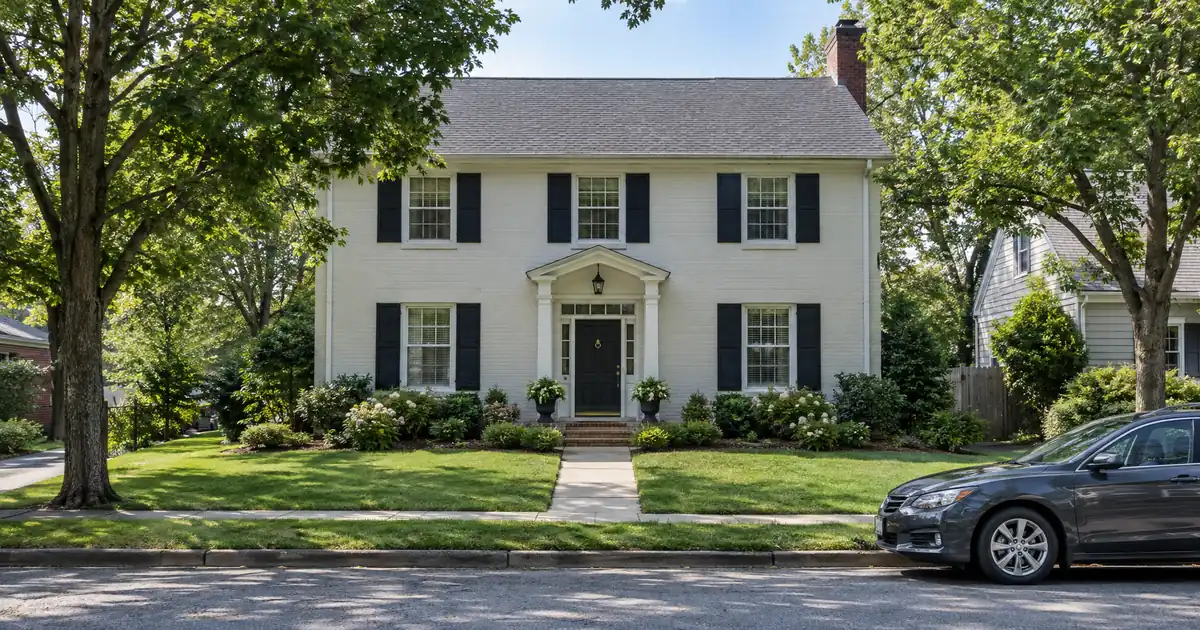
The Quick Read: The county and state where your lien is recorded set these charges, and they follow the amount and type of the document, not how you proved your income, so a bank statement HELOC pays the same recording costs as any other home equity line in that county. The bigger trap is the name itself. Maryland and Pennsylvania each have a Montgomery County, and the two charge in completely different ways.
- Bank statement documentation changes underwriting. It does not change government recording charges.
- Montgomery County, Maryland taxes the amount of new debt secured, in tiers that climb as the amount grows.
- Montgomery County, Pennsylvania charges a flat recording fee driven by pages, names, and parcels, not by line size.
- Whether Maryland measures a revolving line on the full limit or on each advance is a question for your settlement agent before you sign.
- Lendmire arranges HELOCs through select wholesale partners in 16 states. Pennsylvania is among them. Maryland is not.
Which Montgomery County Are You In?
Start here, because everything else depends on it. The two counties discussed below charge in opposite ways, and other states have a Montgomery County too.
How large a line the equity supports.
An equity line is sized by combined loan-to-value, occupancy, and credit — not by rental coverage. Switch the occupancy or the credit band and the ceiling moves with it.
Investment-property lines require a 700 minimum credit score; second-home lines start at a 640 minimum and primary-residence lines at 600, and the combined-LTV ceiling steps down as the credit band drops on primary-residence and second-home lines and holds on investment-property lines; the line cap steps down on primary-residence lines and holds at every tier on investment-property and second-home lines.
A debt-to-income ratio above 45% requires 680+ credit. Profiles under 640 are limited to single-family homes. At least 75% of the approved line is drawn at closing. Ceilings, floors, and caps update from Lendmire’s centralized guideline source.
Line estimate
Illustrative estimate only — not a quote, Loan Estimate, approval, or commitment to lend. The rate is an editable assumption; equity-line pricing is variable through both the draw and repayment periods and never converts to fixed. Occupancy and credit drive the ceiling together: an investment property tops out at 70% combined LTV (minimum credit 700, line cap $500,000); a second home tops out at 90% combined LTV (minimum credit 640, line cap $500,000), with the ceiling stepping down as the credit band drops (the cap holds at every tier); a primary residence tops out at 90% combined LTV (minimum credit 600), and its $750,000 maximum line is available only at 75% combined LTV or below with a 700-or-better credit profile (720 on the longer-runway program) and a full appraisal. Lines above $500,000 require a full appraisal. Credit, debt-to-income, property type, and full underwriting review all affect the final line.
Maryland levies a recordation tax. That is a percentage tax on the debt a mortgage or deed of trust secures. Pennsylvania’s Recorder of Deeds charges a flat per-document recording fee. One cost scales with your line. The other barely notices it.
Other states add their own versions. Some tax a home equity line on its full credit limit and some do not.
Does Bank Statement Documentation Change Recording Charges?
No. A bank statement HELOC is a documentation choice. The borrower is reviewed on documented income under the applicable program, subject to lender guidelines, using deposits over a stretch of months instead of traditional personal-income documentation. That choice drives approval. It has nothing to do with the lien.
The lien is the same instrument as on any other home equity line. In Maryland it is a deed of trust. Recording offices tax and charge for the document and the amount secured. They never ask how you proved your income.
Many borrowers assume an alternative-documentation loan carries extra closing costs at the courthouse. It does not. Any extra cost of that kind sits on the lender or title side, so read each line of the estimate to see who is charging it. For the full picture of how this product works on a primary home, see Lendmire’s piece How to Use a Bank Statement HELOC on Your Primary Home to Buy a Rental.
How Maryland’s Tiered Recordation Tax Works
Maryland’s state law imposes the recordation tax, and each jurisdiction sets its own rates. Security instruments such as deeds of trust are covered, according to a Maryland law firm’s explainer on recordation and transfer taxes. That same source says the state transfer tax does not apply to security instruments. So a HELOC deed of trust normally faces recordation tax but not transfer tax.
Montgomery County uses marginal tiers. Each slice of the amount secured is taxed at its own rate, and the slices are added together. A large line does not reprice the whole amount. It only pushes the top slice into a higher bracket. Per a law-firm alert on the county’s tier reset, the structure is:
| Amount secured | Marginal rate |
|---|---|
| Up to $500,000 | 0.89% |
| $500,000 to $600,000 | 1.35% |
| $600,000.01 to $750,000 | 2.04% |
| $750,000.01 to $1,000,000 | 2.156% |
| Over $1,000,000 | 2.27% |
Do not rely on older county web pages for these numbers. At least one county help page still shows a legacy per-thousand figure and notes the rates changed under the county’s tier-reset bill. Use the tiers above, and confirm the current schedule with the county or your settlement agent.
Here is what that means for line sizing. A line of $500,000 or less sits entirely in the lowest tier. A line that reaches the top of the network’s primary-residence range, $750,000, spills into the 1.35% and 2.04% slices. Every extra dollar of limit above $500,000 costs more to record than the dollars below it. Pick the limit you will actually use, not the biggest one offered.
How a HELOC Differs From a Purchase Loan or a Refinance
Maryland measures the tax on new debt, and that is why the loan type matters.
| Transaction | What the tax is measured on | Key exemption |
|---|---|---|
| Purchase-money mortgage | Debt secured | Exempt under the state code |
| Refinance by original borrower | Principal above the old unpaid balance | Existing balance exempt |
| New HELOC lien | New debt secured | None for the new amount |
The purchase-money and refinance exemptions come from Maryland Tax-Property Code §12-108. A mortgage is exempt to the extent it refinances no more than the unpaid principal on an existing mortgage, if the original mortgagor is the one refinancing. A HELOC on a home you already own is not purchase-money. A standalone line, whether in first or second lien position, adds new debt, so the new amount is what gets taxed.
Here is the open question. A HELOC is revolving, so the tax could be measured on the full stated limit or on each advance as you draw. Maryland law has historically allowed the tax to be computed on the maximum principal stated as secured. How that plays out on a revolving line is something to settle with your title or settlement agent before you sign.
The practical point is that the network’s HELOC programs require at least 75% of the line to be drawn at closing. That shrinks the gap between the two readings, because most of the limit is advanced on day one.
What Montgomery County, Pennsylvania Charges
Pennsylvania flips the picture. The county Recorder of Deeds fee schedule lists a mortgage base fee of $87.75. That base covers up to four names, four pages, and one parcel. Add-ons are $1.00 per extra name, $4.00 per extra page, and $15.50 per extra parcel.
Line size does not appear anywhere in that schedule. A small line and a large line on the same one-parcel home cost the same to record. Page count drives the bill, and a long document or an extra parcel raises it. That is a very different cost curve from Maryland’s, and the reverse of what most borrowers expect.
A deed is different. The same schedule notes that a deed needs two separate checks, one for the recording fee and one for realty transfer tax. A HELOC mortgage does not trigger that second check.
Pennsylvania is one of the 16 states where Lendmire arranges HELOCs. A Pennsylvania property listed for sale, or listed within the past 60 days, is ineligible for these programs.
Who Pays, and Where the Charge Shows Up
Government charges are third-party costs. The lender does not keep them. They pass through the settlement agent to the county. Whether you or the lender bears them is a pricing decision, and you will see it on your fee estimate. A no-closing-cost offer from a lender typically covers the lender’s own charges, not the county’s tax or fee, so confirm that on the estimate.
For consumer home equity lines, federal rules split fees into two buckets. The federal HELOC rule separates fees the creditor imposes from third-party fees paid to open the plan. Third-party fees can be given as a good-faith estimate, often a range, plus a statement that you can ask for an itemization. That means the early estimate of recording charges can differ from the final bill. Ask for the itemization.
Read your closing paperwork in three groups. First is the county charge, which is a tax in Maryland and a flat fee in Pennsylvania. Second is any lender fee. Third is any title or settlement charge. Mixing them up is the most common way borrowers overpay in their heads.
Edge Cases Where the General Rule Bends
Investment property and the refinance exemption. Maryland’s refinance affidavit wording asks about the original mortgagor and the unpaid balance, and some of it ties to a principal residence. Whether a rental pledge qualifies depends on the specific subsection. Do not assume it does. Get a written answer from the settlement agent.
Owner-occupied credit. Maryland counties may allow a credit when the property is owner-occupied. Whether it applies when the collateral is a rental is unverified, so ask before you plan around it.
A refinance in disguise. If you pay off an existing first mortgage with a new larger loan, the exemption covers the old balance and the tax lands on the increase. A second-lien HELOC adds only new debt but gets no exemption. Which costs less depends on the size of the old balance and the new line.
Stale schedules. Both county web pages and secondary sources age. A source that quotes a legacy figure can be off by a wide margin. Treat any rate you read, including the ones here, as a starting point and verify it before you rely on it.
Property and ownership limits. Recording is not the only gate. On the HELOC programs Lendmire places, the borrower holds title individually or in a revocable living trust. LLCs, corporations, and partnerships cannot hold title, and a property already deeded to an LLC needs a vesting change first. Manufactured homes, co-ops, condotels, log homes, and agricultural or commercial zoning are not eligible.
How an Investor Should Weigh It
Recording cost is a line item, not the deciding factor. The program terms decide whether the line works at all. Across the select wholesale partners in the network, an investment-property line tops out at 70% combined loan-to-value, which is the first lien plus the new line measured against the home’s value. The minimum credit score is 700, and the maximum line is $500,000. On a primary residence the line can reach $750,000, but anything above $500,000 requires a full appraisal and a credit profile of 700 or better (720 on the longer-runway structure). Every figure is subject to lender guidelines and file review.
Lines at or below $500,000 ordinarily run automated valuation instead of a traditional appraisal. Debt-to-income runs up to 50%, qualified on the interest-only payment on the maximum draw. These programs are not a commitment to lend.
Now put recording cost in context. An investor in Maryland sizing a line should weigh the tier table against what the equity will actually fund. A line pledged against an investment property, capped at $500,000, never leaves the lowest Maryland tier. A primary-residence line above $500,000 does. In Pennsylvania, line size barely moves the recording bill, so size it to the plan.
Next, compare structures. A HELOC typically adds a second lien and leaves your first mortgage alone. A cash-out refinance replaces the first mortgage, and in Maryland part of it may be exempt up to the old balance. A DSCR cash-out refinance on the rental itself is a different tool again. It qualifies primarily on property-level rental income covering the payment, subject to lender guidelines, and its leverage tops out around 75% LTV on a cash-out. Clearing the coverage test does not mean the property throws off positive cash flow, since repairs, vacancy, and management sit outside it. Lendmire’s complete DSCR loans guide walks through that comparison.
Tax treatment can depend on how the funds are used and how the property is held; investors should keep clear records and speak with a qualified tax professional before relying on any deduction.
How to Calculate and Verify Your Own Charge
Use this sequence on any Montgomery County file.
1. Confirm the state. Maryland and Pennsylvania use different systems.
2. Identify the instrument. In Maryland it is a deed of trust, and in Pennsylvania it is a mortgage.
3. Confirm what is being measured. In Maryland, ask whether the full stated limit or only advances is taxed.
4. Apply the tiers. Tax each slice of the amount at its own rate and add them. In Pennsylvania, start from the base fee and add extra names, pages, and parcels.
5. Ask about exemptions and credits. Request the answer in writing for your occupancy type.
6. Request the itemization. Compare it to the final settlement figures.
Ask your settlement agent five things: what amount is being taxed, whether an exemption applies, whether an owner-occupant credit applies, what the county’s current schedule shows, and who is paying each line.
Key Terms Defined
Recordation tax: A percentage tax some Maryland jurisdictions charge on the debt a recorded mortgage or deed of trust secures.
Recording fee: A flat charge a county recorder collects for filing a document, usually based on pages, names, or parcels.
Deed of trust: The security instrument used in Maryland that places a lien on your property to secure a loan.
Marginal rate: The rate applied only to the slice of an amount that falls inside a given tier, not to the whole amount.
Combined loan-to-value (CLTV): All loans secured by the property, added together, divided by the property’s value.
Future-advance debt: Credit that can be drawn over time under a single lien, as with a revolving line.
Frequently Asked Questions
Does a bank statement HELOC cost more to record than a standard HELOC?
No. Recording charges depend on the county, the document, and the amount secured. How you documented your income is not a factor. Any added cost of an alternative-documentation loan would sit with the lender or title side and should be itemized separately.
Which Montgomery County charges more to record a HELOC?
It depends on line size. Maryland’s tax rises with the amount secured, so larger lines cost more. Pennsylvania’s flat mortgage fee does not rise with line size, only with pages, names, and parcels. A modest line may cost little in either county, while a large Maryland line costs noticeably more.
Is Maryland’s recordation tax the same as transfer tax?
No. Recordation tax applies to the document being recorded, including a deed of trust. Transfer tax applies to a change in ownership and, in Maryland, does not apply to security instruments. A HELOC does not transfer ownership, so only the recordation side is in play.
Can I avoid the tax by borrowing less now and drawing later?
Possibly, but not by assumption. It depends on whether the tax is measured on the stated limit or on advances, which is the question to put to your settlement agent. The network’s programs also require at least 75% of the line to be drawn at closing, which narrows the difference.
Does the lender waive recording charges?
Some lenders waive some of their own up-front costs, but county taxes and fees usually remain. Read the estimate to see which party is paying each line. If a charge is labeled as waived, confirm that it covers the county’s portion.
If you are considering a home equity line and want to see how the numbers work, Lendmire can help you compare HELOC options based on the property, the equity available, credit profile, combined leverage, and your goals. Reach the team at 828-256-2183 or request a quote.
Which county stamps the lien will change the recording bill far more than any choice you make about documentation, so find out the jurisdiction first.
About Lendmire
Lendmire — NMLS# 2371349 — is a mortgage broker that arranges home equity lines of credit in its 16 full-service states through wholesale lenders, on primary residences, second homes and investment properties. Every line is subject to the lender’s guidelines and full underwriting. Scotsman Guide named Lendmire a Top Mortgage Workplace in both 2025 and 2026.
Get Started
Ready to find the right loan for you?
In about 30 seconds you can review financing options available for your home or investment property. No commitment required.
Informational only. Not a Loan Estimate, approval, or commitment to lend. Program availability and eligibility are subject to lender guidelines, credit approval, property review, and underwriting.
References
1. GFR Law, Maryland recordation and transfer tax
2. Ballard Spahr, Transfer Tax and Mortgage Recordation Tax in the DMV Area
3. Maryland Tax-Property Code §12-108
4. Montgomery County, PA Recorder of Deeds Recording Fee Schedule
This article is part of Lendmire’s bank statement HELOC program — full qualification details, guidelines, and scenarios live on the program page.
Related reading: Can a Founder Use a Super Jumbo Bank Statement Cash-Out to Invest? · Bank Statement HELOC for a 2-4 Unit Home and Your Low First Mortgage · How to Time a Super Jumbo Cash-Out as a Loan-Out Company Entertainer
Brandon Miller
Founder & CEO, Mortgage Loan Originator, Lendmire LLC
- Mortgage Loan Originator · NMLS# 1129696 · Verify on NMLS Consumer Access
- North Carolina Real Estate Broker · License# 343312 · Verify on NCREC
- North Carolina Insurance Producer · License# 19053198 · Property, Casualty, Life, Health · Verify on NAIC SBS
- Lendmire LLC · Firm NMLS# 2371349 · Verify firm licensure
Compliance and disclosures. Lendmire (NMLS# 2371349) is a licensed mortgage broker and is not a direct lender, depository institution, financial advisor, or tax professional. Content in this article is general market analysis and educational information — not financial, legal, or tax advice for any specific situation. Lendmire does not guarantee loan approval; every transaction is subject to underwriting by the funding lender. Mortgage pricing and loan program guidelines are subject to change at any time without notice and vary by borrower characteristics, property type, and state regulations. Lendmire complies with Equal Housing Opportunity. Licensure verification: NMLS Consumer Access.