
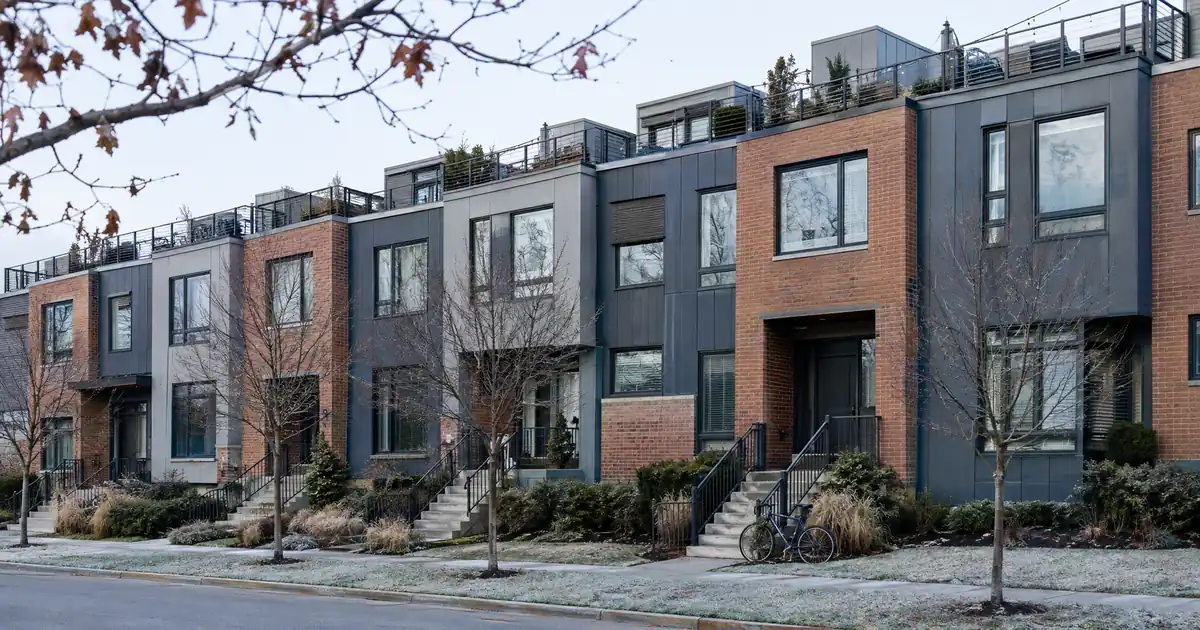
The Quick Read: A condo refinance works like a house refinance with one extra gate. You have to qualify, and so does the building. Your credit, income and equity decide the first test. The association’s finances, insurance and repair history decide the second. A strong borrower in a building that fails review can still get turned down, so check the building early.
Key Takeaways
- Two approvals are needed: one for you, one for the condo project.
- Some refinances of agency-owned loans skip the full building review, but the waiver has conditions.
- Leverage depends on the type of refinance. Rate-and-term goes higher than cash-out.
- HOA dues count against your ratios, even when your credit is excellent.
- If the building fails, you have other paths, though they are narrower.
What Does It Mean to Refinance a Conventional Loan on a Condo?
A conventional loan is one that is not backed by the FHA or VA. Lendmire arranges these through its conventional loan programs, working with wholesale lenders.
Refinance savings and break-even estimate
The starting figures are an example value with a balance in proportion and a placeholder for costs. Replace them with yours, and enter the current rate from your statement.
Editable benchmark: 7.32% as of October 22, 2026 · Freddie Mac 30-year average via FRED®. A conventional market reference, not a refinance quote.
Illustrative starting assumptions: a $350,000 home value, a $245,000 current balance, a current rate you enter and a remaining term seeded at twenty-five years, closing costs seeded at $5,000 as an editable placeholder (not a fee quote) and rolled into the new loan, a thirty-year term at the current Freddie Mac benchmark, and property taxes and insurance estimated at typical national rates. Every field is editable.
Illustrative estimate only — not a Loan Estimate, approval, quote, or commitment to lend. The new rate field carries the weekly Freddie Mac thirty-year conventional benchmark, a market reference and not a refinance quote; a refinance is priced by the lender at lock, and the current rate, the remaining term and the closing costs are figures you enter. The current payment is estimated from the balance, the current rate and the remaining term; the break-even divides the closing costs by the monthly saving and ignores the interest effect of a longer term. On the VA IRRRL the funding fee is added to the loan unless the veteran is exempt. Taxes and insurance are editable estimates. Licensed in sixteen states for consumer mortgages; Lendmire is a broker, never the lender.
People refinance a condo for the same reasons as any homeowner. Some want a different payment or a shorter term. Some want to drop mortgage insurance. Some want to move from an adjustable loan to a fixed one. Others want to pull equity out.
The difference is what the lender is financing. On a house, the lender looks at you and the property. On a condo, the lender also looks at everything you share with your neighbors: the roof, the reserves, the insurance and the unpaid dues. You own a unit, but your loan depends on the whole project.
The Two Tests: You and the Building
Every condo refinance runs on two separate tracks. Passing one does not carry the other.
| Factor | Your test | The building's test |
|---|---|---|
| Money | Credit, income, debts | Reserves, dues delinquencies |
| Equity | Loan-to-value (LTV) | Appraised unit value |
| Condition | Property is safe and sound | Critical repairs, inspections |
| Legal | Clean title | Litigation, ownership mix |
| Insurance | Your HO-6 policy | The master policy |
Across the wholesale programs Lendmire places files with, the borrower side is familiar. The conventional programs start at a 620 decision score. Most files are governed by the automated underwriting finding, with a total debt-to-income ratio ceiling of 50%. Manually underwritten loans run tighter, at 36% or 45%, with added reserve and score requirements. All of this is subject to lender guidelines and full file review.
The building side is where condo files surprise people. Fannie Mae requires lenders to confirm the project is not marked "Unavailable" in its Condo Project Manager system. That status means Fannie Mae has found the project ineligible. Every unit in the building is affected, refinances included.
Fannie Mae does not publish that list for consumers. You learn the status through your lender.
How Does the Building Get Reviewed?
The lender either confirms a waiver applies or runs a full project review. In a full review, the lender collects the association's documents, tests the project against agency standards, and records the result. If the lender cannot get the information it needs, loans in that project may not be sellable to Fannie Mae.
The paperwork usually includes:
- the HOA questionnaire completed by the association or its management company;
- the current budget and financial statements;
- insurance certificates for the master policy;
- often a reserve study, which can stand in for the budget test if it shows adequate funding.
Fannie Mae says it is not prescriptive about which HOA documents lenders collect. Meeting minutes, financial statements and engineer's reports are common examples.
What the Full Review Tests
The Fannie Mae Selling Guide lists project characteristics that make a building ineligible. In plain terms, the lender is looking for these problems:
- Thin reserves. The budget must set aside a minimum share of assessment income for replacement reserves. A special assessment cannot stand in for that budget line.
- Heavy delinquencies. If too many owners are seriously behind on dues, the project fails.
- Critical repairs. These are defects that could cause a major system to fail soon, plus signs of mold, water intrusion or advanced deterioration.
- Failed safety inspections. Mandatory inspections that went badly can sink a project.
- Pending litigation. A lawsuit involving the association is a red flag, with exceptions for minor matters.
- Non-residential features. Timeshare-style arrangements and heavy single-entity ownership are examples.
Agency rules on reserves and repairs have been tightening. Fannie Mae has also barred sales of loans in projects with large unfunded critical repairs. Your lender will have the current thresholds, and they can change.
Here is the practical effect. Your HOA's finances can sink your loan. Your payment history cannot fix a building that fails.
Which Condo Refinances Skip the Full Review?
Some refinances qualify for a waiver of project review. The waiver is the main shortcut, and it is narrower than most people expect. Under Selling Guide B4-2.1-02, project review is waived for units refinanced as a limited cash-out refinance when Fannie Mae already owns the existing loan. The waiver carries its own leverage cap.
Even with the waiver, these conditions still apply:
- The project cannot be marked "Unavailable."
- The project cannot be a condo hotel, houseboat or timeshare.
- Insurance requirements must be met.
- There can be no unaddressed critical repairs and no evacuation order.
Detached condos, which share no walls, floors or ceilings with other units, can also use the waiver. Small projects get lighter treatment too. Fannie Mae's Lender Letter LL-2026-03 widened the waiver to new and established projects with ten or fewer units and revised the insurance requirements.
Freddie Mac's owned "no cash-out" refinances can be exempt from review, with a similar critical-repairs and evacuation-order check on larger projects.
Treat that as something to confirm with your lender. If it holds, bigger buildings generally need a full review or a waiver.
A common misconception: "A refinance skips condo review." It does not. Only qualifying refinances of agency-owned loans get the waiver.
Rate-and-Term vs. Cash-Out on a Condo
The type of refinance sets your maximum leverage and decides whether the waiver is available. A rate-and-term refinance (the agencies call it limited cash-out) replaces your current loan with only incidental cash back. A cash-out refinance lets you borrow more than you owe and take the difference.
| Factor | Rate-and-term | Cash-out |
|---|---|---|
| Max LTV, one-unit primary home | 95%, up to 97% in some cases | 80% |
| Existing loan must be agency-owned? | Only for the 97% tier | No |
| Seasoning of current loan | Not the same test | 12 months |
| Building review | Waiver may apply | Review path fits the building |
| Mortgage insurance | Above 80% LTV | Typically not needed at 80% |
On a one-unit principal residence, the rate-and-term lane reaches 95% LTV. It reaches 97% where the existing loan is agency-owned and the first-time-buyer program allows it. The Fannie Mae Eligibility Matrix lists the agency's maximums by transaction type and occupancy. Fannie Mae's FAQ confirms the 97% option covers eligible condos. Since the 2023 changes, at least one borrower on a limited cash-out refinance must be a current owner of the property. Final terms depend on lender guidelines, property type, leverage, and the borrower's complete credit picture.
Cash-out is tighter. The cap is 80% on a one-unit primary residence and 75% on two- to four-unit homes, second homes and investment property. The first mortgage being paid off must be at least 12 months old, counted note date to note date. A borrower must have been on title for 6 months, with exceptions for delayed financing, inheritance and legal awards. A cash-out condo refinance generally needs the review path that fits the building, because the waiver covers only limited cash-out.
Lendmire has written separate pieces on these. For the building-side details, see its guide Conventional Cash-Out Refinance Requirements for a Condo Building. For the borrower-side question, there is a piece Can a Condo Owner Get a Conventional Cash-Out Refinance?.
Mortgage insurance matters here too. It is required above 80% LTV. You can request cancellation at 80% of the original value, with good payment history, no second liens and no decline in value. The servicer must end it automatically at 78%. A refinance resets that math against a new appraisal, which is one reason people refinance to drop it. These specifics are subject to lender guidelines and a full review of property, leverage, and credit.
How Do You Refinance a Conventional Loan on a Condo Step by Step?
The process follows the same order as any refinance, with the building review added in the middle. Here is how a typical file moves.
1. Pick your goal. Lower payment, shorter term, drop mortgage insurance, switch from adjustable to fixed, or take cash out. The goal sets the loan type and the leverage cap.
2. Check your equity and credit. Know your estimated LTV and your score before you apply. The 620 wholesale floor is a minimum, not a target.
3. Apply and review disclosures. The lender gives you a Loan Estimate that itemizes lender fees, appraisal, title and escrow deposits. Compare it line by line against other offers.
4. Borrower underwriting. The lender runs automated underwriting on your income, assets, credit and existing mortgage. For the 97% tier, the lender also confirms the existing loan is agency-owned.
5. Building determination. The lender checks the project's status, then either confirms a waiver or collects the HOA package for a full review. This is the step where condo files stall, because the documents come from the association and its management company, not from you.
6. Appraisal. The appraisal includes project-level fields like HOA dues and special assessments. Appraisers must document special assessments and deferred maintenance.
7. Insurance check. The master policy must meet agency standards. You may need your own HO-6 policy if the master policy leaves part of the unit's interior uncovered or carries a per-unit deductible.
8. Closing disclosures and signing. You receive a Closing Disclosure ahead of closing and review final costs.
9. Right to cancel. A primary-residence refinance carries a right of rescission. The CFPB explains that cancellation must be in writing and that Saturdays count toward the window. A phone call does not count.
One practical warning. The building review can fail late. Do not treat a rate commitment as proof that the condo will pass. Ask your loan officer early whether the project is a known problem and which review path applies.
Where the General Rule Breaks
Most of what you just read assumes a one-unit primary residence in a typical attached building. These cases bend the rules.
- The project is "Unavailable." Your credit and equity stop mattering. Fannie Mae will not buy the loan. Alternatives are portfolio or non-agency lenders.
- The existing loan is not agency-owned. The waiver and the 97% tier depend on Fannie Mae owning your current loan. Freddie's exemption requires a Freddie-owned loan.
- A detached or very small project. These get lighter treatment, but the unit must still be safe, sound and structurally secure.
A building with a storefront can fail a test that a purely residential building would pass.
- Second home or investment condo. Occupancy decides leverage. Cash-out on a second home or investment property is capped at 75%, and review standards are stricter for investment condos.
- Manufactured homes in a condo project. The standard project-review system is not used.
Approval from other programs does not carry over to Fannie Mae.
Is It Worth It? Break-Even and HOA Dues
A refinance pays off when the savings outlast the costs. Break-even is your total refinance costs divided by your monthly savings. The result is the number of months you need to stay in the home. If you may move before then, the refinance probably loses money.
Condos add two wrinkles to that math.
HOA dues count against your ratios. Dues sit alongside the mortgage in your debt-to-income calculation. A building with high dues can squeeze a borrower with strong income and credit. An existing special assessment payment is generally counted as well. If you are near the 50% ratio ceiling, a modest change in dues can move the file.
Your monthly budget is more than the mortgage. Dues, any special assessment and your HO-6 policy all sit next to the loan payment. A lower loan payment can be offset by a dues increase. Associations that tighten reserve funding to meet stricter standards may raise dues, though that is a general pattern rather than a rule.
Cash-out adds a second question: what does the borrowed money cost over time, and is the project one that can take on new assessments? Run both before you decide.
Run the break-even on your own numbers. Do not rely on a rule of thumb from a marketing page. A "no closing cost" refinance does not remove the costs. They are built into the loan balance or the interest rate.
What If Your Building Doesn't Qualify?
You still have options, but each comes with tradeoffs.
- Wait and watch the association. Some failures are fixable. Reserves can be rebuilt, litigation can end, and repairs can be funded.
- Ask about a different review path. A building that fails one path may fit a waiver or a different structure.
- Try a portfolio or non-agency lender. These lenders write their own guidelines and may accept buildings the agencies reject. Expect different terms and, often, more cash down. Some lenders set stricter rules than the agencies, others looser.
- Consider a home equity loan or line. If your goal is cash, a second lien may avoid the first-mortgage review. It has its own approval process and its own costs.
- Keep your current loan. If the numbers do not work, doing nothing is a valid answer.
Key Terms Defined
Condo Project Manager (CPM): Fannie Mae's system where lenders check and certify a project's status.
Limited cash-out refinance: a refinance that pays off your existing mortgage and costs, with only incidental cash back. Many people call it rate-and-term.
Loan-to-value (LTV): your loan balance divided by the home's appraised value, shown as a percentage.
HO-6 policy: the insurance you carry on your own unit's interior and belongings, separate from the association's master policy.
Seasoning: how long you have held the loan or the title before a refinance rule allows you to use it.
Special assessment: a one-time charge the association levies on owners to cover a repair or shortfall.
Frequently Asked Questions
Can I refinance a condo in a building that is marked "Unavailable" or "Not Eligible"?
Not with a standard conventional loan. A project marked "Unavailable" or "Not Eligible" blocks agency-backed loans on every unit, regardless of your credit. Your realistic paths are a lender that holds loans in its own portfolio, waiting for the building to fix its problem, or keeping your current loan.
Does a condo refinance always require a full building review?
No. Qualifying limited cash-out refinances of agency-owned loans can get a waiver. Detached units and small projects also get lighter treatment. But a cash-out refinance generally needs the review path that fits the building. Your lender will tell you which one applies after checking the project.
How much can I borrow when I refinance my condo?
On a one-unit primary residence, rate-and-term goes to 95% LTV, or 97% where the existing loan is agency-owned and the first-time-buyer program allows it. Cash-out is capped at 80%. Two- to four-unit homes, second homes and investment property cap cash-out at 75%. All figures are subject to lender guidelines and full file review.
Why do HOA dues affect whether I qualify?
Dues are part of your monthly housing obligation, so they count in your debt-to-income ratio. A building with high dues leaves less room under the 50% automated ceiling. The dues also show up on the appraisal, and a pending special assessment can add to your monthly debt.
Can I drop mortgage insurance by refinancing a condo?
Often, yes. Mortgage insurance is required above 80% LTV. If your balance has fallen below 80% of the new appraised value, the new loan may not need it. You can also request cancellation on the current loan at 80% of original value with good payment history, so compare both paths before you pay refinance costs.
Next Step
If you are weighing a refinance and want the break-even run on your own numbers, Lendmire can help you compare the programs on the same home. Ask about the building first. It is the part of a condo refinance that most often decides the outcome, and the answer shapes which program fits.
For your own numbers, request a scenario review with Lendmire.
About Lendmire
Lendmire (NMLS# 2371349) is a mortgage broker licensed for consumer lending in 16 states. Lendmire arranges FHA, VA, conventional and jumbo purchase and refinance loans through wholesale lenders; every file is underwritten by the lender under the applicable program guidelines. Scotsman Guide named Lendmire a Top Mortgage Workplace in both 2025 and 2026.
Get Started
Ready to find the right loan for you?
In about 30 seconds you can review financing options available for your home or investment property. No commitment required.
Informational only. Not a Loan Estimate, approval, or commitment to lend. Program availability and eligibility are subject to lender guidelines, credit approval, property review, and underwriting.
References
1. Fannie Mae Selling Guide B4-2.1-03, Ineligible Projects
2. Fannie Mae Selling Guide B4-2.1-02, Waiver of Project Review
3. Fannie Mae Lender Letter LL-2026-03
4. Fannie Mae Eligibility Matrix
5. CFPB: Can I change my mind after I sign the loan closing documents? (right of rescission)
This article is part of Lendmire’s conventional loan program — full qualification details, guidelines, and scenarios live on the program page.
Related reading: Refinance Requirements to Drop PMI on a Conventional Loan · Conventional Loan Requirements for a Condo With a Low Down Payment · Is Minimum Down a Mistake on a Condo With a Conventional Loan?
Brandon Miller
Founder & CEO, Mortgage Loan Originator, Lendmire LLC
- Mortgage Loan Originator · NMLS# 1129696 · Verify on NMLS Consumer Access
- North Carolina Real Estate Broker · License# 343312 · Verify on NCREC
- North Carolina Insurance Producer · License# 19053198 · Property, Casualty, Life, Health · Verify on NAIC SBS
- Lendmire LLC · Firm NMLS# 2371349 · Verify firm licensure
Important disclosures. Lendmire (NMLS# 2371349) is a licensed mortgage brokerage. Lendmire is not a direct lender, depository institution, or financial advisor. All loan inquiries are subject to lender underwriting; this article does not constitute a commitment to lend. Rates, terms, and program guidelines are subject to change without notice and vary by borrower profile, property type, and state. Information in this article is general in nature and is not financial, legal, or tax advice. Equal Housing Opportunity. NMLS Consumer Access: nmlsconsumeraccess.org.