
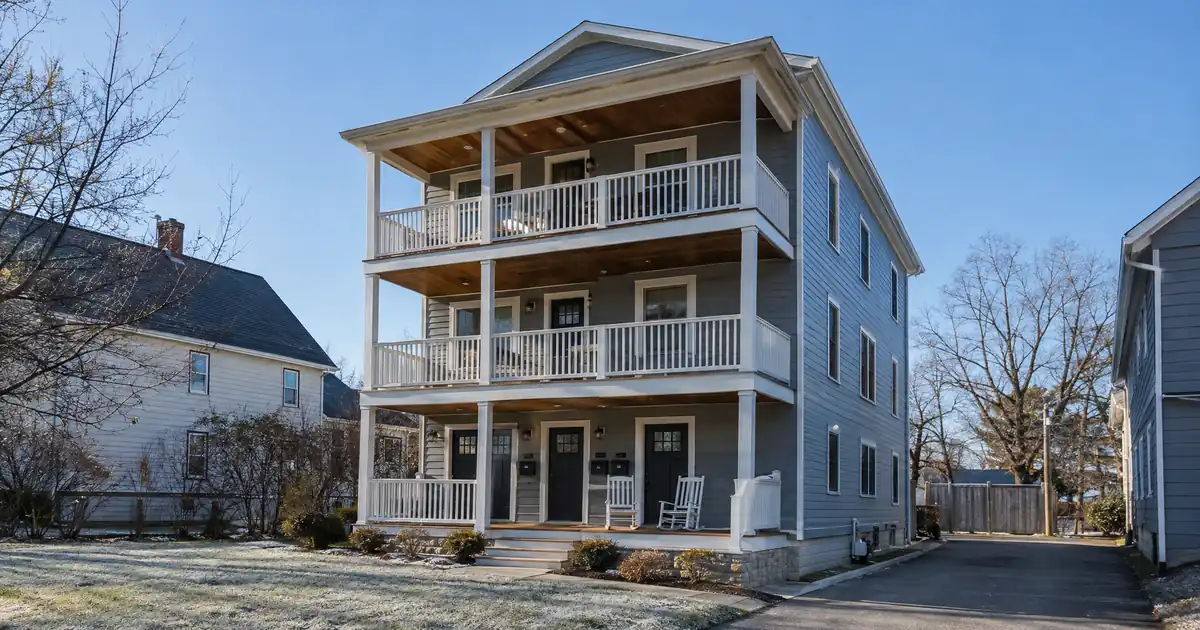
The Quick Read: On a duplex, triplex or fourplex you live in, asking the servicer to cancel mortgage insurance is usually the cheaper route. The catch is the equity test, which is stricter than the one on a single-family home. A refinance is for the owner who is nowhere near that test, whose insurance can’t be cancelled, or who wants a different loan anyway. Which route fits depends on who owns your loan, how much equity you hold, and whether the existing loan is worth keeping.
Key Takeaways
- The familiar “80% request, 78% automatic” rule is built around single-family homes. A 2-4 unit owner-occupied home is held to the loan owner’s own, stricter policy.
- Cancellation costs little: usually a valuation fee, with no new loan and no new closing costs. It needs a lot of equity, though.
- A refinance replaces the whole loan. It brings new closing costs, a new term and a new underwrite, and it needs mortgage insurance again if the new loan sits above 80% of value.
- Lender-paid insurance generally can’t be cancelled by the borrower, so refinancing becomes the practical exit.
Side-by-Side
| Factor | Cancel PMI | Refinance |
|---|---|---|
| Leverage test | 70% or 65% of original value | New loan to 95% on a limited cash-out; 75% on cash-out |
| Credit floor | No new credit pull; payment history reviewed | 620 decision score on wholesale conventional programs |
| Mortgage insurance | Ends if approved | Required again above 80% LTV |
| Occupancy | You keep living there | You keep living there; owner-occupancy documented |
| Documentation | Written request, payment record, valuation | Full application, income, appraisal, title |
| What changes | Nothing else on the loan | New note, new term, new costs |
Every figure above is subject to lender guidelines and full file review, and none of it is a commitment to lend. The 95% limited cash-out and 75% cash-out limits for two- to four-unit primary homes follow the Fannie Mae Eligibility Matrix.
Refinance savings and break-even estimate
The starting figures are an example value with a balance in proportion and a placeholder for costs. Replace them with yours, and enter the current rate from your statement.
Editable benchmark: 7.32% as of October 22, 2026 · Freddie Mac 30-year average via FRED®. A conventional market reference, not a refinance quote.
Illustrative starting assumptions: a $350,000 home value, a $245,000 current balance, a current rate you enter and a remaining term seeded at twenty-five years, closing costs seeded at $5,000 as an editable placeholder (not a fee quote) and rolled into the new loan, a thirty-year term at the current Freddie Mac benchmark, and property taxes and insurance estimated at typical national rates. Every field is editable.
Illustrative estimate only — not a Loan Estimate, approval, quote, or commitment to lend. The new rate field carries the weekly Freddie Mac thirty-year conventional benchmark, a market reference and not a refinance quote; a refinance is priced by the lender at lock, and the current rate, the remaining term and the closing costs are figures you enter. The current payment is estimated from the balance, the current rate and the remaining term; the break-even divides the closing costs by the monthly saving and ignores the interest effect of a longer term. On the VA IRRRL the funding fee is added to the loan unless the veteran is exempt. Taxes and insurance are editable estimates. Licensed in sixteen states for consumer mortgages; Lendmire is a broker, never the lender.
Why a 2-4 Unit Home Plays by Different Rules
The standard cancellation rules were written for one-unit homes. For a 2-4 unit principal residence, the investor that owns your loan decides, and that investor is Fannie Mae or Freddie Mac. They are not interchangeable.
Under Fannie Mae's servicing guide, the automatic-termination trigger for a 2-4 unit primary home is not 78%. Insurance becomes eligible to end after the midpoint of the original amortization period, provided payments are current. On a 30-year loan, that is roughly year 15. The 78% trigger applies to one-unit homes and second homes. If you borrow on request instead, Fannie Mae's guide asks for a balance at 70% of original value on a 2-4 unit, against 80% on a one-unit home.
Freddie Mac treats a 2-4 unit primary home as a "Non-HPA Mortgage." For borrower-requested cancellation, its guide uses original value, and the balance must be 65% or less.
Put plainly, a single-family owner reaches the cancellation line at 20% equity. The 2-4 unit owner needs about 30% to 35% on the original value.
Practitioners at Lendmire see this gap catch owners off guard. A borrower reads a general PMI article, expects cancellation at 20% equity, and learns the building is held to a higher bar. Find out which agency owns your loan before you decide anything else. Your servicer can tell you, and the answer changes the math.
How Cancellation Works on a 2-4 Unit
Cancellation is a request, not a new loan. Here is the usual path:
1. Confirm the loan owner and the insurance type. Borrower-paid insurance can be cancelled on request. Lender-paid insurance generally can't.
2. Check the threshold. Fannie Mae's is 70% of original value. Freddie Mac's is 65%.
3. Check your payment record. Servicers typically look for a clean recent history, with no recent serious late payments.
4. Check for other liens. A second mortgage or HELOC on the building can block a request.
5. Ask in writing. Freddie Mac's guide describes handling written or verbal requests, but a written request leaves a record.
6. Expect a valuation. If you rely on appreciation instead of the original value, the servicer orders an appraisal or a broker price opinion, usually at your expense.
There are two ways to use equity. The original-value route counts only principal paid down. The current-value route lets appreciation help, but it generally needs the loan to be seasoned more than two years. Freddie Mac also says a loan under two years old is reviewed on current value only when the added value comes from substantial improvements, and that routine repairs and maintenance don't count. Confirm the current-value details with your servicer, because they vary by investor and loan age.
A Worked Illustration
The numbers below are illustrative, not typical of any market. Say you bought a fourplex you live in at 95% of its price, and the balance has since been paid down to about 90% of the original value. To hit Fannie Mae's 70% line on current value, the home needs to be worth about 29% more than its original value. For Freddie Mac's 65% line, it needs about 38% more. That is a lot of appreciation. A shorter list of cases fits cancellation well: higher-than-average appreciation, a loan that started with a larger down payment, or extra principal payments over several years.
How a Refinance Removes PMI on a 2-4 Unit
A refinance doesn't "cancel" anything. It pays off the old loan, and the old insurance goes with it. The new loan then carries whatever insurance its own leverage requires.
Most owners in this situation use a limited cash-out refinance, also called a rate-and-term refinance. The new loan pays off the existing first mortgage, closing costs and any purchase-money second lien, with only incidental cash back. Across the wholesale programs Lendmire places files with, a two- to four-unit principal residence can reach 95% on a refinance like this, and mortgage insurance applies above 80%. So a refinance only removes insurance if the new loan lands at 80% or below. That means roughly 20% equity on the new valuation, not the 30% to 35% the cancellation test needs.
That gap is the real argument for refinancing. A new appraisal resets "value" to today's, and the insurance question is decided against the new loan's rules, not the old loan's investor policy. Insurance that would take years to cancel can disappear at closing if the numbers allow.
Other points on the refinance side:
- An appraisal is generally expected on a 2-4 unit. Confirm that early with your loan officer.
- The credit floor on Lendmire's wholesale conventional programs starts at a 620 decision score, and the automated finding governs most files, with a total ratio ceiling of 50%.
- Title must be in your name. The new loan must include at least one owner on title at application, so a building held in an LLC would first need to move to you personally.
- Paying off a non-purchase second lien converts the deal into a cash-out refinance, which on a 2-4 unit tops out at 75% LTV. The seasoning rules also apply: the first mortgage being paid off generally must be at least 12 months old.
Costs and terms are the other half of the story. A refinance means new closing costs, a new note and a new loan term. Those are separate from the insurance question, and they are what the break-even math has to cover.
When Cancellation Is the Better Fit
Cancellation tends to win when most of these are true:
- Your balance is already at or near 70% or 65% of the original value, or appreciation closes the gap.
- You like your existing loan's interest rate and remaining term, so replacing the note would cost you something.
- Your payment record is clean and the building carries no junior liens.
- The insurance is borrower-paid.
- You're a few years from selling or moving, so a refinance's costs wouldn't have time to pay back.
The cost of cancelling is a valuation fee, not a new loan. The financial case for cancellation is just as strong when you owe a loan with a low balance, because you keep a term that has already been partly paid down.
The flip point: if the servicer denies a valid request, or equity won't reach the threshold for years, cancellation stops being the cheap option. Waiting for automatic termination at the amortization midpoint is the fallback, and it can mean paying insurance for a long time.
When Refinancing Is the Better Fit
A refinance tends to win when one or more of these fits:
- Lender-paid insurance. Borrower-requested cancellation covers borrower-paid insurance only, so a new loan is the realistic way out.
- Equity between roughly 20% and 30%. You're too far from the 2-4 unit cancellation line, but you'd clear 80% on a new appraisal.
- A better loan, apart from the insurance. Perhaps you want a shorter term, to drop an adjustable structure, or to pay off a second lien.
- A servicer that won't cooperate, or an old valuation that works against you.
- An FHA loan. FHA mortgage insurance is a different program, not covered by the conventional cancellation tests. Lendmire's piece FHA Loan vs. Conventional PMI on a 2-4 Unit Primary Home covers that exit.
Run the full comparison, not just the insurance line. A lower monthly cost can hide a longer remaining term, and a refinance resets the clock. If your current interest rate is low relative to the market, replacing the note is a real cost, because you give up that rate to eliminate the insurance. If your rate is well above what a new loan would carry, the refinance can solve two problems at once. For the loan options themselves, Lendmire's conventional loan programs spell out how a 2-4 unit primary residence is treated.
Edge Cases That Change the Answer
- Value below original. Cancellation on the original-value test assumes the property hasn't declined. An appraisal or price opinion below the original value is grounds for denial.
- Loan under two years old. Current-value cancellation generally needs seasoning, or substantial documented improvements.
- Older loans. Loans made before the 1999 federal law took effect follow the investor's own midpoint rule.
- Second lien or HELOC. It can block a cancellation request on Fannie Mae loans, even though Freddie Mac says servicers must not require a lien certification. The two investors differ here.
- Occupancy changes. If you move out and rent every unit, the property is no longer a principal residence, and leverage limits drop sharply. Occupancy decides the leverage: a 2-4 unit investment property tops out at 75% on a purchase.
- Loan modifications. A modification can change your payment history record, which servicers review.
What to Do If the Servicer Says No
Servicers sometimes deny 2-4 unit requests by applying single-family logic. Ask which investor owns the loan, and ask the servicer to state the denial grounds and the valuation result in writing. Then compare the stated reason to the investor's own test. If the denial is correct, because equity is short, a refinance is the next step to price out.
One federal rule matters here too. The CFPB's consumer guidance says the legal cancellation protections apply to single-family principal residences, and that some lenders and servicers may allow removal under their own standards. For a 2-4 unit, investor policy fills that space. Conventional rules do get updated, so check the current guide with your servicer before you act.
A Balanced Verdict
For most 2-4 unit owner-occupants, the first move is a phone call to the servicer: who owns the loan, what is the threshold, and what is the valuation process? If the equity is there, cancellation is the lower-cost path. If it isn't, and a new appraisal would put you at 80% or below on a refinance, the refinance can be the only way to eliminate the insurance in a reasonable time. For lender-paid insurance and FHA loans, the refinance is usually the route by default. In between, the break-even depends on closing costs, the remaining term and the loan you'd give up.
Frequently Asked Questions
Does the 78% automatic termination apply to my duplex?
Not in the usual way. For a 2-4 unit principal residence, Fannie Mae's automatic termination arrives at the midpoint of the original amortization period, not at 78%. Freddie Mac treats these as non-HPA loans and applies its own policy.
Which is cheaper, cancelling PMI or refinancing?
Cancelling, in most cases. It usually costs a valuation fee and leaves your loan untouched. A refinance adds new closing costs and a new term. It becomes the better deal when cancellation isn't available or the replacement loan improves your situation in other ways.
Can appreciation help me cancel on a 2-4 unit?
Yes, if the loan is seasoned and the servicer accepts a current valuation. Fannie Mae's current-value test uses 70% and Freddie Mac's uses 65%, and both generally want the loan past two years. Younger loans usually need documented substantial improvements. Routine repairs don't count.
Will a refinance always remove the insurance?
No. The new loan carries insurance whenever its LTV is above 80%. If you refinance at a high balance, you may simply swap one insurance policy for another. The refinance only eliminates insurance when the new loan lands at 80% or below.
What if my insurance is lender-paid?
Borrower-requested cancellation generally covers borrower-paid insurance only. With lender-paid coverage, a refinance is usually how it ends, so ask your servicer which type you have before comparing options.
If you are weighing a refinance and want the break-even run on your own numbers, Lendmire can help you compare the programs on the same home.
For your own numbers, request a scenario review with Lendmire.
About Lendmire
As a mortgage broker (NMLS# 2371349), Lendmire helps homeowners and home buyers in 16 states with FHA, VA, conventional and jumbo purchase and refinance loans arranged through wholesale lenders. Lendmire is never the lender; program terms are set by the lender and the agency guidelines. Scotsman Guide named Lendmire a Top Mortgage Workplace in both 2025 and 2026.
Get Started
Ready to find the right loan for you?
In about 30 seconds you can review financing options available for your home or investment property. No commitment required.
Informational only. Not a Loan Estimate, approval, or commitment to lend. Program availability and eligibility are subject to lender guidelines, credit approval, property review, and underwriting.
References
1. Fannie Mae Eligibility Matrix
2. Fannie Mae Servicing Guide B-8.1-04: Termination of Conventional Mortgage Insurance
3. Freddie Mac Seller/Servicer Guide 8203.3 (cancellation data)
4. Freddie Mac Bulletin 2021-37
5. CFPB: When can I remove private mortgage insurance (PMI) from my loan?
This article is part of Lendmire’s conventional loan program — full qualification details, guidelines, and scenarios live on the program page.
Related reading: Refinance Requirements to Drop PMI on a Conventional Loan · PMI Appraisal vs Refinance for a First-Time Buyer on a Conventional Loan · PMI Refinance Appraisal Requirements After Your Home Value Rises
Brandon Miller
Founder & CEO, Mortgage Loan Originator, Lendmire LLC
- Mortgage Loan Originator · NMLS# 1129696 · Verify on NMLS Consumer Access
- North Carolina Real Estate Broker · License# 343312 · Verify on NCREC
- North Carolina Insurance Producer · License# 19053198 · Property, Casualty, Life, Health · Verify on NAIC SBS
- Lendmire LLC · Firm NMLS# 2371349 · Verify firm licensure
Legal disclosures. Lendmire (NMLS# 2371349) is a state-licensed mortgage brokerage that arranges financing through wholesale lender relationships. Lendmire is not a direct lender, depository institution, or registered financial advisor. The discussion above is general informational content about real estate financing — it is not financial, legal, or tax advice, and readers should consult licensed professionals for guidance on their individual circumstances. Loan inquiries are subject to lender underwriting; this article does not represent a commitment to lend. Loan terms, rates, and qualification standards vary by borrower, property, and state, and are subject to change at any time. Equal Housing Opportunity. NMLS Consumer Access: nmlsconsumeraccess.org.