
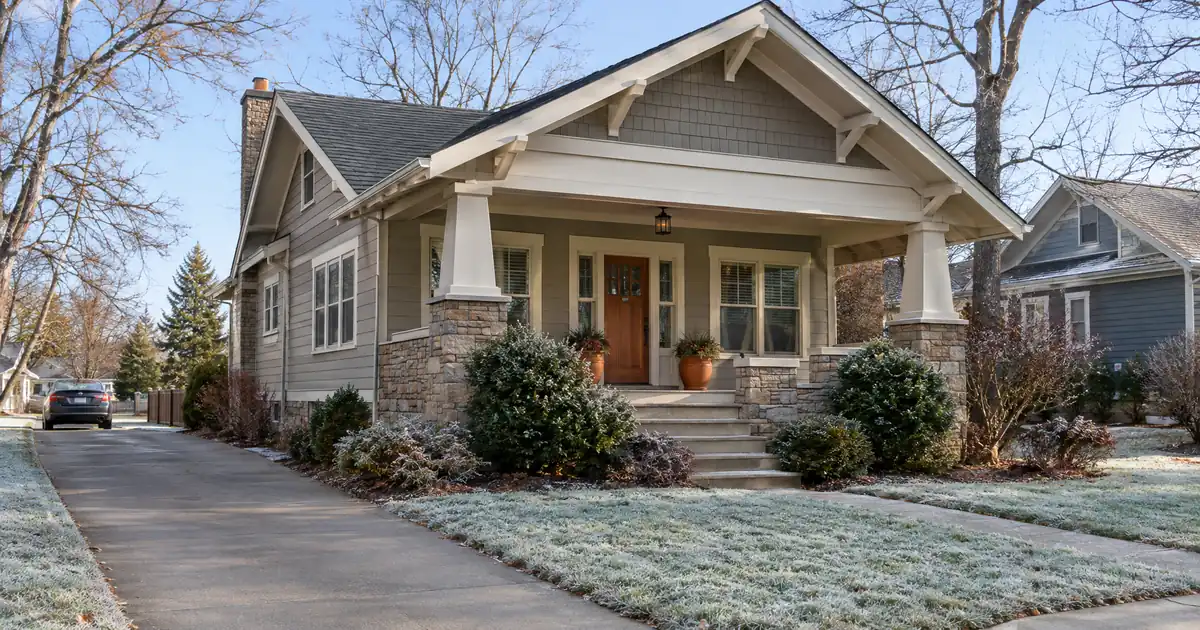
The Quick Read: Usually, yes. A blanket cash-out refinance (one loan secured by both houses) is sized on the pooled rent coverage and the pooled appraised value, and with no strong house in the pool, nothing offsets a thin rent, a low appraisal, or heavy existing debt. Compared with refinancing each house on its own, the answer depends on whether either weak house could clear the test alone.
- The lender sizes the loan on the pool, so two weak houses pull down the blended coverage and can pull down the combined value.
- Your cash is the new loan minus the payoff of every old loan and the closing costs.
- Cash-out on a portfolio loan is never above 75% of the pooled value, and the rent the pool can support may cap it lower.
- A blanket can help when one house would fail alone. It rarely helps when both houses are weak.
- The price of pooling is cross-collateralization and a release price you have to negotiate.
How a Blanket Cash-Out Gets Sized
A blanket cash-out is sized on the lower of two limits: a leverage cap on the pooled value and the loan the pooled rent can carry. Whichever limit is tighter sets the loan. Two weak houses tighten both.
Some vocabulary first. DSCR, the debt service coverage ratio, is monthly rent divided by the monthly housing payment. That payment is PITIA: principal, interest, taxes, insurance, and any association dues. LTV, loan-to-value, is the loan divided by the appraised value.
Across the wholesale network, the product built for this is the 30-year portfolio DSCR loan. It puts two to twenty rentals under one note. Loan sizes run from $300,000 to $5,000,000, with larger balances on review. Eligible property types are single-family homes, two-to-four-unit properties, condos, and townhomes. Pooled coverage has a 1.00 floor, which means the rent from every house is added up and compared against the debt service on the whole loan. The product allows an interest-only period, and it comes with a 30-year term and schedule. All of this is subject to lender guidelines.
On cash-out, the ceiling on investment property is 75% of the pooled value. That holds for a portfolio cash-out too. Proceeds are available on seasoned properties, meaning you have owned each one for about six months, counted from title recording. Inside the first six months, the loan is also capped at 90% of total cost (purchase price plus documented improvements), and at 100% of total cost from six to twelve months. The leverage ceiling still applies, so the loan is the lower of the two. After twelve months, the appraised value alone is the basis. A rate-and-term refinance, which returns no cash, is not subject to the cost-basis cap.
You may also run into a second blanket product, the rental portfolio term loan. It is built for five or more rentals under one loan, so it does not fit a two-house pool.
The check you receive is simple subtraction: the new loan, minus payoffs on the old loans, minus closing costs. Payoffs usually take the biggest share. Equity on paper and cash in hand are different numbers.
Why Two Weak Houses Return Less Cash
Weak can mean three different things, and each one shrinks the check in a different way. A house can have thin rent coverage, a low appraisal, or a large existing loan. The table separates them.
| Weakness | What the lender sees | Effect on cash |
|---|---|---|
| Thin rent | Low pooled coverage | Lowers the loan the rent supports |
| Low appraisal | Smaller pooled value | Lowers the leverage-cap loan |
| Heavy old debt | Large payoff | Eats the new loan before you |
Thin rent hits the coverage limit. Pooled rent against pooled debt service is the test. When both houses sit near the floor, the pool has no cushion, and the supportable loan stays close to what the old loans already cover.
A low appraisal hits the leverage limit. The 75% ceiling applies to the combined value, so a miss on either house lowers the cap for the whole pool.
Heavy existing debt hits the check directly. It does not change what the lender will lend, but it raises how much of the loan goes to payoffs.
With one strong and one weak house, the strong one can lift the blend. With two weak houses, the pool averages two weaknesses. Pooling cannot rescue a pool that has nothing strong in it.
A Worked Example With Ratios, Not Dollars
Run the numbers on four pools of two houses, with one assumption: both houses carry the same monthly payment. With equal payments, the pooled coverage is the simple average of the two houses.
| Pool | House 1 | House 2 | Pooled coverage |
|---|---|---|---|
| Two strong | 1.40x | 1.40x | 1.40x |
| One strong, one weak | 1.40x | 1.00x | 1.20x |
| Two weak | 1.05x | 0.95x | 1.00x |
| Two weak, thin | 1.00x | 0.95x | about 0.98x |
These are modeled ratios, not market data. The second-to-last pool sits exactly on the pooled 1.00 floor. The last pool falls under it, so underwriting would test the pooled coverage, the leverage, and the terms before anything else. Stronger pricing and leverage usually follow stronger coverage, so a pool at the floor tends to get the least room.
A house below 1.00 can sit inside a pool whose pooled coverage still clears the floor. That is a pooled-coverage fact, not a separate low-coverage program.
Now the appraisal effect, again in percentages of value. Say the pool’s old loans total 60% of what you expect the two houses to appraise for. At the 75% cash-out ceiling on investment property, your cash is the gap: 15% of expected value. Now say the appraisals come in 5% light. The ceiling drops to 71.25% of the original expected value, the payoffs stay at 60%, and your cash falls to 11.25%. A 5% appraisal miss cuts the check by a quarter. Payoffs do not shrink when value does. Terms vary by lender guidelines, property type, leverage, credit profile, and full file review.
Blanket, Strong-Only, or Separate Loans?
When you have two weak houses and want the most cash, compare three structures before you commit. The right choice depends on how each house does on its own test.
| Structure | Works best when | Watch for |
|---|---|---|
| Blanket of both | One house would fail alone | Little gain if both are weak |
| Separate loans | Each house clears alone | Two sets of costs and appraisals |
| One house only | One house clearly leads | The other still needs its own plan |
A blanket earns its keep when one house cannot stand on its own and the other can carry it. It adds little when both are weak, because the pool looks like two weak houses either way. Separate loans give a house with strong coverage its full cash-out, and a weak house little or nothing. Which route returns more total cash depends on where the weak houses land against each lender’s per-house test.
Cashing out only the better house can sometimes produce a similar check with less risk, depending on how the weak house tests. That option leaves the weak house’s old loan alone, and it never enters the pool.
Lendmire’s piece Two Individual Cash-Out Refinances vs a Two-Property Blanket Loan walks through that comparison in more depth.
What Else Changes the Check
Several details can move the proceeds up or down. Most of them are lender-specific, so confirm them file by file.
Per-house tests inside the pool. Many programs test the blend and also check each house alone. A strong average cannot hide a house that fails its own test. Some lenders in the network lean on the blend, and others want every house to pass.
A vacant or unleased house. Every property in the pool still needs a lease or an appraiser-supported market rent. An empty house is usually sized on the appraiser’s market-rent opinion, which can run lower than what you hope to charge.
Mixed seasoning. A recently bought house is sized by the cost-basis rule described earlier. That can lower combined proceeds even when its appraisal looks strong.
The appraisal forms. The agency world uses Form 1007, the Single-Family Comparable Rent Schedule, and Form 1025, the Small Residential Income Property Appraisal Report, for rent opinions on one-unit and two-to-four-unit properties. Under agency rules, Form 1007 is required for a one-unit investment property that uses rental income to qualify. DSCR loans are not agency products, so those rules do not govern your file. Which forms a DSCR lender orders is that lender’s call.
Property types. Owner-occupied homes, co-ops, mixed-use property, and commercial property are ineligible in the pool. Manufactured and mobile homes are not reviewable on these programs at all.
Credit. The portfolio programs set a 640 credit floor, with 680 or 720 on some structures. Reserves vary by lender, leverage, and loan size, and they commonly run around six months of PITIA, stepping up on larger loans.
Here is what a broker sees often. Files with two soft houses usually stall on the appraisal and the old payoffs, not on the credit score. Investors expect the rent to be the issue. The first appraisal that lands light is usually the surprise. Asking for a realistic value read on each house before you apply saves the most disappointment.
What You Give Up for the Extra Cash
A blanket secures one loan with both houses. That is cross-collateralization: each property backs the whole debt, so trouble on a weak house can reach the strong one. A missed payment is a problem for the whole pool, not for one address.
The exit side matters just as much. A release clause lets you pay to free one house from the loan. It is a negotiated contract term, not a right that comes with the product. The release price runs above that house’s allocated balance, and the loan documents and the lender’s release terms decide the rest. After a release, the remaining houses still have to cover the debt service. If the weak house is the one that stays, it can block the next release.
That is why a blanket suits a long-hold pool where you do not plan to sell. If a sale is possible, read Lendmire’s piece Can You Sell One Rental From a Two-Property Blanket Cash-Out Refinance? before you sign anything.
Prepayment terms deserve their own line in the checklist. Some portfolio structures carry a prepayment cost, and an early exit from the pool can trigger it.
Ways to Protect Your Cash
You have more options than accepting a smaller check.
- Fix first. Raise rents at renewal, finish pending repairs, or wait for seasoning to run, then apply. Improvements may support a higher appraised value, depending on comps and underwriter review.
- Leave the weak house out. A pool of the stronger house alone keeps the weak one from dragging the coverage.
- Finance the weak house on its own. A single-property DSCR loan on one house is a different product. Coverage below 1.00 is available through select lenders in the network, with leverage and terms adjusted.
- Use an interest-only period. The 30-year portfolio structure offers one, which can lift coverage on paper. It does not change what you owe at the end.
- Stagger the timing. Waiting on one house until it seasons or leases up can raise what the pool supports later.
The strongest files clear both tests: enough equity and enough rental coverage. More cash down never erases a leverage cap, a credit floor, or a reserve rule. And clearing 1.00 is not the same as positive cash flow, since repairs, vacancy, management, utilities, and capital spending sit outside the DSCR math. Lendmire’s complete DSCR loans guide covers the full picture on program structure.
Questions to Ask Before You Commit
Get these answers in writing before you sign.
- Is each house tested on its own as well as in the pool?
- What loan amount is allocated to each house?
- What is the release price, and is the pool re-tested after a release?
- How is a vacant or unleased house treated?
- What happens to the pool if one appraisal comes in low?
- What prepayment terms apply?
Key Terms Defined
Blanket loan: one note secured by several rental properties. A portfolio DSCR loan and a cross-collateralized loan describe the same thing.
Cross-collateralization: a setup where every property in the pool backs the entire loan.
Release clause: a contract term that lets you pay to free one property from the pool.
Seasoning: the ownership time a lender wants before it will lend cash against a property.
Pooled coverage: total rent divided by total debt service across all houses in the loan.
Frequently Asked Questions
Does “return” here mean cash proceeds or investment return?
This article uses it as cash proceeds, the check you receive at closing. Investment return is a different measure, such as cash-on-cash, and it depends on rent, expenses, and what you paid. A refinance that returns less cash can still leave a house with a healthy yield, and the reverse is also true.
Can a strong house carry a weak house in a blanket?
Often yes, up to a point. Pooled coverage lets a stronger house lift the blend, which is the main reason investors pool. Some lenders also test each house alone, so a strong average does not always rescue a house that fails by itself. With two weak houses, there is nothing strong to do the carrying.
Do two houses even qualify for a blanket?
Yes. The 30-year portfolio DSCR loan starts at two properties and goes up to twenty, subject to lender guidelines. The rental portfolio term loan is a different structure for five or more rentals, so it does not apply to a pair.
Is it better to cash out only one house?
Often it is. Leaving the weaker house out keeps its thin rent and low value out of the pool, and your check may land close to what the full blanket would return. The tradeoff is that the weak house keeps its current loan and needs its own plan later.
What if I want to sell one house later?
Then the release terms decide your cost to exit. The release price runs above the house’s allocated balance, and the remaining pool must still cover its debt service. If a sale is likely, a blanket is usually a poor fit, and separate loans keep the exit simpler.
Next Step
If you are buying or refinancing a rental property and want to see how the numbers work, Lendmire can help you compare DSCR loan options based on the property income, credit profile, leverage, and investor goals. Lendmire is a broker that arranges financing through select lenders in its wholesale network, across 41 markets including Washington, D.C. Programs and guidelines change, and every file is underwritten individually. Nothing here is a commitment to lend.
For how equity extraction works on an investment property, see Lendmire’s guide to cash-out refinance on an investment property.
About Lendmire
Lendmire (NMLS# 2371349), a non-QM mortgage broker serving investors in 41 markets including Washington, D.C., helps structure DSCR scenarios commonly evaluated around a property’s rental income rather than personal income paperwork, subject to lender guidelines. A Scotsman Guide Top Mortgage Workplace in 2025 and 2026, Lendmire places loans through wholesale investor lenders and is not a direct lender.
Get Started
Ready to find the right loan for you?
In about 30 seconds you can review financing options available for your investment property. No commitment required.
Informational only. Not a Loan Estimate, approval, or commitment to lend. Program availability and eligibility are subject to lender guidelines, credit approval, property review, and underwriting.
References
1. Fannie Mae Appraisers & Property Underwriting
2. Fannie Mae Selling Guide B4-1.2-01
This article is part of Lendmire’s cash-out refinance program — full qualification details, guidelines, and scenarios live on the program page.
Related reading: How to Cash-Out Refinance Your Home Step by Step · Should You Pull Extra Cash in a Cash-Out Refinance? · How Much Does a Cash-Out Refinance Cost?
Brandon Miller
Founder & CEO, Mortgage Loan Originator, Lendmire LLC
- Mortgage Loan Originator · NMLS# 1129696 · Verify on NMLS Consumer Access
- North Carolina Real Estate Broker · License# 343312 · Verify on NCREC
- North Carolina Insurance Producer · License# 19053198 · Property, Casualty, Life, Health · Verify on NAIC SBS
- Lendmire LLC · Firm NMLS# 2371349 · Verify firm licensure
Legal disclosures. Lendmire (NMLS# 2371349) is a state-licensed mortgage brokerage that arranges financing through wholesale lender relationships. Lendmire is not a direct lender, depository institution, or registered financial advisor. The discussion above is general informational content about real estate financing — it is not financial, legal, or tax advice, and readers should consult licensed professionals for guidance on their individual circumstances. Loan inquiries are subject to lender underwriting; this article does not represent a commitment to lend. Loan terms, rates, and qualification standards vary by borrower, property, and state, and are subject to change at any time. Equal Housing Opportunity. NMLS Consumer Access: nmlsconsumeraccess.org.