
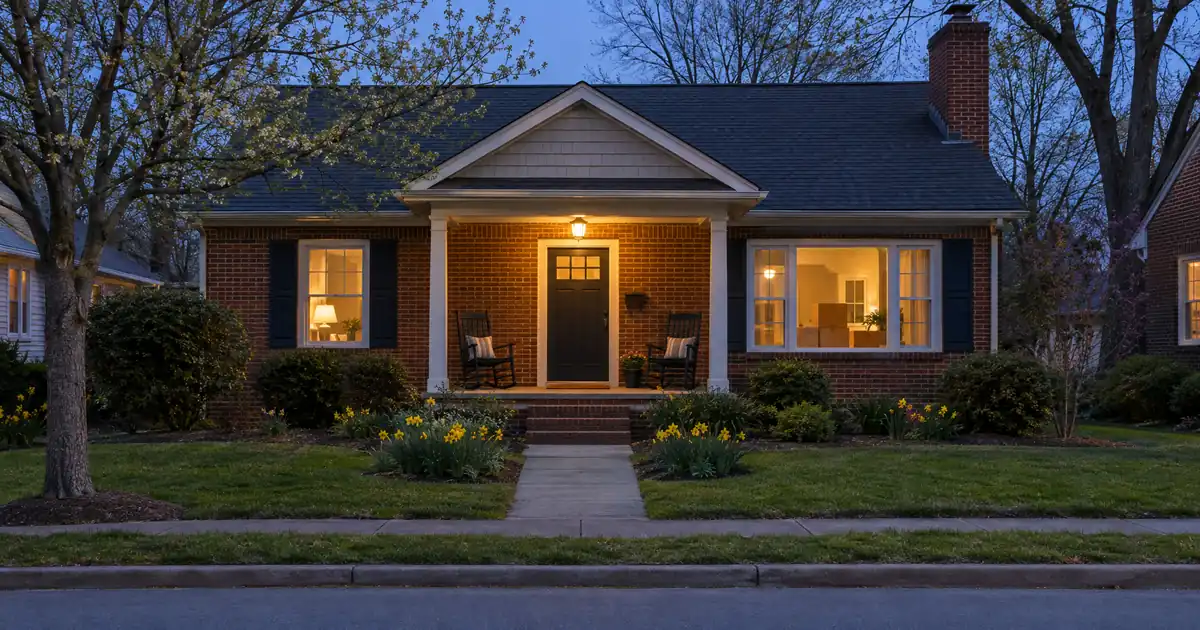
The Quick Read: Usually only in a limited sense. A second-home purchase has no separate allowance for closing costs, because the loan is capped at 90% of the lower of the sales price or the appraised value. Closing costs can sit inside the loan only if the total still fits under that cap, and on most files the buyer covers them with cash, gift funds, or a seller or lender credit.
Why Is Rolling In Different on a Purchase?
On a purchase, the loan amount is not built from your costs. It is built from a ceiling. The lender takes the lower of the sales price or the appraised value, applies the maximum leverage for the occupancy type, and that product is the most you can borrow. Closing costs get no extra room above it.
Conventional payment estimate
The starting figures are an example price at the first-time buyer’s minimum down payment. Replace them with yours.
Editable benchmark: 7.32% as of October 22, 2026 · Freddie Mac 30-year average via FRED®. A conventional market reference, not a conventional loan quote.
Estimate seeded at the low end of Fannie Mae’s published range (0.58%–1.86% a year); the insurer prices the actual premium on the score and the leverage. Applies only above 80% loan-to-value.
Illustrative starting assumptions: a $350,000 price, the first-time buyer’s minimum down payment, a thirty-year term at the current Freddie Mac benchmark, mortgage insurance at the low end of Fannie Mae’s published range, and property taxes and insurance estimated at typical national rates. Every field is editable.
Illustrative estimate only — not a Loan Estimate, approval, quote, or commitment to lend. The rate field carries the weekly Freddie Mac thirty-year conventional benchmark, a market reference and not a conventional loan quote; your rate is set by the lender at lock. The mortgage insurance figure is an editable estimate seeded from Fannie Mae’s published typical range, not a premium quote; the insurer prices the actual premium, and the cancellation month assumes scheduled payments with no extra principal and no change in value. Taxes, insurance and dues are editable estimates; closing costs are not included. Conforming loan limits apply by county. Licensed in sixteen states for consumer mortgages.
Across the wholesale programs Lendmire places files with, a one-unit second home tops out at 90% leverage. A principal residence can reach 95%, or 97% for a first-time buyer on a fixed rate. That gap matters. Final terms depend on the lender’s guidelines, the property type, and the borrower’s complete credit picture.
The math is simple. Say the contract price is 100 and the appraisal agrees. The maximum loan is 90. If your down payment is exactly 10%, there is zero room left to finance anything else. Add a financed cost and you have pushed the loan above 90%, which the program does not allow.
Fannie Mae’s Selling Guide on loan-to-value ratios explains the formula. Divide the loan amount by the property value, and on a purchase that value is the lower of price or appraisal. The result is rounded up to the next whole percent, so a ratio of 90.01% is treated as 91%. Any financed mortgage insurance is added to the loan before dividing. (On a second home at 90%, that rounding leaves very little slack.)
The Fannie Mae Eligibility Matrix lists the same 90% ceiling for a one-unit second home on a purchase.
So Why Do Some Articles Say “Yes”?
Because “rolling in” describes three different things, and only one is a true increase in the loan.
1. A larger loan, where leverage allows. If you put down more than the minimum, there may be room under the cap to borrow slightly more. You are really just choosing a smaller down payment, and the cap still governs.
2. A seller credit. The seller agrees to pay part of your costs. The money comes from the sale proceeds, not your loan.
3. A lender credit. The lender reduces your upfront costs in exchange for a higher interest rate over the life of the loan.
None of these adds a “closing cost” line to the balance in the way a refinance can. That is why the same search returns “yes,” “no,” and “sometimes.” Each answer is right for a different mechanism. For a second-home purchase, the accurate answer is: only if the math still fits under 90%, and usually it does not.
What Can and Can’t Be Financed?
The loan itself does not sort costs into financeable and non-financeable ones. The ceiling does the sorting. Still, it helps to know what makes up your cash to close.
| Cost item | Typical handling on a second-home purchase |
|---|---|
| Down payment | Cash, gift funds, or eligible assets |
| Lender and third-party fees | Cash, seller credit, or lender credit |
| Prepaid taxes and insurance | Cash or seller credit, within limits |
| Escrow account setup | Cash or seller credit, within limits |
| Financed mortgage insurance | Added to the loan, counts toward the cap |
Closing costs are not only fees. They include prepaids and the initial escrow deposit, which is why total cash to close often surprises second-home buyers. Taxes and insurance on a vacation property can be significant, and they land at the table.
The federal disclosure form does include a line for “Closing Costs Financed (Paid from your Loan Amount).” The CFPB’s Closing Disclosure explainer notes that a higher loan amount can reflect costs rolled in, and that this is different from “Cash to Close.” A line on a form does not create room under the leverage cap.
The Real Ways to Reduce Cash to Close
If you cannot borrow your way out, four routes remain. Each carries a tradeoff.
| Route | Upfront effect | Longer-term effect |
|---|---|---|
| Seller credit | Lowers cash to close | May affect price negotiation |
| Lender credit | Lowers cash to close | Usually tied to a higher interest rate |
| Gift funds | Covers costs from a donor | Subject to donor and contribution rules |
| Adjusted down payment | Frees cash for costs | Higher balance, possibly higher insurance cost |
Seller credits
Sellers can contribute, but the amount is capped by leverage tier. Fannie Mae’s interested party contribution rules allow 3% of value above 90% leverage, 6% between 75.01% and 90%, and 9% at 75% or less. A second home at its 90% ceiling falls in the 6% tier. Each figure is subject to lender guidelines and a complete review of property type, leverage, and credit.
Here is the catch. Credits above your actual closing costs are treated as sales concessions, which reduce the price used to calculate leverage. A seller credit cannot be a back door to extra cash.
Lender credits
A lender credit cuts what you bring to the table, but the CFPB says these credits typically come in exchange for a higher interest rate. You trade a lower cash need today for a higher cost over the years you hold the loan. For a second home you plan to keep a long time, that tradeoff deserves a hard look. For a short hold, it can make more sense.
Gift funds
Gifts are allowed on second homes. Fannie Mae’s guide on personal gifts permits acceptable donors to fund the down payment, closing costs, or reserves on a principal residence or second home. They are not allowed on investment properties. At 80% leverage or less, a gift can cover everything needed. Above that, a second home generally requires a minimum contribution from your own funds, so confirm the exact requirement with your loan officer before counting on a gift.
Adjusting the down payment
Some buyers put down less than they planned so they can keep cash for costs. On a second home, that works only while you stay at or under 90%. Moving to a higher leverage tier can also change mortgage insurance and pricing. Because leverage rounds up, a small shift can push a file into the next tier.
How Occupancy Changes the Rules
The home’s classification decides your leverage, and leverage decides everything else.
| Occupancy | Typical maximum leverage (purchase) |
|---|---|
| Principal residence, first-time buyer, fixed rate | 97% |
| Principal residence, standard | 95% |
| Second home, one unit | 90% |
| Investment property, one unit | 85% |
Those figures come from the conforming programs Lendmire arranges through wholesale lenders, and every one is subject to lender guidelines and full file review.
A second home must meet occupancy tests. Fannie Mae’s occupancy rules require that you occupy it for some part of the year, that it be one unit, that it suit year-round use, and that you keep exclusive control. A two-to-four-unit property does not qualify as a second home. If you plan to rent it out heavily, the classification can change, and so does the loan. If rental use is central to your plan, that is a different loan conversation from this one.
Affordable-lending products, including HomeReady and Home Possible, are for principal residences. They do not apply to a second home, which is why the 97% and 95% tiers are out of reach here.
A Worked Example
Consider a buyer purchasing a one-unit vacation home with 10% down. The home appraises at the contract price. Leverage, reserves, and pricing vary by lender and program; the final terms follow the full file review.
- Maximum leverage: 90% of the price.
- Down payment: 10% of the price.
- Room left under the cap: none.
Now suppose the buyer wants to add costs equal to a few percent of the price to the loan. That would push leverage above 90%. The file does not work as structured.
What are the options? Bring more cash and keep the loan at 90%. Ask the seller for a credit within the 6% tier. Accept a lender credit and a higher interest rate. Or accept a smaller loan by putting down more.
Now the appraisal risk. If the home appraises below the price, leverage is measured against the lower value. A 90% loan on a contract price that appraises 3% light means the buyer must cover the gap in cash. In vacation markets, where comparable sales can be thin, this is a real risk. Plan a cushion.
Should You Do It? A Decision Checklist
Rolling costs in, or using a credit, makes the most sense when:
- Your cash is limited and you would otherwise drain reserves.
- You expect to sell or refinance within a few years, so a higher rate costs less overall.
- The seller is motivated and willing to credit within the cap.
Paying costs in cash and keeping the loan lean tends to work better when:
- You plan to hold the property for a long time.
- You can fund costs without thinning your reserves below a comfortable level.
- You want the lowest balance and the cleanest mortgage insurance picture.
One thing to weigh either way: a second home adds a second housing payment to your ratios. The wholesale conventional programs start at a 620 decision score, and the automated finding governs most files, with a total ratio ceiling of 50%. A larger balance or higher cost raises your ratio, which can cut against approval. Subject to lender guidelines, those limits vary by file.
Mortgage insurance deserves a mention as well. It is required above 80% leverage, and at 90% you will carry it. It can be requested for cancellation at 80% of original value with good payment history, and the servicer must end it automatically at 78%. A bigger balance means a longer path to those thresholds.
Key Terms Defined
Loan-to-value (LTV): The loan amount divided by the lower of the price or appraised value, rounded up to the next whole percent.
Closing costs: Lender fees, third-party fees, prepaid taxes and insurance, and the initial escrow deposit, all due at the table.
Cash to close: The total cash you bring, which includes your down payment plus closing costs, minus credits.
Interested party contribution: Money from the seller or another party with a stake in the sale, capped by leverage tier.
Sales concession: A contribution above your actual closing costs, which lowers the price used to measure leverage.
Purchase Versus Refinance
A refinance works differently. A limited cash-out refinance can pay off the existing first mortgage and the closing costs, with only incidental cash back, which is why costs get rolled in there more easily. A cash-out refinance on a second home is capped at 75% leverage, with seasoning rules on the loan being paid off. Those are separate decisions from a purchase, and Lendmire’s pieces on typical cash-out refinance closing costs for a second home go further on that side. Terms vary by lender guidelines, property type, leverage, credit profile, and full file review.
Common Misconceptions
“Closing costs can always be rolled in.” On a purchase, the leverage ceiling and the lower-of-price-or-value rule control the loan amount.
“A second home follows primary-residence rules.” It does not. The ceiling is 90% against 95% to 97% for a principal residence.
“A seller credit can be any size.” It cannot. Caps apply by tier, and excess is treated as a sales concession.
“Cash to close equals closing costs.” They are separate lines on the disclosure.
“Gifts are not allowed on a second home.” They are allowed, though not on an investment property.
“A lender credit is free money.” It usually costs you through a higher interest rate.
What the Lender Will Ask For
Expect to document the source of your down payment and costs, including any gift letters. Expect an appraisal, reserves that can run higher on a second home, and proof the property meets the occupancy tests. The file runs through automated underwriting, and the finding drives most decisions.
Buyers weighing the options can start by reviewing Lendmire’s conventional loan programs, which lay out the leverage tiers by occupancy type.
Frequently Asked Questions
Can I finance closing costs if I put down only 10% on a second home?
Not on top of a 90% loan. With 10% down, you are already at the ceiling, so any added cost would push leverage over the limit. You would need cash, gift funds, a seller credit within the cap, or a lender credit tied to a higher rate. Subject to lender guidelines.
Does a low appraisal hurt a second-home buyer more?
It can, because leverage is measured against the lower of price or appraised value, so a low appraisal shrinks the maximum loan and raises the cash you need. Vacation markets with few comparable sales are where this shows up most.
Can my family gift me money for closing costs on a vacation home?
Yes, from acceptable donors. Gifts can fund the down payment, closing costs, or reserves on a second home, though not on an investment property. Above 80% leverage, a minimum contribution from your own funds generally applies, so confirm the exact requirement for your file.
Can the seller pay all my closing costs?
Only up to the cap for your leverage tier, which is 6% of value between 75.01% and 90% leverage. Amounts beyond your actual costs count as sales concessions and reduce the price used for leverage. Exact terms depend on the lender’s guidelines, property type, leverage, and a full review of the borrower’s file.
Does renting out my second home change the loan?
Yes, it can. A second home must be occupied by you for part of the year and kept under your exclusive control. Counting rental income, or a multi-unit property, may change its classification, which changes the terms.
If you are buying a home and want to see whether a conventional loan fits your file, Lendmire can help you compare the options and what each one asks of the file.
For your own numbers, request a scenario review with Lendmire.
About Lendmire
Lendmire is a mortgage brokerage (NMLS# 2371349) licensed for consumer mortgage lending in 16 states, arranging FHA, VA, conventional and jumbo purchase and refinance loans through a wholesale lending network. Eligibility is determined by the lender on each file. Scotsman Guide named Lendmire a Top Mortgage Workplace in both 2025 and 2026.
Get Started
Ready to find the right loan for you?
In about 30 seconds you can review financing options available for your home or investment property. No commitment required.
Informational only. Not a Loan Estimate, approval, or commitment to lend. Program availability and eligibility are subject to lender guidelines, credit approval, property review, and underwriting.
References
1. Fannie Mae Selling Guide: Loan-to-Value Ratios
2. Fannie Mae Eligibility Matrix
4. Fannie Mae Selling Guide: Interested Party Contributions
5. Fannie Mae Selling Guide B3-4.3-04 Personal Gifts
6. Fannie Mae Selling Guide: Occupancy Types
This article is part of Lendmire’s conventional loan program — full qualification details, guidelines, and scenarios live on the program page.
Related reading: How a Lender Sizes a Conventional Cash-Out Refinance on a Second Home · Can You Avoid PMI on a Conventional Loan Without a Fifth Down? · Can a Repeat Buyer Get a Conventional Loan With Little Down?
Brandon Miller
Founder & CEO, Mortgage Loan Originator, Lendmire LLC
- Mortgage Loan Originator · NMLS# 1129696 · Verify on NMLS Consumer Access
- North Carolina Real Estate Broker · License# 343312 · Verify on NCREC
- North Carolina Insurance Producer · License# 19053198 · Property, Casualty, Life, Health · Verify on NAIC SBS
- Lendmire LLC · Firm NMLS# 2371349 · Verify firm licensure
Important disclosures. Lendmire (NMLS# 2371349) is a licensed mortgage brokerage. Lendmire is not a direct lender, depository institution, or financial advisor. All loan inquiries are subject to lender underwriting; this article does not constitute a commitment to lend. Rates, terms, and program guidelines are subject to change without notice and vary by borrower profile, property type, and state. Information in this article is general in nature and is not financial, legal, or tax advice. Equal Housing Opportunity. NMLS Consumer Access: nmlsconsumeraccess.org.