
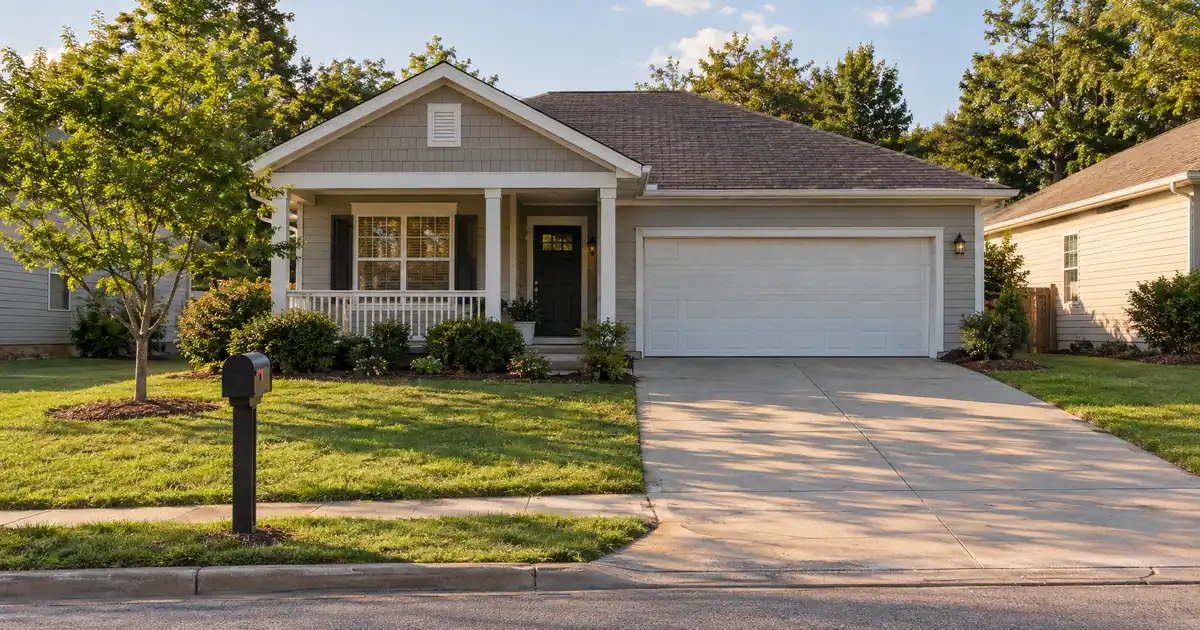
The Quick Read: A second home cash-out refinance releases the value of the home times 75%, minus what you still owe, minus closing costs. That 75% cap is five points below the 80% cap on a one-unit primary residence, so the same equity frees up less cash. Anything else on the property, such as a HELOC, comes out of the same pot. Every figure here is subject to lender guidelines and full file review.
Here is the formula in one line: value × 75% = the largest new loan. Subtract the payoff of your current first mortgage and any other lien that must be paid off. Subtract the costs paid from proceeds. What remains is your cash.
How Is the Release Amount Calculated?
The release amount is the largest new loan the cap allows, minus the payoff of your existing mortgage, any liens that must be cleared, and closing costs paid from proceeds. The cap is applied to the new loan, not to your equity. That is the step most people get wrong.
Work it in four steps:
1. Start with appraised value. The appraisal drives everything.
2. Apply the cap. On a one-unit second home, conventional cash-out tops out at 75%. Across the wholesale programs we place files with, 75% is the working ceiling for second homes.
3. Subtract the payoff. The new loan must pay off your existing first mortgage.
4. Subtract costs. Closing costs and prepaid items either come out of your proceeds or get added to the loan balance.
Picture a second home with a current mortgage balance equal to 50% of its value. The 75% cap leaves room for roughly 25% of the value in gross cash. Costs then trim that. If the balance is 60% of value, gross room shrinks to about 15%. If it is 70%, you have about 5% to work with before costs, which may not be worth the trouble.
That last case matters. Costs are real, and a thin release can vanish into them.
Why Is the Second Home Cap Lower Than a Primary Residence?
Lenders see a second home as a bit riskier than the home you live in. If money gets tight, borrowers tend to protect the primary residence first. So the agencies set lower leverage as a cushion.
Here is how occupancy changes the conventional cash-out cap, using the figures we work with every week:
| Property use | Conventional cash-out cap |
|---|---|
| One-unit principal residence | 80% |
| Two- to four-unit principal residence | 75% |
| Second home | 75% |
| Investment property | 75% |
Occupancy decides the leverage. If you rent a second home out regularly, the lender may treat it under different rules, and the cash available can change. Second-home treatment assumes you use the home yourself.
These specifics are subject to lender guidelines and a full review of property, leverage, and credit.
What Counts as Cash-Out?
Cash-out covers more than a check to you. Under Fannie Mae’s Selling Guide rules for cash-out refinances, a refinance counts as cash-out when it pays off your first mortgage and also finances closing costs, points and prepaids, or gives you cash. A new first mortgage on a property with no mortgage at all is treated as cash-out too.
That surprises people. You can own the home free and clear, take out a small loan, and still face the 75% cap.
The alternative is a limited cash-out refinance, often called rate-and-term. It has higher leverage limits but allows only incidental cash back. Only a subordinate lien that was used to buy the property may be paid off and rolled in. If your goal is to lower your payment or change your term without pulling real cash, that is the lane to ask about. Lendmire’s cash-out refinance programs page lays out how the programs differ.
What Does the Lender Check, Step by Step?
The lender checks value, payoff, seasoning, title, credit, ratios and reserves, in that order of importance for most files. Each one can shrink or block the release.
A file at 75.01% is treated as 76%. That breaks the cap. Files that miss by a hair get fixed by taking a little less cash.
Seasoning on the old loan. The first mortgage being paid off must be at least 12 months old, measured note date to note date. That rule traces to Fannie Mae’s announcement of the change. Seasoning is just the waiting period a lender wants between two events.
Seasoning on title. At least one borrower must have been on title for six months before the new loan funds. Exceptions exist for delayed financing (a cash purchase), inheritance and legal awards. In some cases property held in an LLC and majority-controlled by the borrower is also handled.
Credit and ratios. The wholesale conventional programs we work with start at a 620 decision score. The automated finding governs most files, with a total debt-to-income ceiling of 50%. A second home adds a second housing payment to your ratio. That is often the real limiter, not the equity.
Reserves. Reserves are the cash left in the bank after closing. On files run through Fannie Mae’s automated system, a debt-to-income ratio above 45% calls for six months of reserves on a cash-out. Expect lenders to look harder at reserves when you carry two properties.
Other liens. A HELOC or second mortgage that stays in place counts toward the combined limit. Fannie Mae calls this CLTV and HCLTV. Either way, the cap applies to all debt on the home together. A HELOC with a big balance eats your release dollar for dollar.
Listing status. If the home was listed for sale, it must be taken off the market by the time the new loan funds.
Key Terms Defined
LTV (loan-to-value): the new loan divided by the appraised value, shown as a percentage.
CLTV / TLTV: the same ratio, but counting every loan on the property, not just the first.
Payoff: the balance needed to retire your existing mortgage at closing.
Gross release: the cash the cap allows before closing costs.
Net release: the cash you actually receive after costs come out.
Seasoning: the minimum time a loan or ownership must exist before a refinance qualifies.
How Much Does Each Variable Move the Number?
Small changes in value, balance and costs swing the cash more than people expect. Here is how each input pushes the result, shown in percentages of value so you can map it onto your own home.
| What changes | Effect on your cash |
|---|---|
| Appraisal comes in lower | Cap shrinks; cash falls faster than value |
| Existing balance is higher | Cash falls point for point |
| Costs are financed | Balance rises; less room under the cap |
| HELOC stays open | Counts toward the combined cap |
| Cap is 75%, not 80% | Five fewer points of value available |
The appraisal effect deserves a second look. Say the home appraises 5% below what you hoped. Your cap drops by 3.75% of the original value. But your payoff has not moved. So the cash drops by that full amount, a bigger bite than the 5% headline suggests.
Run it in reverse if you have a target. Take the cash you want, add your payoff and expected costs, and divide by 0.75. That gives the value you need. If your appraisal comes in short, the target will not fit.
Where Does the Rule Break?
The 75% rule has exceptions, and several of them cut against you. These are the named edge cases.
Unit count. Fannie Mae’s matrix shows second-home cash-out for one unit only. Multi-unit properties are treated under other occupancy categories with their own caps.
Manufactured homes. Caps for manufactured homes differ from site-built ones, and the second-home cash-out figure is not always plain on the published matrix. Ask before you assume.
Co-ops. Some lenders limit or decline cash-out on co-op second homes. Check with your loan officer.
Above the conforming limit, the jumbo lanes take over and the terms are lender-specific. Jumbo programs we place can reach 90% leverage on some purchase and refinance files, but second-home cash-out terms vary by lender, so do not assume the agency number carries over.
Rental use. If the home earns rental income on a regular basis, the lender may reclassify it as an investment property. That changes the cap and the file’s reserve and pricing profile.
Recently bought homes. The six-month title rule can block you. The delayed financing exception can help if you paid cash, but it carries conditions: an arm’s-length purchase and a documented source of funds.
Government loans. FHA and VA programs are not second-home cash tools. The HUD FHA Streamline refinances an existing FHA-insured loan, and HUD does not allow closing costs to be added to the new amount. The VA IRRRL is a no-cash-out product tied to a loan you already have. If someone says a streamline will pull cash out of your vacation home, ask them to show you the rule.
What Does Cash-Out Do to Your Budget?
A cash-out replaces your whole mortgage with a bigger one. So the payment and the total interest change on the entire balance, not just on the cash you took. That is the part that gets lost.
Consider an owner with an existing loan on a low rate who takes cash. The old loan disappears. The new one is set at whatever pricing applies on the day you lock. For some households that trade is fine. For others it is the whole reason to leave the old loan alone and borrow differently.
Closing costs also cut into the release. Fannie Mae’s rules allow financing closing costs, points and prepaids in a cash-out, but whatever you finance makes the loan bigger and your cash smaller. A lender’s title insurance policy is a new cost on a refinance, since your owner’s policy does not carry over to a new lender.
Your Loan Estimate shows the projected cash to close, and your Closing Disclosure shows the final figures. Compare them line by line.
Be wary of a “no-cost” refinance. The costs do not disappear. They are built into the rate or the balance.
Do You Get a Three-Day Cancellation Window?
Probably not on a second home. The federal right to cancel a refinance is built around your principal dwelling. A loan on a second home generally falls outside it. Treat the closing as final, and know that your funds may be handled on a different schedule than they would be on your main home.
The CFPB explains the right of rescission for refinances on a principal home. If you are unsure whether it applies to your loan, ask your loan officer to confirm in writing before you sign.
Cash-Out, HELOC or Something Else?
If your main goal is cash from a second home, you have three broad paths.
| Option | How it works | Trade-off |
|---|---|---|
| Cash-out refinance | Replaces the first mortgage | Resets the whole loan |
| Second lien or HELOC | Added behind your first mortgage | Keeps the first loan; counts toward combined cap |
| Rate-and-term refinance | Pays off the old loan only | Little to no cash back |
A second lien can make sense when your existing first mortgage is one you want to keep. The combined cap still applies, so you will not get more total borrowing. You are just choosing whether to replace the first loan or sit behind it.
Some owners also ask about tapping their primary residence instead. On a primary home you can go to 80% on a one-unit cash-out, which is five points more room. Whether that is wise depends on which home you are putting at risk. If the cash is meant to fund the down payment on a second home, Lendmire’s piece How Much Second Home Down Payment a Cash-Out Refinance Funds covers that angle.
What Do Borrowers Actually Decide?
The decision comes down to three questions. Does the net cash justify replacing your current loan? Can you carry two housing payments with room to spare? Is the equity worth the risk to a second property?
Run the formula with your own numbers first. Gross room is value × 75% minus payoff. Then take off costs. If what is left is small, a different structure may serve you better. If it is large, check ratios and reserves before you fall in love with the figure.
If the home is in Texas, state rules add another layer for homestead properties. Lendmire’s piece How Much a Texas Homestead Cash-Out Refinance Funds for a Second Home covers that.
Tax treatment can depend on your situation; borrowers should speak with a qualified tax professional before relying on any deduction or credit.
If you are weighing a cash-out refinance against keeping the loan you have, Lendmire can help you compare the programs and the equity each one reaches.
Frequently Asked Questions
Can I take out 80% on a second home?
No, not on a conventional cash-out. The cap is 75% for a one-unit second home, while a one-unit primary residence reaches 80%. The higher number you may have seen applies to a different occupancy type.
Is cash available just my value minus what I owe?
No. The 75% cap applies to the new loan, and then your payoff, any liens that stay or must be cleared, and costs come out of it. At 60% owed, you have about 15% of value before costs, not 40%.
How long must I own the home before cashing out?
At least one borrower must have been on title for six months, and the mortgage being paid off must be 12 months old. Exceptions include delayed financing after a cash purchase and inheritance. Subject to lender guidelines.
Can I rent out my second home and still qualify as a second home?
Occasional use may be fine, but regular rental income can lead a lender to classify the home as an investment property. That changes the cap and the file’s requirements. Ask before you list it.
Can an FHA Streamline or VA IRRRL pull cash out of a second home?
No. Both are streamline products for existing government-backed loans. They are not cash tools, and neither is built for vacation homes.
For your own numbers, request a scenario review with Lendmire.
For current guidelines and terms, see Lendmire’s refinance programs page.
About Lendmire
Lendmire (NMLS# 2371349) is a mortgage broker licensed for consumer lending in 16 states. Lendmire arranges FHA, VA, conventional and jumbo purchase and refinance loans through wholesale lenders; every file is underwritten by the lender under the applicable program guidelines. Scotsman Guide named Lendmire a Top Mortgage Workplace in both 2025 and 2026.
Get Started
Ready to find the right loan for you?
In about 30 seconds you can review financing options available for your home or investment property. No commitment required.
Informational only. Not a Loan Estimate, approval, or commitment to lend. Program availability and eligibility are subject to lender guidelines, credit approval, property review, and underwriting.
References
1. Fannie Mae Selling Guide B2-1.3-03, Cash-Out Refinance Transactions
2. Fannie Mae Selling Guide announcement SEL-2023-01
3. HUD FHA Streamline Refinance
This article is part of Lendmire’s cash-out refinance program — full qualification details, guidelines, and scenarios live on the program page.
Related reading: How Much Cash You Can Get on a Second Home Cash-Out Refinance? · How Much Cash a Lender Will Release in a Cash-Out Refinance? · Cash-Out Refinance for Second Home Owners Needing Cash
Brandon Miller
Founder & CEO, Mortgage Loan Originator, Lendmire LLC
- Mortgage Loan Originator · NMLS# 1129696 · Verify on NMLS Consumer Access
- North Carolina Real Estate Broker · License# 343312 · Verify on NCREC
- North Carolina Insurance Producer · License# 19053198 · Property, Casualty, Life, Health · Verify on NAIC SBS
- Lendmire LLC · Firm NMLS# 2371349 · Verify firm licensure
Important disclosures. Lendmire (NMLS# 2371349) is a licensed mortgage brokerage. Lendmire is not a direct lender, depository institution, or financial advisor. All loan inquiries are subject to lender underwriting; this article does not constitute a commitment to lend. Rates, terms, and program guidelines are subject to change without notice and vary by borrower profile, property type, and state. Information in this article is general in nature and is not financial, legal, or tax advice. Equal Housing Opportunity. NMLS Consumer Access: nmlsconsumeraccess.org.