
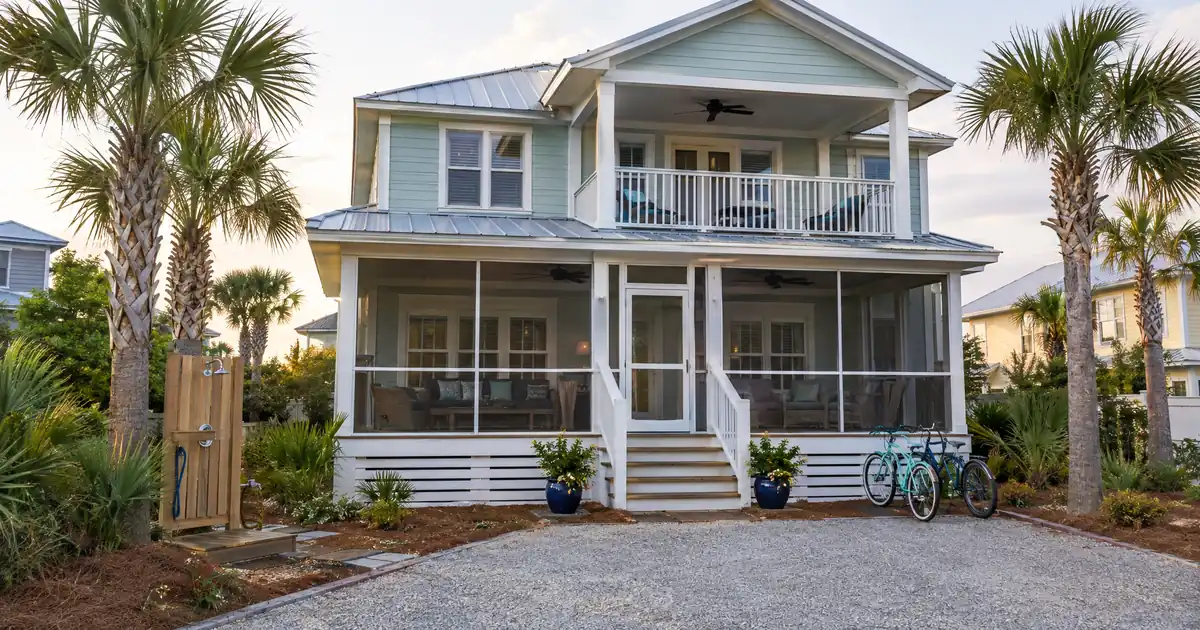
Second Home vs Investment for a Short-term Rental Operator — The Quick Read: A second home is built around your own occupancy, with occasional rental income allowed but not counted for qualification. An investment property is built around the property’s rental income, and that’s exactly what a DSCR loan is designed to size a loan around. If you plan to run active nightly bookings through a co-host or property manager, you are describing investment-property use, not second-home use, and the loan structure needs to match that reality before closing, not after.
This distinction is not paperwork trivia. It decides which loan product you’re even eligible for and what documents get requested. For an operator whose traditional personal-income paperwork understates cash flow, it also decides whether the property’s own income can carry the file at all.
What Actually Separates These Two Categories?
The line isn’t about price point or property type. It’s about occupancy and control. A classic second home is a one-unit property you occupy part of the year, keep under your own exclusive control, and never place in a rental pool or hand to a management company for full operational control. An investment property is owned but not occupied by the borrower — full stop.
The IRS runs its own separate test for tax purposes, unrelated to how a lender classifies the loan. Under IRS Topic No. 415, a home counts as a residence if personal use exceeds the greater of 14 days or 10% of the days it’s rented at fair market value. That’s a tax-reporting trigger, not a loan-qualification rule — the two clocks run independently, and conflating them is one of the more common mistakes an STR operator makes.
For contrast, agency guidance (which does not govern DSCR loans but helps with vocabulary) draws the same basic line. Fannie Mae’s Selling Guide defines an investment property as one the borrower owns but doesn’t occupy, and allows a second-home loan to carry rental income only if that income isn’t used to qualify. DSCR loans sit outside that agency world entirely — they’re business-purpose, non-owner-occupied products, and the borrower or immediate family generally can’t occupy the collateral at all.
Side-by-Side
| Factor | Second Home Structure | Investment Property (DSCR) |
|---|---|---|
| Review basis | Borrower’s personal income/credit | Property’s rental income covering the payment |
| Documentation | Traditional personal-income documentation, W-2s or bank statements, personal DTI | Bank statements or asset-based paths; income runs through the property |
| Occupancy | Borrower must occupy part of the year, exclusive control | Non-owner-occupied; borrower/immediate family generally can’t occupy |
| Management | Rider typically bars turning it over to a management company | Co-hosts and property managers are the normal operating model |
| Entity vesting | Individual ownership expected | LLC, trust, or other entity vesting available, subject to program eligibility |
| Reserve expectations | Vacancy reserves tied to personal income cushion | 3-9 months typical on most files, scaling with loan size |
| Best fit | Owner who genuinely uses the home and rents lightly | Owner running nightly rentals as a business |
When a Second Home Structure Is the Better Fit
A second-home structure fits the owner who actually lives in the property for meaningful stretches and treats rental income as incidental, not the reason for owning it. If you’re the one finding renters, collecting payment, and doing the maintenance yourself — not routing everything through a co-host or full-service property manager — the second-home category can still work.
Here’s the catch for an STR operator: most second-home loan structures don’t allow you to hand occupancy control to a management company or put the unit in a rental pool. If your plan includes dynamic pricing software, a co-host handling bookings, or turnover vendors coordinated through a platform, that setup doesn’t fit how a second-home structure is meant to work. Lenders do notice this. Underwriters specifically watch for red flags — like a vacation property sitting suspiciously close to your primary home — which raises the question of whether it’s really an investment property wearing a second-home label.
If your honest answer is “I stay there six weekends a year and rent it out casually the rest of the time, no full property manager,” a second-home structure is worth a look. If your honest answer involves a co-host, a booking calendar, and revenue projections pulled from a market-data platform, keep reading.
When Investment-Property Financing (DSCR) Is the Better Fit
DSCR financing fits the operator who plans to run the property as a business from day one. That means active nightly bookings, a co-host or property manager handling turnover, and little to no personal use. That’s exactly the profile this product is built for. It qualifies mainly on the property’s own rental income covering the payment, subject to lender guidelines, rather than on your personal income documents.
This matters most for self-employed or portfolio investors whose traditional personal-income paperwork understates their real cash flow. Across the wholesale network, files typically run on 12 or 24 consecutive months of personal or business bank statements. Qualifying income is calculated by dividing eligible deposits by the number of statement months, then applying an expense ratio: 20% for a service business with no employees, 40% for one with a handful of staff, and 50% for larger or product-based operations — or an accountant-supplied ratio instead. Transfers from the borrower’s own business into a personal account count in full. There’s also a profit-and-loss-only path and an asset-based path for borrowers whose deposits don’t tell the whole story.
Leverage on a business-purpose investment property through select wholesale programs typically runs up to 85% on purchase and rate-term in the lowest loan bands, stepping down as loan size grows — 80% in the $1M-$2.5M range, 75% around $2.5M-$3M, then tighter above that. Cash-out is generally capped around 75% for standard rentals and 70% for short-term-rental collateral in that same band — that ceiling scoping matters, because STR collateral gets treated more conservatively than a standard long-term lease. Above roughly $4,000,000, every file goes through case-by-case review before it’s even submitted; that’s not a formality, it’s how the program actually works at that size.
One appraisal quirk trips up a lot of STR buyers. The appraiser typically pulls monthly lease comparables using a form like the Single-Family Comparable Rent Schedule — not nightly STR rates multiplied out into a monthly number. So the appraised “market rent” that drives your coverage ratio often looks nothing like your AirDNA-style revenue projection. Some lenders in the network will add supplemental STR market data on top of that appraisal, but this isn’t automatic. It’s worth confirming before you count on it.
Entity vesting is where the two loan types really differ. Conventional second-home financing usually expects you to own the property as a person, not a company. DSCR loans are different — they’re non-agency products. They commonly let you close in an LLC or similar entity from day one, subject to program eligibility. But most files still require a personal guarantee. So vesting in an entity limits certain operational liability, but it doesn’t remove your personal exposure to the loan itself.
A Practical Way to Decide
Ask three questions honestly. Will you occupy the property for real stretches of the year, not just a token weekend to check a box? Will a co-host, property manager, or booking platform be running day-to-day operations? And does the property’s own rental income, not your traditional income documentation, need to be what carries the loan?
Two or three “yes” answers on the operational side point toward investment-property financing. If you’re mostly living there and renting lightly on your own, a second-home structure fits better — and trying to force STR-scale operations into that structure is the scenario that creates both a lender-side occupancy mismatch and, separately, an insurance coverage gap that tends to surface at the worst possible moment: claim time.
Across files coming through the network, miscategorized cases usually aren’t fraud attempts. They’re operators who genuinely intend light personal use at first, then scale into full STR operations without updating the loan or the insurance to match. That drift is the single most common structural mismatch on this type of file — more common than any outright misrepresentation.
Investors weighing this decision alongside a related question — whether to reclassify an existing vacation property as it converts to active rental use — can see how that plays out in Lendmire’s guide to converting a second home into a short-term rental. It covers the mid-loan conversion problem in more detail. For the deeper mechanics of how DSCR loans size, document, and price a rental purchase generally, check Lendmire’s complete DSCR loans guide for the fuller reference.
Frequently Asked Questions
Can I use a second-home loan on a property I plan to list on Airbnb full-time?
Generally, no — not without conflict. A second-home structure typically requires you to occupy the property part of the year and keep exclusive personal control, which usually rules out handing operations to a full-service co-host or management company. If the plan is active nightly bookings run as a business, investment-property financing is the more accurate fit from the start.
Does the IRS’s 14-day rule mean the same thing as my lender’s occupancy rule?
No, and this is a common mix-up. The IRS’s day-count test under Topic No. 415 is about tax reporting and deduction eligibility. A lender’s occupancy classification is a separate contractual representation on your loan documents, and it controls regardless of what the tax code implies about your personal-use days.
Will my DSCR loan qualify off my actual nightly rental income?
Usually the coverage ratio is built from an appraiser’s monthly rent comparables, not your nightly booking revenue multiplied out. Some lenders in the network will consider supplemental short-term-rental market data alongside that appraisal, but it varies by program, so it’s worth confirming during the initial file review rather than assuming it.
Does vesting my rental in an LLC get me out of personal liability on the loan?
Not on the loan itself. Entity vesting is available on most DSCR files, subject to program eligibility, and it can shield you from certain civil liability tied to property operations. But a personal guarantee is standard on most of these programs, meaning you’re still personally on the hook to the lender if the loan defaults.
What if my property is vacant when I want to buy it as an STR investment?
On a purchase, vacancy at closing is typically fine — the file can qualify off projected market rent from the appraisal. On a refinance, most programs expect the property to already be leased or occupied, and a vacant refinance is usually a harder sell unless the property was recently rehabbed and is actively listed.
Investors focused on short-term rentals can review DSCR loans for Airbnb and short-term rentals.
For current guidelines and terms, see Lendmire’s super jumbo bank statement loan programs page.
Self-employed borrowers can compare both super jumbo programs on Lendmire’s self-employed mortgages page.
About Lendmire
Lendmire — NMLS# 2371349 — is a DSCR and non-QM mortgage brokerage with investor loan programs in 40 markets, including Washington, D.C. DSCR eligibility is commonly reviewed by the lender around property-level rent rather than personal income documentation, subject to lender guidelines, and the brokerage helps arrange financing for LLC-owned portfolios beyond conventional financed-property limits. Recognized by Scotsman Guide as a Top Mortgage Workplace in 2025 and 2026.
Lendmire’s Top Mortgage Workplace recognition is documented by Scotsman Guide 2025 Top Mortgage Workplace and Scotsman Guide 2026 Top Mortgage Workplace.
Get Started
Ready to find the right loan for you?
In about 30 seconds you can review financing options available for your home or investment property. No commitment required.
Informational only. Not a Loan Estimate, approval, or commitment to lend. Program availability and eligibility are subject to lender guidelines, credit approval, property review, and underwriting.
References
1. IRS Topic No. 415 — Renting Residential and Vacation Property
2. Fannie Mae Selling Guide — Occupancy Types
Brandon Miller
Founder & CEO, Mortgage Loan Originator, Lendmire LLC
- Mortgage Loan Originator · NMLS# 1129696 · Verify on NMLS Consumer Access
- North Carolina Real Estate Broker · License# 343312 · Verify on NCREC
- North Carolina Insurance Producer · License# 19053198 · Property, Casualty, Life, Health · Verify on NAIC SBS
- Lendmire LLC · Firm NMLS# 2371349 · Verify firm licensure
Disclosures. The information presented in this article is general market commentary, not financial, legal, or tax advice. Lendmire is a mortgage brokerage (NMLS# 2371349) — not a direct lender or depository institution — and loan placement is subject to lender underwriting. Nothing in this content represents a commitment to lend. Loan terms, pricing, and program availability vary based on borrower qualifications, property characteristics, and state of subject property, and are subject to change at any time. Lendmire complies with Equal Housing Opportunity requirements. Consumer access: nmlsconsumeraccess.org.


