
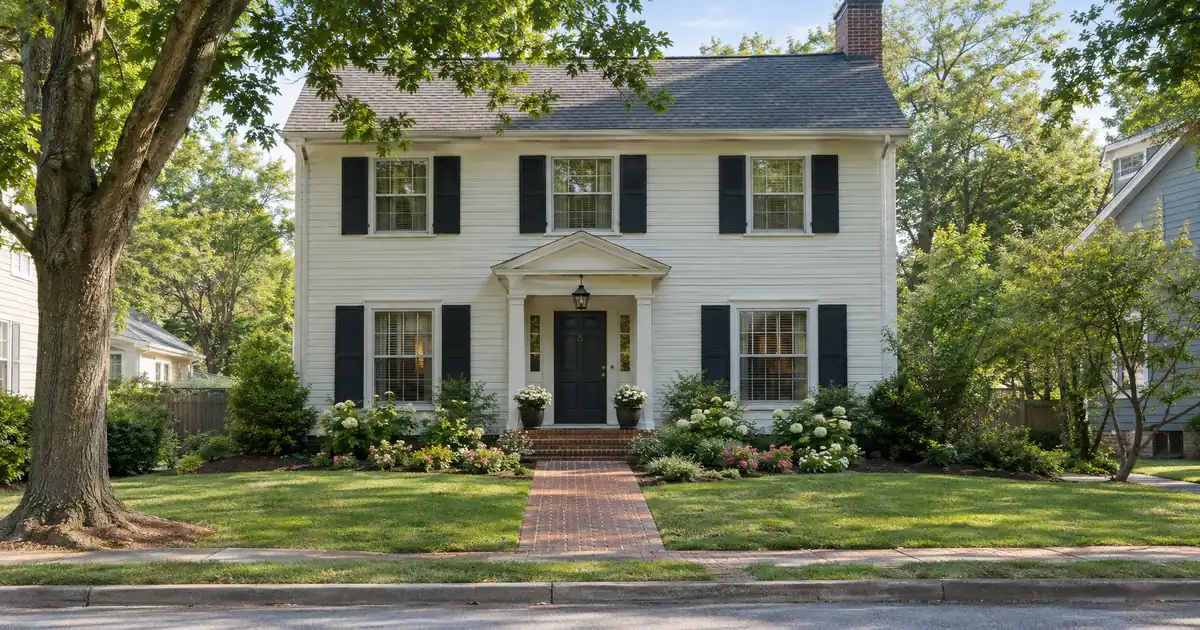
The Quick Read: A homeowner can use a cash-out refinance on a paid-off primary residence to fund the down payment, closing costs and reserves on a second home. It works as two separate loans. The first turns equity in the paid-off home into cash by placing a brand-new first mortgage on it. The second is the purchase loan on the vacation home, and it is underwritten on its own merits. Pulling cash out does not make the second loan easier to qualify for. It only changes where the down payment comes from, and it adds a new payment to the home you own today.
Key Takeaways
- A free-and-clear home is eligible for a conventional cash-out refinance, but the maximum loan on a one-unit primary residence is 80% of appraised value, subject to lender guidelines.
- The second home is a separate approval. Both mortgage payments count against your debt-to-income ratio.
- The household goes from no mortgage payment to two. That is the real cost of the strategy.
- FHA and VA streamline loans cannot do this job. Conventional financing is the realistic path.
- Reserves matter. Cash you spend on the down payment and closing costs does not count as reserves.
How Does a Cash-Out Refinance Work When the Home Has No Mortgage?
There is no old loan to pay off, so after closing costs the net amount comes to you as cash.
Some borrowers assume nothing can be refinanced because nothing is owed. That is a misconception. The Fannie Mae Selling Guide says a cash-out refinance can be a new mortgage on a property with no lien, meaning the borrower owns it free and clear. A paid-off home fits the category directly.
The federal consumer-finance regulator’s research staff describe the basic trade this way: a cash-out refinance replaces the original mortgage, while home equity loans and HELOCs leave the first mortgage in place. On a paid-off home, the “first mortgage” being replaced is zero. You are creating a lien where none existed. Your home becomes collateral for the loan, and the same research notes that payments and loan terms are both likely to increase with a cash-out refinance.
Across the wholesale programs Lendmire places consumer files with, this is one of the cleaner cash-out scenarios to structure. There is no payoff to reconcile and no existing-loan seasoning clock to run. The tradeoff is that the payment starts from zero, so the full obligation lands on your monthly budget at once. Lendmire’s cash-out refinance programs show how the leverage caps differ by property type and occupancy.
How Much Cash Can You Actually Pull Out?
The appraised value of the paid-off home sets the ceiling. On a conventional cash-out refinance of a one-unit primary residence, the cap is 80% LTV. For a two- to four-unit primary residence, a second home or an investment property, the cap is 75%. These match the Fannie Mae Eligibility Matrix. Leverage, reserves, and pricing vary by lender and program; the final terms follow the full file review.
So the borrower cannot take 100% of the equity. Think of it in percentages. If the home appraises at a given value, the new loan can reach 80% of it. Closing costs come out of that amount, and what remains is your net cash. The Loan Estimate and Closing Disclosure show the figure before you sign.
Some borrowers ask about higher-leverage options. A separate wholesale lane exists for strong files on a primary residence with a conforming balance and a thirty-year fixed loan. It carries its own score and ratio requirements and its own seasoning, and it is not written in Texas, where a cash-out on the homestead is capped by the state constitution at the agency figure. For planning purposes, build your numbers around the 80% standard cap and treat anything higher as an exception a loan officer must confirm against your file.
Here’s the catch: more leverage on the paid-off home means a bigger payment on it, and that payment follows you into the second-home underwriting.
What Does the Lender Check on the Paid-Off Home?
The lender checks title seasoning, listing status, appraised value, your credit and your ratios. Each one can shorten the cash or stop the file.
- Title seasoning. At least one borrower must have been on title for six months before the new loan is disbursed, with exceptions for things like inheritance and legal awards. The guide also describes a delayed financing exception, which is a carve-out for homes bought with cash.
- Listing status. If the home was listed for sale, it must come off the market on or before the new loan’s disbursement date.
- Credit and ratios. The wholesale conventional programs start at a 620 decision score. The automated finding governs most files, with a total ratio ceiling of 50%. Manually underwritten loans run tighter, at 36% or 45%.
- Reserves. On a Desktop Underwriter file with a ratio above 45%, six months of reserves apply to the cash-out.
Note what is missing. The usual 12-month rule applies to a first mortgage being paid off, and a truly free-and-clear home has none.
How Is the Second-Home Loan Underwritten?
It is underwritten as its own purchase, and your new refinance payment is already on the books when it is reviewed. That is the sequencing issue most borrowers underestimate.
The second-home purchase carries its own rules:
- Leverage. Second homes can go to 90% LTV on a purchase, meaning a minimum 10% down.
- Occupancy. Per the Fannie Mae definition of a second home, you must occupy it for some portion of the year. It must be a one-unit dwelling suitable for year-round use, and you must have exclusive control. It cannot be a rental or timeshare arrangement, and it cannot be subject to agreements that give a management firm control over occupancy.
- Income. If rental income exists, the loan can still be a second home as long as that income is not used to qualify.
- Reserves. Two months of reserves apply to the second home under Desktop Underwriter. If you already have several financed properties, additional reserves apply, described in the guide’s reserve rules.
- Debt-to-income. Both mortgage payments, each with taxes, insurance and any association dues, count in your ratio.
- Property count. After the cash-out, your primary home has a mortgage, so it counts as a financed property. Fannie Mae allows up to 10 for a second home. First-time second-home buyers rarely hit that cap. Terms vary by lender guidelines, property type, leverage, credit profile, and full file review.
A one-unit vacation cabin and a duplex are treated differently. A two-unit property cannot be financed as a second home. If the buyer needs rental income to qualify, the lender is not underwriting a second home at all.
Why Do Reserves Trip Up Borrowers?
Reserves are liquid assets left after closing, and they are separate from the down payment. Money spent on the down payment and refinance costs does not count toward them, per the reserve requirements. Exact terms depend on the lender’s guidelines, property type, leverage, and a full review of the borrower’s file.
Picture a borrower who pulls out exactly enough cash for the down payment on the second home. The purchase closes. Two months of reserves are now required, and the account is empty. The file stalls. Planning the cash-out amount to cover down payment, closing costs on both loans and reserves is the discipline that keeps this strategy from failing at the last step.
Does the Order of the Two Closings Matter?
Yes. The common order is refinance first, purchase second, and it has a clear logic. The cash is in your account when you make the offer, and the new primary-home mortgage is already on your credit report when the second-home loan is underwritten. Nothing surprises the second lender.
The tradeoff is carrying cost. You may pay on the new refinance loan while you shop for a property. If the search drags on, you are paying interest on cash that sits idle.
A large deposit that appears in your account needs a paper trail. Lenders ask where the money you bring to closing came from, so the refinance’s Closing Disclosure becomes your proof that the down payment is yours and borrowed against your own home. The CFPB’s Loan Estimate explainer describes the cash-to-close figure you will see for the purchase.
A practical sequence looks like this:
1. Confirm title seasoning and that the home is not listed.
2. Get an appraisal-based view of the equity and the 80% cap.
3. Decide how much cash covers the down payment, both sets of closing costs and reserves.
4. Complete the cash-out refinance, and keep the Closing Disclosure.
5. Shop for the second home and apply for the purchase loan, with both payments in the ratio.
6. Document the source of every dollar at closing.
Whether to use the same lender for both loans is a real question. A single broker comparing wholesale lenders for each loan can matter, because the programs differ by purpose.
What Are the Edge Cases Where the Rule Breaks?
Several situations bend or break the standard path:
- Limited cash-out versus cash-out. A “limited” cash-out refinance allows only a small amount back. A borrower who wants usable cash from a free-and-clear home falls outside that category, so plan on the full cash-out category and its 80% cap.
- Inherited home. Exceptions to the six-month title clock exist for inheritance or a legal award.
- Home held in an LLC. An LLC-owned home can be eligible if the borrower majority-owns or controls the entity, but ownership must be moved into the individual borrower’s name first.
- Co-ops and Community Seconds. Cash-out refinances on second-home co-op share loans are not permitted. Community Seconds are not permitted with second homes or cash-out refinances.
- Government programs. HUD’s FHA handbook limits single-family programs to owner-occupied principal residences, so FHA cannot buy a vacation home. The FHA Streamline is a rate-and-term product for existing FHA loans, and it does not apply to a paid-off home. The VA IRRRL cannot pay anything other than the existing VA loan.
That last point matters for veterans. A streamline cannot generate cash for a second home. Conventional financing is the realistic path for the cash-out step.
Second Home, New Primary or Investment? Occupancy Decides
Occupancy intent decides the leverage, and it must be true at closing. Per the program parameters Lendmire works with, second homes can reach 90% LTV on a purchase, while a one-unit primary residence can reach 95%, or 97% on first-time-buyer programs. Investment property sits lower. If your plan changes the intended use, the loan terms change with it. Every figure here varies by lender and program — guidelines, property type, leverage, and credit profile all apply.
If you plan to move into the new property and leave the refinanced home, that is a different transaction from a second home. Be honest with the lender about the plan.
What Does the Plan Cost in Monthly Terms?
It takes you from no mortgage payment to two. The paid-off home now carries a payment, and the second home adds another one with taxes, insurance and any association dues. A home you owned outright now has a lien against it, and the CFPB warns that missed payments can lead to foreclosure.
Also consider pricing. Pricing varies by borrower and by loan, so cost is best discussed qualitatively here. Neither this article nor a broker can tell you the number without a full file review. Closing costs apply to both loans, and the Loan Estimate shows them.
Run a stress test before committing. What if your income drops? What if the vacation home sits empty and you were counting on occasional rental income? What if values dip? The decision is strongest for borrowers with stable income and a comfortable cushion after both payments. It is weaker for those stretching to make both payments work.
How Do the Alternatives Compare?
| Option | Structure | First mortgage impact |
|---|---|---|
| Cash-out refinance | New first lien on paid-off home | Creates a new first lien |
| HELOC or home equity loan | Separate lien on paid-off home | Leaves first-lien position open |
| Savings | No new debt | None |
| Waiting | Build more cash first | None |
| Cash-out on the second home later | Borrow against the new property | Depends on timing |
A HELOC or home equity loan on a paid-off home would be the only lien on it. That can suit a borrower who wants flexibility, though the structure and terms differ. If you have the cash already, using it avoids new debt altogether. Not every borrower should refinance.
When Does This Make Sense, and When Doesn’t It?
It tends to make sense when you have substantial equity, stable income, strong credit and room in your ratios for two payments. It tends to fail when the borrower is already near the ratio ceiling, would have no reserves left, or needs the second home’s rental income to make the numbers work.
Tax treatment can depend on your situation; borrowers should speak with a qualified tax professional before relying on any deduction or credit.
Key Terms Defined
Cash-out refinance: A new mortgage that replaces or newly places a first lien and pays the difference to you in cash.
Free and clear: A home with no mortgage or other lien against it.
LTV (loan-to-value): The loan amount divided by the property’s appraised value.
Seasoning: The length of time you have held title or a loan, required before certain refinances.
Reserves: Liquid assets you still hold after closing, separate from the down payment.
DTI (debt-to-income): Your monthly debt payments divided by your gross monthly income.
Frequently Asked Questions
Can I use all the equity in my paid-off home?
No. A conventional cash-out refinance on a one-unit primary residence is capped at 80% of appraised value, subject to lender guidelines. Closing costs come out of that amount, so your net cash is lower still.
Does the cash-out make the second-home loan easier to get?
Not directly. The purchase is underwritten separately, and the new payment on your primary home counts against your ratio. The cash only changes where your down payment comes from.
Can the second home be a rental?
Not as a second home. It must be a one-unit property you occupy for part of the year, with no rental or timeshare arrangement. If you need rental income to qualify, the loan is not a second-home loan.
Do I need to wait before refinancing a home I just bought with cash?
Title seasoning of six months generally applies, but a delayed financing exception exists for cash purchases. Ask a loan officer how it applies to your file.
Can an FHA or VA streamline pull the cash?
No. The FHA Streamline is for rate-and-term refinances of existing FHA loans, and the VA IRRRL can only pay off the existing VA loan. Neither applies to a paid-off home.
If you are weighing a cash-out refinance on a home you own outright, Lendmire can help you compare the programs and the equity each one reaches. Every figure here is subject to lender guidelines and full file review, and nothing here is a commitment to lend.
For your own numbers, request a scenario review with Lendmire.
For current guidelines and terms, see Lendmire’s refinance programs page.
About Lendmire
Lendmire — NMLS# 2371349 — is a mortgage broker that arranges FHA, VA, conventional and jumbo home purchase and refinance financing in 16 states through wholesale lenders. Every option is subject to the lender’s guidelines and full underwriting. Scotsman Guide named Lendmire a Top Mortgage Workplace in both 2025 and 2026.
Get Started
Ready to find the right loan for you?
In about 30 seconds you can review financing options available for your home or investment property. No commitment required.
Informational only. Not a Loan Estimate, approval, or commitment to lend. Program availability and eligibility are subject to lender guidelines, credit approval, property review, and underwriting.
References
1. Fannie Mae Selling Guide B2-1.3-03, Cash-Out Refinance Transactions
2. CFPB Office of Research, A Look at Cash-Out Refinance Mortgages
3. Fannie Mae Eligibility Matrix
4. Fannie Mae Selling Guide B2-1.1-01, Occupancy Types
5. Fannie Mae Selling Guide B3-4.1-01, Minimum Reserve Requirements
6. CFPB Loan Estimate explainer
8. VA IRRRL
This article is part of Lendmire’s Refinance series — every loan program’s qualification details, guidelines, and scenarios live on the loan options page.
Related reading: How to Close a Cash-Out Refinance on a Paid-Off Texas Home · Can You Cash-Out Refinance a Texas Homestead to Buy a Second Home? · How Much a Cash-Out Refinance Lends on a Paid-Off Second Home
Brandon Miller
Founder & CEO, Mortgage Loan Originator, Lendmire LLC
- Mortgage Loan Originator · NMLS# 1129696 · Verify on NMLS Consumer Access
- North Carolina Real Estate Broker · License# 343312 · Verify on NCREC
- North Carolina Insurance Producer · License# 19053198 · Property, Casualty, Life, Health · Verify on NAIC SBS
- Lendmire LLC · Firm NMLS# 2371349 · Verify firm licensure
Disclosures. The information presented in this article is general market commentary, not financial, legal, or tax advice. Lendmire is a mortgage brokerage (NMLS# 2371349) — not a direct lender or depository institution — and loan placement is subject to lender underwriting. Nothing in this content represents a commitment to lend. Loan terms, pricing, and program availability vary based on borrower qualifications, property characteristics, and state of subject property, and are subject to change at any time. Lendmire complies with Equal Housing Opportunity requirements. Consumer access: nmlsconsumeraccess.org.