
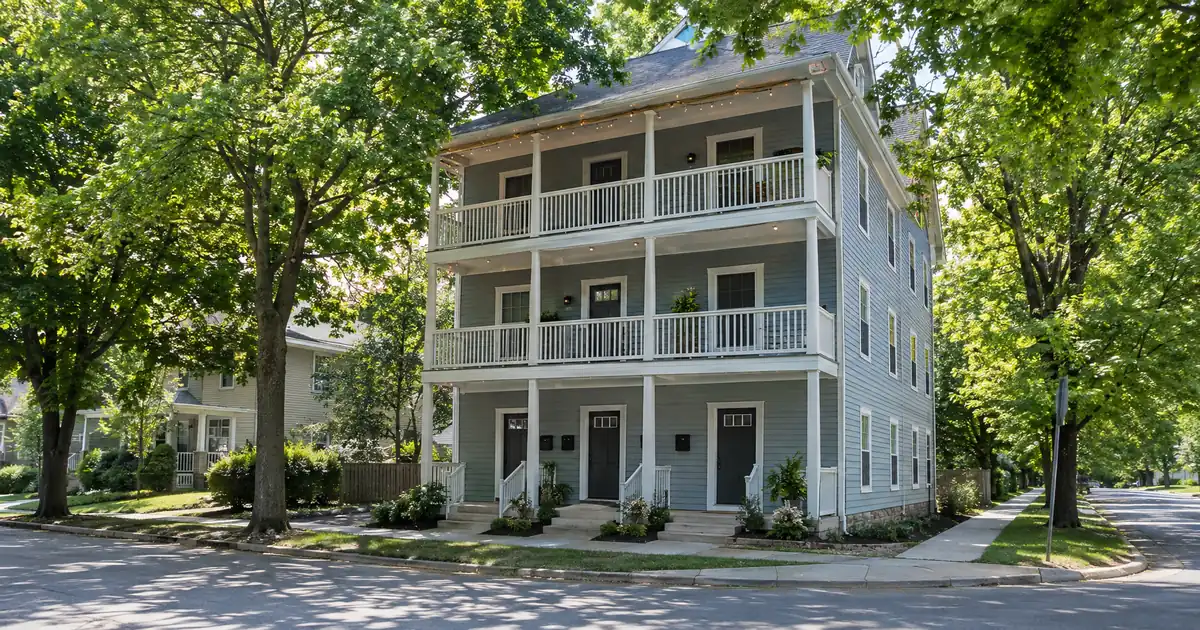
The Quick Read: Yes, a self-employed buyer can occupy one unit of a duplex, triplex, or fourplex and qualify on 12 months of bank statements, because that file is owner-occupied and is reviewed on documented income under the applicable program, subject to lender guidelines. A DSCR loan is the wrong tool for this purchase, since it is built for non-owner-occupied rentals.
- Occupancy sorts the file: living in one unit makes it an owner-occupied purchase.
- Your deposits and debts carry the qualification, not the building’s rent.
- On a primary residence, select lenders in Lendmire’s wholesale network go up to 90% LTV on a purchase or rate-term refinance.
- Loan sizes typically run from $125,000 to $3,500,000, with reserves commonly around 6 months of the housing payment.
- A DSCR loan becomes the right tool again for later purchases you do not live in.
Why Self-Employed Buyers Hit a Wall Elsewhere
Write-offs and depreciation shrink the income on a tax return. That is smart tax planning, but it can leave a profitable owner looking weak on paper.
What your deposits qualify you for.
Alt-doc programs read 12 months of business or personal bank deposits instead of tax returns. Enter your average monthly deposits and see the income a lender would credit you.
The expense factor is set by the lender from your business type and profit-and-loss statement; it is not a number you choose. This widget quotes no rate and no payment.
Program parameters shown update from Lendmire’s centralized guideline source.
Estimate
Illustrative estimate only — not a quote, Loan Estimate, approval, or commitment to lend. Deposit average, expense factor, and housing ratio are editable assumptions; the expense factor a lender applies is set from your business type and documentation. No interest rate or monthly payment is quoted here. Purchase capacity is a simplified illustration and does not account for taxes, insurance, HOA dues, or other debts. Alt-doc income documentation is available on consumer mortgages in the states where Lendmire is licensed for consumer lending; actual terms vary by lender, borrower, and property.
Agency low-down-payment routes for 2-4 units lean on tax-return income. BiggerPockets notes that owner-occupied loans can require far less down than investment loans, which is why house hacking appeals. For a self-employed buyer, the catch is proving the income.
Bank statement underwriting reads deposits instead. Across our wholesale network, most programs average 12 months of business or personal statements. Business deposits get reduced by a lender-set expense factor. Personal deposits are typically counted at or near full value. The exact factor varies by lender and business type, so no one should promise you a number up front.
Can You Live in the Unit and Still Use Bank Statements?
Yes. Bank statements are a documentation method, not an occupancy category. The same documentation type is available on a primary residence, a second home, or a rental. What changes is the rest of the file.
When you certify that you will live in one unit, the lender treats the loan as an owner-occupied consumer mortgage. That means the lender must reasonably confirm you can repay it, using your income, debts, credit, and assets. Bank statements are the income evidence. They are not an exemption from underwriting.
| Factor | You live in one unit | You rent every unit |
|---|---|---|
| Loan character | Owner-occupied, consumer | Business-purpose |
| Main qualifier | Your documented income and debts | Property rent (DSCR) or statements |
| Typical product | Bank statement loan | DSCR or investor bank statement |
| Disclosure regime | TRID applies | TRID-exempt |
| Entity vesting | Usually you personally | LLC often allowed, subject to program terms |
Occupancy is the controlling fact. The federal reference point is Regulation Z’s business-purpose rule. It treats credit for a non-owner-occupied rental as business purpose, but not if the owner expects to occupy the property more than 14 days in the coming year. Living in a unit clears that bar easily, so the file lands in the owner-occupied lane.
What if you plan to move out later?
Finance the property as the home it is today. If you move out after a year or so and rent every unit, you have an investment property. Refinancing it later would likely be reviewed as one. Do not buy as an owner-occupant with no intention of living there. Misstating occupancy is a misrepresentation risk, and it can sink a file or worse.
What Happens to the Rent From the Other Units?
The unit you live in produces no creditable rent. That is obvious but often overlooked.
For the other units, treatment is lender-specific. On an owner-occupied bank statement file, your deposits and debt-to-income ratio carry the qualification. Some programs credit a portion of the other units’ rent. Others give it little or no weight. We never promise a percentage, because it changes by lender.
The appraiser still matters. A 2-4 unit is typically appraised on the small residential income property form, Form 1025, with unit-level rents. That gives the underwriter a view of what the building can produce. It does not turn your file into a DSCR file.
Run the numbers conservatively before you offer. Assume the other units rent for less than the appraiser’s schedule and sit vacant for a stretch. If your documented income still carries the payment, you have a file that holds up.
Why DSCR Doesn’t Work If You Move In
A DSCR (debt service coverage ratio) loan divides a property’s monthly rent by its monthly housing expense. A ratio around 1.0x or higher means the rent covers the payment. The loan is reviewed primarily on property-level rental income covering the payment, subject to lender guidelines.
That logic breaks when you live in the building. DSCR loans are designed for non-owner-occupied investment properties. Because they are business-purpose investor loans, they are reviewed differently from a standard owner-occupied mortgage. Telling a lender the building is an investment when you plan to live there is the occupancy problem in its worst form.
A common myth says the other units pay the mortgage, so DSCR must work. It does not. Rent paying the bills is the outcome of a house hack. It is not the underwriting basis for the loan.
DSCR comes back into play after you move out, or on your next purchase. Read Lendmire’s complete DSCR loans guide for how that side works. Select lenders in the network also offer programs below 1.00 coverage, but leverage and terms adjust when they do.
Duplex, Triplex, or Fourplex: What Changes?
The unit count does not change the occupancy rule. Live in one unit of a duplex, triplex, or fourplex, and the lender treats you as an owner-occupant with an owner-occupied consumer file. What changes is how closely the lender looks at the building.
| Factor | Duplex | Triplex | Fourplex |
|---|---|---|---|
| Residential lending | Yes | Yes | Yes |
| Other units to manage | 1 | 2 | 3 |
| Lender scrutiny | Lower | Higher | Highest |
| Reserves | Program-dependent | Often more | Often more |
Five or more units is commercial lending. It is not a residential bank statement file, and different underwriting applies.
Bank Statement or Agency Loan: Which Fits?
Agency options such as FHA and conventional loans are the contrast case. They can carry lower down payments, per BiggerPockets, but they lean on tax-return income. That is the self-employed pain point.
If your returns show strong income, an agency loan may be cheaper. If write-offs shrink your returns, a bank statement loan may work where an agency loan cannot. Asset depletion is another path: qualifying from liquid assets runs to about 80% LTV on a primary residence, per our network figures.
Each option has trade-offs. Bank statement files can be priced differently and often need stronger credit and reserves. We compare them file by file.
Where These Files Get Declined
Most declines trace back to a short list of causes.
- Messy deposits. Commingled personal and business accounts make deposit cleaning hard. Fix: separate the accounts well before applying.
- Transfers counted as income. Underwriters screen out transfers, refunds, and loan proceeds. Fix: show the real source of each large deposit.
- Short self-employment history. Lenders commonly want about two years in business, though it is lender-specific. Fix: ask about programs with different seasoning.
- Thin reserves. Reserves commonly run around 6 months of the housing payment. Fix: build cash before you offer.
- A fully leased building. A BiggerPockets practitioner comment notes that a fully leased 2-4 unit may not allow you to occupy a unit. Fix: ask the seller to deliver a vacant or month-to-month unit.
- Units that are not legal or permitted. Fix: confirm the unit count before contract.
- A fifth unit or mixed-use space. Fix: stay in residential property types.
Documents Checklist
| Borrower | Property |
|---|---|
| 12 months of personal or business statements | Purchase contract |
| Photo ID and credit authorization | Lease or rent schedule for other units |
| Proof of business ownership | Insurance quote |
| Asset statements for reserves | Appraisal on the small residential income form |
Which Path Fits You?
A gig worker with steady personal deposits and strong credit often fits an owner-occupied bank statement file directly. Deposits are counted largely at face value.
A business owner with big write-offs usually fits too, though the expense factor trims business deposits. Strong credit and reserves help the case.
A borrower with strong rents but weak personal income will find an owner-occupied file difficult. If you will not live there, the building may fit DSCR better.
A buyer who may move out within a year should pick the product that matches the intended use today. Do not buy as an owner-occupant on a plan you do not hold.
Sequencing Your Next Purchase
The house hack can be your anchor property. Later purchases that you do not live in can qualify on rent through DSCR, so your personal income documents stop limiting your portfolio. That sequence is why many self-employed investors start with the owner-occupied building first.
Short-term rental rules can vary by city, county, HOA, and property type, so investors should confirm local rules before relying on projected rental income.
Key Terms Defined
- Bank statement loan: A mortgage that is reviewed around average deposits from 12 months of statements instead of traditional personal-income documentation.
- Owner-occupied: A property where you certify that you will live in it as your home.
- Expense factor: The percentage a lender subtracts from business deposits to estimate real income.
- DSCR: Debt service coverage ratio, meaning monthly rent divided by the monthly housing expense.
- Reserves: Liquid savings a lender wants you to hold after closing, commonly around 6 months of the housing payment.
Frequently Asked Questions
Can I use a DSCR loan if I live in one unit?
No. DSCR loans are for non-owner-occupied investment property. Living in a unit makes it an owner-occupied file, so the lender looks at your documented income instead.
Does the unit I live in count as rent?
No. Your own unit produces no creditable rent. Whether the other units’ rent adds to your qualifying income depends on the lender, so confirm it before you write an offer.
Is a duplex treated differently from a fourplex?
The occupancy rule is the same for both: if you live in one unit, it is an owner-occupied file. Lenders do tend to scrutinize triplexes and fourplexes more, often asking for more reserves. Five or more units moves into commercial lending.
Can I use business or personal statements?
Either, depending on how your income flows. Business deposits take a lender-set expense factor.
Are mixed-use buildings allowed?
Usually not on a standard residential file. Storefront or commercial space can push a building outside the residential lane, so confirm the property type early.
Call 828-256-2183 or request a quote. Program terms vary by lender and are subject to credit approval.
About Lendmire
As a mortgage broker (NMLS# 2371349), Lendmire helps self-employed and high-net-worth borrowers in 16 states qualify on bank statements, a profit-and-loss statement, 1099s or liquid assets instead of traditional personal-income documentation, through wholesale lenders. Lendmire is never the lender; program terms are set by the lender and its guidelines. Scotsman Guide named Lendmire a Top Mortgage Workplace in both 2025 and 2026.
Get Started
Ready to find the right loan for you?
In about 30 seconds you can review financing options available for your home or investment property. No commitment required.
Informational only. Not a Loan Estimate, approval, or commitment to lend. Program availability and eligibility are subject to lender guidelines, credit approval, property review, and underwriting.
References
1. BiggerPockets, House Hacking: What Is It, How to Start
2. CFPB Regulation Z §1026.3, Exempt transactions
3. BiggerPockets forum, Rookie Investor in Arizona House Hacking a 2-4 Unit
This article is part of Lendmire’s bank statement loan program — full qualification details, guidelines, and scenarios live on the program page.
Related reading: FHA vs Bank Statement Loan for a Buyer With One Year of Returns · Changing Title Before vs After Closing a Bank Statement Loan · Can You Get a Bank Statement Loan After Losing a Rental to the Lender?
Brandon Miller
Founder & CEO, Mortgage Loan Originator, Lendmire LLC
- Mortgage Loan Originator · NMLS# 1129696 · Verify on NMLS Consumer Access
- North Carolina Real Estate Broker · License# 343312 · Verify on NCREC
- North Carolina Insurance Producer · License# 19053198 · Property, Casualty, Life, Health · Verify on NAIC SBS
- Lendmire LLC · Firm NMLS# 2371349 · Verify firm licensure
Required disclosures. Lendmire (NMLS# 2371349) operates as a licensed mortgage broker, not a direct lender or depository. The discussion in this article is general in nature and should not be relied upon as financial, legal, or tax advice — every investment scenario is unique and should be reviewed by a qualified professional. Any loan inquiry is subject to lender underwriting, and this article is not a commitment to lend or a guarantee of approval. Mortgage rates, loan terms, and program guidelines vary by borrower, property, and state, and may change without notice. Equal Housing Opportunity. Verify licensure at NMLS Consumer Access.