
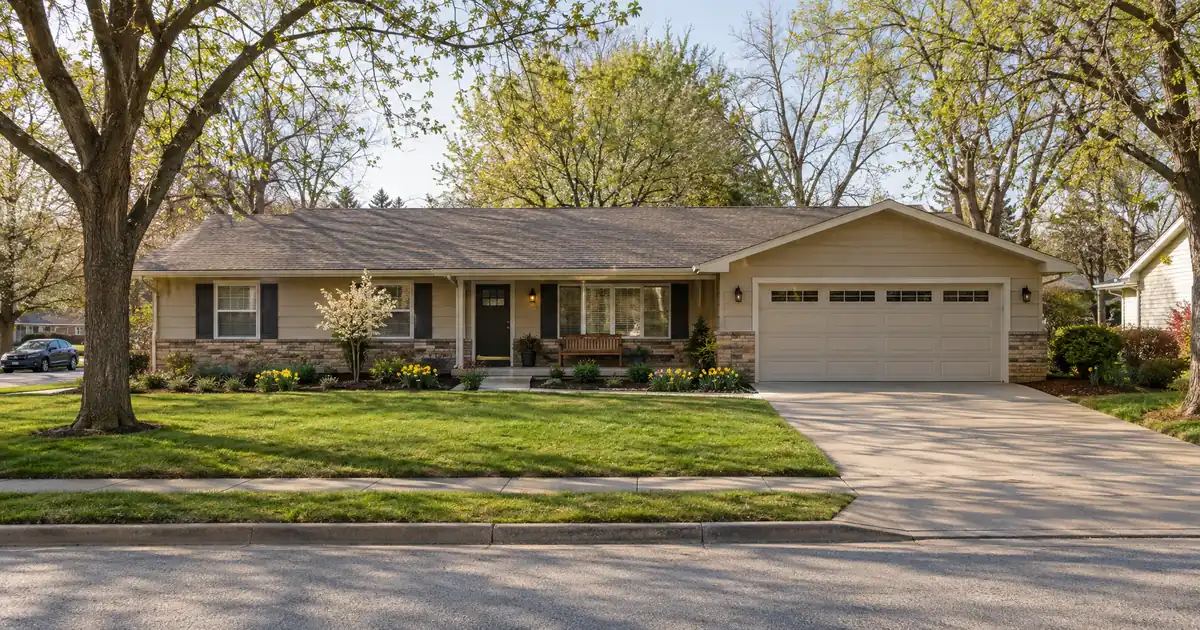
The Quick Read: Nothing sets a special down payment for self-employed buyers. The lender’s maximum loan-to-value (LTV, the loan as a share of the home’s value) does. On a primary residence purchase, select programs that qualify you on 12 months of bank statements reach up to 90% LTV, so the strongest files put down as little as 10%, subject to lender guidelines.
- Qualifying income comes from 12 months of business or personal bank statements, averaged, with lender-specific expense factors.
- Primary residence purchase or rate-term refinance runs up to 90% LTV. Asset-depletion qualifying on a primary residence runs up to about 80% LTV.
- Cash-out is lower. A primary residence reaches up to 80% LTV with a fixed expense ratio, or 75% with an accountant-prepared ratio. A second home tops out around 75% LTV.
- Loan sizes run roughly $125,000 to $3,500,000. Cash reserves (money left in the bank after closing) are commonly around 6 months of the housing payment.
- Occupancy, credit score and loan size move your down payment more than the length of the statement window.
Key Terms Defined
Six terms come up again and again in this topic. Here they are in plain words.
- Bank-statement loan: A mortgage that is reviewed around deposits in your bank accounts instead of on tax-return income.
- Expense factor: The share of business deposits a lender assumes goes to costs, so only the remainder counts as your income.
- Seasoning: How long money has sat in your account. Lenders prefer funds that have been there a while, not money that just arrived.
- Asset depletion: A way to qualify using liquid savings and investments as the income source instead of deposits.
- Cash-out refinance: A new, larger loan that pays off the old one and hands you the difference in cash.
- Occupancy: How you will use the property. It is either your primary residence, a second home or an investment property.
What your deposits qualify you for.
Alt-doc programs read 12 months of business or personal bank deposits instead of tax returns. Enter your average monthly deposits and see the income a lender would credit you.
The expense factor is set by the lender from your business type and profit-and-loss statement; it is not a number you choose. This widget quotes no rate and no payment.
Program parameters shown update from Lendmire’s centralized guideline source.
Estimate
Illustrative estimate only — not a quote, Loan Estimate, approval, or commitment to lend. Deposit average, expense factor, and housing ratio are editable assumptions; the expense factor a lender applies is set from your business type and documentation. No interest rate or monthly payment is quoted here. Purchase capacity is a simplified illustration and does not account for taxes, insurance, HOA dues, or other debts. Alt-doc income documentation is available on consumer mortgages in the states where Lendmire is licensed for consumer lending; actual terms vary by lender, borrower, and property.
Do Self-Employed Buyers Need a Bigger Down Payment?
Not by rule, but often in practice. The standard programs ask the same of a self-employed buyer as of a salaried one. The catch is that many business owners cannot show enough taxable income on a return to use those programs, so they move to bank-statement lending, where lenders set leverage more tightly.
That is the reconciliation of two claims you will see online. One says self-employed buyers face the same minimums as everyone else. The other says they put more down. Both are true. The first describes the mainstream tax-return route. The second describes what happens when the file needs a different documentation path.
Here is the logic behind it. A lender who accepts flexible income documentation takes on more uncertainty about your income. The lender trades that flexibility for a lower LTV, which leaves more of your own money in the deal. Across the lenders in Lendmire’s wholesale network, the pattern is steady. Cleaner documentation earns more leverage, and looser documentation costs more cash up front.
How Underwriting Treats Your Down Payment, Step by Step
An underwriter looks at your down payment as one piece of a risk picture. These are the steps, in order.
1. Pick the documentation path. Options include full traditional personal-income documentation, 12 months of bank statements, asset depletion, or, for a rental purchase, a DSCR loan. Each path has its own leverage ceiling.
2. Match the file to the lender’s matrix. The matrix lists a maximum LTV for each mix of credit score, occupancy, loan size, reserves and self-employment history. Your down payment is 100% minus that LTV.
3. Calculate qualifying income. On the bank-statement path, the lender averages eligible deposits across the statement window. Transfers between your own accounts and loan proceeds come out. An expense factor then trims what remains. If you own only part of a business, your ownership share limits how much of the income you can use.
4. Count reserves. Reserves can trade against leverage. More cash left after closing supports a higher LTV, and thin reserves can pull the ceiling down. Commonly lenders want around 6 months of the housing payment.
5. Source and season the funds. The down payment and reserves must trace back to your statements. Large deposits with no explanation get excluded from income and can trigger a letter of explanation.
No program lets you skip these steps. Every file is underwritten individually, and a ceiling on a rate sheet is the best case, not a promise.
Why the Documentation Path Changes the Cash You Need
The more directly a lender can verify income, the more it will lend against the home. That is the whole reason leverage varies by path. The table compares the main options for an owner-occupant buying a home.
| Path | Best fit | Typical leverage read |
|---|---|---|
| Full traditional personal-income documentation | Steady, high taxable income | Set by the lender’s matrix |
| 12-month bank statements | Heavy write-offs, strong deposits | Up to 90% LTV, primary purchase |
| Asset depletion | Large savings, thin income | Up to about 80% LTV, primary |
| DSCR | Rental purchase, not your home | Varies by lender and property |
A longer statement window does not automatically raise your down payment. Credit, occupancy and history carry more weight. A strong file on 12 months of statements can beat a weak file on a longer window.
Lenders also separate an expense-factor file from one with an accountant-prepared ratio. On a primary residence cash-out, the fixed expense ratio reaches up to 80% LTV and the accountant-prepared ratio caps at 75%. Terms depend on the lender’s guidelines, the property type, the leverage, and a full review of the credit profile.
What the Federal Rules Say About Down Payments
Nothing in the federal repayment rules sets a down payment. The CFPB’s assessment of its ability-to-repay rule says lenders must make a good-faith, documented determination that you can repay. It also found that self-employed borrowers who could not get an agency-eligible loan were pushed toward alternative-documentation loans. That pushed many business owners into the lane where leverage is set by lender matrix.
The conventional route is easy to contrast. Freddie Mac’s Seller/Servicer Guide treats a borrower with under two years of self-employment as a special case that needs a stability analysis. It still requires at least one year of self-employment income on the traditional personal-income documentation. That route runs on returns, so write-offs hurt you there.
Bank-statement loans still verify your ability to repay. They just do it with deposits. A bank-statement file is no stated-income loan, and the lender checks every month of the window.
Where Your Thin or Unusual File Changes the Answer
The general rule breaks in a handful of named cases. Each one moves the number up or down.
Thin self-employment history. Under two years can lower the allowed LTV or add an overlay. Documented prior work in the same field often cures it. The agency guide shows the same idea of combining the prior job with the current business.
Occupancy. The same borrower can face a smaller down payment on a primary residence than on a second home or an investment property. Investment property on any documentation path generally needs more cash down than an owner-occupied purchase.
Cash-out versus purchase. Cash-out ceilings sit below purchase ceilings. On a second home, cash-out reaches up to about 75% LTV, never the 90% purchase ceiling. On an investment property, cash-out tops out around 75% LTV. Treat 90% as a purchase and rate-term number on a primary residence only. The exact numbers vary by lender and program and follow a full review of property, leverage, and credit.
Second-home purchases. Purchase leverage on a second home is generally tighter than on a primary residence. Exact figures depend on the lender, loan size and credit.
Loan size and credit. Larger loans and lower scores both pull the ceiling down. Stronger files earn the top of the range.
Where Your Down Payment Can Come From
Lenders care about the source as much as the amount. Funds need a clear paper trail.
- Personal savings. This is the cleanest source. Money that has sat in your account for a while needs the least explanation.
- Business funds. You can often use them, but lenders look at what the withdrawal does to the business’s cash flow. Draws from a business account are different from money you already pay yourself. An accountant’s letter can show that taking the cash does not hurt the business. Keep the transfer documented.
- Gifts. Many programs allow them with a signed gift letter. Rules differ by lender.
- Retirement accounts and sale proceeds. Both can work if you can document the withdrawal or the sale.
Avoid mixing personal and business money in the weeks before you apply. Commingled accounts make the deposit average harder to read. A large deposit with no paper behind it may be excluded from income and flagged for a letter of explanation.
Down Payment, Reserves and Closing Costs in One Picture
Think of cash to close as three buckets: the down payment, closing costs and reserves. Most buyers plan for the first and forget the others.
Take a primary residence purchase at 90% LTV. You need 10% down, plus closing costs, plus about 6 months of the housing payment sitting in the bank afterward. Move the same purchase to 80% LTV and the down payment doubles to 20%. Reserves are still required, so the cash you need rises at both ends. Final terms depend on the lender’s guidelines, the property type, and the borrower’s complete credit picture.
That is why the lowest down payment is not always the right one. A lower down payment preserves cash now, but it also leaves you with a bigger loan against the same home. Reserves keep the file safe, and the lender wants them whatever your LTV.
How Much Should You Put Down?
Put down the amount that clears the matrix and still leaves your business and reserves healthy. Run these checks in order.
1. Start with the ceiling. Find your maximum LTV for your occupancy, credit and loan size.
2. Subtract reserves first. Set aside the reserves the lender wants, plus a cushion for your business.
3. Protect working capital. A self-employed owner who drains the business account for a down payment creates a second risk. If revenue dips, the mortgage is still due.
4. Weigh the tradeoff. More down lowers the loan and the monthly obligation, and it can strengthen approval. It also ties up money that could earn a return elsewhere.
5. Check your credit. Stronger credit unlocks the top of the leverage range, so a few months spent improving a score can reduce the cash you need.
The Investor Side: House Hacks, Rentals and Cash-Out
Occupancy decides which set of rules applies. An owner-occupied purchase, whether primary residence or second home, is a consumer mortgage with standard consumer disclosures. A bank-statement loan on a non-owner-occupied rental, including a short-term rental, is a business-purpose loan and is exempt from those disclosures. Keep the two lanes separate when you plan.
Because rentals are business-purpose investor loans, they are reviewed differently from a standard owner-occupied mortgage. Investment purchase leverage on bank-statement documentation varies by lender. Investor-focused guidance sits on the DSCR side, where a loan is reviewed primarily on property-level rental income covering the payment, subject to lender guidelines. Lendmire’s complete DSCR loans guide covers those leverage and coverage rules.
Many investors start by buying a small multifamily home and living in one unit. That moves the purchase into the owner-occupied lane, which can mean less cash down. Lendmire’s piece How Self-Employed Mortgage Down Payment Rules Work for a House-Hack Purchase walks through that setup.
A bigger down payment can also help a rental file. The payment shrinks against the same rent, so coverage improves. The tradeoff is the same one as above: more cash tied up means a lower return on the cash you invested.
Some investors recycle equity. They buy, wait for the property to season, then do a cash-out refinance to pull money back for the next deal. On an investment property, cash-out tops out around 75% LTV, so you will not get all of the original down payment back. Each figure is subject to lender guidelines and a complete review of property type, leverage, and credit.
Mistakes That Complicate Approval
These are the problems that show up most often in files.
- Unexplained deposits. Money with no source can be stripped from your income and flagged.
- Moving money at the last minute. Funds that arrive just before the application have little seasoning.
- New debt before closing. A new car loan or credit line changes your profile after the matrix was checked.
- Mixing accounts. Business and personal money in one account blurs the deposit average.
- Ignoring ownership share. If you own part of a business, only your share of the income counts.
- Draining reserves for a bigger down payment. The lender still wants reserves after closing.
- Applying with a thin history and no paper. Prior work in the same field helps, but only if you document it.
Three Borrower Profiles
The new business owner. Under two years of self-employment can trim the allowed LTV. Prior W-2 work in the same field often offsets that, which can bring the leverage back up. A larger down payment adds comfort when the history is short.
The owner with heavy write-offs. This is the buyer for whom bank-statement lending exists. The tax return shows little income, but deposits show strong cash flow. Tax treatment varies; consult a qualified professional before relying on any deduction. Expect a lender expense factor to trim deposits, and expect the strongest leverage only with strong credit.
The freelancer with variable income. Deposits swing from month to month. The lender averages them over the statement window, so one very strong or very weak stretch matters less than the pattern. A larger reserve balance helps here.
Frequently Asked Questions
Can I use money from my business account for the down payment?
Often yes, but the lender looks at the effect on your business. Withdrawing a large sum can reduce cash flow, which reduces the income the lender can count. A document trail and sometimes an accountant’s letter keep the transfer clean. Funds still need to be sourced and seasoned.
How long do I need to be self-employed?
It depends on the program, the lender and your prior work history. Many lenders like two years, but documented work in the same field can offset a shorter history. The conventional agency route needs at least one year of self-employment income on the returns, per the Freddie Mac guide.
How much do I need in reserves?
Reserves commonly run around 6 months of the housing payment. Programs differ, and larger loans or lower credit can raise the requirement. Reserves can also trade against leverage, since more cash left after closing may support a higher LTV.
Does a bigger down payment make approval easier?
It helps, because a lower LTV means less risk for the lender. It does not fix weak credit, thin history or undocumented deposits. Stronger credit and clean documentation often matters more than adding a little more cash.
Is the down payment the same for a second home as for a primary residence?
Second-home purchase leverage is generally tighter than primary-residence leverage. On a cash-out, a second home reaches up to about 75% LTV, versus up to 80% on a primary residence.
Next Step
If you are self-employed and want to see how the numbers work, Lendmire can help you compare bank statement loan options based on your deposits, the property, credit profile, leverage, and your goals. Lendmire’s consumer mortgage licensing covers 16 states, and every file is reviewed on documented income under the applicable program, subject to lender guidelines. This is not a commitment to lend. Reach the team at 828-256-2183 or request a quote.
For current guidelines and terms, see Lendmire’s self-employed mortgage programs page.
About Lendmire
Lendmire (NMLS# 2371349) is a mortgage broker licensed for consumer lending in 16 states. Bank statement, P&L-only, 1099-only and asset-based mortgages for self-employed and high-net-worth borrowers are arranged through wholesale lenders on primary residences, second homes and investment properties; every file is underwritten by the lender under its program guidelines. Scotsman Guide named Lendmire a Top Mortgage Workplace in both 2025 and 2026.
Get Started
Ready to find the right loan for you?
In about 30 seconds you can review financing options available for your home or investment property. No commitment required.
Informational only. Not a Loan Estimate, approval, or commitment to lend. Program availability and eligibility are subject to lender guidelines, credit approval, property review, and underwriting.
References
1. CFPB’s assessment of its ability-to-repay rule
2. Freddie Mac Seller/Servicer Guide, Section 5304.1
This article is part of Lendmire’s bank statement loan program — full qualification details, guidelines, and scenarios live on the program page.
Related reading: Can You Get a Self-Employed Mortgage With Only a 1099? · Can a 1099 Employee Get a Self-Employed Mortgage on 1099s Alone? · Can You Get a Self-Employed Mortgage With a Small Down Payment?
Brandon Miller
Founder & CEO, Mortgage Loan Originator, Lendmire LLC
- Mortgage Loan Originator · NMLS# 1129696 · Verify on NMLS Consumer Access
- North Carolina Real Estate Broker · License# 343312 · Verify on NCREC
- North Carolina Insurance Producer · License# 19053198 · Property, Casualty, Life, Health · Verify on NAIC SBS
- Lendmire LLC · Firm NMLS# 2371349 · Verify firm licensure
Compliance and disclosures. Lendmire (NMLS# 2371349) is a licensed mortgage broker and is not a direct lender, depository institution, financial advisor, or tax professional. Content in this article is general market analysis and educational information — not financial, legal, or tax advice for any specific situation. Lendmire does not guarantee loan approval; every transaction is subject to underwriting by the funding lender. Mortgage pricing and loan program guidelines are subject to change at any time without notice and vary by borrower characteristics, property type, and state regulations. Lendmire complies with Equal Housing Opportunity. Licensure verification: NMLS Consumer Access.