
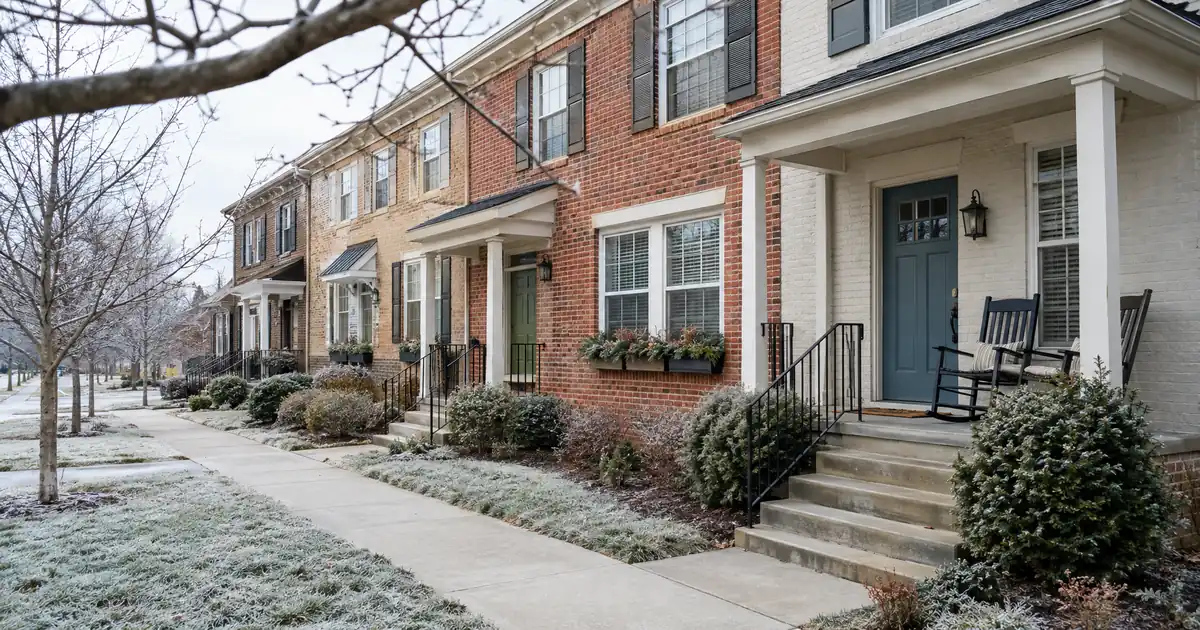
The Quick Read: A seller concession saves you only what the loan program lets it cover. The credit is capped by your down payment tier, limited to real eligible costs, and measured against the lower of the price or the appraised value. A builder’s credit counts as a concession, so the advertised number and the usable number are often different.
Key Terms Defined
Interested party: The seller, builder, developer, real estate agent or broker, or anyone affiliated with them who benefits from a higher price.
Financing concession: A seller or builder contribution toward your closing costs and prepaids, allowed up to the program cap.
Sales concession: Anything above the cap, or any non-real-estate item such as furniture, a vehicle or a decorator allowance. It is treated as a price reduction.
Prepaids: Costs paid up front at closing, such as the first insurance premium and escrow deposits.
LTV (loan-to-value): The loan amount divided by the lower of the price or the appraised value.
Conventional payment estimate
The starting figures are an example price at the first-time buyer’s minimum down payment. Replace them with yours.
Editable benchmark: 7.32% as of October 22, 2026 · Freddie Mac 30-year average via FRED®. A conventional market reference, not a conventional loan quote.
Estimate seeded at the low end of Fannie Mae’s published range (0.58%–1.86% a year); the insurer prices the actual premium on the score and the leverage. Applies only above 80% loan-to-value.
Illustrative starting assumptions: a $350,000 price, the first-time buyer’s minimum down payment, a thirty-year term at the current Freddie Mac benchmark, mortgage insurance at the low end of Fannie Mae’s published range, and property taxes and insurance estimated at typical national rates. Every field is editable.
Illustrative estimate only — not a Loan Estimate, approval, quote, or commitment to lend. The rate field carries the weekly Freddie Mac thirty-year conventional benchmark, a market reference and not a conventional loan quote; your rate is set by the lender at lock. The mortgage insurance figure is an editable estimate seeded from Fannie Mae’s published typical range, not a premium quote; the insurer prices the actual premium, and the cancellation month assumes scheduled payments with no extra principal and no change in value. Taxes, insurance and dues are editable estimates; closing costs are not included. Conforming loan limits apply by county. Licensed in sixteen states for consumer mortgages.
What a Concession Is on a New Build
A builder incentive is a seller concession. A “$X toward closing costs” offer, a design-center credit and a rate-buydown package all fall under the same rules as a resale seller’s credit.
Fannie Mae’s Selling Guide B3-4.1-02 names the property seller, the builder or developer, and the real estate agent or broker as interested parties. Affiliates of those parties are included. That matters on new construction because the builder often runs, or is tied to, a preferred lender.
Across the wholesale programs Lendmire places consumer files with, builder credits are among the most common places a buyer’s cash-to-close estimate shifts late in the process. The headline number in the sales brochure and the number that survives underwriting are rarely identical.
Buyers exploring conventional loan programs through Lendmire should treat the builder’s offer as the starting point of the math, not the end of it.
How Big Can the Credit Be?
The cap depends on your down payment and how you will use the home. For a principal residence or second home on a Fannie Mae loan, the maximum financing concession is:
| LTV tier | Maximum concession |
|---|---|
| Above 90% LTV | 3% |
| 75.01% to 90% LTV | 6% |
| 75% or less | 9% |
| Investment property | 2% at any LTV |
Occupancy decides the leverage, so a second home or rental sits in a different bracket than the home you live in.
Here is how those tiers connect to the program envelope. On a one-unit principal residence, conforming purchase loans run to 97% LTV (3% down) when at least one borrower is a first-time buyer, and 95% LTV (5% down) otherwise. Both land in the highest-leverage tier, so the 3% cap is the one most new-build buyers meet. Put down more and the allowed credit grows, but you also need less of it. Program details vary by borrower and file, and all figures are subject to lender guidelines and full file review.
The cap is measured against the lower of the sales price or the appraised value, not the loan amount. If the appraisal comes in under contract, the base for the cap shrinks with it.
What the Credit Can and Cannot Pay For
A financing concession can go toward your closing costs, including prepaids. It can also cover HOA assessments for up to 12 months after settlement.
It cannot pay for:
- The down payment
- Reserves
- The minimum borrower contribution
A credit larger than your eligible costs does not turn into cash back. The unused portion is simply stranded, which is why a big builder offer is not automatically a big saving.
How Underwriting Handles It, Step by Step
1. The contract. The incentive goes into the sales contract and any addenda. The lender must give the appraiser the fully executed contract with all addenda.
2. Disclosure. The appraiser is told about the price, financing concessions and seller-paid costs. If the incentive is a buydown, its terms are disclosed to the appraiser too.
3. The tier and the cap. The lender finds your LTV tier first, since that sets the percentage cap. Then it tests the concession against the lower of price or value.
4. Eligible costs. The lender confirms the credit is applied only to costs it may legally cover.
5. Fannie Mae will not purchase loans with undisclosed contributions, including “silent” seller second mortgages and payments made off the settlement statement.
6. Appraisal treatment. Comparable sales that include concessions get adjusted for their effect on the comparable’s price.
7. Amendments. If the contract changes after the appraisal, such as a renegotiated credit, the updated contract goes back to the appraiser.
8. Closing. The credit shows up on your Closing Disclosure as a buyer credit.
Fannie Mae has also told appraisers to test, not accept, a builder’s claim that a concession had no effect on price. That claim comes up when a builder steers buyers toward its affiliated lender.
When the Credit Exceeds the Cap
Anything above the cap becomes a sales concession. A sales concession is treated as a reduction in price when the lender calculates LTV. That can push you into a higher-leverage tier or past a program maximum. The result may be a change in mortgage insurance or an adjustment to the loan.
Say a builder offers a credit that is larger than your tier allows. The excess does not simply vanish. Either the contract gets restructured, or the excess is treated as a lower price. Neither outcome is a disaster, but both are easier when someone catches them before the appraisal rather than after.
Three Ways to Use the Same Builder Credit
The credit has real value, but how you use it changes who benefits. Here is a plain-language comparison, with no payment dollars.
| Use of the credit | Effect on cash to close | Effect on loan and monthly budget |
|---|---|---|
| Closing costs | Lowers it | Price and loan unchanged |
| Seller-funded buydown | Little change | Lowers early-year payments only |
| Price reduction | Lowers down payment | Smaller loan, lower payment for the full term |
A price cut is usually the cleanest long-term saving because it shrinks the loan for the whole term. A closing-cost credit helps most when your cash is the bottleneck. A temporary buydown helps when you expect income to rise, but it uses up part of the credit’s cap, because a buydown funded by an interested party counts toward the limit.
Borrowers still qualify at the note rate, not the bought-down rate. A buydown does not help you clear income ratios. The wholesale conventional programs generally work from an automated finding with a total ratio ceiling of 50%, so qualification is about the note, not the teaser.
Here’s a genuine toss-up: if cash to close is tight, the closing-cost credit usually wins. If you plan to stay in the home for many years and cash is comfortable, the price reduction often wins. The decision flips on how long you will hold the loan and how much cash you have on hand.
Where the General Rule Breaks
Buyer-agent commissions. When paid under local customary practice, they are not required to count toward the cap, per a Fannie Mae selling notice.
Realtor rebates. A rebate that is not applied to the transaction must be treated as a sales concession, per Fannie Mae SEL-2025-03.
Builder forward commitments. These are blanket rate arrangements between a builder and a lender, signed before your sales contract. They can be excluded from the cap only when they are not attributable to your specific loan. If your rate comes from a commitment that fails those tests, the cost counts against your cap.
Affiliated lender incentives. Under the newer rules, an incentive from a lender that is, or is affiliated with, an interested party counts as a sales concession. The rules apply to loans with note dates on or after September 3, 2025. The incentive cannot be funded through the transaction itself, and you must qualify without it.
Lender credits are different. A lender credit lowers upfront costs in exchange for a higher interest rate, a trade the CFPB explains. It is not a seller concession, unless the lender is itself an interested party.
Gift of equity. A gift from a related seller is not subject to the interested-party rules, provided the donor has no tie to the builder, agent or another interested party.
Other programs. FHA, VA and USDA have their own caps. They differ from conventional.
Second homes and rentals. Occupancy decides leverage. A second home goes to 90% LTV, and an investment property has a lower cap at any LTV. Final terms depend on lender guidelines, property type, leverage, and the borrower’s complete credit picture.
The Practical Decision
When you compare a new-build offer, run it on net cost, not on the headline.
- Ask for a line-by-line usable-credit figure. Your Loan Estimate shows how much of the credit lands on eligible costs, and the Closing Disclosure shows the final result.
- Compare the high-price-with-credit offer against a lower price without one. A big credit baked into a higher price can leave you with a higher loan and a higher future comparable sale.
- Check the appraisal risk. If value comes in low, the cap base shrinks.
- Compare lenders on total cost over how long you expect to keep the loan. Skipping the builder’s preferred lender can mean forgoing its incentive, so the trade needs real numbers.
- Keep every promise in the contract. Side deals made off the contract can make a loan ineligible.
Mortgage insurance matters here too. On a conforming loan above 80% LTV, it is required. You can request cancellation at 80% of the original value, with good payment history, no subordinate liens and no decline in value. The servicer must end it automatically at 78%. A price reduction lowers the loan and can speed up that timeline, which a closing-cost credit does not. These specifics are subject to lender guidelines and a full review of property, leverage, and credit.
Common Mistakes
- Assuming the cap is the same for every buyer. It moves with your down payment tier.
- Expecting excess credit to come back as cash.
- Trying to use the credit toward the down payment or reserves.
- Believing a buydown lets you qualify at the lower rate.
- Leaving a side agreement out of the contract.
- Treating a builder credit as free money when it may be priced into the home.
Frequently Asked Questions
Can a builder credit cover my down payment?
No. Interested-party contributions cannot pay the down payment, reserves or minimum borrower contribution. They go toward eligible closing costs, prepaids and, in some cases, up to 12 months of HOA assessments. Your own funds have to cover the down payment.
What happens if the builder’s credit is bigger than my closing costs?
The extra is not paid to you. Credit above your eligible costs is generally unusable, and anything above the program cap is treated as a sales concession, which lowers the price used for LTV. Ask for the usable figure before you sign.
Is a seller credit the same as a price cut?
No. A credit leaves the price and loan unchanged and helps with upfront costs. A price cut shrinks the loan for the full term. The appraiser also looks at how a concession affects the comparable’s price, so the two can be treated differently.
If the home appraises below the contract price, does my credit change?
Yes, it can. The cap is based on the lower of the price or the appraised value, so a low appraisal shrinks the base. The tier may also shift if your LTV rises. Talk to your loan officer before the appraisal if the credit is large.
Do rate buydowns from the builder count against the cap?
Yes, when an interested party or an affiliated lender funds the subsidy, its cost counts. A builder’s forward commitment can sit outside the cap only if it meets the timing and attribution tests. Qualification is based on the note rate.
If you are buying a home and want to see whether a conventional loan fits your file, Lendmire can help you compare the options and what each one asks of the file.
For your own numbers, request a scenario review with Lendmire.
About Lendmire
Lendmire (NMLS# 2371349) is a mortgage broker licensed for consumer lending in 16 states. Lendmire arranges FHA, VA, conventional and jumbo purchase and refinance loans through wholesale lenders; every file is underwritten by the lender under the applicable program guidelines. Scotsman Guide named Lendmire a Top Mortgage Workplace in both 2025 and 2026.
Get Started
Ready to find the right loan for you?
In about 30 seconds you can review financing options available for your home or investment property. No commitment required.
Informational only. Not a Loan Estimate, approval, or commitment to lend. Program availability and eligibility are subject to lender guidelines, credit approval, property review, and underwriting.
References
1. Fannie Mae Selling Guide B3-4.1-02, Interested Party Contributions
3. CFPB
This article is part of Lendmire’s conventional loan program — full qualification details, guidelines, and scenarios live on the program page.
Related reading: Conventional Loan Income Verification for a W-2 Employee · Can You Roll Closing Costs Into a Conventional Loan? · Does New Construction Need a Full Appraisal on a Conventional Loan?
Brandon Miller
Founder & CEO, Mortgage Loan Originator, Lendmire LLC
- Mortgage Loan Originator · NMLS# 1129696 · Verify on NMLS Consumer Access
- North Carolina Real Estate Broker · License# 343312 · Verify on NCREC
- North Carolina Insurance Producer · License# 19053198 · Property, Casualty, Life, Health · Verify on NAIC SBS
- Lendmire LLC · Firm NMLS# 2371349 · Verify firm licensure
Legal disclosures. Lendmire (NMLS# 2371349) is a state-licensed mortgage brokerage that arranges financing through wholesale lender relationships. Lendmire is not a direct lender, depository institution, or registered financial advisor. The discussion above is general informational content about real estate financing — it is not financial, legal, or tax advice, and readers should consult licensed professionals for guidance on their individual circumstances. Loan inquiries are subject to lender underwriting; this article does not represent a commitment to lend. Loan terms, rates, and qualification standards vary by borrower, property, and state, and are subject to change at any time. Equal Housing Opportunity. NMLS Consumer Access: nmlsconsumeraccess.org.