
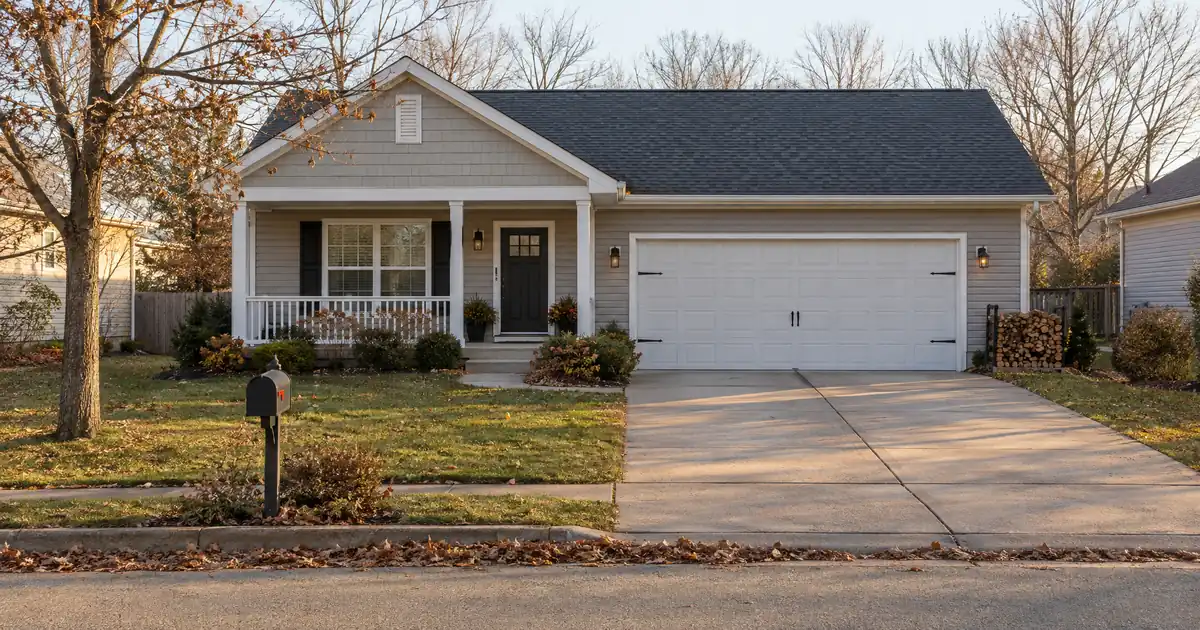
The Quick Read: Usually, yes, as long as the sum really is small. A conventional rate-and-term refinance allows a capped amount of cash back, and FHA and VA streamlines allow far less. Go past the cap and the loan changes class: it becomes a cash-out refinance with different equity limits, seasoning and pricing. The cap is a leftover, not a way to reach your equity.
What Does “Staying in the Refinance” Actually Mean?
Three loan classes sit behind this question, and the line between them decides almost everything.
Refinance savings and break-even estimate
The starting figures are an example value with a balance in proportion and a placeholder for costs. Replace them with yours, and enter the current rate from your statement.
Editable benchmark: 7.32% as of October 22, 2026 · Freddie Mac 30-year average via FRED®. A conventional market reference, not a refinance quote.
Illustrative starting assumptions: a $350,000 home value, a $245,000 current balance, a current rate you enter and a remaining term seeded at twenty-five years, closing costs seeded at $5,000 as an editable placeholder (not a fee quote) and rolled into the new loan, a thirty-year term at the current Freddie Mac benchmark, and property taxes and insurance estimated at typical national rates. Every field is editable.
Illustrative estimate only — not a Loan Estimate, approval, quote, or commitment to lend. The new rate field carries the weekly Freddie Mac thirty-year conventional benchmark, a market reference and not a refinance quote; a refinance is priced by the lender at lock, and the current rate, the remaining term and the closing costs are figures you enter. The current payment is estimated from the balance, the current rate and the remaining term; the break-even divides the closing costs by the monthly saving and ignores the interest effect of a longer term. On the VA IRRRL the funding fee is added to the loan unless the veteran is exempt. Taxes and insurance are editable estimates. Licensed in sixteen states for consumer mortgages; Lendmire is a broker, never the lender.
A rate-and-term refinance (the agencies call it limited cash-out, or "no cash-out") replaces your current first mortgage. The new loan covers the payoff, the closing costs, and a purchase-money second lien if you have one. Only incidental cash comes back to you.
A cash-out refinance is built to turn equity into money. It carries lower maximum leverage, a seasoning test, and its own pricing.
A government streamline (FHA Streamline or VA streamline refinance) is a limited-documentation refinance of a loan you already hold. Cash back is nearly off the table.
Across the wholesale programs Lendmire's brokers place consumer files with, the rate-and-term lane reaches 95% LTV on a one-unit principal residence. It reaches 97% where the existing loan is agency-owned and the first-time-buyer program allows it. Mortgage insurance applies above 80% LTV. Everything here is subject to lender guidelines and full file review, and none of it is a commitment to lend.
Homeowners comparing options can start with Lendmire's refinance programs page. The sections below explain the cash-back rules that apply to these programs.
How Much Cash Can a Conventional Refinance Hand Back?
A small, capped amount. Fannie Mae raised its cap in Selling Guide Announcement SEL-2025-08: cash paid to the borrower may not exceed the greater of 1% of the new loan's unpaid principal balance or $2,000. The older formula was the lesser of 2% or $2,000. Some lender guides and matrices still show the old wording. If you see it, the document is stale.
Limited cash-out refinances can cover certain items, including paying off a junior lien that was used in full to buy the home, plus related closing costs. Treat the size of the cash-back cushion as a small, capped amount, and let the lender confirm the exact number on your file.
Two details save people from surprises:
- The cap counts cash paid to you. Closing costs, prepaids and escrows that the new loan finances raise the balance, but they are not cash in your hands. They do not count against the cap.
- Fee refunds sit outside the cap. Fannie Mae's cash-out guide topic B2-1.3-03 says a lender may refund a borrower for fee overpayments required by federal or state law. Properly documented, that refund is not counted as cash back.
When Does Your Need Exceed "Small"?
When the cash you want to receive is more than the cap. At that point the loan is a cash-out refinance, not a rate-and-term.
The practical effect shows up in the numbers a lender uses:
| Factor | Rate-and-term | Conventional cash-out |
|---|---|---|
| Max LTV, one-unit primary | 95% (97% in some cases) | 80% |
| Cash to borrower | Small, capped | Equity access |
| Seasoning | Not the cash-out test | 12 months on the first mortgage; 6 on title |
| Mortgage insurance | Above 80% LTV | Tied to lower LTV |
Seasoning is where files get kicked back. The first mortgage being paid off must be at least 12 months old, counted note date to note date. A borrower must have been on title for 6 months. Delayed financing, inheritance and legal-award exceptions exist. A file that assumes seasoning away is a file that gets returned.
There is a second trap. Paying off a second lien that was not purchase money turns the transaction into cash-out. A HELOC you drew on for a kitchen, a car or a tuition bill does not qualify for a limited cash-out payoff. Only a junior lien used entirely to buy the home does, and the file has to document it. Fannie Mae's limited cash-out topic spells out the subordinate-lien rule.
What About FHA and VA Streamlines?
Almost no cash, and the rules are tighter than conventional.
FHA Streamline. HUD's streamline page says cash over $500 may not be taken out. The loan must already be FHA-insured and current, and the refinance has to show a net tangible benefit. FHA also does not allow closing costs to be financed into the new streamline amount. That is why you see "no cost" offers on these loans: the cost moves into the rate instead.
VA IRRRL. VA's lender pamphlet describes one exception to the no-cash rule: energy-efficiency improvements, subject to a dollar cap, completed shortly before closing. Allowable fees and the funding fee can ride in the loan. Cash for any other purpose can't. Describe it as reimbursement or financing of qualifying improvements, nothing broader.
In Lendmire's program set, the VA IRRRL carries a 0.5% funding fee unless exempt, no VA appraisal, a net tangible benefit test, and seasoning of the later of 210 days and 6 payments. The FHA Streamline needs no appraisal and only a limited credit review. A streamline is a rate or payment move, not a cash move. If you need real money, the streamline is the wrong tool.
What Does a Small Sum Cost You?
More than the sum itself, often. Every dollar rolled in or taken out adds to the balance, so the payment saving shrinks. The CFPB explains that a "no-cost" refinance works one of two ways: the lender charges a higher rate and gives a credit, or the closing costs are added to the loan. A higher rate costs more over time. A higher balance raises the payment and cuts equity.
Here is the sizing test. Do this before you ask for cash:
1. List every cost the new loan carries: closing costs, prepaids, escrows.
2. Decide which of those you will pay at closing and which you will roll in. Rolled-in costs raise the balance and shrink your saving, but they are not cash to you, so they do not count against the cap. (On an FHA Streamline they can't be rolled in at all.)
3. Work out the cash you would actually receive at closing.
4. Compare only that cash to the cap your program allows.
If the cash you receive fits the cap, you stay on the rate-and-term track. If not, you are in cash-out territory and the whole file reprices. Remember too that a new rate applies to the entire balance, not just the cash. If your current rate is already low, a refinance to fund a small sum can cost you more than a separate loan would.
Run a break-even. Divide total closing costs by the monthly payment saving. The result is how many months you need to keep the loan. A term reset also matters: starting a fresh thirty-year clock lowers the payment and raises total interest.
Which Path Fits a Small Cash Need?
Say a homeowner is refinancing to cut a payment and also wants a modest amount for a repair. Three paths exist.
1. One refinance with capped cash back. Cleanest if the amount fits the cap. One loan, one closing, one new payment.
2. No-cash refinance plus a separate loan. A home equity loan or HELOC for the sum. Two payments, but the first loan stays clean and the sum is sized independently. Order matters here, so sequence it with your lender. Lendmire's piece Can You Refinance a Too-High Payment and Take a Small Sum Out? walks through that tradeoff.
3. Skip the refinance. If your current rate is low and the sum is small, the closing costs may exceed the benefit. Savings, or a small loan outside the mortgage, may beat touching the first lien.
Pick by cash need, budget fit and how long you will keep the home. A short horizon rarely pays back closing costs, and a small sum rarely justifies a fresh set of them.
Edge Cases That Change the Answer
- Delinquent property taxes. Per Fannie Mae, a cash-out loan that finances real estate taxes more than 60 days delinquent, with no escrow account established, is ineligible unless the law bars requiring escrow.
- Renovation loans. On HomeStyle Renovation limited cash-out loans with a co-owner buyout, the borrower may not receive any cash proceeds, per SEL-2025-10.
- LTV above 95%. The existing loan generally has to be Fannie Mae-owned, and the file runs through Desktop Underwriter.
- Occupancy. If the home is not your principal residence, occupancy sets the leverage. Second homes and investment properties carry lower caps than a primary home.
- Rules move. The Fannie Mae loan-purpose sections have been revised more than once recently. Have the lender confirm the current text on your file.
Key Terms Defined
Limited cash-out refinance: A refinance that pays off the first mortgage, costs and a purchase-money second, with only a small capped amount to the borrower.
Cash-out refinance: A refinance sized to turn home equity into cash, with lower maximum leverage and a seasoning test.
Seasoning: The minimum age of the loan being paid off, and the minimum time a borrower has been on title.
Net tangible benefit: The test that a streamline must show real improvement for the borrower, such as a lower combined rate.
Purchase-money second lien: A junior loan used entirely to buy the home.
Prepaids and escrows: Up-front amounts for taxes, insurance and interest that fund the account the servicer pays from.
Self-Check Before You Ask for Cash
Stay in the refinance if the cash you would receive fits the program cap (rolled-in costs raise the balance but do not count as cash), you have no non-purchase-money second lien, and the break-even fits how long you will keep the home.
Separate the cash if the amount is above the cap, or a separate loan leaves your first mortgage cleaner.
Skip it if the sum is small, your current loan is already favorable, and closing costs would eat the gain.
If you are weighing a refinance and want the break-even run on your own numbers, Lendmire can help you compare the programs on the same home.
Frequently Asked Questions
Can I roll closing costs into a conventional refinance without it becoming cash-out?
Yes. Rolling closing costs into the new loan raises the balance, which trims your payment saving, but the financed costs are not cash to you and do not count against the cash-back cap. FHA Streamlines are the exception, because FHA does not allow closing costs to be financed.
Is the cash-back cap still the lesser of 2% or $2,000?
No. That was the older Fannie Mae formula. The current cap is the greater of 1% of the new loan balance or $2,000. Some lender documents still show the old wording, so ask which version your lender applies.
Can I pay off my HELOC in a rate-and-term refinance?
Only if the HELOC was used entirely to buy the home, and the file documents that. If you drew on it for anything else, paying it off makes the loan a cash-out refinance, with the lower LTV limit and seasoning test.
Can a VA or FHA streamline give me cash for a project?
Barely. An FHA Streamline allows no more than $500 in cash. A VA IRRRL generally allows none, except reimbursement of qualifying energy-efficiency improvements completed in the prior 90 days. Larger needs call for a different loan.
Does a "no-cost" refinance mean I pay nothing?
No. The costs move into a higher rate or a larger balance. Either way you pay them over time, which is why break-even math still matters on these offers.
For your own numbers, request a scenario review with Lendmire.
About Lendmire
Lendmire (NMLS# 2371349) is a mortgage broker licensed for consumer lending in 16 states. Lendmire arranges FHA, VA, conventional and jumbo purchase and refinance loans through wholesale lenders; every file is underwritten by the lender under the applicable program guidelines. Scotsman Guide named Lendmire a Top Mortgage Workplace in both 2025 and 2026.
Get Started
Ready to find the right loan for you?
In about two minutes you can review financing options available for your home or investment property. No commitment required.
Informational only. Not a Loan Estimate, approval, or commitment to lend. Program availability and eligibility are subject to lender guidelines, credit approval, property review, and underwriting.
References
1. Fannie Mae Selling Guide Announcement SEL-2025-08
2. Fannie Mae Selling Guide B2-1.3-03
3. Fannie Mae Selling Guide B2-1.3-02 (limited cash-out)
5. VA Pamphlet 26-7, Chapter 6
6. CFPB
7. SEL-2025-10
This article is part of Lendmire’s Refinance series — every loan program’s qualification details, guidelines, and scenarios live on the loan options page.
Related reading: Refinance Break-Even Rules for a Lower Payment That Saves Long Term · Can You Qualify for a Cash-Out Refinance on a Lower Income? · How Lenders Count Equity as a Down Payment on a Cash-Out Refinance
Brandon Miller
Founder & CEO, Mortgage Loan Originator, Lendmire LLC
- Mortgage Loan Originator · NMLS# 1129696 · Verify on NMLS Consumer Access
- North Carolina Real Estate Broker · License# 343312 · Verify on NCREC
- North Carolina Insurance Producer · License# 19053198 · Property, Casualty, Life, Health · Verify on NAIC SBS
- Lendmire LLC · Firm NMLS# 2371349 · Verify firm licensure
Disclosure information. Lendmire is a state-licensed mortgage brokerage under NMLS# 2371349. Lendmire is not a depository institution, direct lender, or financial advisor — all loans referenced are placed through wholesale lender partners and are subject to each lender's underwriting standards. This article is provided for general informational purposes and is not a commitment to lend, nor does it constitute financial, legal, or tax advice. Loan programs, terms, rates, and qualification standards change without notice and depend on borrower profile, property type, and the state in which the subject property is located. Equal Housing Opportunity provider. NMLS Consumer Access: nmlsconsumeraccess.org.