
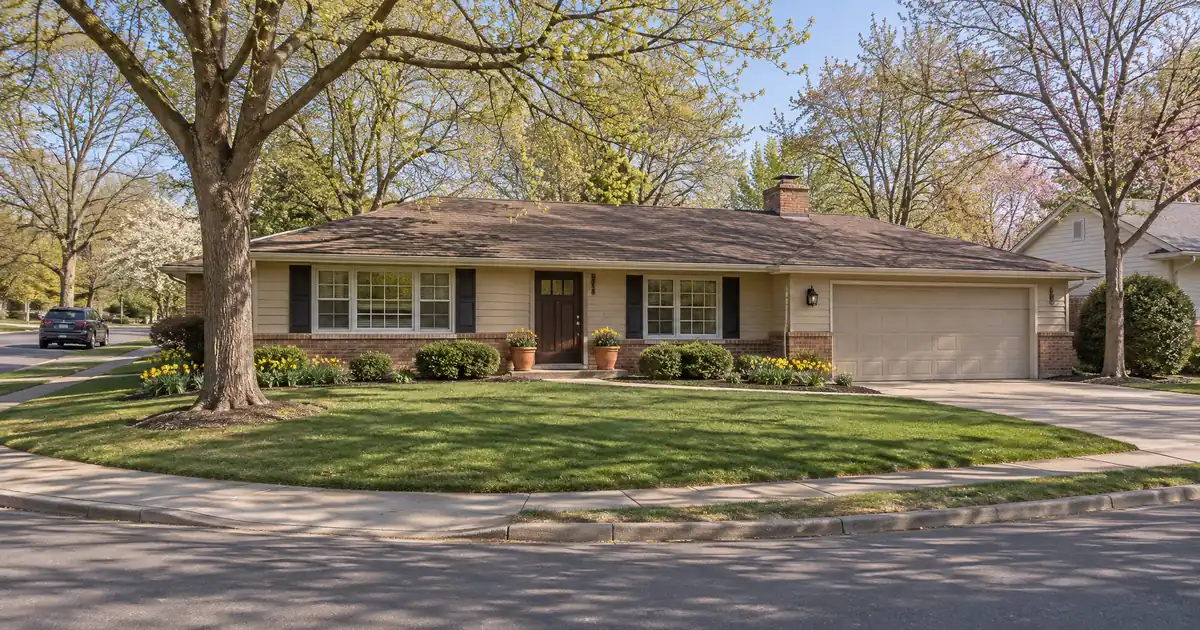
The Quick Read: A home with leased or PPA solar panels can usually still carry a bank statement equity line, because the lease sits on the equipment and not on the deed, but the file has to clear a title step, a lease-payment step, and a valuation step that a normal line never faces, and the lenders that write it depend on the borrower’s property, credit profile, and how the solar filing is recorded.
- The leased panels belong to the solar company, so they add nothing to the home’s value for sizing the line.
- A UCC-1 filing is the usual friction point. Title wants it cleared, subordinated, or insured over before a new lien records.
- The lease payment may count in the debt-to-income picture, depending on program guidelines.
- On an investment property the network’s ceiling is 70% CLTV with a 700 minimum credit score and a $500,000 maximum line.
- Title has to sit with an individual or a revocable living trust, not an LLC.
No honest article can hand you a ranked list of providers here. Lendmire is a mortgage broker, not a lender, and it works with a network of wholesale HELOC lenders. The right program depends on the property, the equity, the credit profile, and how the solar paperwork reads. What follows is how those lenders look at the file, so you can prepare it before it goes in.
How large a line the equity supports.
An equity line is sized by combined loan-to-value, occupancy, and credit — not by rental coverage. Switch the occupancy or the credit band and the ceiling moves with it.
Investment-property lines require a 700 minimum credit score; second-home lines start at a 640 minimum and primary-residence lines at 600, and the combined-LTV ceiling steps down as the credit band drops on primary-residence and second-home lines and holds on investment-property lines; the line cap steps down on primary-residence lines and holds at every tier on investment-property and second-home lines.
A debt-to-income ratio above 45% requires 680+ credit. Profiles under 640 are limited to single-family homes. At least 75% of the approved line is drawn at closing. Ceilings, floors, and caps update from Lendmire’s centralized guideline source.
Line estimate
Illustrative estimate only — not a quote, Loan Estimate, approval, or commitment to lend. The rate is an editable assumption; equity-line pricing is variable through both the draw and repayment periods and never converts to fixed. Occupancy and credit drive the ceiling together: an investment property tops out at 70% combined LTV (minimum credit 700, line cap $500,000); a second home tops out at 90% combined LTV (minimum credit 640, line cap $500,000), with the ceiling stepping down as the credit band drops (the cap holds at every tier); a primary residence tops out at 90% combined LTV (minimum credit 600), and its $750,000 maximum line is available only at 75% combined LTV or below with a 700-or-better credit profile (720 on the longer-runway program) and a full appraisal. Lines above $500,000 require a full appraisal. Credit, debt-to-income, property type, and full underwriting review all affect the final line.
Key Terms Defined
Bank statement HELOC: A revolving equity line, in first or second lien position, where income is documented from bank deposits instead of tax returns.
Solar lease: A contract where the homeowner pays a fixed monthly amount to use panels the solar company owns.
PPA (power purchase agreement): A contract where the homeowner pays per kilowatt-hour the panels produce, again on equipment the solar company owns.
UCC-1 filing: A notice recorded by the solar company saying it owns the equipment on the property.
Fixture filing: A UCC-1 recorded in county land records, so it shows up in a title search.
PACE: A financing tied to the property tax bill, repaid as an assessment on the property.
CLTV: Combined loan-to-value, meaning all liens on the home added together and divided by its value.
Does a Solar Lease Block a Bank Statement HELOC?
A solar lease does not block the line by itself. The lease is not a mortgage and the panels are not the borrower’s asset. The block, when it happens, comes from title: a recorded filing that the new lender’s title company will not insure around.
Energysage explains that a lease charges a fixed monthly amount while a PPA charges for the power produced, and that in both the solar company owns the equipment. That ownership point drives everything downstream. Equipment the borrower does not own cannot count as home value, and the payment is an ongoing obligation.
The filing is the part people misread. Solar.com describes the UCC-1 as covering the solar equipment, not the home, and notes it can be removed and refiled if the system is refinanced. So the filing is not a lien on your house. It is still a recorded claim that title has to deal with.
How Underwriting Treats the File, Step by Step
Underwriting reads the file in four passes: income from deposits, debt including the lease payment, title and lien position, and value. Each pass has its own documents.
1. Income from deposits. The lender reviews a window of personal or business statements, commonly 12 to 24 months depending on the program. Underwriters generally strip transfers and one-off deposits, apply an expense factor to business accounts, and average what remains. The program sheet sets the exact method.
2. Debt and DTI. Across the wholesale network, DTI tops out at 50%. Credit profiles from 600 to 679 are held to 45%, so anyone who wants a ratio above 45% needs a score of at least 680. Qualification runs on the interest-only payment calculated on the maximum draw. A recurring lease or PPA payment may enter this picture. Whether it counts, and how, is set by the program guidelines, so the lease contract goes into the file early.
3. Title and lien position. The lender orders title. A fixture filing appears in a county title search. A standard UCC-1 is filed at the state level and may not. Either way, the borrower should pull the recorded filing and the lease before title does.
4. Value and CLTV. Available line equals value times the allowed CLTV, minus every existing lien. Leased panels add nothing to value.
Where the UCC-1 Gets Resolved
The filing has three common outcomes. A title-industry write-up from Atlantic Title says a fixture filing shows in the title search and has to be resolved before a sale or refinance closes. It lists payoff, lease assumption, and a UCC-3 termination as the ways to do that.
On an equity line the practical outcomes look like this:
- Filing stays, title insures over it. This is possible when the line takes second position, as is typical, and the filing does not threaten the new lien.
- Solar company signs a subordination. The solar company agrees its filing sits behind the new lender. This needs the solar company’s cooperation.
- Lease bought out, UCC-3 filed. The filing comes off the record. Paying off the lease alone does not remove the UCC-1. The termination has to be filed.
The first-lien case is harder. If the line is being written in first position and replaces an existing mortgage, the solar filing has to be cleared or subordinated for the new lender to hold first position. Confirm that against the specific program rules before ordering anything.
How the Solar Structure Changes the File
Lease and PPA are the easy cases. A solar loan, PACE, and a recorded deed of trust change what the lender sees.
| Solar structure | Shows on title? | Counts as debt? | Hits CLTV? |
|---|---|---|---|
| Lease | Usually a UCC-1 | Payment may count in DTI | No |
| PPA | Usually a UCC-1 | Payment may count in DTI | No |
| Solar loan, deed of trust | Yes, recorded lien | Yes | Yes |
| Solar loan, UCC-1 only | Equipment filing | Yes | Program-dependent |
| PACE | Assessment on the property | Property-tax level | Reduces equity |
PACE is the hardest case because it rides on the property tax bill and not on the borrower’s credit. It also can finance leases and PPAs, so a leased-solar home is not automatically free of it. Ask the borrower which structure they have before assuming a lease. A recorded solar deed of trust is a true junior lien and counts toward CLTV.
Sizing the Line: Why the Panels Add Nothing
Leased panels should be treated as zero in the value used to size the line. The Fannie Mae appraisal rule is a useful contrast here. Fannie Mae’s Selling Guide treats leased or PPA panels as personal property excluded from appraised value. Equity lines in the wholesale network are not agency products, so that rule does not bind them. The practical result is the same. Do not plan on a bigger line because solar is on the roof.
The valuation method is the other mechanical piece. Lines at or below $500,000 ordinarily run an automated valuation with no traditional appraisal, though a higher CLTV may require a secondary valuation. Every line above $500,000 requires a full appraisal, and a borrower may request one in any case.
Here is a worked example using percentages only. Say a rental is valued at a round figure and carries a first mortgage equal to 50% of that value. On an investment line with a 70% CLTV ceiling, the room is up to 20 points of value, before the line-size limits apply. Now add a recorded solar loan sitting at 5% of value. Room drops to 15 points. A lease with only a UCC-1 filing, by contrast, does not subtract from CLTV, though its payment may still sit in the debt picture.
What the Network’s Programs Allow, by Occupancy
The ceiling depends on occupancy, and it cannot be quoted as one number. Leased solar shows up on owner-occupied homes more than rentals, but an investor holding a rental with a lease in place is a real scenario, so the investment figures matter here.
- Investment property: 70% CLTV at both the 700 and 720 tiers, up to $500,000. The minimum credit score is 700. Investment lines run the 5-year interest-only draw with a 25-year repayment.
- Second home: up to 90% CLTV at 720 or better, up to $500,000. The minimum credit score is 640.
- Primary residence: the program ceiling is 90% CLTV, which exists only at a 720-or-better profile and up to $500,000. Lower credit tiers step down from there, and the minimum credit score is 600. A line above $500,000, up to $750,000, requires 700 or better (720 on the 5-year draw structure), caps at 75% CLTV, and needs a full appraisal.
Two draw structures exist on primary residences and second homes. One is a 3-year interest-only draw with a 17-year repayment. The other is a 5-year interest-only draw with a 25-year repayment. At least 75% of the line is drawn at closing, and pricing floats across both the draw and repayment periods. Every figure is subject to lender guidelines and full file review.
Credit is a single-bureau score keyed to the primary wage earner, with a report no more than 90 days old at closing. A bankruptcy needs 4 years of seasoning from discharge or dismissal. A manufactured home, co-op, condotel, log home, or mixed-use property is not eligible.
Vesting and Availability: The Two Quiet Disqualifiers
Title has to sit with an individual borrower or an inter vivos revocable living trust. LLCs, corporations, partnerships, and irrevocable, blind, or land trusts cannot hold title. That is the sharpest structural difference from a DSCR loan. A rental already deeded to an LLC needs a vesting change first. Another path is a DSCR cash-out refinance, which can lend to an entity, subject to program terms. Policy varies by lender, so this is a network parameter and not a market rule.
Availability is narrower than most readers expect. These HELOC programs run only in Lendmire’s 16 full-service states: AL, CA, CO, FL, GA, IN, MI, MT, NM, NC, OH, PA, TN, TX, VA, and WA. That is smaller than the DSCR investor footprint.
A borrower is also limited to three lines, and an owner of more than 15 financed properties is not eligible. Those limits catch portfolio landlords before solar ever comes up.
Which Kinds of Lenders Write This?
Equity lines at many depository lenders are underwritten on tax-return income, which can be the wrong fit for a self-employed owner whose returns show heavy write-offs. The bank statement version lives mainly in the non-QM channel, reached through brokers and wholesale lenders. Within that channel, programs differ on credit floors, draw structures, property types, and how they treat third-party filings.
That is why the right program depends on the situation: occupancy, credit tier, leverage needed, how the solar is recorded, and whether title holds in an individual’s name. A broker that shops several wholesale lenders can match the scenario to the program whose guidelines it fits. A single lender only offers its own.
The same logic applies to the solar company. EnergyScout notes that modern lease contracts are more flexible than early ones, but terms still vary, so read the transfer language. A provider that has gone out of business, or a contract with no transfer clause, can make the subordination step harder.
Where the General Rule Breaks
The “leased solar is fine” rule bends in five places.
- Solar loan with a recorded deed of trust. It counts toward CLTV and can sink an investment line that is already at 70%.
- PACE on the tax bill. It is the hardest structure to clear, and it follows the property.
- First-lien replacement. The solar filing has to be cleared or subordinated for the new lender to take first position.
- Property deeded to an LLC. Vesting alone stops the file before title is even ordered.
- Exit risk. Aurora Solar says a transfer needs the buyer’s agreement and qualification, plus the solar company’s consent, and a fee may apply. A lease can make a later sale harder, which matters for an investor planning to sell the rental.
None of these is a flat denial. Each is a point to catch before the file goes in.
What to Gather Before Applying
Preparation shortens the list of preventable gaps. Assemble these:
1. The full lease or PPA contract, including any escalator and term length.
2. The recorded UCC-1 or fixture filing, plus any fixture addendum.
3. A preliminary title report and a UCC search.
4. Bank statements for the full review window, with transfers marked.
5. The current first mortgage statement.
6. Vesting documents, showing an individual or revocable trust.
Order of operations matters. Pull the filing and lease first, then decide how it will be handled, then submit. Do not discover the subordination step during underwriting.
If the Line Does Not Fit
If income cannot be documented from deposits, the property fails the vesting test, or the CLTV room is gone, there are other paths. A DSCR cash-out refinance qualifies primarily on property-level rental income covering the payment, subject to lender guidelines. It replaces the first mortgage, so it only fits when the existing first is not worth keeping. The tradeoffs between a HELOC and a cash-out refinance on a rental property are worth weighing, and the complete DSCR loans guide covers the rental-income route in full. For how the deposit-based income review works, see the bank statement HELOC page.
DSCR compares rent to the full monthly obligation. Clearing 1.00 is not the same as positive cash flow, since repairs, vacancy, and management sit outside the ratio.
Frequently Asked Questions
Can I get a bank statement HELOC if my solar panels are leased?
Often yes, subject to lender guidelines. The panels belong to the solar company, so the lease itself is not a mortgage. The issues are the recorded filing and the lease payment. Title has to insure around the filing or have it subordinated or terminated.
Does a leased solar system increase how much I can borrow?
No. Leased and PPA panels are personal property of the solar company and add nothing to home value. Size the line on the home’s value alone, then subtract every existing lien.
Will the monthly lease payment count against me?
It may, depending on program guidelines. The lender reviews DTI, with a 50% maximum across the network and 45% for credit profiles from 600 to 679. Put the lease contract in the file early so the payment is documented correctly.
What is the maximum CLTV on a rental property with solar?
On an investment property the network ceiling is 70% CLTV, with a 700 minimum credit score and a $500,000 maximum line. Higher ceilings apply only to primary residences and second homes, and the 90% tier requires 720 or better.
Can an LLC borrow on this kind of line?
No. Title must be held by an individual or an inter vivos revocable living trust. A property deeded to an LLC needs a vesting change, or a DSCR cash-out refinance may fit better.
Where do these lines operate?
Only in 16 states: AL, CA, CO, FL, GA, IN, MI, MT, NM, NC, OH, PA, TN, TX, VA, and WA. This is narrower than the DSCR investor footprint.
If you are considering a home equity line and want to see how the numbers work, Lendmire can help you compare HELOC options based on the property, the equity available, credit profile, combined leverage, and your goals. Program details are subject to lender guidelines and full file review, and nothing here is a commitment to lend.
About Lendmire
As a mortgage broker (NMLS# 2371349), Lendmire helps homeowners and real estate investors in its 16 full-service states open home equity lines of credit arranged through wholesale lenders. Lendmire is never the lender; line amounts, ceilings and terms are set by the lender under its guidelines. Scotsman Guide named Lendmire a Top Mortgage Workplace in both 2025 and 2026.
Get Started
Ready to find the right loan for you?
See your offer in seconds. No credit pull, no obligation.
Informational only. Not a Loan Estimate, approval, or commitment to lend. Program availability and eligibility are subject to lender guidelines, credit approval, property review, and underwriting.
References
1. Energysage, Solar Leases vs. PPAs
2. Solar.com, UCC-1 lien explainer
3. Atlantic Title, Solar UCC-1 fixture filings
4. Fannie Mae Selling Guide B4-1.3-05
5. EnergyScout, Solar Loans vs Leases and PPAs
This article is part of Lendmire’s bank statement HELOC program — full qualification details, guidelines, and scenarios live on the program page.
Related reading: How Much Can You Borrow on a Bank Statement HELOC After a Bank Denial?
Brandon Miller
Founder & CEO, Mortgage Loan Originator, Lendmire LLC
- Mortgage Loan Originator · NMLS# 1129696 · Verify on NMLS Consumer Access
- North Carolina Real Estate Broker · License# 343312 · Verify on NCREC
- North Carolina Insurance Producer · License# 19053198 · Property, Casualty, Life, Health · Verify on NAIC SBS
- Lendmire LLC · Firm NMLS# 2371349 · Verify firm licensure
Disclosures. The information presented in this article is general market commentary, not financial, legal, or tax advice. Lendmire is a mortgage brokerage (NMLS# 2371349) — not a direct lender or depository institution — and loan placement is subject to lender underwriting. Nothing in this content represents a commitment to lend. Loan terms, pricing, and program availability vary based on borrower qualifications, property characteristics, and state of subject property, and are subject to change at any time. Lendmire complies with Equal Housing Opportunity requirements. Consumer access: nmlsconsumeraccess.org.