
The Quick Read: Yes, often, as long as you live in one of the three units. A three-unit home you occupy is a primary residence, so a jumbo cash-out is generally on the table, subject to lender guidelines and full file review. Signed leases on the other two units help the file, but lenders count only part of that rent, and sometimes none. Your own income, credit, equity and reserves still decide the outcome.
- Occupancy is the fork. Live in one unit and you are in the consumer lane. Move out and the loan changes.
- Leases help, but they do not carry the loan. The lender tests whether you can repay from your own finances.
- Two limits cap your cash. One is the leverage cap on a three-unit home. The other is your debt-to-income ratio.
- Paper matters. Expect leases, a unit-by-unit rent schedule and proof that deposits match.
Why Does Occupancy Decide Everything?
If you live in one unit, the lender treats the building as your home. If you live in none, the building is a rental, and a different set of rules applies. That is the first question on every triplex file.
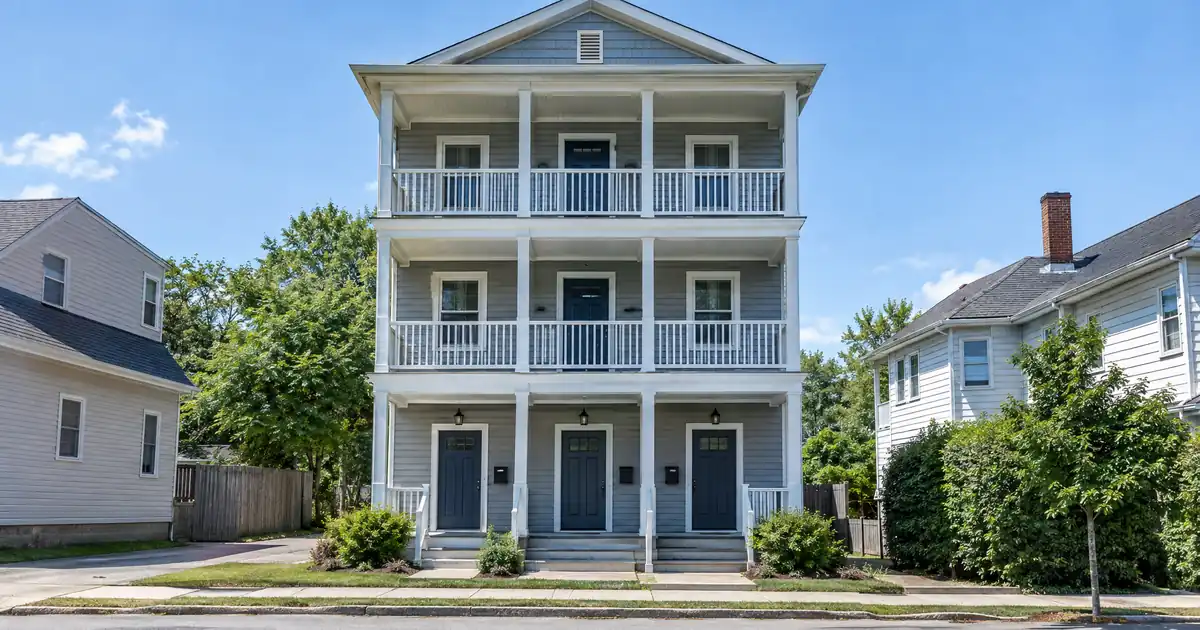
Here is the plain version. A triplex has three front doors under one roof. You sleep behind one of them. Tenants pay rent behind the other two. To a mortgage lender, that is a three-unit primary residence.
It is not an investment loan with a bonus. Your personal income and credit carry the file. The rent from the other two units supports it.
| Factor | You live in one unit | You live in none |
|---|---|---|
| Loan type | Consumer jumbo cash-out | Different loan type |
| Main test | Your income, credit, equity | Set by the program |
| Leverage | Lane-specific, lower than a house | Lane-specific, often lower still |
| Your unit’s rent | Does not count | Not applicable |
Across the wholesale jumbo lanes a broker works with every week, occupancy changes the leverage the lender allows. Primary residence, second home and investment occupancy each get their own limit. If you plan to move out, tell your loan officer before you apply, not after.
What Is a Jumbo Cash-Out on a Triplex?
A jumbo cash-out refinance replaces your current loan with a new, larger one. You keep the difference between the new balance and the old one as cash. “Jumbo” means the new loan is above your county’s conforming limit.
That limit is set yearly by the Federal Housing Finance Agency. It varies by county, and it rises with unit count. A three-unit home has a higher limit than a one-unit home. So a loan that looks jumbo on a house may still be conforming on a triplex. Check your county’s three-unit limit before you assume which lane you are in.
Lendmire’s jumbo cash-out refinance program covers loans above that line. The wholesale lanes behind it have a handful of fixed points:
- Headline lane: a 660 decision score, with leverage up to 90%.
- Other lanes: several reach 89.99% combined leverage, and the rest stop at 80%.
- Loan size: up to $5,000,000 on the largest lanes.
- Debt-to-income ceiling: 50% on the fixed lanes, 45% on the adjustable lanes and 43% on the interest-only lanes. Each figure is subject to lender guidelines and a complete review of property type, leverage, and credit.
Those are the outer edges, and they apply to the best case. Cash-out sits at lower leverage than a purchase. A three-unit home sits lower than a single-family home. The largest lanes also put a cash cap on what you can take out. Treat 90% as a ceiling for a clean purchase, not a promise for your triplex.
How Do Lenders Count Rent From the Other Units?
Usually in part, and only with paper behind it. The lender looks at the signed leases, the rent deposits and the appraiser’s opinion of market rent. Then it decides how much to credit.
Three ideas run through the whole file.
Your own unit’s rent does not count. The Fannie Mae Selling Guide says rental income from the unit you occupy generally can’t be used to qualify. That makes sense, since you cannot rent to yourself.
The other two units are a separate matter. Rent from them can help, but the lender sets the share it will credit. Many borrowers assume 100% counts.
The appraisal checks the leases. On a two-to-four-unit home, the appraiser reports market rent unit by unit. The lender compares that to your leases. If a lease is far below market, expect the lower figure to matter. If a lease is above market, expect the appraiser’s number to win.
Jumbo guidelines are set by each lender, so the agency rules are a framework, not the final word. Still, that framework shapes how most jumbo underwriters think. Ask your loan officer how much of the rent a given lane will credit before you build a plan around it.
What Do You Need to Document?
Lenders want proof that the rent is real, current and tied to actual tenants. Leases come first. Deposits that match the lease amounts come second. Then comes anything that shows history.
Here is the usual stack:
- Signed leases for each rented unit
- A unit-by-unit rent schedule
- Bank records showing rent deposits
- The rental schedule from your tax return, if you have rental history
- Proof of your own housing cost
- Standard income, asset and credit documents
Different lease situations call for different support.
| Situation | What helps |
|---|---|
| Standard signed lease | Lease plus matching deposits |
| New tenant, no history | Lease, deposit proof, first rent payment |
| Lease expiring soon | Renewal or a signed extension |
| Month-to-month tenant | Deposit history over several months |
| Below-market rent | Lease plus the appraiser’s rent figure |
| Unit under renovation | Expect little or no rent credit |
Tax treatment can depend on your situation; borrowers should speak with a qualified tax professional before relying on any deduction or credit.
Can Rent Make Up for a Weak Income File?
Not on a consumer loan. This is where the rules matter most, so here they are plainly.
A cash-out on the home you live in is consumer credit. Under the CFPB’s ability-to-repay rule, the lender must make a reasonable, good-faith decision that you can repay. It must verify your income or assets. The value of the home itself cannot be the repayment source.
That rule covers homes with up to four units. A triplex qualifies. So the rent from your two tenants is a supporting player. Your paycheck, your other income and your debts are the main cast.
Here is how that shows up in practice. A borrower with modest personal income and strong rents may run into the 50% debt-to-income ceiling on a fixed lane. The lower ceilings on the adjustable and interest-only lanes can pinch even sooner. Strong leases do not fix that. Credit, reserves and equity have to hold up too.
This is also why a consumer jumbo cash-out differs from a loan built on the property alone. If you want to buy or refinance a building you do not live in, that is a different conversation with different rules.
What Limits the Cash You Can Take Out?
Two tests cap the loan, and the tighter one wins. The first is value. The second is your income against your debts.
Value test. The appraisal sets your home’s value. The lane then caps the new loan as a percentage of that value. For a three-unit home, the cap is lower than for a single-family home. The Fannie Mae eligibility matrix shows the same pattern in the agency world: cash-out on a two-to-four-unit home carries a lower cap than on a one-unit home. Jumbo lanes set their own caps, but they follow the same logic. More units means less leverage.
Income test. Your new payment, plus your other monthly debts, must fit under the lane’s ratio ceiling. Rent credit can help this test, but only the portion the lender counts.
Picture a triplex owner with solid equity and a mortgage balance well under the lane’s cap. The value test leaves plenty of room. But the owner also carries a car loan and a large student balance. The income test now binds first, and the cash-out shrinks to fit.
Now flip it. A second owner has low debts and strong pay but a balance sitting close to the cap. The value test binds first. Rent does nothing to change that.
So when you ask “how much can I take out?”, you are really asking which test you hit first. A good loan officer runs both before you commit to a number.
What Happens If a Unit Is Vacant?
A vacant unit usually earns little or no rent credit. The lender will not count income from a tenant who does not exist. The loan may still work if your own income carries the file.
Say one of your two rented units sits empty when you apply. The lender may credit rent from only the occupied unit. Or it may count none and review the file against personal income alone. A signed lease with a start date and a deposit can sometimes bring a vacant unit back into the picture, depending on the lane.
Vacancy also matters after closing. You will keep paying the loan whether or not tenants pay you. Budget for empty months, repairs and turnover. Do not plan your cash flow on every unit being full all year.
Reserves, Appraisals and Jumbo Scale
Bigger loans ask for more cushion. Reserves are measured in months of your full payment, and the number rises with the loan amount. Cash you take out may or may not count toward reserves, depending on the lane. Ask early.
Appraisals scale the same way. Above a lane’s threshold amount, the lender requires two appraisals instead of one. On a triplex, the appraiser also completes the rent schedule. That adds a step, so give the process room.
Condition matters too. A triplex with a unit under renovation, or one that mixes legal and unpermitted space, gets extra scrutiny. Confirm that all three units are legal and documented before you apply.
Mistakes That Sink Triplex Cash-Outs
A few errors show up again and again:
- Counting all the rent. Lenders credit part of it, and your own unit’s rent counts for nothing.
- Skipping the lease check. An expired or unsigned lease weakens the file.
- Ignoring seasoning. Lenders often want some time on the title and on the existing loan before a cash-out. Ask what the lane requires.
- Assuming a house-sized cap. Triplexes get lower leverage than single-family homes.
- Moving out mid-process. A change in occupancy changes the loan.
Honestly, the last one is the costliest. Borrowers sometimes plan a move after closing and say nothing. The lender prices and sizes the loan on what you tell it, so be straight about your plans.
Is a Cash-Out the Right Move?
It depends on what you want the money for and what you give up. A cash-out is a new loan. It carries new closing costs, and your lender provides a Loan Estimate that shows them. The cash you pull becomes debt on the home you live in.
It is a decent fit when you have real equity, steady income and clean leases. It is a poor fit when your ratio is already tight, your reserves are thin or a tenant dispute is brewing.
A home equity line of credit is the common alternative. It leaves your first loan alone and borrows against the equity instead. A cash-out replaces the first loan entirely. Which one fits depends on the loan you already have and how much you need. Compare both on the Loan Estimate, not on a headline number.
Key Terms Defined
Cash-out refinance: a new loan that pays off your old one and gives you the leftover equity as cash.
Jumbo loan: a loan above your county’s conforming limit, so it falls outside the agency programs.
LTV (loan-to-value): the loan amount divided by the home’s appraised value, shown as a percentage.
Debt-to-income ratio: your monthly debts, including the new payment, divided by your gross monthly income.
Rent schedule: a unit-by-unit list of rent that the appraiser reports and the lender compares to your leases.
Seasoning: the waiting period a lender wants between events, such as buying a home and cashing out equity.
Reserves: liquid savings, counted in months of your full payment, that you keep after closing.
Next Step
If you are weighing a cash-out refinance against keeping the loan you have, Lendmire can help you compare the programs and the equity each one reaches. Bring your leases, your current loan details and your goal for the cash. A mortgage broker can then check them against the wholesale jumbo lanes.
Frequently Asked Questions
Do I have to live in the triplex to get a jumbo cash-out?
Yes, for the consumer lane described here. You live in one unit, and the other two are leased. If you do not live there, the building is treated as a rental. Occupancy then changes the leverage and the loan type, so it is a separate conversation.
Will the lender count all the rent from my other two units?
Probably not. Lenders credit part of the documented rent, and some lanes credit none. Your own unit’s rent does not count at all. Plan your budget on your personal income first, and treat rent as a cushion.
Does a signed lease matter more than the appraiser’s rent figure?
Both matter. The appraiser reports market rent for each unit, and the lender compares that figure to your leases. If they disagree, the lower number usually carries more weight. A lease well below market can limit the rent credit even if the tenant pays on time.
How much cash can I take out on a three-unit home?
Less than on a single-family home with the same equity. Cash-out sits at lower leverage than a purchase, and three-unit homes sit lower than one-unit homes. The largest lanes also cap the cash. Your debt-to-income ratio, which tops out at 50% on the fixed lanes, can limit you before value does.
What if one of my units is empty when I apply?
It depends on the lane. The lender may credit rent from the occupied unit only, or qualify you on personal income alone. A signed lease with a deposit on the empty unit can sometimes help. All of this is subject to lender guidelines and full file review.
For your own numbers, request a scenario review with Lendmire.
About Lendmire
Lendmire, NMLS# 2371349, is a mortgage brokerage with consumer lending licenses in 16 states. FHA, VA, conventional and jumbo purchase and refinance loans are arranged through wholesale lending partners, and each application is reviewed individually by the lender. Scotsman Guide named Lendmire a Top Mortgage Workplace in both 2025 and 2026.
For the program’s current guidelines, see jumbo loan programs.
Get Started
Ready to find the right loan for you?
In about 30 seconds you can review financing options available for your home or investment property. No commitment required.
Informational only. Not a Loan Estimate, approval, or commitment to lend. Program availability and eligibility are subject to lender guidelines, credit approval, property review, and underwriting.
References
1. FHFA – Conforming Loan Limit Values announcement
2. Fannie Mae Selling Guide – General Rental Income
3. CFPB – Ability-to-Repay Requirement, 12 CFR § 1026.43
4. Fannie Mae – Eligibility Matrix
This article is part of Lendmire’s Jumbo Loans series — every loan program’s qualification details, guidelines, and scenarios live on the loan options page.
Related reading: How to Get Your First Jumbo Cash-Out After a Quitclaim Deed · Should a Homeowner Do a Jumbo Cash-Out Now or Wait? · Can You Get Your First Jumbo Cash-Out Before Probate Closes?
Brandon Miller
Founder & CEO, Mortgage Loan Originator, Lendmire LLC
- Mortgage Loan Originator · NMLS# 1129696 · Verify on NMLS Consumer Access
- North Carolina Real Estate Broker · License# 343312 · Verify on NCREC
- North Carolina Insurance Producer · License# 19053198 · Property, Casualty, Life, Health · Verify on NAIC SBS
- Lendmire LLC · Firm NMLS# 2371349 · Verify firm licensure
Disclosure information. Lendmire is a state-licensed mortgage brokerage under NMLS# 2371349. Lendmire is not a depository institution, direct lender, or financial advisor — all loans referenced are placed through wholesale lender partners and are subject to each lender's underwriting standards. This article is provided for general informational purposes and is not a commitment to lend, nor does it constitute financial, legal, or tax advice. Loan programs, terms, rates, and qualification standards change without notice and depend on borrower profile, property type, and the state in which the subject property is located. Equal Housing Opportunity provider. NMLS Consumer Access: nmlsconsumeraccess.org.