
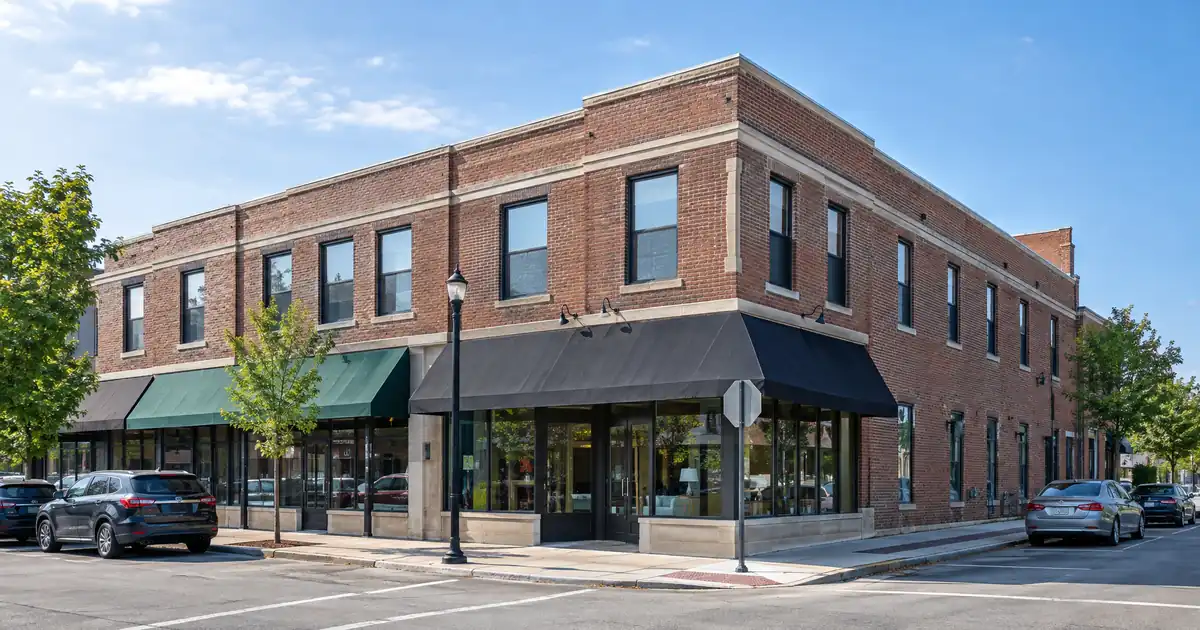
The Quick Read: It depends on the building, but often yes: a condo tower with ground-floor retail, restaurant, or office space can still support a jumbo DSCR cash-out, provided the commercial share is modest or the loan fits the narrower non-warrantable branch, which typically caps leverage at 75% and the loan at $1,500,000 on a cash-out. The commercial floor changes how the whole project is classified, not just your unit.
- A large commercial share usually moves the file to a smaller group of lenders. It does not usually end the file.
- Cash-out on an investment property tops out around 75% LTV across most of our network, and some larger balance bands come in lower.
- Clearing the building’s tests and clearing the rent coverage test are two separate hurdles.
- Ask for the commercial-space percentage before you contract or apply, not after.
Key Terms Defined
DSCR (debt service coverage ratio): monthly rent divided by the full monthly housing payment. That payment is principal, interest, taxes, insurance, and HOA dues, together called PITIA.
Warrantable condo: a condo project that meets the standard project checklist lenders use for ordinary condo loans. It looks like a typical residential building.
Non-warrantable condo: a project that fails one or more of those checklist items. The problem sits with the building, not the borrower.
Commercial share: the portion of a building’s square footage used for non-residential purposes, such as retail, restaurants, or offices.
Condotel: a condo run like a hotel, with a front desk, rental pooling, or similar features. Lenders treat it as a tighter category than an ordinary non-warrantable condo.
Seasoning: the waiting period after you buy before you can take cash out. On most files it is about 6 months from title recording.
Jumbo: a loan above the agency conforming limit. For a DSCR investor it works mostly as a pricing and tier label, because these loans are not agency products either way.
Why Does a Commercial Floor Matter to the Lender?
The lender reviews the building, not only your unit. A commercial floor changes the project’s risk profile, because retail and restaurant tenants bring different insurance, turnover, and income patterns than residential owners do.
Picture two buyers with identical units and identical rent. One sits in a tower where retail fills the lower floors, and the other sits in a tower with only residential floors. The second file looks like a routine condo. The first file gets an extra layer of project review.
DSCR loans are designed for non-owner-occupied investment properties. Because they are business-purpose investor loans, they are reviewed differently from a standard owner-occupied mortgage. Qualification runs primarily on property-level rental income covering the payment, subject to lender guidelines. The project still gets underwritten alongside the unit.
How Much Commercial Space Is Too Much?
Lenders in our network set their own tolerance, and there is no single number that applies to every file. The common reference point comes from the agency world. Fannie Mae’s Selling Guide caps nonresidential space at 35% of a condo project or its building, counting space above and below grade.
That rule does not govern DSCR loans. Treat it as a yardstick. Many DSCR lenders use an informal version of it to size project risk, and some are stricter on specific tenants or building features.
Here is what that means in practice:
- A modest commercial share often leaves the tower looking like an ordinary warrantable condo.
- A large share makes the project non-warrantable, and the file runs through a more conservative branch of the program.
- Non-warrantable is a project label. As Homebuyer.com’s explainer notes, buildings fall into it by failing standards rather than by being named in a rule.
Over the threshold means a different branch with a smaller lender pool. It does not mean declined.
Does a Taller Building Change the Math?
Yes, because the same commercial floor is a smaller share of a tall building than of a short one. Run the numbers on this hypothetical, with simplified assumptions.
- Tall tower: two commercial floors in a 40-story building. If every floor had equal square footage, that is about 5% of the building.
- Short building: the same two commercial floors in a 5-story building. That is 40% of the building.
Real towers are messier. Podium floors with retail and parking are often larger than the tower floors above them, so the true share runs higher than a simple floor count suggests. The only number that matters is the square-footage breakdown the association or appraiser produces.
Ask how the percentage was computed. Some explainers say residential-only amenities, such as gyms and clubhouses, and commercial parking sit outside the commercial count. Definitions vary, so get the method in writing along with the result.
What Counts as Commercial Space?
The table below is a working guide, not a rulebook. Each lender’s project review decides the final treatment.
| Space type | Usually counted? | Who supplies the data |
|---|---|---|
| Retail and restaurants | Yes | HOA or management |
| Offices on lower floors | Yes | HOA or management |
| Residential-only amenities | Often not | Appraiser, HOA |
| Commercial parking | Often not | HOA, lender review |
| Hotel-style or pooled units | Separate, tighter category | Lender review |
Two ownership questions also come up. First, does the HOA own the commercial space, does a separate commercial unit owner hold it, or does an outside party control it? Second, are the commercial tenants occupied, vacant, or operated by the association? A vacant floor and a busy restaurant do not draw identical scrutiny, and an association-run business draws its own questions.
How Is a Jumbo Cash-Out Sized on This Building?
Two ceilings apply to your file, and the lower one governs. One comes from the property type. The other comes from the loan-size band.
Across most of our wholesale network, a cash-out refinance on a standard rental tops out around 75% LTV. Loans run up to $3,000,000 on standard programs, and credit and reserve requirements step up as balances grow. A 620 score is the floor in parts of the network, most programs want about 660, and 700+ opens the strongest leverage tiers. Reserves commonly run about 6 months of PITIA, stepping up to about 9 months above $1,500,000. Reserves vary by lender, leverage, and loan size.
A non-warrantable condo adds its own cap. Typically, such a unit is held to 75% on a cash-out and a $1,500,000 loan amount, even when the loan-size bands above it are larger. In the $1,000,000 to $1,500,000 band, a warrantable condo’s cash-out leverage can come in below that 75% ceiling, so confirm the exact tier for your balance and classification.
That produces the rule of thumb for jumbo borrowers:
- If the tower is warrantable, the standard balance bands and tiers apply.
- If the tower is non-warrantable, the $1,500,000 loan cap applies no matter how strong your credit is.
- A larger balance on a non-warrantable unit needs more equity left in the property, or it does not fit the program.
Here is how conforming limits fit in. FHFA’s announcement set the current one-unit baseline at $832,750 and the high-cost ceiling at $1,249,125, a figure Orrick’s summary also reports. A condo counts as one unit, and the county decides where you land. Because DSCR loans are not agency products, those limits matter mainly as a way to label tiers.
Can the Super Jumbo Ladder Fix a Non-Warrantable Tower?
No. Larger balance bands apply to standard collateral. A non-warrantable unit priced above its own ceiling cannot borrow its way past it through the bigger bands. The realistic options are more equity in the property, a smaller cash-out, or a different loan structure.
The broker view matters most here. Program details differ from lender to lender, and the commercial-floor tower is where the differences show up. In deals like this, most programs we place files with agree on the broad shape. A few lenders in the network are more flexible on project review, and the strictest overlays ask for more documentation on the commercial space. That spread is why a single lender’s answer rarely settles the question.
What About DSCR Coverage on These Buildings?
Coverage is the second hurdle. The lender compares rent, either leased or market per the appraisal, to the full payment including HOA dues. Towers with commercial floors often carry high dues, and high dues pull the ratio down.
Programs in our network commonly start at 1.00 coverage, and stronger ratios can open better pricing and leverage. Separately, a select-lender path accepts coverage below 1.00, with leverage and terms adjusted. Qualification remains subject to lender guidelines, credit approval, and property review.
Do not confuse a passing ratio with positive cash flow. The ratio compares rent to PITIA only. Repairs, vacancy, management, utilities, and capital expenses sit outside the calculation, so a 1.00 file can still lose money.
Warrantability and coverage do not fix each other. A strong ratio does not rescue a building that fails the project review. A clean building does not rescue rent that cannot cover the payment. The strongest files clear both tests: enough equity and enough rental coverage.
How Do You Check Your Building? (Step by Step)
1. Ask the association or management company for the condo questionnaire. It is the lender’s starting document.
2. Request the commercial-space calculation. Ask for the square-footage breakdown and how the percentage was computed.
3. Gather the budget, financials, and reserve study. Lenders read these to judge the association’s financial health.
4. Get the master insurance certificate. Commercial tenants can affect coverage.
5. Ask about litigation and special assessments. Either can independently make a building non-warrantable.
6. Find out the investor concentration. A high share of rented units is another common trigger.
7. Confirm the HOA dues. They swing the DSCR, so ask early.
8. Verify your own seasoning. Most files want about 6 months from title recording before a cash-out.
Commercial space is rarely the only checkpoint. Reserves, delinquencies, owner-occupancy mix, and litigation are the other usual ones, and they stack. A tower that is fine on commercial share can still fail on a pending lawsuit.
Appraisal documents matter too. A condo appraisal describes the project, and the appraiser should note the commercial space. A rent schedule supports the income side.
Pass, Borderline, or Fail: What Happens Next?
| Result | What it means | Next move |
|---|---|---|
| Pass | Commercial share modest, no other flags | Standard condo review, standard tiers |
| Borderline | Share near a lender’s tolerance, or a second flag | Compare lenders in the network |
| Fail | Non-warrantable or condotel features | Non-warrantable branch, lower caps |
If the answer is no, you have four paths. You can wait, if seasoning or a pending issue is the obstacle. You can cure, for example by getting the association to document the commercial calculation more clearly. You can change the structure by taking less cash out. Or you can switch loan types, such as a rate-and-term refinance that returns no cash.
A larger down payment, or leaving more equity in the unit, lowers the payment and can lift the ratio. It never erases leverage caps, credit floors, reserve rules, or property eligibility.
Is This the Same as the 2-4 Unit Mixed-Use Program?
No. A small building with a storefront on the ground floor runs through a mixed-use program built for 2-4 unit properties, where commercial space stays under 50%. That program is not a framework for a 40-story condo tower, and a condo unit in a high-rise does not use that rule.
Also keep condotels separate. Hotel-style operation, rental pooling, or a front desk puts a tower in a tighter category than an ordinary non-warrantable condo. Not every high-rise with a retail floor operates that way, but it is worth asking.
Common Misconceptions
A commercial floor kills the loan. Not necessarily. It may only change the tier and shrink the lender pool.
The agency 35% rule governs DSCR loans. It does not. It is a reference point, and DSCR lenders set their own tolerance.
A higher DSCR fixes warrantability. It does not. They are separate hurdles.
Non-warrantable is a borrower problem. It is a project label, and a strong borrower can still sit in a non-warrantable building.
You can cash out to the same LTV as a house. Not on a non-warrantable condo, which carries the lower caps described above.
Frequently Asked Questions
Does ground-floor retail automatically rule out a cash-out?
No. A modest commercial share may leave the tower looking like a normal condo project. A large share moves the file to the non-warrantable branch, which has lower caps and a smaller lender pool.
What if the commercial floor is vacant?
Vacancy does not erase the space from the commercial count, so the percentage still applies. Lenders may look at it differently from an active restaurant, and underwriters can weigh insurance and project income concerns. Ask the lender how it treats vacant commercial space.
Does it matter who owns the commercial floor?
Yes, it can. The space may belong to the association, to a separate commercial unit owner, or to an outside party. Each arrangement draws different questions about income, insurance, and control. Ask for the ownership structure along with the square-footage breakdown.
Can I hold the unit in an LLC?
Often, depending on program guidelines. Vesting rules differ by lender, so confirm eligibility for your entity type before you apply.
Is a cash-out harder than a purchase on this kind of building?
Usually a little. Cash-out typically tops out around 75% LTV on investment property, requires about 6 months of seasoning, and draws a reserve review. The project review is the same either way, so the commercial share matters on both transactions.
Tax treatment can depend on how the funds are used and how the property is held. Investors should keep clear records and speak with a qualified tax professional before relying on any deduction.
If you are buying or refinancing a rental property and want to see how the numbers work, Lendmire can help you compare DSCR loan options based on the property income, credit profile, leverage, and investor goals. Lendmire’s complete DSCR loans guide lays out the full program landscape.
Program details change, and every file is underwritten individually. This is not a commitment to lend.
Investors weighing their equity options can start with Lendmire’s guide to cash-out refinance on an investment property.
About Lendmire
Lendmire, NMLS# 2371349, is a non-QM mortgage broker serving real estate investors in 41 markets, including Washington, D.C., through DSCR investor loan programs. Qualification is generally reviewed around the subject property’s rental income, not the borrower’s W-2 history — a practical fit for LLC-titled portfolios and self-employed investors. All scenarios remain subject to lender review and program guidelines. Two consecutive Scotsman Guide Top Mortgage Workplace recognitions (2025, 2026).
Get Started
Ready to find the right loan for you?
In about 30 seconds you can review financing options available for your investment property. No commitment required.
Informational only. Not a Loan Estimate, approval, or commitment to lend. Program availability and eligibility are subject to lender guidelines, credit approval, property review, and underwriting.
References
1. Fannie Mae Selling Guide, ineligible projects
2. Homebuyer.com non-warrantable condominium explainer
3. FHFA conforming loan limit announcement
4. Orrick InfoBytes summary of the FHFA limits
This article is part of Lendmire’s investment property cash-out refinance program — full qualification details, guidelines, and scenarios live on the program page.
Related reading: Jumbo Cash-Out vs Jumbo HELOC to Renovate a Second Home · How to Consolidate a HELOC Into an FHA Cash-Out With a High DTI · Conforming Cash-Out Plus a HELOC vs One Jumbo Cash-Out Refinance
Brandon Miller
Founder & CEO, Mortgage Loan Originator, Lendmire LLC
- Mortgage Loan Originator · NMLS# 1129696 · Verify on NMLS Consumer Access
- North Carolina Real Estate Broker · License# 343312 · Verify on NCREC
- North Carolina Insurance Producer · License# 19053198 · Property, Casualty, Life, Health · Verify on NAIC SBS
- Lendmire LLC · Firm NMLS# 2371349 · Verify firm licensure
Compliance and disclosures. Lendmire (NMLS# 2371349) is a licensed mortgage broker and is not a direct lender, depository institution, financial advisor, or tax professional. Content in this article is general market analysis and educational information — not financial, legal, or tax advice for any specific situation. Lendmire does not guarantee loan approval; every transaction is subject to underwriting by the funding lender. Mortgage pricing and loan program guidelines are subject to change at any time without notice and vary by borrower characteristics, property type, and state regulations. Lendmire complies with Equal Housing Opportunity. Licensure verification: NMLS Consumer Access.