
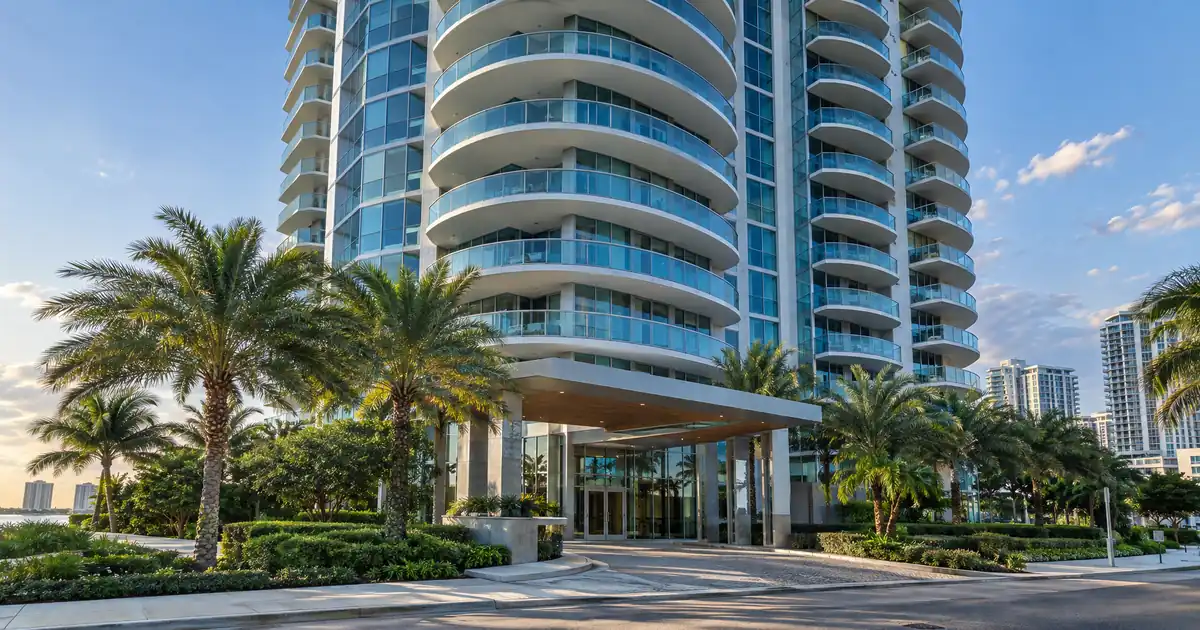
Yes, a trust can hold title on a condotel financed with a super jumbo bank statement loan, subject to lender guidelines — but trust eligibility and condotel eligibility are two separate underwriting questions, and clearing one does not clear the other. The trustee typically signs as the individual guarantor even though the trust holds title. Leverage on condotels runs lower than on a standard rental unit, and the loan size itself decides how many other overlays apply.
Trust Finance a Condotel with a Super Jumbo — The Quick Read: A trust generally can hold title on a condotel purchased or refinanced with a super jumbo bank statement loan, through select lenders in Lendmire’s wholesale network, subject to program eligibility. The trust question and the condotel question get underwritten separately. Vesting in a trust doesn’t loosen or tighten the property-type review, and it doesn’t change the leverage ladder that condotels sit on. The individual trustee usually still qualifies as guarantor using bank statement income or the property’s rental cash flow.
Key Terms Defined
Condotel: a condo unit inside a building operated like a hotel — front desk, daily housekeeping, a rental-pool program — which makes the whole project non-warrantable for agency financing.
Super jumbo loan: a loan size well above standard jumbo limits, generally starting in the low millions and running to $30,000,000 through select wholesale programs.
Bank statement loan: a non-QM mortgage that qualifies a borrower on 12 or 24 months of bank deposits instead of traditional personal-income documentation, after an expense ratio is applied against those deposits.
Trust vesting: holding legal title to real property inside a revocable living trust rather than in an individual’s own name — common for estate planning and privacy.
DSCR loan: a loan that qualifies primarily on the property’s own rental income covering the monthly payment, rather than the borrower’s personal income.
Does Trust Vesting Actually Work on a Condotel File?
Select lenders in Lendmire’s wholesale network generally accept trust vesting on condotel files, subject to program eligibility. But the underwriter still has to review the trust’s governing documents on their own, separate from the property review. Layered structures — like an LLC owned by a trust — raise a distinct question. Lenders don’t automatically approve them just because the trust alone would qualify.
The property side of underwriting doesn’t care who’s on title. It cares about the building. A condo project loses its warrantable status when it allows daily or short-term rentals, runs front-desk check-in and hotel-style services, or has a heavy concentration of investor-owned units. This follows guidance on warrantable versus non-warrantable condo triggers. Condotels typically hit all three triggers at once. That’s why they get their own leverage and reserve treatment instead of sliding into the general non-warrantable-condo bucket.
A condotel purchase for rental use is a business-purpose transaction, not an owner-occupied one. So it falls outside the standard consumer disclosure framework entirely. DSCR loans are built for non-owner-occupied investment properties. Because they’re business-purpose investor loans, lenders review them differently than a standard owner-occupied mortgage.
What Leverage Does a Condotel Actually Get?
Condotels top out at 75% LTV on a purchase and 65% on cash-out through select lenders in Lendmire’s wholesale network, subject to underwriting — well below the leverage available on a standard warrantable condo. On the bank portfolio program specifically, cash-out on a condotel caps at 50%. Warrantable condos in the same network can reach 85%, and non-warrantable condos (the less strict category condotels don’t quite fit into) top out around 80%. That spread is the real cost of the property type, and it applies whether the borrower holds title individually, through an LLC, or through a trust. Every figure here varies by lender and program — guidelines, property type, leverage, and credit profile all apply.
Two- to four-unit buildings, by comparison, can reach 85% on the same investment-property grid — a reminder that condotels are penalized specifically for their hotel-style operating structure, not just for being investment property.
How Does Loan Size Change the Math?
Loan size drives everything once you go above roughly $3,000,000 to $3,500,000 on investment property. Credit floors rise, leverage compresses, and the deal moves into case-by-case review. This happens no matter how the property is held — a trust-held condotel and an individually-titled condotel at the same loan amount face the same size overlays. Investment-property loans for non-owner-occupied use count as business-purpose credit under the Consumer Financial Protection Bureau’s Regulation Z exemption. That exemption removes them from Ability-to-Repay requirements.
Through select lenders in Lendmire’s wholesale network, super jumbo bank statement loans run from $300,000 to $30,000,000 across two program tracks. A portfolio non-QM program carries files to $6,000,000. A separate bank portfolio program carries twelve-month-statement files up to $30,000,000 on its own leverage ladder: 65% to $5,000,000, 60% to $10,000,000, and 55% to $30,000,000, with interest-only capped at 60% or the band’s ceiling, whichever is lower. That bank program’s ladder begins above $4,000,000 and overlaps the portfolio program up to $6,000,000; above $6,000,000 it stands alone.
On the investment-property leverage grid generally, purchase leverage steps down as size climbs — 85% in the $1,000,000-to-$1,500,000 band, 80% through $2,500,000, 75% through $3,000,000, then 60% through $4,000,000, with the 700-credit-floor $4,000,000-to-$5,000,000 band reviewed case by case before submission. Every figure above $4,000,000 gets that same case-by-case treatment. On a condotel specifically, the 75%-purchase-cap and 65%-cash-out-cap for standard rentals still apply as the property-type ceiling underneath whatever the size band would otherwise allow — condotel financing never exceeds those property-type limits even in a lower loan-size band where a standard condo might get more room.
Super-jumbo overlays kick in above $3,500,000 on a primary residence and above $3,000,000 on a second home or investment property. These include a 700 credit floor, a clean 0x30x24 housing-payment history, 48-month seasoning on any credit event, U.S. citizens and permanent residents only, no non-occupant co-borrowers, and cash-out proceeds that can never be used to satisfy a reserve requirement. Final terms still depend on lender guidelines, property type, leverage, and the borrower’s complete credit picture.
What Does the Bank Statement Documentation Actually Look Like?
Bank statement qualification runs on 12 or 24 consecutive months of personal or business bank deposits, with an expense ratio applied against those deposits — never a tax return. Business bank accounts need at least 25% ownership by the borrower. Qualifying income comes from eligible deposits divided by the number of statement months, after applying a fixed expense ratio that scales with staffing and business type — lower for a service business with no employees, higher as headcount grows or for product-based businesses — or an accountant-provided ratio in place of the fixed grid. A profit-and-loss method is also available, capped at 80%. Transfers from the borrower’s own business into a personal account count in full toward qualifying deposits — no discount applied there.
For borrowers who’d rather qualify off assets than deposits, an asset allowance divides liquid assets by 36, 60, or 84 months depending on the DTI outcome and loan size, while an assets-only path requires liquidity equal to the full loan amount plus closing costs, with no DTI calculated at all. One catch specific to trust structures: retirement accounts count at 70% (80% once the borrower is 59.5 or older), but business funds, gift funds, most trusts, unvested stock, and cryptocurrency never count toward an assets-only qualification — even though those same trust assets can simultaneously back the trust’s title on the condotel itself. Holding title and qualifying on assets are not the same math.
Credit sits at a 660 floor on the portfolio program (680 on the bank program, 700 above the super-jumbo threshold), with debt-to-income allowed up to 50%. Reserves scale by size: three months to $500,000, six months to $1,500,000, nine months above that, plus two additional months for every other financed property up to a twelve-month ceiling — and first-time investors generally need the full twelve months regardless of size. None of those reserves can come from the cash-out proceeds on the same transaction; the two pools of money get verified independently.
In practice, underwriting a super jumbo bank statement file like this comes down to one question: do the deposit history and the condotel’s operating structure line up? If a borrower has a strong twelve-month rental-pool statement but thin personal deposits, the file often works better as property-income qualification instead. That’s because bank statement math checks the borrower’s cash flow, while a DSCR structure checks the property’s cash flow against the payment. Many lenders in a wholesale network run their own guidelines side by side. The files that move smoothest are the ones where someone pulls together the trust documents, the condotel HOA questionnaire, and the deposit history before submission — not after.
What Happens If the Property Moves Into a Trust After Closing?
This depends on timing. If title transfers into a trust after the loan already closed in the borrower’s individual name, federal law — not the lender’s discretion — decides whether that transfer triggers the loan’s due-on-sale clause. 12 U.S.C. § 1701j-3, the Garn-St. Germain Depository Institutions Act, exempts certain transfers into an inter vivos trust from acceleration, provided the borrower remains a beneficiary of the trust and other conditions are met.
That protection is narrower than most investors assume, and it was built around owner-occupants transferring a primary residence, not landlords transferring a rental. A rental-property owner generally doesn’t get the same federal shelter an owner-occupant does when moving title into a trust after the fact. Separately, moving mortgaged property into an LLC is treated differently still — that kind of transfer isn’t covered by the same trust exemption and can trigger a due-on-sale clause on its own. Anyone considering a post-closing title change on a financed condotel should think through that distinction before assuming a trust transfer is free of risk simply because an LLC transfer may carry more exposure.
What Does the Appraisal Actually Cover?
Lenders typically appraise small two- to four-unit income properties on the Fannie Mae Form 1025 Small Residential Income Property Appraisal Report. That form also covers those unit types inside PUD, condo, or co-op projects. A single condotel unit doesn’t fit that form the same way, since it’s one unit inside a much larger hotel-operated project. So the appraisal has to address the rental-pool agreement, the hotel-style operating structure, and comparable condotel sales — not just unit condition and rent. This added appraisal complexity is one more reason condotel files, whether trust-held or not, need a more careful pass through underwriting than a standard rental unit.
Want a fuller walkthrough of how property-income qualification works across loan types? Lendmire’s complete DSCR loans guide covers the qualification logic in more depth. And the dedicated piece on how to finance a condotel on a super jumbo bank statement loan walks through the property-side mechanics step by step.
This article is for general information only and isn’t legal or tax advice. Trust structuring, due-on-sale exposure, and the tax treatment of a condotel purchase depend on individual facts, so investors should talk to a qualified attorney or CPA about their own situation before acting.
Frequently Asked Questions
Can a revocable living trust be the borrower on a condotel loan?
Generally the trust holds title while the individual trustee or grantor signs as guarantor and gets underwritten personally — the trust itself isn’t scored for creditworthiness the way a business entity’s cash flow might be. This is common through select lenders in Lendmire’s wholesale network, subject to program eligibility.
Does putting a condotel in a trust get around the condotel leverage caps?
No. Property-type leverage caps — 75% purchase, 65% cash-out (50% on the bank program) — apply to condotels regardless of vesting. Trust title doesn’t loosen or tighten those caps; they’re set by the building’s operating structure, not by who’s on the deed. These specifics are subject to lender guidelines and a full review of property, leverage, and credit.
Can a trust qualify using assets instead of bank statements?
Not directly in most cases. Most trusts (aside from a straightforward revocable living trust) don’t count toward an assets-only or asset-allowance calculation, even though the same trust can hold title on the property. Retirement accounts and other qualifying liquid assets held individually are treated differently than assets held inside certain trust structures.
Is a trust-held condotel loan reviewed the same way regardless of size?
No. Loans above roughly $3,000,000 to $3,500,000 on investment property move into case-by-case review with tighter credit floors and seasoning requirements, and that size-based overlay applies whether title sits in a trust, an LLC, or an individual name.
What happens if I buy a condotel individually and move it into a trust later?
The Garn-St. Germain Act may exempt that transfer from triggering the existing loan’s due-on-sale clause if the borrower remains a trust beneficiary, but that federal protection is narrower for a rental property than for an owner-occupied home, so it’s worth reviewing with an attorney before making the change.
Self-employed borrowers can compare both super jumbo programs on Lendmire’s self-employed mortgages page.
About Lendmire
As a DSCR and non-QM mortgage broker, Lendmire — NMLS# 2371349 — connects investors with wholesale lending channels across 40 markets, including Washington, D.C. The property’s rental income, not the borrower’s tax returns, is central to lender review, which works for self-employed operators and portfolios beyond four financed properties. Scotsman Guide named Lendmire a Top Mortgage Workplace in both 2025 and 2026.
Get Started
Ready to find the right loan for you?
In about 30 seconds you can review financing options available for your home or investment property. No commitment required.
Informational only. Not a Loan Estimate, approval, or commitment to lend. Program availability and eligibility are subject to lender guidelines, credit approval, property review, and underwriting.
References
1. Newrez — Warrantable vs. Non-Warrantable Condos Guide
2. Consumer Financial Protection Bureau — Reg Z Exempt Transactions Commentary
3. Cornell Law School — 12 U.S.C. § 1701j-3 (Garn-St. Germain Act
4. Fannie Mae Selling Guide — Form 1025 Small Residential Income Property Appraisal Report
Brandon Miller
Founder & CEO, Mortgage Loan Originator, Lendmire LLC
- Mortgage Loan Originator · NMLS# 1129696 · Verify on NMLS Consumer Access
- North Carolina Real Estate Broker · License# 343312 · Verify on NCREC
- North Carolina Insurance Producer · License# 19053198 · Property, Casualty, Life, Health · Verify on NAIC SBS
- Lendmire LLC · Firm NMLS# 2371349 · Verify firm licensure
Compliance and disclosures. Lendmire (NMLS# 2371349) is a licensed mortgage broker and is not a direct lender, depository institution, financial advisor, or tax professional. Content in this article is general market analysis and educational information — not financial, legal, or tax advice for any specific situation. Lendmire does not guarantee loan approval; every transaction is subject to underwriting by the funding lender. Mortgage pricing and loan program guidelines are subject to change at any time without notice and vary by borrower characteristics, property type, and state regulations. Lendmire complies with Equal Housing Opportunity. Licensure verification: NMLS Consumer Access.


