
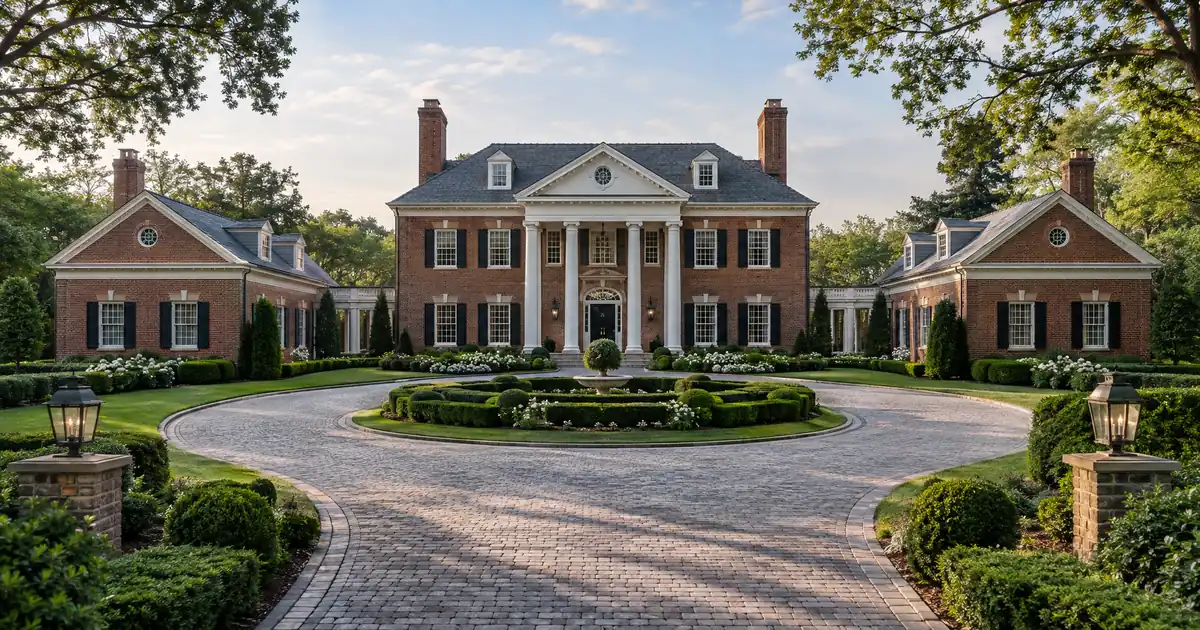
Twenty-Acre Property Qualify For A Super Jumbo — The Quick Read: Generally, no — not as submitted. Across Lendmire’s wholesale network, the super-jumbo overlay caps acreage at ten acres once a bank statement loan crosses above $3,500,000 on a primary residence or $3,000,000 on a second home or investment property. A twenty-acre parcel sits at double that ceiling, so the file usually needs a carve-out, a smaller loan size, or a different program path before it clears underwriting.
That’s the short version. The longer version — how the carve-out actually works, why acreage caps exist, and what happens when the property is genuinely rural — is where most borrowers get surprised.
Key Terms Defined
Super jumbo loan: a loan size well above standard jumbo pricing tiers — there’s no regulatory line for it, just lender shorthand for very large loan amounts, generally starting somewhere north of $2,000,000 to $3,000,000 depending on the program.
Bank statement loan: a non-QM mortgage that qualifies a self-employed borrower using 12 or 24 months of bank deposits instead of traditional personal-income documentation, after applying an expense ratio to estimate real income.
Excess land: the portion of a large parcel that isn’t needed to support the home and could theoretically be subdivided and sold on its own.
Surplus land: extra acreage that also isn’t needed for the home, but — unlike excess land — can’t be legally separated or sold off independently.
Non-QM (non-qualified mortgage): a loan that doesn’t fit the standard rules set for agency-backed mortgages, used for borrowers whose income, property, or documentation profile falls outside conventional guidelines.
Why Ten Acres Is the Line, Not Twenty
Acreage limits on super-jumbo bank statement files aren’t a federal rule — they’re an underwriting overlay that shows up once loan size crosses a threshold. Below the super-jumbo line, acreage gets more flexibility. Above it, the guideline tightens hard.
Once a bank statement loan crosses $3,500,000 on a primary residence, or $3,000,000 on a second home or investment property, a cluster of stricter rules kicks in across Lendmire’s wholesale network. These include a 700 credit floor, a clean 0x30x24 housing-payment history, and 48-month seasoning on any credit event. One rule matters most here: a ten-acre acreage ceiling, with rural property excluded outright. A twenty-acre listing lands right in the middle of that restriction.
Below the super-jumbo threshold, the rural and acreage rules loosen. Program guidelines allow rural property up to 80% LTV on ten acres or less, and never above $3,000,000 — so even under the super-jumbo line, ten acres is still the ceiling most files see. Twenty acres, in other words, isn’t just a super-jumbo problem. It’s a problem at nearly every loan size once the parcel is classified as rural or oversized for its lot.
What Actually Drives the Cap — Valuation, Not Prejudice
Lenders cap acreage because appraisers can’t confidently price what they can’t easily comp — not because large land is inherently risky collateral. The industry solves this by splitting a big parcel into the part that supports the home and the part that doesn’t.
Appraisers use a specific split to handle this. Land that isn’t needed to support the home, but could be sold separately, gets classified as excess land. Land that isn’t needed but also can’t be split off gets classified as surplus land. The HUD knowledge base defines excess land as property “not needed to serve or support the existing improvement,” where the highest and best use may differ from the home site itself and may have potential to be sold as its own parcel.
That distinction is the whole ballgame on a twenty-acre file. If ten of those acres qualify as excess land — legally separable, marketable on its own — a lender may be willing to appraise and secure only the parcel up to its acreage cap, treating the rest as unencumbered land or a separate legal description. If the acreage can’t be separated (a single legal parcel with no subdivision path, easements tying the land together, or zoning that blocks a split), it’s surplus land — and that carve-out option disappears.
This is also where the appraiser earns their fee on a big-acreage file. They walk the entire site, check the subject’s land-to-building ratio against comparable sales, and confirm whether local zoning even permits a split. On a rural-adjacent property, that comparable-sales search often becomes the harder problem — not the acreage itself.
Rural Property Is a Different Question Than Large Acreage
People constantly lump acreage and rurality together, but they’re separate underwriting questions. They just happen to travel in the same direction. A twenty-acre parcel inside a developed, suburban-adjacent area is a fundamentally different file than the same twenty acres surrounded by open farmland with no comparable sales for miles.
There’s no single federal definition of “rural” that governs non-QM underwriting. The closest thing to an official rural determination is the Consumer Financial Protection Bureau’s rural-and-underserved tool. It was built for a narrow Truth in Lending purpose: escrow exemptions and balloon-payment qualified-mortgage eligibility for small creditors. It defines an underserved county as one where, based on HMDA data, no more than two lenders extended five or more covered mortgages in the prior year. Non-QM underwriters don’t run acreage decisions through this tool — it answers a different regulatory question entirely. But it’s worth knowing it exists, because it’s the only genuinely official rural test in the mortgage system.
What actually matters on a bank statement file is whether the appraiser can find enough sales comparables to support value, and whether the surrounding area is developed enough to make the home marketable. A twenty-acre estate ringed by other large-lot homes is a manageable file. Twenty acres surrounded by working farmland, with the nearest comparable sale ten miles away, is a much harder sell — carve-out or not.
Does Agricultural Use Kill the File?
Yes, generally — but agricultural use is a use question, not an acreage question, and the two get confused constantly. A twenty-acre parcel with no working farm on it is not automatically treated the same as an active agricultural operation.
Properties zoned and used for farming, ranching, or orchards are typically excluded from bank statement and DSCR-style investor financing. Why? Because the land itself generates non-rental income, or the property sits outside the standard residential market entirely. A quiet twenty-acre residential lot with a pasture nobody farms is a very different conversation than a working orchard generating harvest income. The acreage size is identical in both cases — what disqualifies the property is what the land actually does.
Where the Twenty-Acre File Actually Lands
Say an investor is buying a $2,800,000 primary residence on twenty acres. That loan sits below the $3,500,000 super-jumbo overlay line. So the strict ten-acre, no-rural-property rules don’t automatically apply. Instead, the file gets underwritten against the standard leverage ladder. In that price band, this ladder allows purchase financing up to 80% LTV with a 720+ credit profile, subject to underwriting. Every figure here varies by lender and program — guidelines, property type, leverage, and credit profile all apply.
But acreage still isn’t ignored just because the loan is under the super-jumbo line. Rural property guidelines cap leverage at 80% LTV on ten acres or less, and that allowance stops entirely above $3,000,000 — so a twenty-acre parcel that reads as rural still runs into the same acreage wall, even at a loan size where the super-jumbo overlay hasn’t kicked in yet, and beyond that threshold leverage on rural acreage pulls back well below the 80% mark. The loan-size threshold and the acreage threshold are two separate gates, and a file has to clear both. Final terms depend on lender guidelines, property type, leverage, and the borrower’s complete credit picture.
Now run the same twenty acres against a $4,200,000 primary residence. That crosses into super-jumbo territory, where the ten-acre ceiling is explicit and rural property is excluded outright. At that size, everything above $4,000,000 gets reviewed case by case before submission across Lendmire’s network — acreage included — so a twenty-acre file at that loan size isn’t a flat no, but it is a conversation that starts with the carve-out question, not the leverage question.
Loan Size, Separately From Acreage
Loan size and acreage are two independent variables, and it’s worth keeping them that way. Across Lendmire’s wholesale network, bank statement financing runs from $300,000 up through two separate programs: a portfolio non-QM program to $6,000,000, and a bank portfolio program that carries twelve-month-statement files up to $30,000,000 on its own leverage ladder — 65% LTV to $5,000,000, 60% to $10,000,000, and 55% up to $30,000,000, with interest-only available at 60% LTV or the band’s ceiling, whichever is lower. These specifics are subject to lender guidelines and a full review of property, leverage, and credit.
Leverage steps down as size grows on the primary-residence ladder — from a higher starting point in the lowest band down through the mid-tiers, to roughly 65-60% once a loan clears $4,000,000, all reviewed case by case above that point. Second homes and investment properties run about five points lower at every size tier. None of that changes based on acreage — acreage is a separate collateral gate layered on top of the size-and-leverage math, and both have to clear before a file moves forward.
For a deeper walkthrough of how the size and leverage ladder works overall, Lendmire’s guide on how to qualify for a super jumbo bank statement loan breaks down the tiers in more detail.
If the Carve-Out Doesn’t Work, What Then?
A blocked acreage overlay doesn’t have to end the deal — it usually means switching lanes, not walking away. A few paths tend to open up when the straight bank statement route hits the ten-acre wall:
- A smaller effective site through a carve-out, if the excess acreage is legally separable and the neighborhood has enough development to support an appraisal.
- A DSCR loan instead, if the property will be a rental — DSCR programs qualify on the property’s own income rather than personal deposits, and some lenders in the network carry more flexibility on acreage for straightforward residential rentals. Lendmire’s complete DSCR loans guide covers how that qualification path works.
- A conventional loan, if the borrower’s traditional personal-income documentation actually support the income — bank statement underwriting exists specifically for the self-employed borrower whose returns understate cash flow, and it isn’t always often a strong option.
- Splitting the transaction — financing the home and its supporting acreage while the excess land is purchased, held, or sold separately from the mortgaged security.
Are you an investor buying a large-acreage property to hold as a rental, not to live in? Then it’s worth comparing two loan options first. Look at how DSCR underwriting treats acreage versus a jumbo bank statement approach. Do this before you lock into one program. Lendmire’s breakdown of DSCR loans versus jumbo loans for investment property walks through that comparison directly.
What Documentation Looks Like Once the Acreage Question Is Settled
That ratio runs 20% for a service business with no employees, and higher for businesses with staff or more overhead, depending on the lender’s assessment of the business type — or an accountant-provided figure can be used instead.
Credit floors sit at 660 on the portfolio program, 680 on the bank program, and 700 once a file crosses the super-jumbo line. Reserve requirements scale with size — typically three months of payments up to $500,000, six months up to $1,500,000, and nine months above that, plus two additional months per other financed property. Debt-to-income can run as high as 50% on most files, subject to underwriting.
Here’s a pattern worth knowing from working these files across the network. Large-acreage estates almost always trigger a second, more detailed appraisal review. This isn’t because the borrower’s credit is weaker — it’s because the collateral itself takes longer to price correctly. Files with twenty-plus acres routinely need a supplemental land valuation or a specific carve-out exhibit before the appraisal even goes to underwriting. Building that extra step into your timeline up front avoids a scramble later.
It’s also worth noting that acreage friction isn’t a sign of a shaky borrower pool. Recent industry data shows non-QM borrowers carried an average credit score of 776 in 2024, compared to 781 for conventional borrowers, with average loan-to-value running 75% for both groups, according to Scotsman Guide. The acreage issue is a collateral and valuation question — not a credit-risk one. Terms vary by lender guidelines, property type, leverage, credit profile, and full file review.
DSCR loans, mentioned above as one alternative path, are designed for non-owner-occupied investment properties. Because they’re business-purpose investor loans, they’re reviewed differently from a standard owner-occupied mortgage.
FAQ
Does a twenty-acre property always get rejected outright?
No — rejection isn’t automatic. What usually happens first is a carve-out conversation: can the excess acreage be legally separated from the home site, and does the surrounding area have enough sales comparables to support an appraisal? If both answers are yes, the file often moves forward on a smaller effective site rather than getting declined.
Is twenty acres treated the same whether the loan is $1,000,000 or $5,000,000?
Not exactly, but acreage rules apply at nearly every size. Rural property guidelines cap at ten acres and 80% LTV up to $3,000,000 regardless of super-jumbo status; above the super-jumbo threshold, the ten-acre cap and the rural exclusion apply explicitly, and everything above $4,000,000 is reviewed case by case. Exact terms depend on the lender’s guidelines, property type, leverage, and a full review of the borrower’s file.
What if the twenty acres includes a barn, pasture, or old outbuilding?
That depends on actual use, not just the presence of a structure. A pasture or barn with no working agricultural income is a different case than an active farm — the disqualifying factor is agricultural use generating non-rental income, not the mere existence of farm-style buildings.
Would a DSCR loan handle the acreage differently than a bank statement loan?
Sometimes, particularly for a straightforward residential rental rather than a personal residence. DSCR loans qualify primarily on the property’s rental income covering the payment, subject to lender guidelines, and some programs in Lendmire’s network carry different acreage tolerances than the bank statement super-jumbo overlay — it’s worth comparing both before choosing a path.
Can the excess acreage just be sold off before closing instead of carved out at appraisal?
That’s one option investors sometimes pursue, particularly when the excess portion has a clear subdivision path and independent market value. It restructures the transaction into financing only the home site, though it depends on zoning, timing, and whether the seller is willing to structure the sale that way — all things to confirm with local counsel and the lender before relying on it.
Tax treatment can depend on how the funds are used and how the property is held; investors should keep clear records and speak with a qualified tax professional before relying on any deduction.
Is a large-acreage property giving you trouble with a straight bank statement quote? Lendmire can help. It can compare how different programs in its wholesale network treat acreage, rural classification, and loan size — before an appraisal gets ordered on the wrong assumption. Lendmire operates as a broker arranging financing through select lenders across 40 markets, including Washington, D.C. None of the figures above are a commitment to lend; every file is underwritten individually.
For current guidelines and terms, see Lendmire’s super jumbo bank statement loan programs page.
Self-employed borrowers can compare both super jumbo programs on Lendmire’s self-employed mortgages page.
About Lendmire
Lendmire is a DSCR-focused mortgage brokerage, NMLS# 2371349, placing investor loans across 40 markets, including Washington, D.C. DSCR eligibility is generally reviewed by the lender around a property’s rental income rather than personal income documentation, which fits LLC-held rentals, self-employed investors, and portfolios scaling past conventional financed-property limits. Scotsman Guide named Lendmire a Top Mortgage Workplace in both 2025 and 2026.
Get Started
Ready to find the right loan for you?
In about 30 seconds you can review financing options available for your home or investment property. No commitment required.
Informational only. Not a Loan Estimate, approval, or commitment to lend. Program availability and eligibility are subject to lender guidelines, credit approval, property review, and underwriting.
References
1. CFPB — Rural and Underserved Areas Tool
2. Scotsman Guide — A Decade Later, Non-QM Loans Prove a Stable, Crucial Option
Brandon Miller
Founder & CEO, Mortgage Loan Originator, Lendmire LLC
- Mortgage Loan Originator · NMLS# 1129696 · Verify on NMLS Consumer Access
- North Carolina Real Estate Broker · License# 343312 · Verify on NCREC
- North Carolina Insurance Producer · License# 19053198 · Property, Casualty, Life, Health · Verify on NAIC SBS
- Lendmire LLC · Firm NMLS# 2371349 · Verify firm licensure
Disclosures. The information presented in this article is general market commentary, not financial, legal, or tax advice. Lendmire is a mortgage brokerage (NMLS# 2371349) — not a direct lender or depository institution — and loan placement is subject to lender underwriting. Nothing in this content represents a commitment to lend. Loan terms, pricing, and program availability vary based on borrower qualifications, property characteristics, and state of subject property, and are subject to change at any time. Lendmire complies with Equal Housing Opportunity requirements. Consumer access: nmlsconsumeraccess.org.


