
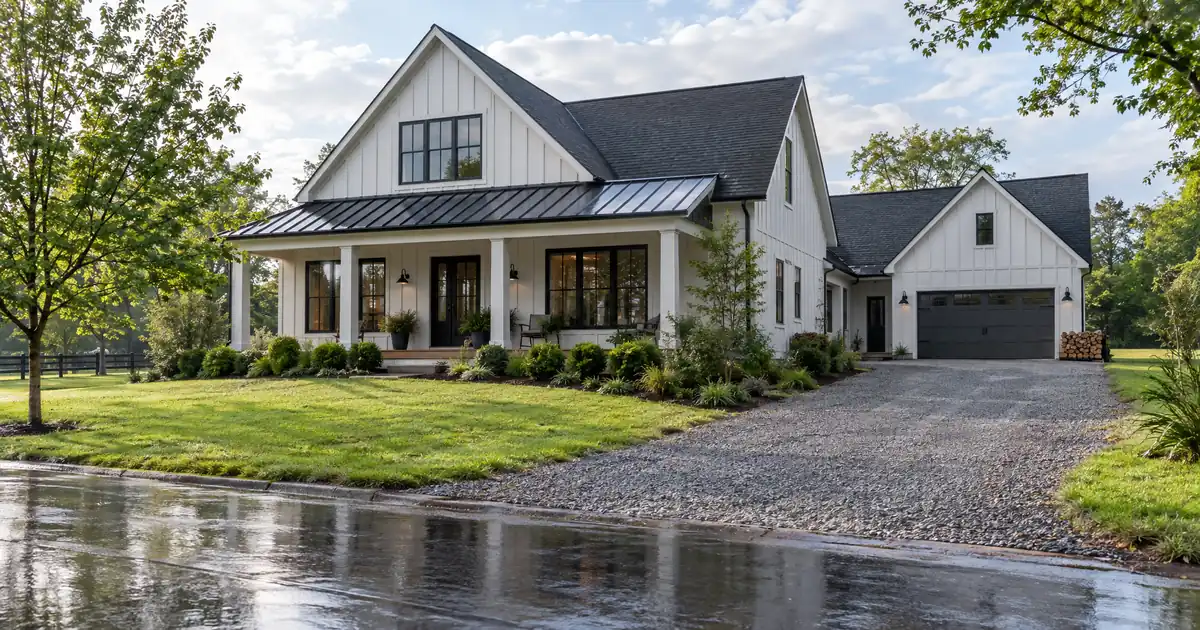
The Quick Read: Yes, for a finished new-build home you buy from a builder, because the lender treats it like any other purchase with a completed, appraised property. Building from the ground up is different, since the construction phase is normally funded by a separate construction loan. Whether an asset-based program can take over afterward depends on the lender.
- A completed builder home with an occupancy permit is the clean fit.
- The asset qualifier path counts your eligible assets against the entire loan. The asset depletion path turns assets into monthly income.
- Money you spend on deposits and upgrades shrinks the asset pool that qualifies you.
- Long gaps between contract and closing can age out your account statements.
- Construction phase terms are set by each lender and are not published for this program, so confirm them before you sign a build contract.
What “Asset-Based” Means Here
Here, asset-based means you qualify using your own money: brokerage accounts, savings, retirement funds. It does not mean a hard-money loan secured by the property. Those are a different product, aimed at builders.
This program is a consumer mortgage for principal residences and second homes. Investment property is allowed only on the asset depletion path. Through select programs in Lendmire’s wholesale network, consumer lending is available in 16 states, subject to underwriting.
Here is the quick version of the two paths. A borrower is reviewed on one path at a time.
- Asset qualifier path. Your eligible assets, after the credit percentages, must equal or exceed the entire loan. No employment or income is documented.
- Asset depletion path. Your eligible assets, after haircuts, are divided by 60 months into a monthly qualifying income. That income must carry the housing payment and your other debts through the debt-to-income test.
On both paths the assets are documented. “No income documentation” never means no documentation.
Which New-Construction Scenarios Work?
A finished home fits best. The farther you get from a completed, occupancy-ready house, the more questions land on the lender’s desk. The table sorts the four common situations.
| Scenario | Typical fit | Main complication |
|---|---|---|
| Finished builder home | Strong | Appraisal and occupancy permit |
| To-be-built tract home | Case by case | Long gap before closing |
| Custom build on your land | Usually a separate loan first | Draws and inspections |
| Land plus build | Usually a separate loan first | No finished collateral yet |
On a finished home, the file looks like a resale purchase. The house exists, the appraiser can value it, and the lender can review it. In the lender network Lendmire works with, that is the scenario that moves most smoothly.
A to-be-built home in a tract community sits in the middle. The contract is signed today, but the house closes later. That gap is where most asset-based files get into trouble, and the later sections cover why.
A custom build or a land-plus-build project is a construction financing question first. Construction loans are short-term. Funds go out in draws against milestones, with inspections before each release, and the borrower typically pays interest only on the money drawn, as explained in Bankrate’s overview of construction-to-permanent loans. Whether an asset-based program will serve as the permanent loan after the build is a lender-by-lender answer. It is not a published feature of this program, so treat it as a question to confirm up front.
Why Ground-Up Construction Is the Hard Part
An asset-based lender is underwriting a completed home plus your balance sheet. A construction loan underwrites a project that does not exist yet. Those are two different jobs, which is why most programs separate them.
The common structure is two loans. A construction loan pays for the build. Once the home is finished, a permanent mortgage pays off the construction loan. On the asset qualifier path, a refinance goes up to 75% loan-to-value on a principal residence or second home, subject to underwriting.
Single-close loans, which roll construction and permanent financing into one closing, are mostly an owner-occupant product. For contrast only, agency rules cap the construction period of a single-closing loan at 18 months in total, according to the Fannie Mae Selling Guide. That is an agency rule, not a term of this program. Ask any asset-based lender whether it offers single-close at all.
Two practical risks come with the two-loan route:
- The construction loan can mature before the permanent loan is ready. Plan the take-out before the build starts, not after.
- You pay for two closings, which means two sets of title, appraisal and origination costs.
One more note on paperwork. Because this is a consumer-purpose mortgage, consumer disclosure rules apply. The CFPB’s guide to separate construction loans explains how construction-only and construction-permanent loans are disclosed. That is background reading, not something to untangle on your own.
How the Numbers Change When the Home Is New
The credit percentages, seasoning and leverage do not change because the house is new. What changes is timing, and timing changes your balances.
Your asset pool shrinks during the build
Builders ask for deposits. Design centers sell upgrades. Overages happen. Every dollar that leaves a qualifying account lowers the amount the lender can count.
This matters most on the asset qualifier path, where usable assets must cover the entire loan. Take an illustrative case. An $800,000 loan is supported by $330,000 in brokerage accounts (100% counts), $300,000 in a 401(k) for a borrower under 59½ (90% counts, so $270,000), and $200,000 in savings (100% counts). That totals $800,000 of usable assets, which is reviewed on assets alone with nothing to spare. Pay a builder deposit from the savings account and the total drops below the loan amount. The lender’s own calculation governs, and every file is subject to underwriting.
The lesson is simple. Build your cushion before you sign the contract, not after.
Statements age while the house goes up
Each path has its own statement rules:
- Asset qualifier path: 60 days of seasoning and two months of statements for each qualifying account.
- Asset depletion path: statements at least 120 days old at application, plus the most recent statement within 45 days. Funds from the sale of a business, an inheritance or a legal settlement are excused from that seasoning.
On a long build, the statements you submit early can go stale before closing. Expect the lender to ask for updated ones. Moving money between accounts during that window can also reset the clock, so keep transfers clean and documented.
The depletion math still applies
On the asset depletion path, take $1,500,000 in securities (80% counts, so $1,200,000) and $300,000 in cash (100% counts). That is $1,500,000 of usable assets. Divided by 60 months, it produces $25,000 of monthly qualifying income, which must then carry the housing payment and other debts through the debt-to-income test. Assets you spend on the build come out of that numerator, and the monthly income falls with them.
Leverage and Credit: What Does the Program Allow?
Typical figures from select programs in Lendmire’s network, all subject to underwriting:
- Asset qualifier path: up to 80% loan-to-value on a purchase and up to 75% on a refinance, on a principal residence or second home, with loans up to $4,000,000.
- Asset depletion path: up to 80% on a purchase or rate-and-term refinance and 60% on a cash-out refinance for a principal residence or second home. On an investment property, up to 65% on a purchase or rate-and-term refinance and 60% on a cash-out. Loan amounts run from $125,000 to $3,500,000. Cash-out proceeds never count as qualifying assets.
- Credit: the qualifier path publishes a 600 minimum score. The depletion path follows the lender’s matrix. A first-time investor on the depletion path needs 700.
- Depletion minimums: qualified assets of at least the lesser of $1,000,000 or 1.25 times the loan balance, and never below $250,000 liquid when depletion is the only income source.
These are ceilings and floors, not offers. Appraised value sets the loan size, not what the builder charged. If the finished home appraises below the contract price, you cover the difference.
What About Builders and Their Preferred Lenders?
Builders often steer buyers toward an affiliated lender, usually with credits attached. You are generally free to use outside financing, but you may lose those credits, so run the numbers both ways. Also confirm early that the builder will work with your lender’s closing process. That conversation is easier before you sign than after.
If you are buying a rental rather than a home to live in, the rules change. Business-purpose investor loans are reviewed differently from a standard owner-occupied mortgage, and rental purchases usually move to a DSCR loan, which qualifies primarily on property-level rental income covering the payment, subject to lender guidelines. Read Lendmire’s complete DSCR loans guide for that route. Builder credits work differently there too, as covered in Lendmire’s piece How to Use Seller Concessions on a New-Construction DSCR Purchase.
Asset-Based Purchase or Another Route?
| Route | Best when | Watch for |
|---|---|---|
| Asset-based purchase | Finished home, big balances | Statement aging |
| Construction loan, then asset-based | Custom build | Two closings |
| Paying cash | Liquidity is deep | Tying up capital |
| Bridge solution | Short gap to sale | Cost and exit risk |
Many buyers in this position hold plenty of money but little documented income: retirees, people who sold a business, heirs, and households living off a portfolio. For them, an asset-based file is often the clean path on a finished home. For a ground-up build, the two-loan plan comes first and the asset-based take-out is a question to settle early.
Questions to Ask Your Lender and Your Builder
- Does the program fund only completed homes, or does it include a construction phase?
- Which path fits you, asset qualifier or asset depletion, and why?
- How will deposits and upgrades paid from your accounts change the usable total?
- When do statements need refreshing before closing?
- What happens if the appraisal comes in below contract price?
- Will the builder keep its credits and schedule if you use outside financing?
- If you plan to refinance out of a construction loan, how long can that loan run?
Assets like cryptocurrency, precious metals and collectibles are not published as eligible on either path. The documented route is converting them to a seasoned cash balance in a regulated account, with the source reviewed by the lender. Do that well before you need the funds.
Key Terms Defined
Asset qualifier path: the route where eligible assets, after credit percentages, must cover the entire loan with no income documented.
Asset depletion path: the route that divides usable assets by 60 months to create monthly qualifying income.
Seasoning: the time funds must sit in your account before a lender counts them.
Certificate of occupancy: the building official’s sign-off that a finished home meets code and can be lived in.
Draw: a release of construction loan funds after a milestone is inspected.
Take-out loan: the permanent mortgage that pays off the construction loan.
Frequently Asked Questions
Can I use an asset-based mortgage to buy a new-construction home?
Yes, when the home is finished and appraised. The program treats a completed builder home like any other purchase, subject to underwriting, leverage limits and your asset documentation. Confirm the closing structure with your lender before you sign the builder’s contract.
Will an asset-based mortgage pay for the construction itself?
Usually not. Construction is typically funded by a separate short-term loan with draws. Whether an asset-based program can serve as the permanent loan afterward is set by the individual lender, so ask before you commit to a build.
Do builder deposits and upgrades hurt my qualification?
They can, because money paid from a qualifying account no longer counts toward your assets. On the asset qualifier path, where assets must cover the whole loan, a large deposit can push your usable total below the loan amount.
Can I use this on a rental or investment new build?
Only on the asset depletion path, at up to 65% on a purchase or rate-and-term refinance and 60% on a cash-out. Most pure rental buyers look at a DSCR loan instead, which is built for business-purpose investment property.
Does a long build timeline create problems?
It can, because account statements age, balances move, and updated documents may be required before closing. Keep your qualifying accounts stable and your paperwork current.
Next Step
If you are qualifying on assets rather than income and want to see how the numbers work, Lendmire can help you compare asset-based mortgage options based on your statements, the property, credit profile, leverage, and your goals. Retirement balances can also support reserves; see Lendmire’s guide How to Use Retirement Accounts for Reserves on an Asset Depletion Mortgage. Whatever you build, plan your take-out loan before the first draw is released.
For current guidelines and terms, see Lendmire’s asset-based mortgage programs page.
About Lendmire
Lendmire, NMLS# 2371349, is a mortgage brokerage with consumer lending licenses in 16 states. Bank statement, P&L-only, 1099-only and asset-based mortgages are arranged through wholesale lending partners for borrowers whose tax returns understate their income, and each application is reviewed individually by the lender. Scotsman Guide named Lendmire a Top Mortgage Workplace in both 2025 and 2026.
Get Started
Ready to find the right loan for you?
In about 30 seconds you can review financing options available for your home or investment property. No commitment required.
Informational only. Not a Loan Estimate, approval, or commitment to lend. Program availability and eligibility are subject to lender guidelines, credit approval, property review, and underwriting.
References
1. Bankrate: Construction-to-permanent loans
2. Fannie Mae Selling Guide B5-3.1-02
3. CFPB: TRID guide for separate construction loans
This article is part of Lendmire’s asset-based mortgage program — full qualification details, guidelines, and scenarios live on the program page.
Related reading: How an Asset Depletion Mortgage Works · Asset Qualifier Mortgage vs Bank Statement Mortgage · How Lenders Count Assets Toward an Asset Depletion Mortgage
Brandon Miller
Founder & CEO, Mortgage Loan Originator, Lendmire LLC
- Mortgage Loan Originator · NMLS# 1129696 · Verify on NMLS Consumer Access
- North Carolina Real Estate Broker · License# 343312 · Verify on NCREC
- North Carolina Insurance Producer · License# 19053198 · Property, Casualty, Life, Health · Verify on NAIC SBS
- Lendmire LLC · Firm NMLS# 2371349 · Verify firm licensure
Important disclosures. Lendmire (NMLS# 2371349) is a licensed mortgage brokerage. Lendmire is not a direct lender, depository institution, or financial advisor. All loan inquiries are subject to lender underwriting; this article does not constitute a commitment to lend. Rates, terms, and program guidelines are subject to change without notice and vary by borrower profile, property type, and state. Information in this article is general in nature and is not financial, legal, or tax advice. Equal Housing Opportunity. NMLS Consumer Access: nmlsconsumeraccess.org.