
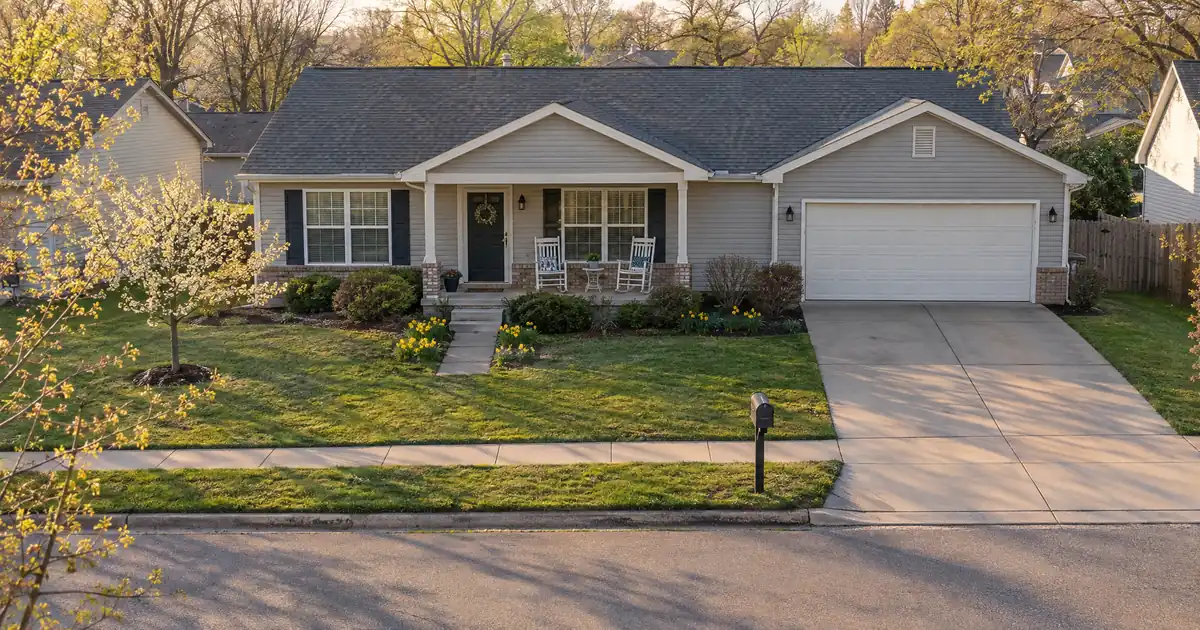
The Quick Read: Usually no, not at the same time. FHA insures loans on a principal residence, and you can have only one of those at a time. HUD carves out four narrow exceptions: a job relocation, a bigger family, leaving a jointly owned home, and a non-occupying co-borrower. If none fits, you can still use FHA again once the first loan is paid off or sold.
Is There a Lifetime Limit on FHA Loans?
There is no lifetime cap on FHA loans. The limit is on holding more than one FHA-insured mortgage on a principal residence at once. Pay off the first loan, sell the house, or refinance out of FHA, and the slate is clean. The new loan is then underwritten like any other FHA loan.
FHA payment estimate
Starting assumptions reflect an example price and the FHA minimum investment. Replace them with your own figures.
Editable benchmark: 7.32% as of October 22, 2026 · Freddie Mac 30-year average via FRED®. A conventional market reference, not an FHA loan quote.
Illustrative starting assumptions: a $350,000 price, the FHA minimum investment as the down payment, a thirty-year term at the current Freddie Mac benchmark, and property taxes and insurance estimated at typical national rates. Every field is editable.
Illustrative estimate only — not a Loan Estimate, approval, quote, or commitment to lend. The rate field carries the weekly Freddie Mac thirty-year conventional benchmark, a market reference and not an FHA loan quote; your rate is set by the lender at lock. FHA mortgage insurance follows HUD’s published schedule for the term, leverage and loan size entered; taxes, insurance and dues are editable estimates; closing costs are not included; county loan limits are not checked here. Licensed in sixteen states for consumer mortgages. Lendmire is not affiliated with or acting on behalf of FHA, HUD, or the federal government.
Plenty of buyers confuse those two ideas. “I used FHA once, so I’m done” is a myth. “I want a second FHA loan while keeping my first” is the real hurdle.
Why does the wall exist? FHA is built for people who live in the home they finance. HUD defines a principal residence as the dwelling where you keep a permanent place of abode and live most of the year. It also says you may have only one principal residence at a time. Two FHA loans at once would mean one of them is not really your home.
The occupancy standard is specific. At least one borrower must move in within 60 days of signing the security instrument. That borrower must intend to stay at least one year.
What Are the Four HUD Exceptions?
HUD’s own list has four exceptions, and its FHA Answers page calls them the only circumstances. You will see lender sites claim a fifth. HUD’s list has four, so treat extras with suspicion.
| Exception | Who it fits | What the lender needs to see |
|---|---|---|
| Job relocation | You moved, or are moving, for work | New home more than 100 miles away |
| Family size | More legal dependents, home no longer fits | Current home at 75% LTV or less |
| Vacating a joint property | You leave a home a co-borrower keeps | You do not intend to return |
| Non-occupying co-borrower | You co-signed on someone else’s FHA loan | New home will be your own residence |
Each one deserves a closer look, because the details are where files get stuck.
Relocating for Work
You are moving, or have moved, for a job-related reason. The new principal residence must sit more than 100 miles from the current one. You do not have to sell the first house.
Here’s a detail people miss: if you later move back to the original area, you do not have to live in the original house again. You can still get a new FHA loan on a new principal residence, as long as the relocation met both tests.
Close calls are common. A commute that is 90 miles does not qualify. A move for a spouse’s job or a remote-work arrangement raises questions a lender has to sort out against the exception’s wording. A lender may also be stricter than HUD, so ask early.
Growing Household
This exception is about legal dependents. You need satisfactory evidence of more dependents and that the current home no longer fits the household. Think birth, adoption, or custody records.
There is also an equity test. The loan-to-value ratio (LTV, the loan balance compared with the home’s value) on your current home must be 75% or less. If it is higher, you can pay it down to that level. The lender measures it with your outstanding balance and a current appraisal.
Two misconceptions live here. First, the 75% test is part of this exception only. It is not a general rule for every second FHA loan. Second, wanting a bigger or nicer house is not enough. A preference does not count. Documented dependents and a home that truly no longer works do.
Leaving a Jointly Owned Home
Say you co-own a home with someone and you are leaving, with no intent to return. A co-borrower stays and keeps living there. You may qualify for a new FHA loan on a new principal residence. Divorce and separation are the usual stories. A decree or similar paperwork is the typical proof, though each lender sets its own document list.
Non-Occupying Co-Borrower
Maybe you co-signed on a relative’s FHA loan to help them qualify, but never lived there. You can still get your own FHA loan for your own home. HUD treats you as a non-occupying co-borrower, and the exception lets you buy a home of your own.
The reverse also works in practice. Someone with their own FHA home can be a non-occupying co-borrower on another person’s loan. The lender will still review that borrower’s debts, income, and credit.
Does Meeting an Exception Mean Approval?
No. An exception gets you past the one-at-a-time rule. It does not skip underwriting.
Across the wholesale programs I place FHA files with, the lender still reviews your income, credit, debts, and ability to repay. The housing payment on your first home generally counts when the lender measures your debt against income. That matters. You are carrying two housing payments, and the new loan has to fit alongside the old one.
Debt ratios drive this. The base pair on FHA is 31/43 (housing payment over income, and total debts over income), with no compensating factors. Documented compensating factors, such as strong reserves or a solid payment history, can stretch ratios as far as 40/50 at the top tier. Most files run through an automated finding, which governs the final answer. All of it is subject to lender guidelines and full file review.
Here is the honest read: borrowers with a thin cushion after the first mortgage often hit the wall on ratios, not on the exception itself.
How Does the Process Work, Step by Step?
Order matters. Start early, because the exception must be documented before the new loan can close.
1. Check the first loan’s status. If it is paid off or sold, you need no exception.
2. Match yourself to one exception. The lender has to document which one.
3. Gather proof. Typical items are an employer letter, family records, or a separation decree. Exact lists vary by lender.
4. Run the equity test if you claim family size. That means a current appraisal and a balance at or below 75% of value.
5. Underwrite the whole picture. Both payments, income, credit, and debts get reviewed.
6. Close on a true principal residence. One borrower moves in within 60 days and plans to stay a year.
7. Decide what the first home becomes. Under relocation, it commonly becomes a rental. HUD’s anti-abuse concept still applies: using FHA to build a portfolio of investment homes is not allowed.
The program basics also apply to the new loan. Maximum financing is 96.5% LTV with a 3.5% minimum investment at a decision score of 580 or higher, one to four units, owner-occupied. There is an upfront mortgage insurance premium of 1.75% of the base loan, plus an annual premium. County loan limits apply and change every year. Final terms depend on the lender’s guidelines, the property type, and the borrower’s complete credit picture.
What If I Still Own the First Home and Do Not Fit an Exception?
You have four practical routes. This is advisory, not a HUD statement, but it is how these files tend to go.
| Route | How it works | Tradeoff |
|---|---|---|
| Use an exception | Document one of HUD’s four | Needs paperwork and two-payment qualifying |
| Different loan on the new home | Conventional or another program | Different leverage and mortgage insurance rules |
| Refinance first loan out of FHA | Pay off the FHA loan with a non-FHA loan | Costs and terms change on the old home |
| Sell first | Clears the FHA loan | Timing pressure on the purchase |
If your first loan is conventional, not FHA, the handbook limit targets existing FHA-insured mortgages, so it may not apply to you. The new home still has to be your principal residence. Lenders can read this differently, so confirm before you write an offer.
Can the first home’s rent help you qualify? Many lenders consider it only with documentation, and rules vary. Keep that conversation open with your loan officer rather than assuming it counts.
Thinking about whether a different property type creates trouble? Lendmire’s piece Can a Condo Buyer Still Use an FHA Loan if the Project Isn’t Approved? covers a separate FHA snag. And if you are weighing the long-term cost of FHA insurance, Lendmire’s article Should You Use an FHA Loan if You Plan to Exit Mortgage Insurance? walks through that.
Key Terms Defined
Principal residence: the home where you live most of the year and keep your permanent place of abode. You can have only one at a time.
Non-occupying co-borrower: someone on the loan who does not live in the home. Often a relative who helps the borrower qualify.
LTV (loan-to-value): your loan balance as a percentage of the home’s appraised value.
Security instrument: the signed mortgage or deed of trust that pledges the home as collateral. The 60-day move-in clock starts at its signing.
Common Mistakes
- Treating a preference as an exception. “I want to keep my house” is not on HUD’s list.
- Assuming 75% equity applies everywhere. It belongs to the family-size exception.
- Skipping the paperwork. An exception without documentation does not exist for the lender.
- Ignoring occupancy. Saying you will move in when you will not is misrepresentation, and the stakes are high.
- Forgetting the first payment. Lenders count it, so budget for both.
HUD’s policy sits in Handbook 4000.1, and the agency’s Housing Handbooks page shows the handbook as the active policy source, updated recently. Lender rules can be tighter than HUD’s, so read your lender’s overlays, not just the handbook.
Frequently Asked Questions
Can I use FHA again after I sell or pay off my first FHA loan?
Yes. Once the first FHA loan is paid off or the house is sold, you are not holding two active FHA mortgages. The new loan is underwritten like any other FHA file, subject to lender guidelines.
Can I keep my first FHA home as a rental after I move?
In practice, yes under exceptions such as relocation, where the first home commonly becomes a rental. Turning a home into a rental does not create an exception by itself. You still need one of HUD’s four to get the second FHA loan.
Does wanting a bigger house qualify me for a second FHA loan?
No. The family-size exception requires documented additional legal dependents and a home that no longer fits the household. You also need the current home at 75% LTV or less, or paid down to it. Each figure is subject to lender guidelines and a complete review of property type, leverage, and credit.
Can I use FHA for a vacation home or second home?
No. FHA finances a principal residence, and you can have only one at a time. Occupancy decides the loan type and leverage, so a vacation home would need a different program.
I co-signed on a relative’s FHA loan. Can I still get my own?
Often yes. HUD lists the non-occupying co-borrower exception for this case. The new home must be your own principal residence, and the lender still reviews your income, credit, and debts.
If you are buying a home and want to see whether an FHA loan fits your file, Lendmire can help you compare the options and what each one asks of the file. You can read more about FHA loan programs before you start. Every program detail is subject to lender guidelines and full file review, and nothing here is a commitment to lend.
For your own numbers, request a scenario review with Lendmire.
About Lendmire
As a mortgage broker (NMLS# 2371349), Lendmire helps homeowners and home buyers in 16 states with FHA, VA, conventional and jumbo purchase and refinance loans arranged through wholesale lenders. Lendmire is never the lender; program terms are set by the lender and the agency guidelines. Scotsman Guide named Lendmire a Top Mortgage Workplace in both 2025 and 2026.
Get Started
Ready to find the right loan for you?
In about two minutes you can review financing options available for your home or investment property. No commitment required.
Informational only. Not a Loan Estimate, approval, or commitment to lend. Program availability and eligibility are subject to lender guidelines, credit approval, property review, and underwriting.
References
1. HUD: How Does FHA Define Principal Residence
This article is part of Lendmire’s FHA loan program — full qualification details, guidelines, and scenarios live on the program page.
Related reading: Second FHA Loan Requirements for Borrowers Who Already Have One · Can You Combine a VA Loan With an FHA Loan on Two Homes? · Can You Have a Cosigner on an FHA Loan?
Brandon Miller
Founder & CEO, Mortgage Loan Originator, Lendmire LLC
- Mortgage Loan Originator · NMLS# 1129696 · Verify on NMLS Consumer Access
- North Carolina Real Estate Broker · License# 343312 · Verify on NCREC
- North Carolina Insurance Producer · License# 19053198 · Property, Casualty, Life, Health · Verify on NAIC SBS
- Lendmire LLC · Firm NMLS# 2371349 · Verify firm licensure
Compliance and disclosures. Lendmire (NMLS# 2371349) is a licensed mortgage broker and is not a direct lender, depository institution, financial advisor, or tax professional. Content in this article is general market analysis and educational information — not financial, legal, or tax advice for any specific situation. Lendmire does not guarantee loan approval; every transaction is subject to underwriting by the funding lender. Mortgage pricing and loan program guidelines are subject to change at any time without notice and vary by borrower characteristics, property type, and state regulations. Lendmire complies with Equal Housing Opportunity. Licensure verification: NMLS Consumer Access.