
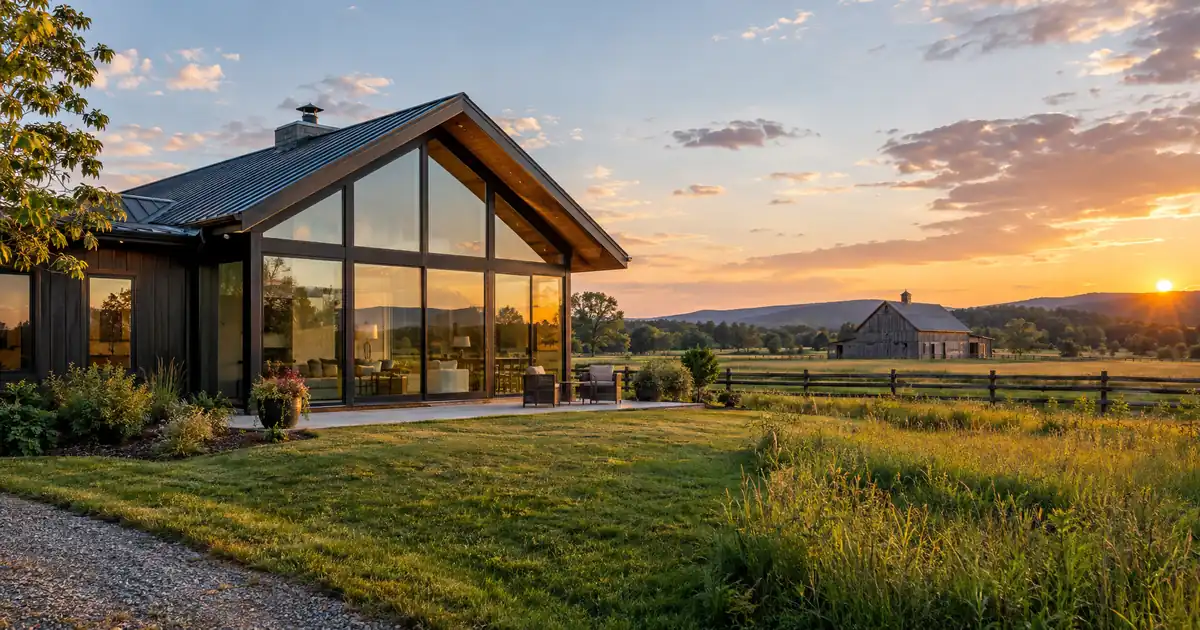
The Quick Read: Usually, yes. VA sets no acreage cap, so the real tests are whether the home is your primary residence and whether the property is residential in character. The land has to appraise as a home with acreage, not as a working farm. The usual roadblock is a lender’s own acreage rule, which is not a VA rule, plus the well, septic and appraisal details that come with rural property.
What Does VA Actually Say About Acreage?
VA does not limit the number of acres on a guaranteed property. That comes straight from VA’s Farm Loans fact sheet, which also says there must be a residence on the land and the veteran must live in it as a primary home.
Many veterans have heard that VA caps acreage at ten acres. It doesn’t. Where a cap exists, a lender set it.
The second half of that rule matters more. VA loans are for residential purposes. They can’t buy a business, so a property that is mainly a commercial operation may not be eligible. A house on forty wooded acres, with a barn you use for your own truck and tools, looks like a home. A house attached to a dairy or a row-crop operation looks like a business.
For the cash-out itself, VA’s cash-out loan page says you need a Certificate of Eligibility (COE), credit and income that meet VA and lender standards, and you must live in the home you’re refinancing. A COE is the VA document that confirms your service qualifies you for the benefit. Across the wholesale programs Lendmire places VA files with, that is the same starting line whether the home sits on a city lot or on twenty acres.
VA Rule vs. Lender Overlay: Who Sets What?
An overlay is a rule a lender adds on top of the agency’s rules. Most of the friction on acreage files comes from overlays, not from VA.
| Constraint | Who sets it | What it means for you |
|---|---|---|
| No acreage cap | VA | Land size alone doesn’t disqualify you |
| Primary residence | VA | You must live in the home |
| Residential use | VA | Not a business purchase |
| Acreage threshold | Lender | Some lenders set their own limit |
| Land-value share | Lender | Some cap how much of the value is land |
| Comparable-sales comfort | Lender | Thin local sales can make a lender cautious |
This is why one lender can decline a property that another lender handles. A mortgage broker earns its keep here. Lendmire works with several wholesale lenders, so a file that one channel finds awkward can be placed with another whose guidelines fit the property. Every placement stays subject to lender guidelines and full file review, and nothing here is a commitment to lend.
What Counts as a “Rural Home With Acreage”?
Think of it as a home that happens to have land, not land that happens to have a house. These properties generally fit:
- A house on several acres with a yard, woods, a pasture used for your own horses, or a pond.
- A home with ordinary outbuildings, such as a shed, garage or small barn.
- A rural homestead where any farm activity is a hobby, not the main source of income.
These properties are harder or won’t work:
- A working farm or ranch where the land is the business.
- Agriculturally zoned land where the house is secondary.
- A property where the home is not your primary residence.
VA’s Buyer’s Guide says a guaranteed loan can’t cover non-residential farmland value, farm equipment or livestock. It also says you can start a business on your property, but the benefit exists to help you buy a home. That guide is written around purchases. For a refinance on land you already own, the Farm Loans fact sheet is the better anchor, so don’t read the purchase wording as a hard rule on your situation.
How Does Acreage Change the Appraisal?
Every VA cash-out needs a VA appraisal. Per VA’s Buyer’s Guide, the appraisal is required on cash-out refinances, and a VA-approved appraiser sets the home’s reasonable value.
Land is rarely the problem if similar properties nearby recently sold as residences. The fact sheet says exactly that. Trouble starts when the area has few comparable sales, because the appraiser has little to measure against.
Here is what the appraiser does and doesn’t count:
- Excluded: livestock, crops, and farm equipment and supplies.
- Valued at fair market value: non-residential improvements like barns, sheds and stables.
- Core of the value: the house, the home site and the land that supports residential use.
A simple way to picture it: say the appraiser reads your property as a house worth a certain amount plus acreage that adds some more. The loan is sized to the appraised value, not to what you paid or what the land might fetch from a farmer. If the appraisal separates out land that doesn’t read as residential, the value available to borrow against shrinks. That reduces the cash you can take.
The ceiling is firm. VA Circular 26-19-05 says VA won’t guarantee a refinance when the loan-to-value (LTV) ratio exceeds 100 percent, and a financed funding fee can’t push the loan above reasonable value. LTV is simply the loan amount divided by the home’s appraised value. Across the wholesale programs Lendmire works with, a VA cash-out reaches 100% of the appraised value, funding fee included, subject to lender guidelines.
What If You Already Own the Land?
Most rural cash-outs involve land that has been owned for years. A few situations come up again and again.
Proving you live there. The occupancy test applies to the home you’re refinancing. A vacation cabin, second home or rental doesn’t qualify. VA’s home loans page describes the benefit as financing for homes you occupy (or that a spouse or dependent occupies, for active-duty service members).
A paid-off home. A cash-out replaces an existing loan, so a home with no lien is a different conversation. If that’s you, Lendmire’s piece VA Cash-Out vs HELOC for a Veteran With a Paid-Off Home walks through the alternatives.
A non-VA loan today. You don’t need an existing VA loan. A cash-out can refinance a conventional or FHA loan into a VA-backed one, and the same program reaches any loan type.
An IRRRL won’t do it. The Interest Rate Reduction Refinance Loan, or IRRRL, is VA’s streamline product for loans that are already VA-guaranteed. It isn’t a way to take cash out.
Parcels and land liens. If your home and acreage sit on separate parcels or carry separate loans, tell your loan officer on day one. How those pieces are titled and secured affects whether they can be treated as one residential property. The brokerage can’t answer that in general, because it depends on the file.
Do the Well and Septic Matter?
Yes. Rural homes are held to the same safe, sound and sanitary standard as any other VA home. VA Pamphlet 26-7, Chapter 12 lays out the Minimum Property Requirements. For rural properties, that means:
- A continuous supply of safe drinking water and hot water.
- Sanitary facilities.
- A safe method of sewage disposal.
Many wells and septic systems get tested as part of the process. Water test results have a limited shelf life, so a test done too early can need repeating. A shared well generally needs a permanent easement and a recorded sharing agreement that covers repair costs.
Keep one distinction straight. The VA appraisal checks the MPRs. It is not a home inspection and it doesn’t test every system. Many rural buyers and owners still order their own inspection, and that’s a sound idea on a home with a well, a septic tank and outbuildings.
If you suspect an aging septic system or a questionable well, deal with it before you apply.
What About Farm Income and Hobby Farms?
Underwriting a rural home follows the same guidelines as any other home. If you need farm income to qualify, VA says the self-employment income analysis from its Lenders Handbook generally applies. In plain terms, the lender looks at a documented earnings history, not a promise.
Most veterans with acreage don’t need farm income at all. Their wages, pension or disability compensation carry the file. Keeping farm income out of the picture simplifies things, since the lender can then treat the property as a home with land.
Hobby activity is usually fine. A few chickens, a garden, horses for personal use or a hay field you cut for yourself all read as residential. Leasing a pasture to a neighbor for grazing, or crop acreage to a farmer, is the gray area. Disclose it early and let the lender tell you how it reads.
What Does a VA Cash-Out Cost?
VA charges a one-time funding fee. You can finance it, but it counts toward the 100% ceiling. Across the wholesale programs Lendmire places these loans with, the cash-out fee is 2.15% for first use and 3.3% for later use, subject to lender guidelines. Veterans who receive compensation for a service-connected disability, and certain other exempt groups, don’t pay it.
Other facts from the program side:
- Credit: VA sets no minimum score, but the wholesale programs Lendmire places VA loans with start at a 580 decision score. Some lenders set a higher floor.
- No mortgage insurance of any kind.
- Residual income is the controlling test, the money left each month after major obligations and living costs. The 41% debt-to-income figure is a guideline, not a cap, and a ratio above it needs residual income well above the table.
- Seasoning applies: the later of 210 days from the first payment on the loan being refinanced, or the sixth payment.
- A net tangible benefit is required. VA’s circular says that standard applies to all cash-out refinances.
VA’s cash-out page also warns that closing costs can add up to thousands of dollars and tells borrowers to understand how the new loan amount relates to the home’s value. Take that seriously. A cash-out swaps your current mortgage for a bigger balance, so the monthly payment, the interest paid over time and the equity you keep all change. VA’s page points borrowers to the CFPB’s home loan resources for more on comparing offers.
Some terms, in plain words. VA Circular 26-19-05 defines Type I as a loan, funding fee included, that doesn’t exceed the payoff of the loan being refinanced. Type II exceeds the payoff. Most cash-outs are Type II, since the point is to take cash.
Why Do Rural Cash-Outs Get Declined?
Most declines trace to a short list. Here is the usual map from problem to fix.
| What goes wrong | Likely cause | What to try |
|---|---|---|
| Lender won’t take the acreage | Lender overlay | Ask a broker to place it with another lender |
| Value comes back low | Few comparable sales | Provide nearby residential sales; ask about appraiser area experience |
| Land treated as non-residential | Commercial look or use | Show residential use; ask how farm activity reads |
| Water or septic fails | Condition or testing | Repair, retest, then reapply |
| Income falls short | Farm income not documented | Qualify on wage or pension income if you can |
| Not your primary home | Occupancy | VA requires you to live there |
Notice that VA itself shows up in only a couple of rows. Most fixes are about matching the property with the right lender.
What Are the Alternatives?
If a VA cash-out doesn’t fit, you have other routes. A home equity line or loan leaves your current first mortgage alone, which can matter if your existing loan is a good one. A conventional cash-out can work on land that a VA lender balks at, though it generally brings different leverage limits and mortgage insurance considerations, and it uses none of your VA entitlement benefits. Lendmire’s article VA Cash-Out vs Second Lien for a Veteran With a Paid-Off Home compares the first-lien and second-lien approach in detail.
Honestly, this is a genuine toss-up for many rural veterans. The VA cash-out reaches the highest share of your value with no mortgage insurance, but it carries a funding fee unless you’re exempt. A second lien keeps your first loan intact but follows its own rules. Run both against your actual equity before choosing.
If you’re weighing a cash-out on a rural property, the VA cash-out refinance program page lays out the mechanics.
How Should You Shop for a Lender?
Ask the loan officer these questions before you spend money on an appraisal:
1. Do you have an acreage threshold, and what is it?
2. Do you limit how much of the value can be land?
3. Which appraisers cover my area, and do they handle rural comps?
4. How do you treat leased pasture or crop land?
5. What do you need on my well and septic?
6. If you decline, can the file go to a different channel?
Rural experience matters more than a brand name. A lender that closes acreage loans every month already knows which appraisers understand your county.
Key Terms Defined
Certificate of Eligibility (COE): The VA document confirming your service qualifies you for the home loan benefit.
Overlay: A rule a lender adds on top of VA’s own requirements.
Minimum Property Requirements: VA’s standards that a home be safe, sound and sanitary, including water and sewage.
Loan-to-value (LTV): The loan amount divided by the appraised value of the home.
Residual income: The money left each month after major obligations and living expenses, the controlling test in VA underwriting.
Net tangible benefit: A requirement that the refinance must clearly help the borrower.
Tax treatment can depend on your situation; borrowers should speak with a qualified tax professional before relying on any deduction or credit.
If you are weighing a cash-out refinance against keeping the loan you have, Lendmire can help you compare the programs and the equity each one reaches.
Frequently Asked Questions
Is there a maximum number of acres for a VA cash-out?
VA doesn’t set one. Its Farm Loans fact sheet says VA does not limit the number of acres on a guaranteed property. Any limit you hit comes from a lender’s own overlay, and those differ from lender to lender.
Can I take cash out on a working farm?
Usually not. VA loans are for residential purposes and can’t buy a business. A property that is mainly a commercial operation may not qualify, and VA excludes livestock, crops and equipment from the value. A home with hobby-level activity is a different story.
Do I need an existing VA loan to do a cash-out?
No. A VA cash-out can refinance any loan type, including conventional and FHA, into a VA-backed loan. The IRRRL is the product that requires an existing VA loan, and it doesn’t pay out cash.
Can I do this on a vacation cabin or rental on acreage?
No. You must live in the home you refinance. A second home, vacation property or rental doesn’t meet VA’s occupancy rule.
Will the barn and outbuildings add to my loan amount?
They can add to appraised value as non-residential improvements, valued at fair market value. Livestock, crops and equipment never count. Whether a lender gives credit for a large outbuilding depends on its guidelines and how the appraiser treats it.
For your own numbers, request a scenario review with Lendmire.
About Lendmire
Lendmire is a mortgage brokerage (NMLS# 2371349) licensed for consumer mortgage lending in 16 states, arranging FHA, VA, conventional and jumbo purchase and refinance loans through a wholesale lending network. Eligibility is determined by the lender on each file. Scotsman Guide named Lendmire a Top Mortgage Workplace in both 2025 and 2026.
Get Started
Ready to find the right loan for you?
In about 30 seconds you can review financing options available for your home or investment property. No commitment required.
Informational only. Not a Loan Estimate, approval, or commitment to lend. Program availability and eligibility are subject to lender guidelines, credit approval, property review, and underwriting.
References
2. VA cash-out refinance loan page
3. VA Home Loan Guaranty Buyer’s Guide
4. VA Circular 26-19-05 (AQ42)
6. VA Pamphlet 26-7, Chapter 12
This article is part of Lendmire’s VA Loans series — every loan program’s qualification details, guidelines, and scenarios live on the loan options page.
Related reading: Can a Veteran Use VA Cash-Out Money for a Remodel? · How to Get a VA Cash-Out Refinance on a Paid-Off Home · Can a Veteran With Thin Credit Do a VA Cash-Out on an Existing VA Loan?
Brandon Miller
Founder & CEO, Mortgage Loan Originator, Lendmire LLC
- Mortgage Loan Originator · NMLS# 1129696 · Verify on NMLS Consumer Access
- North Carolina Real Estate Broker · License# 343312 · Verify on NCREC
- North Carolina Insurance Producer · License# 19053198 · Property, Casualty, Life, Health · Verify on NAIC SBS
- Lendmire LLC · Firm NMLS# 2371349 · Verify firm licensure
Disclosure information. Lendmire is a state-licensed mortgage brokerage under NMLS# 2371349. Lendmire is not a depository institution, direct lender, or financial advisor — all loans referenced are placed through wholesale lender partners and are subject to each lender's underwriting standards. This article is provided for general informational purposes and is not a commitment to lend, nor does it constitute financial, legal, or tax advice. Loan programs, terms, rates, and qualification standards change without notice and depend on borrower profile, property type, and the state in which the subject property is located. Equal Housing Opportunity provider. NMLS Consumer Access: nmlsconsumeraccess.org.