
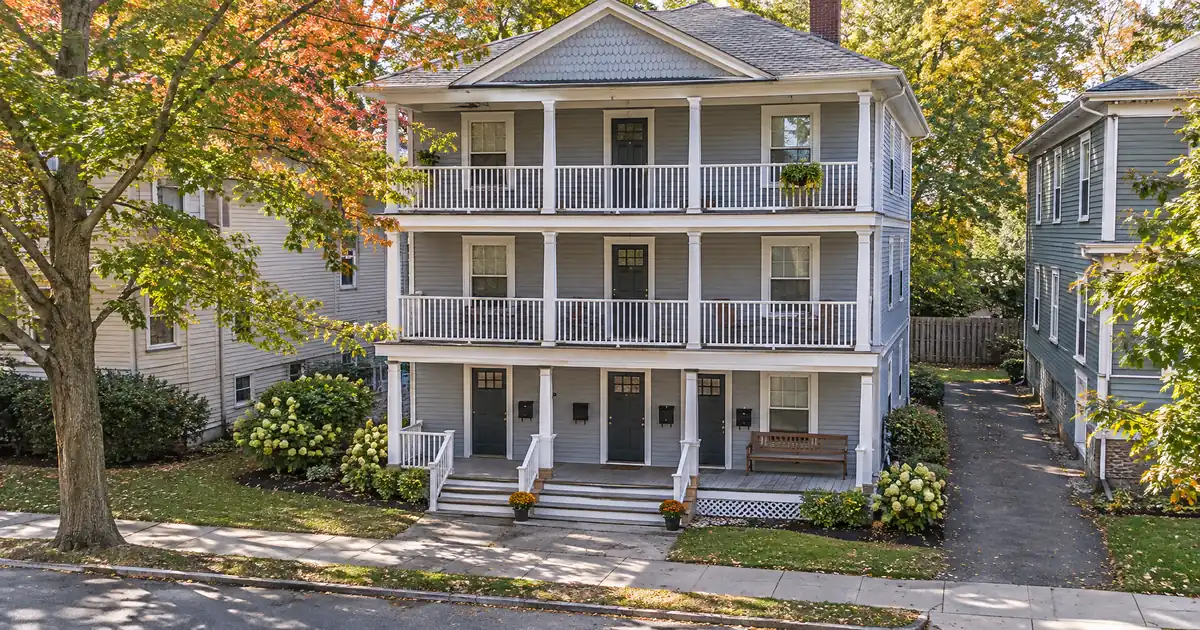
The Quick Read: VA cash-out suits a veteran who lives in one unit and wants the most equity access with no mortgage insurance. Conventional cash-out suits a veteran who has no usable VA entitlement or whose credit and income profile fits agency conventional guidelines better. A triplex pulls both loans into the same occupancy rule: you live in one unit, and the other two can be rented. Leverage, fees and underwriting method are where the two split.
The Honest Answer First
Pick VA if you are an eligible veteran, you live in the triplex, and you want to reach the highest loan-to-value the file allows. The VA cash-out can go up to 100% of the appraised value, including the financed funding fee. It carries no mortgage insurance. It can also refinance any loan type into a VA loan, so a current conventional loan is not a barrier.
VA cash-out estimate
Seeded with an example value, a typical balance, and a round cash request at the first-use fee; change any field.
Editable benchmark: 7.18% as of November 5, 2026 · Freddie Mac 30-year average via FRED®. A conventional market reference, not a VA cash-out refinance quote.
Illustrative starting assumptions: a $350,000 home value, a $193,000 current balance, the full-value VA cap with the first-use funding fee financed, a thirty-year term at the current Freddie Mac benchmark, and property taxes and insurance estimated at typical national rates. Every field is editable.
Illustrative estimate only — not a Loan Estimate, approval, quote, or commitment to lend. The rate field carries the weekly Freddie Mac thirty-year conventional benchmark, a market reference and not a VA cash-out refinance quote; a VA loan is priced by the lender at lock. The total loan, funding fee included, is capped at the program leverage on the reasonable value; the fee follows the tier chosen. The cash available is what the cap allows less the balances paid off and the fee, before closing costs, which are not included. The HELOC line is the line program’s combined loan-to-value ceiling applied to the same value and balance. Taxes and insurance are editable estimates. The debt-to-income figure is a guideline; residual income decides a VA file. Licensed in sixteen states for consumer mortgages.
Pick conventional if you cannot or do not want to use VA entitlement, or if you want to avoid the funding fee. Conventional cash-out on a three-unit home is capped well below VA’s ceiling. It is also priced and underwritten more tightly because of the extra units and the cash-out purpose. You get less equity out, but you skip the VA funding fee and keep your entitlement untouched.
Neither loan works if you do not live in the building. That is the first screen on a triplex. Everything else is a refinement.
Across the wholesale programs Lendmire works with, the triplex files that go smoothly are the ones where the borrower already knows which unit is theirs and has the lease evidence for the other two. Lendmire’s VA cash-out refinance program page lays out the program basics before you run any comparison.
Side-by-Side
The table compares the structural features that decide this choice. Program figures are subject to lender guidelines and full file review.
| Factor | VA Cash-Out | Conventional Cash-Out (3 units) |
|---|---|---|
| Maximum leverage | Up to 100% of appraised value, fee included | Capped well below VA; lower than a one-unit home |
| Credit floor | 580 decision score on the wholesale programs | Set by agency guidelines and lender; credit weighs heavily |
| Mortgage insurance | None | Applies above a set loan-to-value threshold |
| One-time fee | Funding fee, waived for exempt veterans | No funding fee |
| Occupancy | You live in one unit | You live in one unit for the principal-residence tier |
| Rental income | Counted with reserves; lenders set the detail | Counted under agency rental-income rules |
| Main underwriting test | Residual income; 41% DTI is a guideline | DTI and credit score drive the decision |
| Loan limit | None on full entitlement | Agency conforming limits apply |
| Source of the loan | Private lender, VA guarantees | Private lender, loan sold to an agency |
Two rows deserve a second look. Leverage is the biggest gap. Underwriting method is the quietest one, and it matters more than veterans expect.
How the VA Cash-Out Works on a Triplex
The loan comes from a private bank, mortgage company or credit union, not from VA. VA’s cash-out page lists two basics: a Certificate of Eligibility (COE) and a promise that you will live in the home. The lender orders the appraisal, and the loan is fully underwritten with a credit check.
The VA Lenders Handbook, Chapter 3 caps a cash-out at the reasonable value VA determines, with the funding fee counted inside that cap. It also puts the occupancy certification on VA Form 26-1820 at closing. You sign that form for your own unit. Renting the other two is expected on a triplex.
Whether a funding fee applies depends on your VA eligibility category, and VA, not the lender, determines exemptions.
Residual income is the controlling test. That is the money left each month after debts, taxes and living costs, measured against VA’s table. The 41% debt-to-income figure is a guideline, not a cap. A ratio above it needs residual income well above the table. On a triplex, the rent from the other two units can help, but lenders usually want reserves documented when rent is used to qualify.
How the Conventional Cash-Out Works on a Triplex
The Fannie Mae Selling Guide limits eligible loans to properties of four or fewer units, so a triplex fits. The Selling Guide also carries a general rule that conventional loans above a set loan-to-value level need mortgage insurance. Fannie Mae’s eligibility matrix sets lower cash-out maximums for two-to-four unit principal residences than for one-unit homes. Investment properties sit lower still.
So a three-unit owner-occupied cash-out takes less equity than the same veteran could take through VA. That is the core tradeoff. Mortgage insurance rarely decides this one, since cash-out leverage on a triplex generally stays under the line where insurance applies. Pricing is a different matter. Fannie Mae publishes loan-level price adjustments that change with loan purpose, credit score and unit count. Cash-out and multi-unit both carry extra adjustments, and those show up in your Loan Estimate as part of the loan’s cost. This article doesn’t quote them.
Conventional underwriting runs through automated systems. Credit score and debt-to-income lead the decision. There is no residual income table. A veteran with strong credit and low debts can do well here.
When VA Cash-Out Is the Better Fit
VA is the better fit when equity access is the goal and you qualify for the program. Four situations stand out.
You want more of your equity. VA’s ceiling is the full appraised value, with the financed fee inside it. Conventional on three units stops short of that. If the project needs the extra cash, such as a roof and unit renovations, VA may reach what conventional cannot.
Your credit is middling. The wholesale programs Lendmire places VA loans with start at a 580 decision score. Conventional guidelines tend to price lower scores harder and add more on multi-unit cash-outs. Some lenders set a higher floor than the program does, so the number you see can vary by lender.
You are paying mortgage insurance today. VA has no mortgage insurance of any kind. If your current loan carries monthly insurance, a refinance that removes it is one of the listed net tangible benefits.
Your debt load is higher. A debt-to-income ratio above the 41% guideline is not an automatic stop under VA. It needs residual income well above the table. On conventional, a high ratio is harder to overcome.
A cash-out refinance also has to pass a net tangible benefit test. VA’s refinancing rule, 38 CFR 36.4306, requires the lender to give you the test and the comparison of old and new loans. The test is satisfied when the new loan delivers one of VA’s eight listed benefits. The half-percent rate-reduction test and the fee-recoupment test are IRRRL rules. They do not apply to the VA cash-out.
Seasoning applies too. The VA cash-out carries the same seasoning as the IRRRL: the later of 210 days from the first payment and the date of the sixth payment. A recent purchase has to age before this loan is available.
When Conventional Cash-Out Is the Better Fit
Conventional is the better fit when VA’s features do not help you, or when preserving entitlement matters more than cash.
You are not eligible or have no COE. The COE from VA decides eligibility. Without it, VA is off the table. Conventional is open to any owner-occupant who fits the guidelines.
You want no funding fee. A non-exempt veteran pays the cash-out funding fee, financed into the balance. A conventional loan has no equivalent fee. If the cash needed is modest, the lower leverage may not matter, and skipping the fee may.
You want to save entitlement for a later purchase. Using VA on a cash-out uses some of your entitlement, and how much is available afterward depends on your situation, which your COE and a loan officer can help you sort out. If you plan another VA purchase soon, a conventional cash-out leaves entitlement alone.
Your income and credit are strong and the extra leverage is not needed. With strong credit, low debts and a lower cash need, conventional underwriting is straightforward. The loan stays inside agency limits and avoids VA’s occupancy certification paperwork for the file.
Here is a scenario with no dollar figures. Picture a veteran who owns a triplex worth a given amount and lives in one unit. The balance is well under half of value. She wants cash for repairs on all three units. Under VA, the loan can reach up to 100% of appraised value, so the cash is limited mainly by the appraisal and by what she can show in residual income. Under conventional, the cap is lower, so the cash is limited by the ceiling first. If her repair budget fits under the conventional ceiling, conventional works and she skips the funding fee. If the budget runs past it, VA is the loan that reaches it.
Occupancy: The Rule That Decides Both
The occupancy rule is the same on both sides for a principal residence. You live in one of the three units. VA’s home loans page says purchase and cash-out loans are for homes you occupy, or that a spouse or dependent occupies for active-duty members.
If you no longer live there, VA cash-out is unavailable. Conventional drops to a lower investment-property tier, with lower leverage. One sentence settles it: occupancy decides the leverage.
If you are moving out of the triplex and keeping it as a rental, speak with a loan officer before you apply for either product. The certification you sign at closing is a statement about your plans, and the file should match them.
Rental Income, Reserves and the Appraisal
Rental income from the two other units helps on both loans, but lenders treat it with care.
- Lease evidence. Expect to supply signed leases or, where a unit is vacant, a market-rent opinion from the appraisal.
- Reserves. Lenders typically require reserves when rent is used to qualify. The amount is set by the lender and the program, not by this article.
- Appraisal. A three-unit property needs comparable sales of multi-unit homes. Comps are thinner than for a one-unit house. A low value shrinks the loan under VA’s 100% cap and under conventional’s lower cap alike.
- Circular proceeds. Cash out is not the loan amount. The payoff of your existing loan, the financed funding fee and closing costs all come out of the loan first. Files that assume the cap equals the cash get surprised.
What Comes From VA and What Comes From the Lender
VA sets the program rules: eligibility, occupancy, the 100% ceiling, the net tangible benefit. Lenders can add overlays. Many cap VA cash-out below 100%, ask for higher credit scores, or require more reserves on multi-unit files. State law can also limit cash-out in some states.
If one lender says no, another may say yes. The program is the same, but the overlays differ. That is the practical advantage of a broker who places the file with a wholesale lender whose overlays fit it.
The IRRRL is not a substitute. It refinances an existing VA loan to a lower rate or from adjustable to fixed, and it pays out no cash. It is VA-to-VA only.
Key Terms Defined
Certificate of Eligibility (COE): The document from VA that confirms you qualify for the VA loan benefit.
Entitlement: The amount of guaranty VA backs for you, which affects how much you can borrow without a down payment.
Funding fee: A one-time VA charge that can be financed into the loan and is waived for exempt veterans.
Residual income: The money left each month after debts, taxes and living costs, measured against VA’s table.
Net tangible benefit: A measurable gain from refinancing, such as removing mortgage insurance, that the lender must document.
Seasoning: The waiting period before a refinance is allowed after a loan begins.
A Balanced Verdict
VA cash-out gives a veteran who lives in the triplex the most leverage, no mortgage insurance and a residual-income test that can fit a tighter debt picture. It costs a funding fee unless you are exempt, and it uses entitlement. Conventional cash-out gives up leverage on three units, but it carries no funding fee and leaves entitlement alone.
If you need cash near the top of the value, VA usually wins. If you need modest cash, have solid credit and want to save entitlement, conventional deserves a real look. Either way, the occupancy certification has to be true, and the numbers have to survive the appraisal.
If you are weighing a cash-out refinance against keeping the loan you have, Lendmire can help you compare the programs and the equity each one reaches.
Frequently Asked Questions
Can I rent out the other two units on a VA cash-out?
Yes. You certify that you live in one unit, and renting the other two is expected on a multi-unit home. The occupancy rule applies to your own unit. Lenders usually want lease evidence and may require reserves when the rent is used to qualify.
Can a VA cash-out refinance a conventional loan?
Yes. VA says the loan can pay off a non-VA loan and replace it with a VA-backed loan. You do not need an existing VA loan. Seasoning and the net tangible benefit test still apply.
Does a VA cash-out let me take 100% of my equity as cash?
No. The 100% is a ceiling on the loan, not on cash received. The financed funding fee, your payoff and closing costs all come out of the loan first. A lender’s own overlays can also cap it lower than VA does.
What if I am on active duty?
A spouse or dependent can satisfy the occupancy rule for an active-duty service member. The exact certification wording is handled at closing, and the lender confirms how it applies to your file.
Is an IRRRL the same as a cash-out?
No. The IRRRL refinances an existing VA loan, pays out no cash, and carries a 0.5% fee unless you are exempt. A cash-out can refinance any loan type and pays out cash, with a 2.15% fee on first use and 3.3% after.
For your own numbers, request a scenario review with Lendmire.
About Lendmire
Lendmire, NMLS# 2371349, is a mortgage brokerage with consumer lending licenses in 16 states. FHA, VA, conventional and jumbo purchase and refinance loans are arranged through wholesale lending partners, and each application is reviewed individually by the lender. Scotsman Guide named Lendmire a Top Mortgage Workplace in both 2025 and 2026.
Get Started
Ready to find the right loan for you?
See your offer in seconds. No credit pull, no obligation.
Informational only. Not a Loan Estimate, approval, or commitment to lend. Program availability and eligibility are subject to lender guidelines, credit approval, property review, and underwriting.
References
1. VA.gov: Cash-out refinance loan
2. VA Lenders Handbook, Chapter 3
5. Veterans Benefits Administration: VA Home Loans
This article is part of Lendmire’s VA cash-out refinance program — full qualification details, guidelines, and scenarios live on the program page.
Related reading: How a VA Lender Counts Triplex Rent on a Cash-Out · VA Cash-Out Refinance Requirements to Tap Equity as a Veteran Using VA Benefits · Does a VA Cash-Out Use Up Your Remaining Entitlement?
Brandon Miller
Founder & CEO, Mortgage Loan Originator, Lendmire LLC
- Mortgage Loan Originator · NMLS# 1129696 · Verify on NMLS Consumer Access
- North Carolina Real Estate Broker · License# 343312 · Verify on NCREC
- North Carolina Insurance Producer · License# 19053198 · Property, Casualty, Life, Health · Verify on NAIC SBS
- Lendmire LLC · Firm NMLS# 2371349 · Verify firm licensure
Required disclosures. Lendmire (NMLS# 2371349) operates as a licensed mortgage broker, not a direct lender or depository. The discussion in this article is general in nature and should not be relied upon as financial, legal, or tax advice — every investment scenario is unique and should be reviewed by a qualified professional. Any loan inquiry is subject to lender underwriting, and this article is not a commitment to lend or a guarantee of approval. Mortgage rates, loan terms, and program guidelines vary by borrower, property, and state, and may change without notice. Equal Housing Opportunity. Verify licensure at NMLS Consumer Access.