
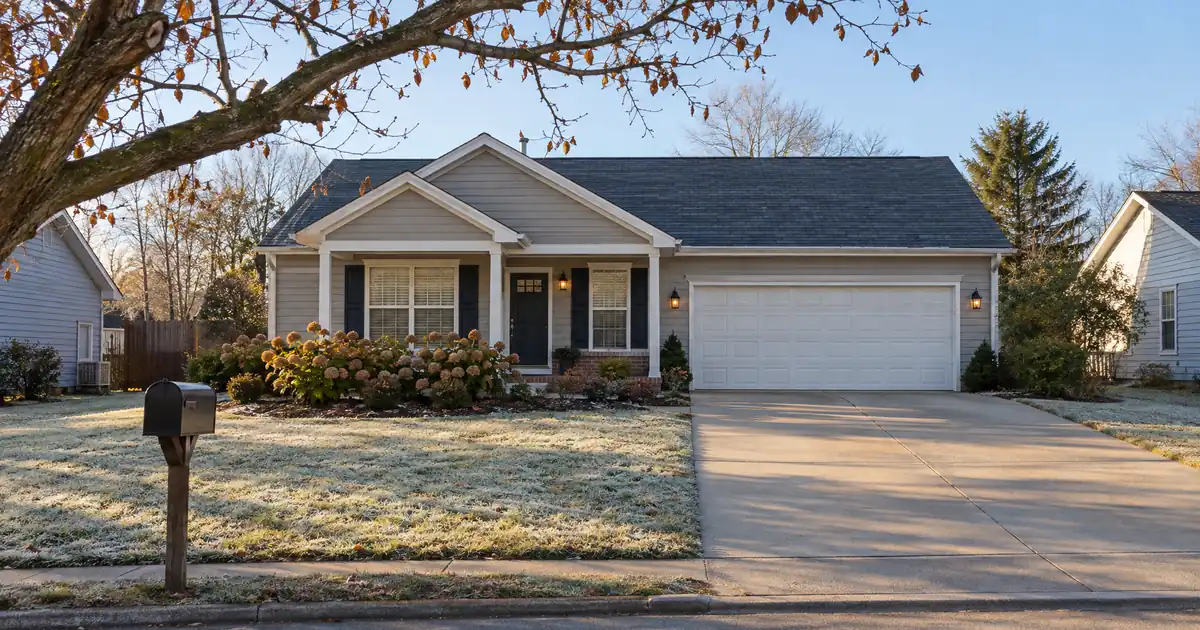
The Quick Read: The VA Interest Rate Reduction Refinance Loan is for borrowers who already have a VA-guaranteed loan on the home, and VA generally does not require an appraisal on it. The loan must pass a net tangible benefit test, a seasoning test, and a cost-recoupment test instead. Individual lenders can add their own valuation or credit overlays, so “no appraisal” depends on who is handling the file.
Key Takeaways
- The VA streamline refinance is VA-to-VA only. The loan being paid off must already carry a VA guaranty.
- VA does not require a new appraisal, a new certificate of eligibility, or full underwriting. The test is whether the new loan actually improves your position.
- Seasoning, payment history, and a recoupment window still apply.
- The funding fee is 0.5% unless you are exempt, and it can be financed.
- No cash comes out. Only the existing VA loan gets paid off.
- A lender overlay can bring back a valuation or a credit review. Ask before you apply.
What Is the VA Streamline Refinance?
The VA streamline refinance (often called the VA streamline) refinances an existing VA loan into a new VA loan. The goal is usually a lower interest rate or a move from an adjustable rate to a fixed one. VA’s home loans page describes it as a “VA to VA” loan that can only be done when the property already has a VA-guaranteed loan.
Refinance savings and break-even estimate
The starting figures are an example value with a balance in proportion and a placeholder for costs. Replace them with yours, and enter the current rate from your statement.
Editable benchmark: 7.32% as of October 22, 2026 · Freddie Mac 30-year average via FRED®. A conventional market reference, not a refinance quote.
Illustrative starting assumptions: a $350,000 home value, a $245,000 current balance, a current rate you enter and a remaining term seeded at twenty-five years, closing costs seeded at $5,000 as an editable placeholder (not a fee quote) and rolled into the new loan, a thirty-year term at the current Freddie Mac benchmark, and property taxes and insurance estimated at typical national rates. Every field is editable.
Illustrative estimate only — not a Loan Estimate, approval, quote, or commitment to lend. The new rate field carries the weekly Freddie Mac thirty-year conventional benchmark, a market reference and not a refinance quote; a refinance is priced by the lender at lock, and the current rate, the remaining term and the closing costs are figures you enter. The current payment is estimated from the balance, the current rate and the remaining term; the break-even divides the closing costs by the monthly saving and ignores the interest effect of a longer term. On the VA IRRRL the funding fee is added to the loan unless the veteran is exempt. Taxes and insurance are editable estimates. Licensed in sixteen states for consumer mortgages; Lendmire is a broker, never the lender.
Because VA already guaranteed the original loan, it treats this refinance as a lower-risk change to an existing obligation. That is why the paperwork is lighter. You are not buying a house or taking equity out. You are swapping one VA loan for another.
Lendmire arranges these through wholesale lenders as a mortgage broker. The mechanics below come from files placed across VA loan programs in the 16 states where Lendmire is licensed for consumer lending. Everything is subject to lender guidelines and full file review, and none of it is a commitment to lend.
What Are the Core VA Streamline Refinance Requirements?
The core requirements are an existing VA loan, certified prior occupancy, a clean enough payment history, adequate seasoning, and a net tangible benefit. Credit and income rules are mostly lender-driven, not VA-driven. Here is each one in file terms.
Existing VA-guaranteed loan. This is the gate. A conventional or FHA mortgage cannot be refinanced through a VA streamline refinance. If your current loan is not VA, the route is a VA cash-out refinance, which carries an appraisal and full underwriting.
Entitlement. No new certificate of eligibility is needed. The borrower can show the COE from prior entitlement use, or the lender can confirm through VA's e-mail procedure. The VA streamline refinance reuses the original entitlement and adds no new charge against it, per the FDIC's summary of the program.
Occupancy. You certify that you occupied the home as your residence at some point. You do not have to live there now. A former residence that is currently rented can still qualify on this point, because the certification looks backward.
Payment history. The regulation text shows the loan being refinanced must be at least six months old and the veteran must not have been more than 30 days past due in that period, per 38 CFR Part 36, Subpart B.
Seasoning. The wholesale programs Lendmire places files with apply seasoning as the later of 210 days from the first payment date and the sixth payment. In plain terms, that is roughly seven months of payments on the loan you are replacing. Count from the first payment due date, not the closing date.
Net tangible benefit. The new loan has to help you in a measurable way. More on that below.
VA Rule vs. Lender Overlay
The most common confusion on these files is treating the VA rule and the lender's rule as the same thing. They are not.
| Item | VA rule | Possible lender overlay |
|---|---|---|
| Appraisal | Generally not required | Some lenders order a valuation |
| Credit review | Not required by VA | Some set a minimum score or review |
| Income check | None by VA | Some ask for basic verification |
| Payment history | 30-day-late limit | Some look back further |
| Seasoning | Regulation floor | Some wait longer |
The wholesale programs Lendmire places VA loans with start at a 580 decision score on VA loans generally. That is a lender floor, not a VA requirement. Lenders set higher floors. The practical move is to ask three questions before applying: Do you order a valuation on an IRRRL? Do you pull credit and set a minimum score? Do you wait longer than VA's seasoning?
The Appraisal Question, Scenario by Scenario
Most borrowers searching this topic want one answer: can I skip the appraisal? Usually yes. Three scenarios cover it.
VA requires none. Under the Lenders Handbook approach, an IRRRL generally needs no appraisal and no credit information, and many lenders may not require full underwriting, subject to lender guidelines. The lender requests a loan number through VA's system without ordering an appraisal. Home value is not part of VA's test. That means a homeowner whose home has dropped in value is generally not shut out on value alone.
A lender overlay may require one. A lender can order a valuation under its own policy. It may also charge a customary and reasonable appraisal or credit report cost it incurred for its own requirements, and that cost can be financed. The "no appraisal" benefit is therefore not guaranteed with every lender.
The fixed-to-adjustable edge. Some secondary sources say an appraisal enters the picture when a fixed-rate loan is refinanced into an adjustable one with added loan costs. The regulation sets a stricter test for that move. Because this is a narrow case, confirm it against the Handbook with your lender before relying on it. Most borrowers are going the other direction anyway.
How Does the Net Tangible Benefit Test Work?
The net tangible benefit test is the real underwriting on an IRRRL. 38 CFR 36.4306 sets two pieces that matter to a borrower.
The rate drop. When both the old and new loans are fixed-rate, the new rate must be at least 50 basis points lower, per the regulation text. Fixed-to-adjustable moves face a separate, stricter standard that your lender will walk you through.
The recoupment test. The lender certifies that the fees, closing costs, and expenses will be recouped within 36 months of loan issuance. Recoupment is measured through lower regular monthly payments. Taxes, escrowed amounts, and the VA funding fee are excluded from that calculation.
A way to picture it, with no dollar figures: if the combined costs of the refinance divided by the monthly payment savings come out to 36 months or less, the test is met. If the savings are small and the costs are large, the quotient runs past 36 months and the loan fails. This is a built-in check against churning, where a borrower refinances repeatedly and pays costs each time without real savings.
VA's 2024 rulemaking proposed starting the 36-month clock at the first payment due date of the new loan, so skipped payments do not shorten the window. It also clarified that a result of 36 months or less meets the test. Check the final rule with your lender before relying on that timing.
ARM to Fixed: The Exception to "Lower Payment"
An IRRRL can move a borrower from an adjustable rate to a fixed rate. In that case the new rate can be higher than the current one, because the benefit is stability. The payment "should decrease" with a lower rate, which leaves room for exceptions. A borrower coming off an adjustable loan nearing a reset should ask the lender how it documents the benefit in that case.
What Does the IRRRL Cost?
The VA funding fee on an IRRRL is 0.5% of the loan amount unless you are exempt. VA's funding fee page lists that figure and notes it does not vary with down payment or prior use. Veterans receiving compensation for a service-connected disability are exempt, and VA News covers who else is exempt.
The fee can be paid at closing or financed into the loan. Financing it keeps cash in your pocket but raises the balance, and with it the interest paid over time. That is general logic, not a VA rule, but it is worth weighing. Pricing for the loan is set by the lender, not VA. Each cost line still counts, and the loan is not a "no-cost" refinance just because nothing is paid out of pocket at the table. Those costs are built into the balance or the pricing.
Edge Cases That Trip Up Files
No cash out, no other liens paid. Only the existing VA loan can be paid off from proceeds. A borrower who wants cash needs a VA cash-out refinance, which can reach 100% of the appraised value including the financed fee and requires an appraisal. Lendmire's piece VA IRRRL vs. VA Cash-Out for a Veteran With an Existing VA Loan covers that decision. Secondary sources mention a small energy-improvement exception, but it is not confirmed here, so ask a lender instead of assuming.
A non-VA existing loan. The IRRRL is not available. The path is a VA cash-out or another refinance with appraisal and underwriting.
A former residence now rented. Eligible on occupancy, since only prior occupancy is certified. The lender may still have its own view on rentals, so ask.
A loan already refinanced once. Seasoning runs from the first payment on the loan you are replacing. A recent IRRRL or cash-out resets the clock.
A second lien on the home. The IRRRL pays off only the VA loan. A second lien has to stay in place and generally has to be resubordinated, which depends on that lender.
Underwater homes. Because VA does not use an appraisal in its test, home value is not VA's concern. A lender-driven valuation is the place this could surface.
Self-Check Before You Apply
On these files, the preventable delays come from missing basics. Have these ready:
- The current VA loan statement and the loan number
- Your payment history for the last twelve months, or at least since origination
- A copy of your prior COE, if you have it
- A note of when the first payment on the current loan was due
- Your occupancy history for the home
- Any second lien details
- Proof of funding fee exemption, if you claim one
Then ask the lender about overlays in writing: valuation, credit score, income check, seasoning beyond VA's, and who pays for a lender-ordered report.
How the Process Runs, Step by Step
The order in which each requirement gets checked looks like this.
1. Confirm the loan is VA-guaranteed. The lender checks your current loan and entitlement use.
2. Certify occupancy. You sign that you previously lived in the home.
3. Check seasoning and payment history. The lender counts from your first payment due date and reviews lates.
4. Run the rate and recoupment tests. The lender calculates whether the new loan meets the 50-basis-point drop (fixed-to-fixed) and the 36-month window, then provides the required disclosures.
5. Order the VA loan number. The lender requests the number through VA's system without an appraisal, unless an overlay says otherwise.
6. Review the Loan Estimate and Closing Disclosure. Confirm the funding fee, any financed costs, and the new balance.
7. Close. The old VA loan is paid off and the new one replaces it.
If You Don't Qualify Yet
Most failures are fixable. If seasoning is short, wait for the later of the 210-day mark or the sixth payment. If you had a 30-day late, the lender may require a clean stretch afterward. If the recoupment math runs past 36 months, a lower cost structure or a bigger rate drop may bring it in. If you want cash, the answer is a VA cash-out, not a stretched IRRRL, and Lendmire's guide How to Choose an IRRRL or VA Cash-Out With an Existing VA Loan lays out that fork. Some lenders will decline a file that another lender would take, because of overlays. A different wholesale lender can change the outcome.
Key Terms Defined
IRRRL: The Interest Rate Reduction Refinance Loan, a VA-to-VA refinance with reduced documentation.
Net tangible benefit: A measurable improvement from the refinance, such as a lower rate or a move from adjustable to fixed.
Recoupment: Earning back the refinance costs through lower monthly payments, within 36 months.
Seasoning: The minimum age and payment history on the loan you are replacing.
Funding fee: VA's one-time fee on the loan, 0.5% on an IRRRL unless exempt, and reviewable.
Overlay: A lender requirement stricter than VA's own rule.
Entitlement: The amount of VA guaranty available to you, which the IRRRL reuses.
Frequently Asked Questions
Can I refinance a VA loan without an appraisal?
Usually, yes. VA generally does not require an appraisal on an IRRRL, and the lender requests a loan number without one. Some lenders order a valuation under their own policy, so ask up front whether yours does.
Can I use an IRRRL if my home is worth less than I owe?
Often yes. VA's test looks at the rate and payment change, not home value. A lender overlay that orders a valuation is the place this could become an issue, so confirm before applying.
Do I have to live in the home to use an IRRRL?
No. You certify prior occupancy, not current occupancy. A former residence that is now rented can still meet the occupancy requirement, though a lender may have its own view.
Can I take cash out with an IRRRL?
No. Only the existing VA loan is paid off. A VA cash-out refinance is the route for equity, and it requires an appraisal and full underwriting.
Who is exempt from the IRRRL funding fee?
Veterans receiving compensation for a service-connected disability are exempt, along with certain other groups. The fee is otherwise 0.5%. Confirm your exemption through VA's published list and your COE.
Next Step
If you are weighing a refinance and want the break-even run on your own numbers, Lendmire can help you compare the programs on the same home.
For your own numbers, request a scenario review with Lendmire.
About Lendmire
Lendmire (NMLS# 2371349) is a mortgage broker licensed for consumer lending in 16 states. Lendmire arranges FHA, VA, conventional and jumbo purchase and refinance loans through wholesale lenders; every file is underwritten by the lender under the applicable program guidelines. Scotsman Guide named Lendmire a Top Mortgage Workplace in both 2025 and 2026.
Get Started
Ready to find the right loan for you?
In about 30 seconds you can review financing options available for your home or investment property. No commitment required.
Informational only. Not a Loan Estimate, approval, or commitment to lend. Program availability and eligibility are subject to lender guidelines, credit approval, property review, and underwriting.
References
2. FDIC: VA Interest Rate Reduction Refinance Loan
6. VA funding fee and loan closing costs
7. VA News: funding fee, who pays and who is exempt
This article is part of Lendmire’s VA loan program — full qualification details, guidelines, and scenarios live on the program page.
Related reading: VA Cash-Out Refinance Appraisal Requirements for a Home With Acreage · Should a Veteran Refinance a Conventional Loan Into a VA Cash-Out? · How Much a VA Cash-Out Releases After Costs on an Existing VA Loan
Brandon Miller
Founder & CEO, Mortgage Loan Originator, Lendmire LLC
- Mortgage Loan Originator · NMLS# 1129696 · Verify on NMLS Consumer Access
- North Carolina Real Estate Broker · License# 343312 · Verify on NCREC
- North Carolina Insurance Producer · License# 19053198 · Property, Casualty, Life, Health · Verify on NAIC SBS
- Lendmire LLC · Firm NMLS# 2371349 · Verify firm licensure
Important disclosures. Lendmire (NMLS# 2371349) is a licensed mortgage brokerage. Lendmire is not a direct lender, depository institution, or financial advisor. All loan inquiries are subject to lender underwriting; this article does not constitute a commitment to lend. Rates, terms, and program guidelines are subject to change without notice and vary by borrower profile, property type, and state. Information in this article is general in nature and is not financial, legal, or tax advice. Equal Housing Opportunity. NMLS Consumer Access: nmlsconsumeraccess.org.