
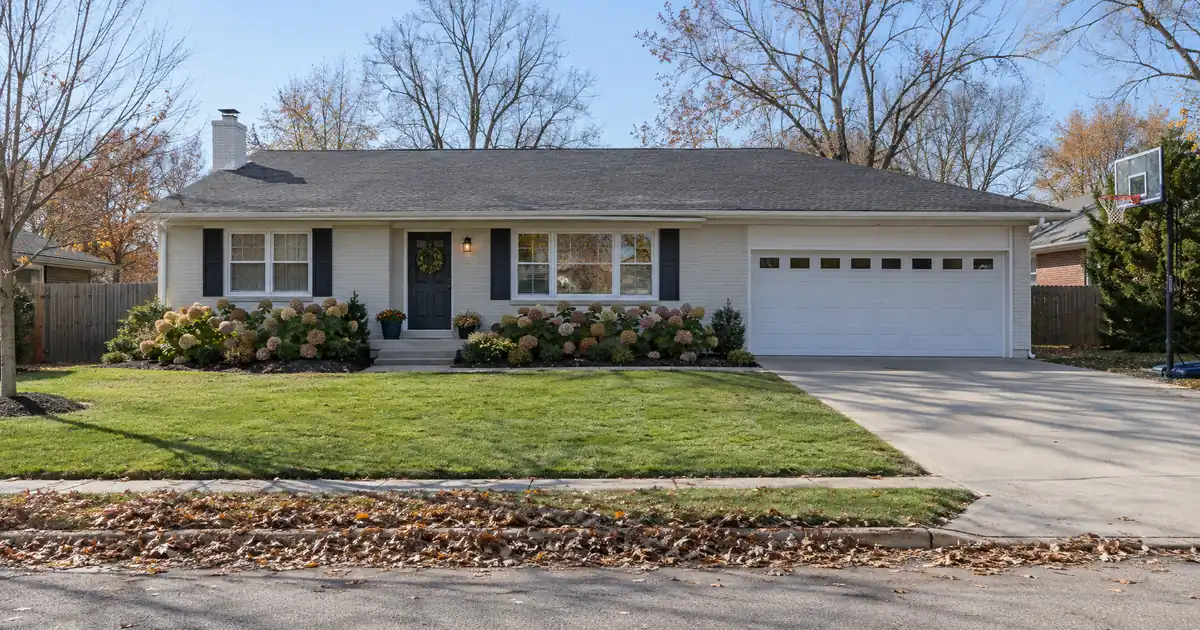
The Quick Read: A VA IRRRL replaces your existing VA loan with a new VA loan that lowers your payment or moves you from an adjustable rate to a fixed one. It is VA-to-VA only, so a conventional or FHA loan does not qualify. The new loan must pass a net tangible benefit test and a cost-recovery test, and the seasoning clock must be satisfied. The paperwork is lighter than a purchase file, though not empty.
Key Takeaways
- The IRRRL only refinances an existing VA-guaranteed loan, and it generally must lower the interest rate unless the old loan is adjustable.
- The program uses a 0.5% funding fee unless you are exempt, and the fee may be financed.
- Seasoning is the later of 210 days from your first payment and your sixth monthly payment.
- The lender must certify that costs are recovered through lower monthly payments within 36 months.
- No VA appraisal is required, and cash back is not allowed apart from energy-efficiency improvements.
What Is a VA IRRRL, Exactly?
IRRRL stands for Interest Rate Reduction Refinance Loan, often called the VA streamline refinance. The VA Lenders Handbook, Chapter 6 describes it as a VA-guaranteed loan that refinances an existing VA-guaranteed loan, generally at a lower rate and a lower principal-and-interest payment.
Refinance savings and break-even estimate
The starting figures are an example value with a balance in proportion and a placeholder for costs. Replace them with yours, and enter the current rate from your statement.
Editable benchmark: 7.32% as of October 22, 2026 · Freddie Mac 30-year average via FRED®. A conventional market reference, not a refinance quote.
Illustrative starting assumptions: a $350,000 home value, a $245,000 current balance, a current rate you enter and a remaining term seeded at twenty-five years, closing costs seeded at $5,000 as an editable placeholder (not a fee quote) and rolled into the new loan, a thirty-year term at the current Freddie Mac benchmark, and property taxes and insurance estimated at typical national rates. Every field is editable.
Illustrative estimate only — not a Loan Estimate, approval, quote, or commitment to lend. The new rate field carries the weekly Freddie Mac thirty-year conventional benchmark, a market reference and not a refinance quote; a refinance is priced by the lender at lock, and the current rate, the remaining term and the closing costs are figures you enter. The current payment is estimated from the balance, the current rate and the remaining term; the break-even divides the closing costs by the monthly saving and ignores the interest effect of a longer term. On the VA IRRRL the funding fee is added to the loan unless the veteran is exempt. Taxes and insurance are editable estimates. Licensed in sixteen states for consumer mortgages; Lendmire is a broker, never the lender.
The loan can be fixed, a hybrid ARM or a traditional ARM. The new rate must come in below the old one, with one exception: when you refinance an adjustable-rate VA loan into a fixed rate, the rate can rise and the loan can still work.
It is not a cash-out loan, and it is not a purchase loan. It also uses no additional entitlement, so your remaining VA entitlement stays where it was. Lendmire's VA loan programs page covers the wider VA lineup if you are still deciding which refinance fits.
Guidelines vs. Requirements: Who Sets What?
Some rules come from VA. Others come from the lender or the wholesale program behind it. Across the wholesale programs Lendmire places VA files with, this is a common source of confusion, because a borrower hears "VA requires" when the lender is actually adding its own layer.
| Item | Set by | Plain-language note |
|---|---|---|
| Existing loan must be VA | VA | No exceptions for other loan types |
| Same home secures new loan | VA | Ownership and occupancy certification |
| Seasoning | VA | Later of 210 days or six payments |
| Net tangible benefit | VA | Lender certifies it |
| 36-month recoupment | VA | Lender certifies it |
| Credit score floor | Lender | VA sets no minimum; wholesale programs start at a 580 decision score |
| Extra documents, appraisal | Lender | Overlays vary by lender |
That last row matters. If a lender asks for more than the items in the table above, ask whether it is a VA rule or the lender's own preference. Both can be legitimate. You are entitled to know which one you are dealing with.
How Does Seasoning Work?
Seasoning is a waiting period on the loan you are replacing. Under 38 CFR 36.4306, the new loan cannot be guaranteed until the later of two dates: 210 days after your first monthly payment, or the date you have made six monthly payments.
Both conditions must be met. A borrower who made payments on schedule and counts six payments before reaching day 210 still has to wait for day 210. Miscounting this is one of the most common reasons an IRRRL gets delayed.
Payment status matters too. A loan that is behind on payments follows special VA handling, and the file needs more than the standard path. If you have missed a payment, tell the loan officer early.
What Is the Net Tangible Benefit Test?
Net tangible benefit, or NTB, is VA's way of confirming the refinance actually helps you. 38 CFR 36.4307 points to several qualifying outcomes:
- A lower principal-and-interest payment.
- A shorter loan term.
- A move from an adjustable rate to a fixed rate.
- Financing of energy-efficiency improvements.
For a fixed-to-fixed refinance, VA also sets a minimum rate drop. A fixed-to-adjustable move needs a larger drop. The exact thresholds are VA's, and the lender will apply them to your file. Because VA has been updating its IRRRL rule, confirm current thresholds with your loan officer rather than relying on a number you saw online.
Two cases break the usual pattern. When you go from an ARM to a fixed rate, your payment can go up and the loan can still pass, because stability is the benefit. The same goes for energy-efficiency improvements, where the payment can rise because of the added work.
How Does the 36-Month Recoupment Test Work?
Recoupment asks one question: how long until the monthly savings pay back the cost of refinancing? The lender must certify that fees, closing costs and expenses will be recovered through lower regular monthly payments within 36 months of loan issuance, per 38 CFR 36.4306.
The formula, as VA described it in a March 2024 Federal Register proposal, takes fees, closing costs and expenses, subtracts lender credits, and divides the result by the monthly reduction in principal and interest. The answer must be 36 months or less.
Here is how that plays out in plain words. Picture a borrower whose payment drops by a meaningful amount each month. The larger that drop, the shorter the payback. A borrower with a tiny payment reduction and high costs can run past 36 months, and the refinance fails the test.
Taxes, escrow amounts and the funding fee are excluded from the recoupment calculation. On an adjustable-rate IRRRL, the calculation uses the initial rate on the new loan. VA's final rule governs how closing costs are treated on the cost side, so ask your lender how they are handled on your file.
VA Circular 26-19-22 describes the lender documentation. If the disclosed recoupment period is 36 months or less, the lender may upload the disclosure. If it exceeds 36 months, the lender must provide the full calculation. Circulars do expire, and rules now rest in statute and regulation, so treat the Circular as VA guidance on how the documentation works.
What Does the Funding Fee Look Like?
The IRRRL funding fee is 0.5% of the loan amount unless you are exempt. Veterans receiving compensation for a service-connected disability, and the other exempt groups, owe nothing. The fee can be financed into the new loan or paid in cash.
For comparison, a VA cash-out refinance carries a 2.15% fee on first use and 3.3% after. The IRRRL's fee is the lowest on the VA menu. Remember that the funding fee is excluded from the 36-month test, but financing it still raises your balance.
Mortgage insurance does not apply to VA loans. That is true on the IRRRL as well.
What Paperwork Will You Actually Handle?
The paperwork falls into a few groups.
- A signed occupancy certification. You certify that you currently live in the home or did so previously.
- Identification.
- Information on your existing VA loan, such as the loan number and a recent statement.
- Acknowledgment of the lender's disclosures.
- The recoupment disclosure, showing the VA loan number, loan amount, term, monthly payment, rate, borrower names and the recoupment period.
- The net tangible benefit certification.
- Your Loan Estimate and, later, your Closing Disclosure.
- A new VA appraisal. The program does not require one.
- A new certificate of eligibility. In most cases you will not need one, since you are reusing the original loan's entitlement.
Whether the lender pulls credit or verifies income is the lender's call. The program itself does not mandate a credit review, and there is no income limit. Many lenders still run credit and check that the file is consistent, so do not assume "streamline" means "no questions."
An appraisal can also show up if a lender requires one or if the loan structure calls for it. The 100% value cap in the regulation appears in the cash-out section, so do not treat it as an IRRRL rule. For the IRRRL, the loan is capped at the payoff plus authorized closing costs and certain permitted charges.
Where the General Rule Breaks
A few situations deserve a closer look.
You moved out. Prior occupancy is enough. You certify that you lived in the home before, so an IRRRL works on a house you no longer occupy. Spouse occupancy provisions exist for veterans who were on active duty. The home must still be the same dwelling that secures the existing VA loan, and the lender confirms the property type is one the program accepts.
Your old loan is an ARM. The rate can rise on the new fixed loan and still pass.
You want cash back. Not through an IRRRL, except for energy-efficiency improvements. Lendmire's piece Can a VA IRRRL Streamline Refinance Return Cash to the Veteran? goes deeper.
Your loan isn't VA. Only a VA-guaranteed loan can be streamlined. A conventional or FHA borrower who wants VA terms would look at a VA cash-out refinance, which refinances any loan type into VA.
You are behind on payments. Special handling applies, and VA approval requirements enter the picture. This is the case where a loan officer needs the facts upfront.
IRRRL vs. VA Cash-Out: A Quick Comparison
| Factor | IRRRL | VA cash-out |
|---|---|---|
| Existing loan | Must be VA | Any loan type |
| Cash to borrower | No (energy exception) | Yes |
| Funding fee | 0.5% | 2.15% first use, 3.3% after |
| Appraisal | Not required by program | Required |
| Max value reached | Payoff plus costs and points | Up to 100% of appraised value |
If you need equity as well as a lower payment, the choice may flip. Lendmire's article Should a Veteran Pick a VA Cash-Out Refinance Over an IRRRL? walks through that decision.
Why IRRRLs Stall
| Problem | Likely cause | Fix |
|---|---|---|
| Date rejected | Seasoning miscounted | Count from the first payment, apply the later test |
| Recoupment fails | Costs too high, savings too small | Cut costs, add lender credits, or skip it |
| Occupancy questions | No certification or unclear history | Provide a signed certification |
| Lender asks for more | Lender overlay, not VA | Ask if it is VA or lender policy |
| Payment history flagged | Late payments | Disclose early |
Key Terms Defined
IRRRL: Interest Rate Reduction Refinance Loan, the VA streamline that replaces an existing VA loan.
Net tangible benefit: VA's test that the refinance gives you a real advantage, such as a lower payment or a fixed rate.
Recoupment: The time it takes for monthly savings to repay the cost of refinancing, capped at 36 months.
Seasoning: The waiting period on the old loan: the later of 210 days from the first payment and the sixth payment.
Entitlement: The amount of VA guarantee available to you; the IRRRL does not use more of it.
Funding fee: A one-time VA charge, 0.5% on the IRRRL, waived for exempt veterans.
What Does the Decision Look Like in Practice?
Start with three questions. Is the loan VA, and is it current? Has the seasoning clock run? Will the savings recover costs within 36 months?
If all three are yes, the IRRRL is likely the cleanest path. If you want cash, the answer changes. If the payment savings are thin, the test may not clear, and waiting may serve you better. Program figures are subject to lender guidelines and full file review, and nothing here is a commitment to lend.
If you are weighing a refinance and want the break-even run on your own numbers, Lendmire can help you compare the programs on the same home.
Frequently Asked Questions
Do I need an appraisal for an IRRRL?
Not under the VA program. A lender can still order one because of its own overlay or the structure of the loan, so ask whether a request is VA's rule or the lender's.
Can I get cash out with a streamline?
No, apart from financing energy-efficiency improvements. Cash-out is a separate VA program with its own fee, appraisal and benefit test.
Do I have to live in the home now?
No. Certifying prior occupancy is enough, so an IRRRL can work on a home you have moved out of. You sign an occupancy certification either way.
Can the funding fee be financed, or waived?
Yes. The 0.5% IRRRL fee may be financed or paid in cash, and exempt veterans owe none. It is excluded from the 36-month recoupment test.
What if my payment goes up?
That can happen when you move from an ARM to a fixed rate, shorten the term, or finance energy improvements. The loan can still show a net tangible benefit, but lenders may look closer at the file.
For your own numbers, request a scenario review with Lendmire.
About Lendmire
Lendmire — NMLS# 2371349 — is a mortgage broker that arranges FHA, VA, conventional and jumbo home purchase and refinance financing in 16 states through wholesale lenders. Every option is subject to the lender's guidelines and full underwriting. Scotsman Guide named Lendmire a Top Mortgage Workplace in both 2025 and 2026.
Get Started
Ready to find the right loan for you?
In about two minutes you can review financing options available for your home or investment property. No commitment required.
Informational only. Not a Loan Estimate, approval, or commitment to lend. Program availability and eligibility are subject to lender guidelines, credit approval, property review, and underwriting.
References
1. VA Lenders Handbook, Chapter 6: Refinancing Loans
4. Federal Register, March 7, 2024
This article is part of Lendmire’s VA loan program — full qualification details, guidelines, and scenarios live on the program page.
Related reading: Should a Veteran Pick a VA Cash-Out Refinance Over an IRRRL? · How a VA Cash-Out Refinance Changes the Loan Compared to an IRRRL · VA Cash-Out Refinance Requirements Versus a VA Streamline
Brandon Miller
Founder & CEO, Mortgage Loan Originator, Lendmire LLC
- Mortgage Loan Originator · NMLS# 1129696 · Verify on NMLS Consumer Access
- North Carolina Real Estate Broker · License# 343312 · Verify on NCREC
- North Carolina Insurance Producer · License# 19053198 · Property, Casualty, Life, Health · Verify on NAIC SBS
- Lendmire LLC · Firm NMLS# 2371349 · Verify firm licensure
Compliance and disclosures. Lendmire (NMLS# 2371349) is a licensed mortgage broker and is not a direct lender, depository institution, financial advisor, or tax professional. Content in this article is general market analysis and educational information — not financial, legal, or tax advice for any specific situation. Lendmire does not guarantee loan approval; every transaction is subject to underwriting by the funding lender. Mortgage pricing and loan program guidelines are subject to change at any time without notice and vary by borrower characteristics, property type, and state regulations. Lendmire complies with Equal Housing Opportunity. Licensure verification: NMLS Consumer Access.