
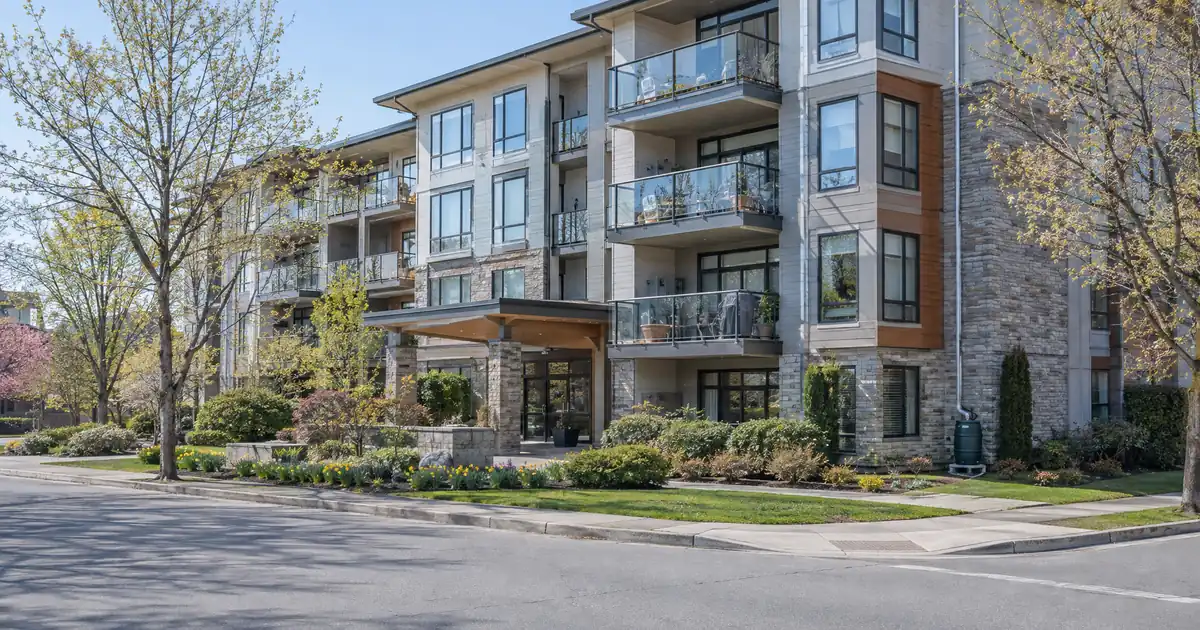
The Quick Read: VA approves the condo project, not your individual unit. Before VA guarantees a loan on a condo, the building’s legal documents must be approved, and approved projects go on a list your lender checks. If the project is not on the list, the lender or the sponsor can submit it for review. Your own income, credit and appraisal are judged separately.
You can buy a condo with a VA loan. The catch is that the building has to pass first. Here is how that works, step by step, and where the general rule bends.
Key Takeaways
- Approval is project-level. VA does not approve a single unit on its own.
- The lender confirms project status, so ask for it before you write an offer.
- A project that is not listed can be submitted, but the HOA’s cooperation decides how smoothly that goes.
- Project approval does not approve you. Your file and the appraisal still have to qualify.
- Status can change, so recheck before the appraisal and again before closing.
VA payment estimate
Starting assumptions reflect an example price with no down payment and a first-use funding fee. Replace them with your own figures.
Editable benchmark: 7.32% as of October 22, 2026 · Freddie Mac 30-year average via FRED®. A conventional market reference, not a VA loan quote.
Illustrative starting assumptions: a $350,000 price, no down payment with full entitlement, a first-use funding fee financed into the loan, a thirty-year term at the current Freddie Mac benchmark, and property taxes and insurance estimated at typical national rates. Every field is editable.
Illustrative estimate only — not a Loan Estimate, approval, quote, or commitment to lend. The rate field carries the weekly Freddie Mac thirty-year conventional benchmark, a market reference and not a VA loan quote; your rate is set by the lender at lock. The funding fee follows VA’s published table for the use and down payment entered; the residual-income figure is VA’s guideline for the region and family size, and the rough residual shown subtracts only the housing payment and the debts entered, while VA also deducts taxes, maintenance and utilities. Taxes, insurance and dues are editable estimates; closing costs are not included. Licensed in sixteen states for consumer mortgages. Lendmire is not affiliated with or acting on behalf of the Department of Veterans Affairs.
What Is the VA Approved Project List?
It is VA’s record of condominium projects that have been reviewed and accepted for VA-guaranteed loans. The rule behind it is federal. Under 38 CFR 36.4360, the Secretary must approve the legal documents that establish the condominium project before VA guarantees a loan on a unit. The same rule says the loan must still meet VA’s other loan guaranty requirements. Cornell’s Legal Information Institute shows the rule covers loans on one-family residential units in condominium projects.
VA’s own Buyer’s Guide says the same thing in consumer terms. VA keeps a list of approved condos. If the project isn’t on it, the project has to be submitted to VA for review.
Think of the list as a building-level pass. It tells the lender the HOA’s documents and structure meet VA’s standards. It says nothing about you or the specific unit you want.
How Is a VA Condo Loan Underwritten, Step by Step?
Condo approval runs on two tracks at once. One track covers the project. The other covers you and the unit. Here is the project track in order.
1. Check status early. Ask your loan officer to look up the project before you make an offer. Do it again before the appraisal is ordered, so you don’t pay for an appraisal on a building that can’t be financed.
2. Submit if needed. If the project isn’t approved, the lender or the sponsor sends a request to the VA Office of Jurisdiction. It includes a written request and the condo’s organizational documents.
3. VA reviews the documents. The VA Lenders Handbook, Chapter 16 is the authority on the full document list. Typical items include the declaration or master deed, the bylaws, the HOA’s articles of incorporation, plat or subdivision plans, the HOA budget, financial statements and reserves, service contracts, easements and recent HOA meeting minutes.
4. VA decides. VA checks the documents against its regulations and tells the requesting lender or sponsor.
5. The appraisal follows. Condo appraisal rules sit in 38 CFR 36.4360a. If the project has commercial or other non-residential ownership interests, the appraisal has to include them and their effect on the value of the residential units.
6. Your file is underwritten separately. Across the wholesale programs Lendmire places VA files with, residual income is the controlling test. Residual income is the money left each month after your debts, taxes and living costs are covered. The 41% debt-to-income figure is a guideline, not a cap. A higher ratio needs residual income well above VA’s table.
Project approval does not carry over to your file. A fully approved building can still produce a declined loan if the borrower or the appraisal falls short.
What Does VA Look At in a Condo Project?
VA reviews whether the project is financially sound and legally clean. It is looking at the mix of owner-occupants, the HOA’s budget and reserves, delinquent dues, insurance, and any litigation. It also reviews the governing documents for anything that conflicts with VA’s rules.
Exact percentages for owner-occupancy, delinquency and reserves appear on many websites, but they are not figures that can be tied to VA’s published text, and lenders sometimes set their own stricter standards on top of VA’s. The reliable answer is qualitative: healthy finances, a stable owner base, adequate insurance and no cloud of legal trouble.
For new projects, presale requirements and warranty requirements also come into play. Each phase of a phased project is subject to its own presale requirement.
Can an Attorney’s Opinion Shorten the Review?
Often, yes. The handbook encourages an attorney’s opinion stating that the documents comply with VA regulations. That reduces how much VA has to examine. The opinion has to address 38 CFR 36.4356 through 36.4360a(g).
There is another shortcut. If the documents are essentially the same as a set VA approved before, the sponsor can include a certification identifying that earlier set and describing any variation. This helps with phased builds and related projects from the same developer.
What If the Condo Isn’t on the List?
Not being on the list is not the same as being rejected. The project may be listed under a different legal name or phase, or it may never have been submitted. Start by confirming the exact name and address with your loan officer.
If the project really has not been approved, the path looks like this:
- The request comes from the lender or the sponsor. You, as the buyer, do not file it yourself. The handbook puts the request on them.
- The HOA has to supply the documents. This is where deals stall. If the board or management company won’t cooperate, the project can’t move forward.
- The seller may or may not want to wait. An offer contingent on project approval gives you protection, but a seller with other buyers may not accept it.
A word on single-unit approvals. You will find websites describing a VA “single-unit” or “spot” approval, but VA’s own rules don’t describe that path. The handbook says condominiums must be approved before any unit is eligible. Don’t assume a unit-level shortcut exists. Ask your lender, for the specific building, whether any option is available.
Where the General Rule Bends
HUD/FHA and USDA approvals. This one is confusing, and the sources point in different directions. VA once accepted FHA-approved projects without reviewing them. VA Circular 26-09-19 rescinded that policy. The current handbook text says projects already approved by HUD or USDA generally need no further VA review, and the VA office can add them to the list once it receives evidence of that approval. It also says that in rare cases VA may find such a project noncompliant and notify the lender. The practical takeaway: FHA approval does not equal VA approval. Have the lender confirm the project’s current VA standing.
PUDs. A planned unit development is not a condo. PUDs do not need project approval. They still have to meet VA’s title and lien requirements, and the lender is responsible for confirming that on each loan.
Phased, flexible and converted projects. New construction, conversions, phased projects and flexible condos are covered by separate rules, including 38 CFR 36.4364. They tend to have extra conditions, such as presales, and more documents to review.
Townhomes. A townhome can be legally classified as a condominium. If so, the same project rules apply. The legal classification matters more than what the building looks like.
Refinancing. The same project-approval rule applies when you refinance a condo unit with a VA loan. A cash-out refinance on a condo goes through the same gate. Lendmire’s piece VA Cash-Out Refinance Requirements for a Condo Project walks through that case.
Misconceptions That Cost Buyers Time
| Myth | What is actually true |
|---|---|
| VA approves my unit | Approval is project-level |
| FHA-approved means VA-approved | Lender must confirm current VA status |
| Project approval means loan approval | Your file and appraisal qualify separately |
| I submit the condo myself | Lender or sponsor submits the request |
| A quick single-unit fix exists | Not confirmed in VA’s published rules |
What Still Applies to You and the Unit
Once the project clears, the usual VA loan mechanics take over. The VA loan programs Lendmire arranges through wholesale lenders offer 100% financing on a purchase, with no down payment as long as the price is not above the appraised value. There is no mortgage insurance, and no VA loan limit with full entitlement. With remaining entitlement, a down payment may be required, so speak with a loan officer.
VA itself sets no minimum credit score. The wholesale programs Lendmire places VA loans with start at a 580 decision score and serve amounts up to $4,000,000 with full entitlement. Your certificate of eligibility (COE) from VA decides whether you are eligible at all.
There is also a funding fee, which can be financed. The amount depends on use and down payment. Veterans receiving compensation for a service-connected disability and other exempt groups are not charged the fee. All of this is subject to lender guidelines and full file review.
Budget for HOA dues, too. They count as housing expense. Weak reserves, high delinquencies or thin insurance can lead to special assessments or rising dues later, which affects your monthly budget long after closing.
A Walkthrough: From Lookup to Closing
Say you are a first-time VA buyer. You find a one-bedroom condo and ask your loan officer to check the building before you offer.
The lookup comes back with no match. Your loan officer checks for a different legal name or an earlier phase, and finds nothing. So the project likely has never been approved.
You now have three choices. You can ask the seller to give the HOA a request to gather documents, with your offer contingent on approval. You can pivot to a building already on the list. Or you can ask your lender whether another loan type fits that particular building. Lendmire’s piece How to Get a Condo Project Onto the FHA List for a Cash-Out covers that third route, though FHA approval does not settle VA status.
If the building is on the list, you recheck status before the appraisal and again before closing. Then your income, residual income, credit and the appraisal decide the rest.
Key Terms Defined
Project approval: VA’s acceptance of a condominium’s legal documents, which must come before any unit in the building can carry a VA-guaranteed loan.
Residual income: The money left each month after debts, taxes and basic living costs, which is the controlling test in VA underwriting.
Certificate of eligibility (COE): The VA document that confirms you are eligible to use the benefit.
PUD: A planned unit development, where you own your lot and share common areas, and which does not need VA project approval.
Sponsor: The developer or declarant behind a condominium project, who may submit documents to VA.
Funding fee: A one-time VA charge on most loans, waived for exempt veterans.
Frequently Asked Questions
Does VA approve individual condo units?
No. The rule is project-level approval. VA approves the legal documents behind the building, and then the loan on your unit must meet the other VA requirements. The unit still needs a passing appraisal.
Is a condo with “accepted with conditions” status approved?
Often, yes, but the conditions matter. Status labels can vary, so the exact wording may differ from one listing to the next. Ask your lender what the conditions are and whether they affect your unit or your loan.
Who submits a condo for VA approval?
The lender or the sponsor, not the buyer. The request goes to the VA Office of Jurisdiction with the condo’s organizational documents. The HOA has to supply those documents, which is why cooperation from the board decides how smoothly it goes.
Does FHA or USDA approval make a condo VA-approved?
Not automatically. The handbook allows HUD or USDA approvals to be added to the list with evidence, but VA can still find a project noncompliant in rare cases. Your lender should confirm the project’s current VA standing.
When should I check the project’s status?
Before you write an offer, before the appraisal is ordered, and again before closing. Status can change, and an early check keeps you from paying for an appraisal on a building that can’t be financed.
If you are buying a home and want to see whether a VA loan fits your file, Lendmire can help you compare the options and what each one asks of the file.
For your own numbers, request a scenario review with Lendmire.
About Lendmire
Lendmire is a mortgage brokerage (NMLS# 2371349) licensed for consumer mortgage lending in 16 states, arranging FHA, VA, conventional and jumbo purchase and refinance loans through a wholesale lending network. Eligibility is determined by the lender on each file. Scotsman Guide named Lendmire a Top Mortgage Workplace in both 2025 and 2026.
Get Started
Ready to find the right loan for you?
In about 30 seconds you can review financing options available for your home or investment property. No commitment required.
Informational only. Not a Loan Estimate, approval, or commitment to lend. Program availability and eligibility are subject to lender guidelines, credit approval, property review, and underwriting.
References
2. Cornell LII, 38 CFR 36.4360
4. VA Lenders Handbook, Chapter 16 (VA Pamphlet 26-7)
This article is part of Lendmire’s VA loan program — full qualification details, guidelines, and scenarios live on the program page.
Related reading: Refinancing a VA Loan Into a Conventional Loan to Restore Your Entitlement · VA Cash-Out Seasoning Requirements on a Texas Homestead · VA Cash-Out Requirements for a Condo Without VA Approval
Brandon Miller
Founder & CEO, Mortgage Loan Originator, Lendmire LLC
- Mortgage Loan Originator · NMLS# 1129696 · Verify on NMLS Consumer Access
- North Carolina Real Estate Broker · License# 343312 · Verify on NCREC
- North Carolina Insurance Producer · License# 19053198 · Property, Casualty, Life, Health · Verify on NAIC SBS
- Lendmire LLC · Firm NMLS# 2371349 · Verify firm licensure
Compliance and disclosures. Lendmire (NMLS# 2371349) is a licensed mortgage broker and is not a direct lender, depository institution, financial advisor, or tax professional. Content in this article is general market analysis and educational information — not financial, legal, or tax advice for any specific situation. Lendmire does not guarantee loan approval; every transaction is subject to underwriting by the funding lender. Mortgage pricing and loan program guidelines are subject to change at any time without notice and vary by borrower characteristics, property type, and state regulations. Lendmire complies with Equal Housing Opportunity. Licensure verification: NMLS Consumer Access.