
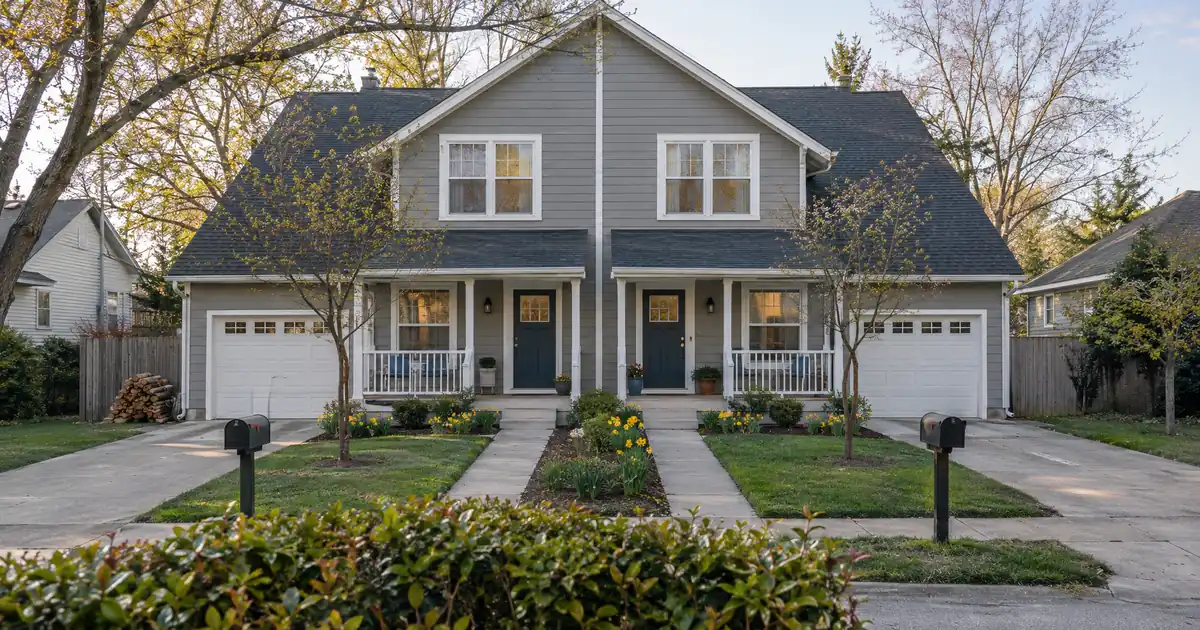
The Quick Read: No, not to buy a 2-4 unit you will not live in. FHA purchase financing requires you to occupy one of the units as your home. The workable path is to buy a duplex, triplex or fourplex, live in one unit, and rent out the rest. A co-borrower, military orders and a few narrow cases bend the rule, but none removes it.
Why Does FHA Require You to Live There?
FHA is built to help people buy a home, not a portfolio. The low down payment and flexible credit rules exist because the borrower is also the occupant. That is the whole bargain.
FHA payment estimate
Starting assumptions reflect an example price and the FHA minimum investment. Replace them with your own figures.
Editable benchmark: 7.32% as of October 22, 2026 · Freddie Mac 30-year average via FRED®. A conventional market reference, not an FHA loan quote.
Illustrative starting assumptions: a $350,000 price, the FHA minimum investment as the down payment, a thirty-year term at the current Freddie Mac benchmark, and property taxes and insurance estimated at typical national rates. Every field is editable.
Illustrative estimate only — not a Loan Estimate, approval, quote, or commitment to lend. The rate field carries the weekly Freddie Mac thirty-year conventional benchmark, a market reference and not an FHA loan quote; your rate is set by the lender at lock. FHA mortgage insurance follows HUD’s published schedule for the term, leverage and loan size entered; taxes, insurance and dues are editable estimates; closing costs are not included; county loan limits are not checked here. Licensed in sixteen states for consumer mortgages. Lendmire is not affiliated with or acting on behalf of FHA, HUD, or the federal government.
Here is what the program offers when you do occupy. Across the wholesale programs Lendmire places files with, FHA loan programs allow financing up to 96.5% of the price or value, with a 3.5% minimum investment, starting at a 580 decision score. Those figures depend on lender guidelines and a full file review. They apply to a principal residence of one to four units. Occupancy is what unlocks them.
Think of a 2-4 unit as a house that happens to have extra kitchens. If you live in one unit, it is your home. If you live in none, it is a rental, and FHA purchase financing is not designed for rentals.
A purchase you will not occupy needs a different loan type, and occupancy is what decides how much leverage a lender will give you.
What Counts as “Living There”?
At least one borrower must move in within 60 days of signing the security instrument and intend to stay for at least one year. HUD’s FHA Resource Center states both points and ties them to Handbook 4000.1. The security instrument is the mortgage or deed of trust you sign at closing.
Three details trip people up:
- Only one borrower has to occupy. If two people buy together, one can live there and the other can stay elsewhere.
- You sign a certification. You are telling the lender you intend to live there. That statement carries weight.
- Intent at closing is what the lender documents. Lenders verify occupancy when they originate the loan, not by checking on you later.
Mixed-use buildings can work. HUD’s Handbook 4000.1 drafting excerpt says FHA Single Family programs are limited to one- to four-family properties that are owner-occupied principal residences. It also requires the building to be mostly residential, so a storefront below your apartment can qualify as long as housing dominates the floor area.
Five or more units is a different world. That is a separate commercial program, not a bigger version of this one.
House Hacking: The Version That Works
Buy a duplex, triplex or fourplex. Live in one unit. Rent the others. That is the legitimate way to use an FHA loan on a multi-unit property, and the occupancy rule is the reason it is allowed.
Here is how the pieces fit on a typical file:
- Leverage. Up to 96.5% financing with 3.5% invested, at a 580 decision score or higher, subject to lender guidelines.
- Seller help. Seller or interested-party contributions can reach 6% of the price.
- Mortgage insurance. FHA charges an upfront premium of 1.75% of the base loan, which can be financed. It also charges an annual premium between 0.15% and 0.75% of the balance, depending on term, loan amount and LTV. On a thirty-year loan above 90% LTV, the annual premium lasts for the term. At or below 90%, it ends after eleven years. These are program mechanics, not a price quote.
- Ratios. The base pair is 31/43, meaning housing cost over income and total debt over income. Documented compensating factors can stretch that toward 40/50 at the top tier. The automated finding governs most files.
- Loan limits. County limits apply, and they vary with the number of units.
Credit history still matters. HUD sets waiting periods after major credit events: two years from a Chapter 7 discharge and three years from a foreclosure. Those are HUD’s rules, not a promise about any single file.
Living in your own building also changes your life. You are the landlord and a tenant at the same time. A late rent check, a broken boiler and a vacant unit all land on your phone and your budget.
How Rental Income Counts (and Why It Counts Less Than You Hope)
Only a reduced portion of the projected rent from the units you will not occupy counts toward qualifying. Rent on a unit you have never rented is a forecast. Lenders treat forecasts with caution.
When you have no rental history on the property, the lender documents expected rent with an appraisal. HUD’s Mortgagee Letter 2023-17 points to the small residential income property appraisal form, which shows market rent for each unit. Signed leases can support the number when they exist. That letter is older, so the lender confirms current handbook treatment on your file.
The rent helps, but it does not erase your payment. You owe the full mortgage whether the units are rented or empty. Vacancy, repairs and reserves are yours to carry.
The Self-Sufficiency Test for 3-4 Units
A triplex or fourplex has one more hurdle. The self-sufficiency test asks whether the building’s rent, reduced for vacancy, can cover the full housing payment on its own. The rent from all units counts in this test, including yours. The payment includes principal, interest, taxes, insurance, mortgage insurance and any HOA dues.
A duplex skips this test. A 3-4 unit building that fails the test cannot get the loan as structured. Plan for that before you fall in love with a fourplex.
Which Situation Is Yours?
Most readers fall into one of these rows. Occupancy decides every answer.
| Your situation | FHA purchase fits? | What to consider |
|---|---|---|
| You will live in one unit | Yes, if the file qualifies | Rent counts only in part |
| You will move in later | Only if you meet the move-in window | One borrower must occupy on time |
| You will never occupy it | No | Different loan type needed |
| A relative will live there | Generally no | The borrower must occupy |
| A co-borrower lives there, you do not | Yes, if one borrower occupies | Expect tighter terms |
The “move in later” row deserves a second look. Waiting a year does not work. The occupancy window runs from the day you sign.
Can a Co-Borrower Who Won’t Live There Help?
Yes, as long as at least one borrower occupies. HUD calls this a non-occupying borrower transaction: two or more borrowers, where at least one will not live in the home. The property is still owner-occupied, because someone does live there.
The helper has to be a real co-borrower, not a co-signer. HUD’s FHA Resource Center says every occupying and non-occupying borrower must take title, be obligated on the note, and sign the security instrument. Co-signers sign the note but do not hold title.
A co-borrower can lift your income and credit. It can also lower the leverage the lender allows, especially on a 2-4 unit. Trade sources quote a lower LTV cap for these files, and the exception FHA gives for family-member purchases does not extend to two- to four-unit properties. Treat any quoted cap as unverified until a lender confirms it against the live handbook.
A non-occupant cannot rescue a file where nobody plans to live there. At least one borrower still has to move in.
Military Orders, Moving Out Later, and Streamline Refinances
These are the situations that look like exceptions. Most of them are not.
Military orders. Trade sources describing the handbook say a service member stationed away can still count as an owner-occupant when a family member lives in the home, or when the member intends to occupy it after discharge. The lender documents the orders. Treat this as a conversation to have early, not a loophole to assume.
Moving out after a year. Once you have met the one-year intent at closing, FHA does not bar you from renting the whole building later. Life changes: a job transfer, a new baby, a marriage. Honest changes after closing differ from false statements at closing. Many owners do move out and rent every unit.
Streamline refinances. The FHA Streamline refinances an existing FHA loan with no appraisal, a limited credit review and a net tangible benefit, and the mortgage insurance premium continues. An FDIC-hosted FHA summary says owners of one- to four-unit primary residences, approved secondary residences and non-owner-occupied properties with an existing FHA loan can use it. No cash comes out. It also cannot be used to buy anything.
So a streamline is not a back door into an investor purchase. It only refinances a loan you already have.
Cash-out. An FHA cash-out refinance requires owner occupancy. It reaches 80% LTV on a home you have owned and occupied for 12 months before the case number. If you are comparing cash-out routes while living in a multi-unit, Lendmire’s piece FHA vs Conventional Cash-Out When You Live in a 2-4 Unit Primary Home walks through it. The exact numbers vary by lender and program and follow a full review of property, leverage, and credit.
HUD-owned homes. HUD sells foreclosed homes it owns, and some of those sales have their own rules for investor buyers. That is a narrow, separate program with its own sales terms, not a general route.
What Happens If You Misstate Occupancy?
Claiming you will live there when you will not is occupancy misrepresentation, and lenders treat it seriously. You sign a certification, and misrepresenting occupancy can carry legal consequences. Describing them in detail is a job for an attorney, not a loan article.
The risk is also practical. A Federal Reserve Bank of Philadelphia working paper found that borrowers who misreported occupancy defaulted at a rate 75% higher than similar borrowers who declared themselves investors. It also found the pattern extended beyond the housing bubble years. Lenders know this, which is why they document occupancy.
The honest framing: if you plan to live there, say so and do it. If you do not, say that too and use the right loan type. Saving a little on down payment is a poor trade for a false statement on a federal-backed loan.
Key Terms Defined
Owner-occupant: A borrower who lives in the property as a principal residence. FHA requires at least one.
Security instrument: The mortgage or deed of trust you sign at closing, which pledges the property as collateral.
Self-sufficiency test: A check on 3-4 unit buildings. It asks whether the vacancy-adjusted rent from every unit can cover the full housing payment.
House hacking: Living in one unit of a multi-unit home and renting the others to help pay for it.
Non-occupying borrower: A co-borrower who takes title and signs the loan but does not live in the home. At least one other borrower must.
Streamline refinance: An FHA-to-FHA refinance with limited paperwork and no appraisal, and no cash out.
What a Lender Looks At
When occupancy is clear, the file turns on a short list:
1. Your intent to occupy, documented at closing.
2. Credit and income ratios, usually measured against the 31/43 base pair or documented factors.
3. The appraiser’s opinion of value and market rent.
4. For 3-4 units, the self-sufficiency result.
5. Reserves after closing, which matter more as the unit count rises.
6. County loan limits for the number of units.
Skip the guessing. Lay out your plan to a loan officer before you make an offer, because the unit count changes what the file needs.
Next Step
If you are buying a home and want to see whether an FHA loan fits your file, Lendmire can help you compare the options and what each one asks of you. Lendmire is a mortgage broker, so it arranges loans through wholesale lenders rather than lending directly. Every figure above depends on lender guidelines and a full file review, and nothing here is a commitment to lend.
Frequently Asked Questions
Can I buy a 2-4 unit with FHA if I plan to live there next year?
Not under the standard purchase program. One borrower must move in within 60 days of signing and intend to stay at least a year. A purchase you will occupy later falls outside that window. If your timing is flexible, adjust it so you move in on schedule.
Does my family living in one unit count as me occupying it?
Generally no. The occupancy requirement attaches to a borrower, not a relative. Military service is the narrow exception, and the lender documents the orders. Otherwise, one person on the loan has to live there.
Do I have to live there forever?
No. The standard is intent to stay at least one year, measured at closing. Many owners move out later and rent every unit. A genuine change in circumstances after closing is different from misstating your plans when you sign.
Does a duplex have the same hurdles as a fourplex?
No. A duplex skips the self-sufficiency test, which applies to 3-4 units. A triplex or fourplex has to show the building’s rent can cover the whole housing payment, and lenders often want reserves on those files. Both still require you to occupy one unit.
Can I use an FHA Streamline on a unit I moved out of?
Yes, if you already hold an FHA loan on it. The streamline refinances an existing FHA loan, with no appraisal, a net tangible benefit and no cash out. It cannot finance a new purchase, so it is not a way around the occupancy rule.
For your own numbers, request a scenario review with Lendmire.
About Lendmire
Lendmire is a mortgage brokerage (NMLS# 2371349) licensed for consumer mortgage lending in 16 states, arranging FHA, VA, conventional and jumbo purchase and refinance loans through a wholesale lending network. Eligibility is determined by the lender on each file. Scotsman Guide named Lendmire a Top Mortgage Workplace in both 2025 and 2026.
Get Started
Ready to find the right loan for you?
In about 30 seconds you can review financing options available for your home or investment property. No commitment required.
Informational only. Not a Loan Estimate, approval, or commitment to lend. Program availability and eligibility are subject to lender guidelines, credit approval, property review, and underwriting.
References
1. HUD FHA Resource Center: How does FHA define owner occupant?
2. HUD Handbook 4000.1 drafting-table excerpt
4. HUD FHA Resource Center: Co-borrowers and co-signers
5. FHA Streamline summary (FDIC-hosted PDF)
6. Federal Reserve Bank of Philadelphia, Working Paper 23-01
This article is part of Lendmire’s FHA loan program — full qualification details, guidelines, and scenarios live on the program page.
Related reading: Can You Get an FHA Loan With a High DTI After a Conventional Denial? · Can You Get an FHA Loan With Minimum Down at a Lower Credit Tier? · FHA Cash-Out Requirements for a Loan Near the County Limit
Brandon Miller
Founder & CEO, Mortgage Loan Originator, Lendmire LLC
- Mortgage Loan Originator · NMLS# 1129696 · Verify on NMLS Consumer Access
- North Carolina Real Estate Broker · License# 343312 · Verify on NCREC
- North Carolina Insurance Producer · License# 19053198 · Property, Casualty, Life, Health · Verify on NAIC SBS
- Lendmire LLC · Firm NMLS# 2371349 · Verify firm licensure
Disclosures. The information presented in this article is general market commentary, not financial, legal, or tax advice. Lendmire is a mortgage brokerage (NMLS# 2371349) — not a direct lender or depository institution — and loan placement is subject to lender underwriting. Nothing in this content represents a commitment to lend. Loan terms, pricing, and program availability vary based on borrower qualifications, property characteristics, and state of subject property, and are subject to change at any time. Lendmire complies with Equal Housing Opportunity requirements. Consumer access: nmlsconsumeraccess.org.