
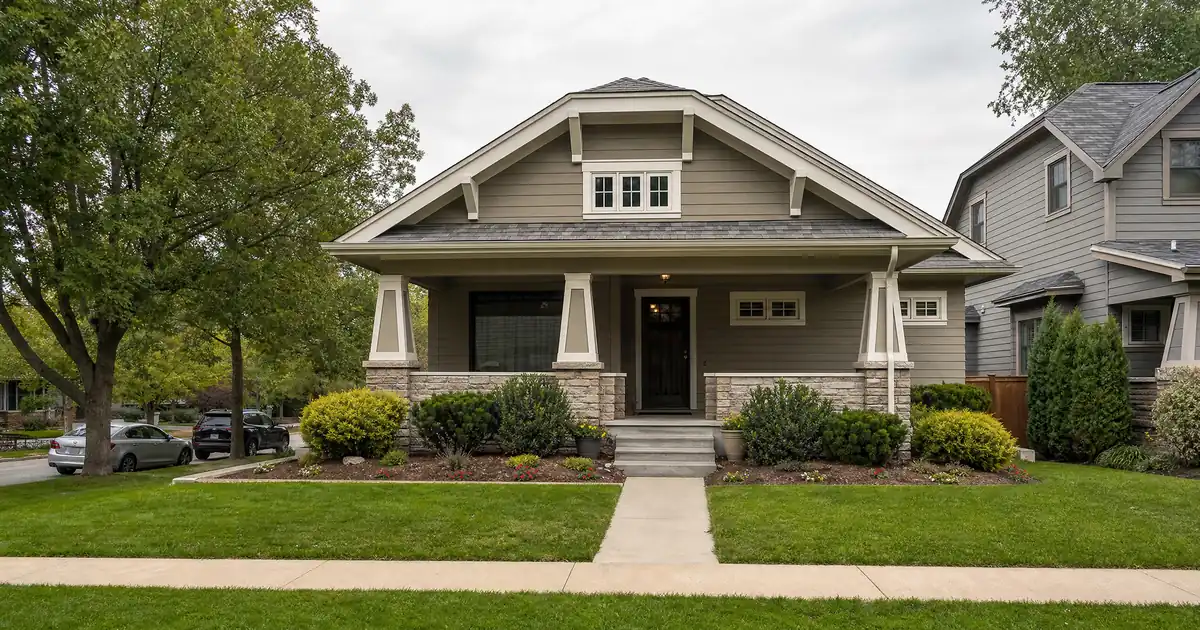
1099-only Loan Or DSCR HELOC For A First Rental — The Quick Read: A 1099-only loan is reviewed around the borrower on 1-2 years of actual 1099 income and finances the purchase of the rental itself. A DSCR HELOC pulls equity out of a property the investor already owns — usually a primary residence, since a first rental by definition hasn’t been bought yet — and that draw typically becomes the down payment for the purchase loan on the new property. Neither one replaces the other. They solve different problems at different points in the same transaction, and understanding which lever to pull first often determines how smoothly a first rental purchase closes.
Key Takeaways
- A 1099-only loan is a purchase-money mortgage underwritten on the borrower’s own income history — 1-2 years of IRS 1099-NEC forms, program dependent.
- A DSCR HELOC is a revolving equity line, and for a true first-time investor, it’s almost always drawn against an owned primary or second home rather than the rental itself.
- Investment-property HELOC lines cap at 70% CLTV and $500,000 total on most files, with a 700 credit floor, and that ceiling doesn’t move regardless of line size.
- Primary and second-home lines can reach up to 90% CLTV, but only at a 720-or-better credit profile — larger lines above $500,000 step down to a 75% CLTV cap and require a full appraisal, a limit that applies only to these owner-occupied and second-home lines and never to investment-property lines, whose 70% ceiling stays fixed no matter how large the line is.
- LLCs, corporations, and partnerships cannot hold title on this equity-line product — a sharp break from how many standalone DSCR purchase loans allow LLC vesting, subject to lender program eligibility.
Key Terms Defined
- DSCR (debt-service coverage ratio): rental income divided by the monthly housing obligation — a ratio, not a dollar figure, used to size how a property’s own cash flow covers its payment.
- 1099-NEC: the IRS form a business files for anyone paid at least $2,000 in nonemployee compensation during the year, per IRS instructions — the document set a 1099-only loan is built around.
- CLTV (combined loan-to-value): the total of all liens against a property divided by its value, used to size how much a HELOC or purchase loan can reach.
- Business-purpose loan: financing used to acquire, improve, or maintain a non-owner-occupied rental rather than the borrower’s own residence.
- Draw period: the window during which a HELOC can be drawn, typically interest-only, before it converts to a fully amortizing repayment schedule.
- Non-QM: a mortgage written outside the federal consumer-finance regulator’s Qualified Mortgage standard — a regulatory label, not a statement about borrower quality.
- Wholesale lender network: the group of non-QM lenders a mortgage broker like Lendmire has access to; guidelines, coverage, and pricing vary lender by lender rather than being set by the broker itself.
Side-by-Side
| Factor | 1099-Only Loan | DSCR HELOC |
|---|---|---|
| Reviewed on | Borrower’s own 1099 income | Equity, credit, and draw-payment DTI |
| Core documents | 1-2 years of IRS 1099-NEC forms | Credit report, valuation, bank statements |
| Financing type | New purchase-money mortgage | Revolving line against equity already owned |
| Property funded | The rental being purchased | Usually the borrower’s primary or second home |
| Entity vesting | Individual borrower, consumer-purpose | Individual or revocable living trust only |
| Underwriting focus | Income-history file, tax-form driven | Equity- and credit-based, lighter income file |
Neither row above touches pricing. Rate, points, and payment amounts aren’t part of this comparison — they’re set loan-by-loan, borrower-by-borrower, and belong in an actual quote, not in a program-mechanics table. The broader rate environment for non-QM products moves with the market generally, and that context matters for timing a purchase, but it doesn’t change which of these two tools fits a given borrower’s situation.
How large a line the equity supports in your market.
An equity line is sized by combined loan-to-value, occupancy, and credit — not by rental coverage. Switch the occupancy or the credit band and the ceiling moves with it.
Investment-property lines require a 700 minimum credit score. Second-home tiers reach 640; primary-residence tiers reach 600.
A debt-to-income ratio above 45% requires 680+ credit. Profiles under 640 are limited to single-family homes. At least 75% of the approved line is drawn at closing. Ceilings, floors, and caps update from Lendmire’s centralized guideline source.
Line estimate
Illustrative estimate only — not a quote, Loan Estimate, approval, or commitment to lend. The rate is an editable assumption; equity-line pricing is variable through both the draw and repayment periods and never converts to fixed. Occupancy and credit drive the ceiling together: investment property runs to 70% combined LTV with a 700 credit floor and a $500,000 cap; a second home runs to 90% at a 640 floor with a $500,000 cap; a primary residence reaches up to 90% at a 600 floor, and its $750,000 maximum line applies only at 75% combined LTV or below with 720+ credit and a full appraisal. Lines above $500,000 require a full appraisal. Credit, debt-to-income, property type, and full underwriting review all affect the final line.
When the 1099-Only Loan Is the Better Fit
The 1099-only loan works best for a contractor, gig worker, or commission earner who has strong, documented 1099 income and no existing equity to draw from. This is the borrower non-QM lending was built to serve. Research on self-employed homeownership from the Urban Institute found homeownership rates among the self-employed declined after the financial crisis even though self-employed households earn higher average incomes than salaried households — a documentation gap, not an earnings gap. A 1099-only loan closes that gap by replacing two years of tax-return averaging with the income actually reported on 1099-NEC forms.
That documentation choice matters because Schedule C deductions — depreciation, contractor costs, equipment, mileage — legitimately shrink net income on a tax return even when cash flow stays strong. A 1099-only program looks past those write-offs to the gross or near-gross 1099 figures instead. It’s a purchase tool, and it works before the investor owns anything else. There’s no property to draw equity from yet, so this path doesn’t depend on already having a home with meaningful appreciation.
It also keeps the transaction simple: one loan, one closing, one file built around the borrower’s income rather than a second lien layered on top of an existing mortgage. There’s no draw schedule to track, no separate repayment structure to convert into later, and no equity ceiling to bump against — the entire file rests on the income history itself. For a first-time buyer weighing whether age, income timing, or limited home equity should hold them back, Lendmire’s guide to buying a first rental property at any age covers that decision in more depth.
The trade-off is documentation. The borrower still has to produce a real income history, and a recently self-employed 1099 earner without 1-2 years of consistent forms may not clear the bar a lender wants to see, program dependent. A borrower who switched from W-2 to 1099 work only a handful of months ago typically hasn’t built the track record this program is designed around yet, and may need to wait out the seasoning period or explore a different documentation path in the meantime.
When the DSCR HELOC Is the Better Fit
The DSCR HELOC works best for someone who already owns a home with real equity and wants to fund a first rental’s down payment without touching their personal income file at all. Because it’s business-purpose in structure, it’s reviewed on the property and the borrower’s credit and equity position rather than a full personal-income underwrite. Lendmire arranges this equity-line product through select lenders in a wholesale network limited to 16 full-service states — Texas, Florida, California, and Georgia among them — which is narrower than the 40-market DSCR footprint spanning 39 states plus the District of Columbia used on Lendmire’s standalone DSCR purchase and refinance loans.
The leverage ceiling depends entirely on which property is being tapped, and the two tiers don’t blend into each other. On a home already held as a rental, the investment-property tier caps at 70% CLTV and $500,000 total, with a 700 credit floor across both tiers of that table — credit above 700 buys eligibility, not extra leverage, and that 70% ceiling doesn’t step up to 75% or any other figure regardless of how large the requested line is. But most first-time investors don’t have a rental to draw against yet. That’s why, for a true first rental, the more common path is pulling equity from the borrower’s own primary or second home instead, where the ceiling can reach 90% CLTV — but only at a 720-or-better credit profile, and only on lines up to $500,000. Lines above that threshold, on the primary or second-home tier specifically, step down to a 75% CLTV cap and require a full appraisal rather than an automated valuation. That 75% figure never applies to the investment-property tier; it’s a ceiling reserved for larger owner-occupied and second-home lines only.
Two structures apply on primary and second-home lines: a shorter draw with a 17-year fully amortizing repayment, and a longer one with a 25-year repayment (Tennessee shortens both). Investment-tier lines run the 25-year repayment structure only. On either structure, at least 75% of the approved line is drawn at closing — this isn’t a line an investor opens and lets sit untouched, which matters for anyone weighing a HELOC purely as a standby reserve rather than as a funding source for an actual purchase.
Debt-to-income matters here in a way it typically doesn’t on a standalone DSCR purchase loan: files cap at a 50% maximum DTI, tightening to 45% for credit profiles between 600 and 679, with anything above 45% requiring at least a 680. That ratio is measured against the interest-only payment on the maximum draw, not against the future rental’s income, because there usually isn’t a rental generating income yet. This is the piece that trips up borrowers who assume a DSCR product always ignores personal DTI — on the standalone purchase loan it typically does, but on this equity-line product, the borrower’s own debt load still gets measured.
Title is the sharpest friction point. Fee simple or leasehold property held by the individual borrower or an inter vivos revocable living trust qualifies; LLCs, corporations, partnerships, and irrevocable, blind, or land trusts cannot hold title on this line at all. That’s a real structural break from a standalone DSCR purchase or cash-out loan, where LLC vesting is often available, subject to lender program eligibility. An investor planning to hold the eventual rental in an entity needs to sequence the HELOC draw before the property moves into that structure, not after. For the broader mechanics of qualifying on rental income rather than a personal-income file, Lendmire’s complete DSCR loans guide walks through how that underwriting works end to end.
Credit and derogatory history round out the file. The program floor sits at 600, with a single-bureau score keyed to the primary wage earner and a report no older than 90 days at closing — no rescores. Bankruptcy seasons in 4 years from discharge or dismissal on both structures; foreclosure-family history is stricter, seasoning in 7 years (4 years for a deed-in-lieu, pre-foreclosure, or short sale) on one structure, while the other declines that history outright regardless of age. Property eligibility covers single-family, 2-4 units, PUD, townhome, and condominium — including non-warrantable condos — but manufactured homes, co-ops, condotels, log homes, and commercial or mixed-use properties are all ineligible on this equity-line product.
How the Two Financing Paths Work Together
In practice, these two tools often show up in the same transaction rather than as competing choices. A borrower with strong 1099 income but no owned property yet leans entirely on the purchase-side documentation path. A borrower who already owns a primary residence with equity, but whose income file is thin or complicated, can draw against that equity first and then use a lighter-documentation purchase loan — DSCR or otherwise — on the rental itself, since the rental purchase is being sized on the property’s own cash flow rather than the borrower’s personal income.
The sequencing question is worth planning around before either application goes in. A HELOC draw changes the borrower’s DTI and adds a lien to the property backing it, both of which a purchase lender will see when it pulls credit and reviews the file. Closing the HELOC first, letting the draw fund, and then applying for the purchase loan with those funds already in hand tends to create a cleaner file than trying to run both applications at once. Borrowers who are unsure which path — or which order — fits their situation are generally better served working through the specifics with a broker before choosing a documentation route, since program guidelines shift by lender and by state coverage.
DSCR vs. conventional financing
Two common ways to finance an investment property in this market. They qualify you differently — here’s how investors weigh them.
Why investors choose it
- Qualifies on the property’s rental income — no personal tax returns, W-2s, or pay stubs needed to document income.
- No personal debt-to-income ceiling to clear, so existing mortgages and obligations don’t cap your borrowing the same way.
- Can be closed in an LLC, keeping the property inside a business entity.
- Built for scaling — not held to the limit on number of financed properties that conventional financing applies.
- Underwriting centers on the deal: generally qualifies when the rent covers the payment, a 1.00x coverage ratio being a common baseline (confirmed in underwriting).
- Designed specifically for investment property, including long-term and, where the program allows, short-term rentals.
Where it’s strong
- Often the lowest ongoing financing cost for a buyer who fully qualifies on personal income — a fit for a first property or a cost-first purchase.
Trade-offs for investors
- Requires full personal income documentation and must fit within a debt-to-income limit — salary, existing debts, and other mortgages all count.
- Typically held in your personal name rather than a business entity.
- Caps how many financed properties you can carry, which can become a ceiling as a portfolio grows.
- Evaluates you as a borrower as much as the property, which usually means more paperwork.
How investors usually choose: a first or single property often optimizes for the lowest financing cost; portfolio builders often optimize for leverage, vesting in an LLC, and scaling past conventional caps. The right answer depends on your goals, the property, and current guidelines — both paths run through select lenders in Lendmire’s wholesale network, with eligibility and terms confirmed in underwriting.
FAQ
How do you qualify for a 1099-only loan on a first rental purchase?
Qualification centers on the borrower’s own income history rather than the property. Lenders generally want 1-2 years of consistent IRS 1099-NEC forms, program dependent, along with the usual credit, reserves, and down-payment requirements for a purchase-money mortgage. Because it’s underwritten on gross or near-gross 1099 income rather than net tax-return income, Schedule C write-offs that would otherwise shrink a borrower’s qualifying income typically aren’t held against the file.
How do you qualify for a DSCR HELOC to fund a first rental’s down payment?
Qualification runs on equity, credit, and the draw-period payment rather than a full personal-income review. The specific ceiling depends on which property is being tapped: an owned rental caps at 70% CLTV with a 700 credit floor, while a primary or second home can reach higher CLTV with a stronger credit profile, subject to the line-size and appraisal thresholds described above. Title must sit with the individual borrower or a revocable living trust — entities can’t hold title on this product.
Can an LLC use a DSCR HELOC to buy a first rental?
No. This particular equity-line product restricts title to an individual borrower or an inter vivos revocable living trust; LLCs, corporations, partnerships, and irrevocable, blind, or land trusts are excluded from holding title on the line itself. An investor who wants the eventual rental held in an entity typically needs to draw the HELOC before transferring the property into that structure, and should confirm sequencing with a broker beforehand.
Is a 1099-only loan or a DSCR HELOC faster for a first-time investor?
Neither is inherently faster; timing depends on the borrower’s starting point. A borrower with clean 1099 documentation and no property to draw equity from generally has one file to build — the purchase loan itself. A borrower drawing a HELOC first typically closes that line, waits for funds to become available, and then applies for the purchase loan, which adds a sequencing step rather than removing one. Actual timelines vary by lender and file complexity.
Do these two products ever get combined for the same first rental?
Yes. It’s common for a borrower to draw a DSCR HELOC against an owned primary or second home to generate the down payment, then use a separate purchase loan — a 1099-only loan or a DSCR purchase loan sized on the rental’s own income — to close on the rental itself. The two products solve different pieces of the same purchase rather than competing for the same role.
About Lendmire
Lendmire is a non-QM DSCR mortgage brokerage (NMLS# 2371349) that arranges purchase, refinance, and equity-line financing through a network of wholesale lenders across roughly 40 markets. Lendmire doesn’t fund loans directly; it matches a borrower’s file — whether that’s a 1099-only purchase, a standalone DSCR purchase or refinance, or a DSCR HELOC draw on an owned property — to lenders whose guidelines fit the property type, the state, and the borrower’s documentation path. Because Lendmire operates as a broker rather than a direct lender, program availability, state coverage, credit floors, and leverage limits described here reflect current wholesale-lender guidelines Lendmire has access to and can change without notice. Scotsman Guide named Lendmire a Top Mortgage Workplace in both 2025 and 2026.
A note on the details above: credit-score floors, CLTV ceilings, DTI caps, seasoning periods, and property-eligibility lists vary by lender and by program, and the figures cited here describe current guidelines rather than fixed industry standards. None of the leverage or credit figures here should be read as a quote or a commitment to lend. Rate, term, and payment figures are intentionally omitted from this comparison because they’re set loan-by-loan once a specific borrower and property are underwritten — a prospective borrower should request an individualized quote rather than relying on general program information to estimate cost.
Get Started
Ready to find the right loan for you?
In about 30 seconds you can review financing options available for your home or investment property. No commitment required.
Informational only. Not a Loan Estimate, approval, or commitment to lend. Program availability and eligibility are subject to lender guidelines, credit approval, property review, and underwriting.
References
2. Research on self-employed homeownership from the Urban Institute
Brandon Miller
Founder & CEO, Mortgage Loan Originator, Lendmire LLC
- Mortgage Loan Originator · NMLS# 1129696 · Verify on NMLS Consumer Access
- North Carolina Real Estate Broker · License# 343312 · Verify on NCREC
- North Carolina Insurance Producer · License# 19053198 · Property, Casualty, Life, Health · Verify on NAIC SBS
- Lendmire LLC · Firm NMLS# 2371349 · Verify firm licensure
Compliance and disclosures. Lendmire (NMLS# 2371349) is a licensed mortgage broker and is not a direct lender, depository institution, financial advisor, or tax professional. Content in this article is general market analysis and educational information — not financial, legal, or tax advice for any specific situation. Lendmire does not guarantee loan approval; every transaction is subject to underwriting by the funding lender. Mortgage pricing and loan program guidelines are subject to change at any time without notice and vary by borrower characteristics, property type, and state regulations. Lendmire complies with Equal Housing Opportunity. Licensure verification: NMLS Consumer Access.


