
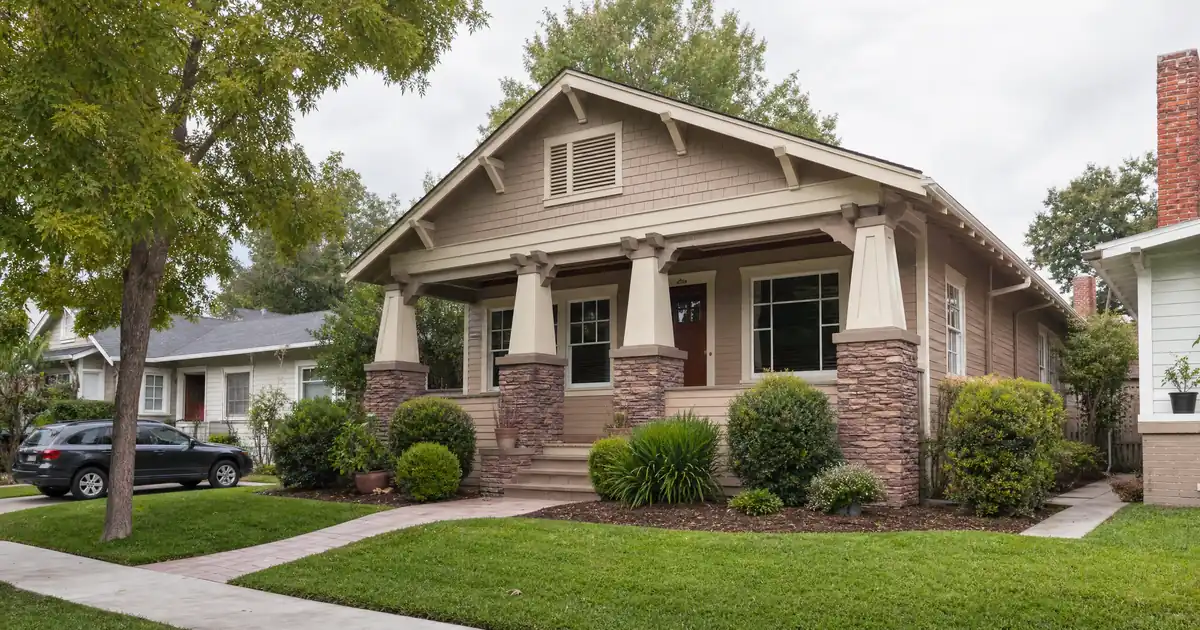
Your First Rental Property At Any Age — The Quick Read: Once you clear your state’s legal age of majority (18 in most states, 19 in Alabama and Nebraska, 21 in Mississippi), age plays no role in whether a lender can approve your first rental purchase — federal law forbids it. What actually decides the file is the property’s rent-to-payment math, your credit profile, and your reserves. A 22-year-old and a 68-year-old buying their first rental property face the identical underwriting test on a DSCR loan.
Is There a Right Age to Start?
No. There’s a legal floor and a federal anti-discrimination rule — nothing else.
DSCR Calculator
Run the numbers in your market
Rate source: Freddie Mac 30-yr average via FRED® — Federal Reserve Bank of St. Louis · effective Aug 13, 2026
Prefilled with local estimates — enter your own rent or nightly figures, taxes, insurance, and HOA for a more accurate picture.
Program parameters update from Lendmire’s centralized guideline source. Taxes and insurance are editable estimates.
As of Aug 13, 2026 · General Freddie Mac market benchmark, not a Lendmire loan offer. Rent, nightly rate, occupancy, taxes, and insurance are editable estimates. Short-term rental figures are estimates only and vary significantly by season, property type, management approach, and local short-term-rental rules — confirm local regulations before relying on them. Qualifying income for short-term rentals varies by program — some use appraisal market rent, others use documented STR history or projections — and is confirmed in underwriting. Not a Loan Estimate, approval, or commitment to lend. Program availability and eligibility are subject to lender guidelines, credit approval, property review, and underwriting.
Below the age of majority, you can’t sign a mortgage note, full stop. Above it, the Federal Trade Commission’s codification of the Equal Credit Opportunity Act makes age a legally protected characteristic in lending, right alongside race, sex, and national origin — provided the applicant has the capacity to enter a binding contract. That means a lender cannot deny your application, price it worse, or attach extra conditions because you’re 19 and buying your first duplex, or because you’re 74 and buying your first single-family rental with retirement savings.
Here’s what that means in practice for the two anxieties every first-timer carries:
- “I’m too young.” Not a lending issue once you’ve reached your state’s age of majority. The barrier at this age is almost always capital and credit depth, not eligibility.
- “I’m too old.” No federal ceiling exists. A qualified borrower in their 70s or 80s can be approved on the same terms as a borrower in their 30s.
- The legal floor is a contract-law question, not a mortgage rule — it applies identically whether you’re financing through a conventional lender or a non-QM/DSCR program.
- Age of majority varies by state — 18 in most places, 19 in Alabama and Nebraska, 21 in Mississippi.
- What actually decides your file is the property’s income, your credit history, and your reserves — not your birth year.
Key Terms Defined
DSCR (Debt Service Coverage Ratio): the property’s monthly rent divided by its monthly housing payment (principal, interest, taxes, insurance, and any HOA dues) — a ratio above 1.00 means the rent covers the payment on paper.
LTV (Loan-to-Value): the loan amount expressed as a percentage of the property’s purchase price or appraised value; lower LTV means more equity in the deal.
PITIA: the full monthly housing obligation — principal, interest, taxes, insurance, and association dues where applicable — used as the denominator in a DSCR calculation.
Reserves: liquid funds, typically measured in months of PITIA, that a lender wants documented and available after closing as a cushion against vacancy or repairs.
Seasoning: the minimum ownership period a lender requires before a cash-out refinance is available, measured from the title recording date on the settlement statement.
Non-QM: a category of mortgage loans, including DSCR programs, that fall outside the standard agency (Fannie Mae/Freddie Mac) qualification box and instead use alternative underwriting logic, most commonly property income rather than personal income.
The Legal Floor: Age of Majority and Contract Capacity
This is the only hard age rule in the entire process, and it has nothing to do with mortgage underwriting.
Every state sets an age at which a person can sign a legally binding contract. That age is 18 across most of the country, but Alabama and Nebraska set it at 19, and Mississippi sets it at 21, according to LegalClarity’s review of state contract-age rules. Below that threshold, a real estate contract signed by a minor is voidable — meaning the minor could walk away from the deal at any point, which is exactly why no lender will fund a mortgage where the named borrower could legally void the note. It’s not that minors can’t own property; a five-year-old can hold title through a trust or a custodial account. The constraint is narrower than people assume: minors can’t be the named signer on the note itself.
Once you clear that age, the contract-law question disappears entirely and the lending-law question — governed by the Equal Credit Opportunity Act — takes over.
What ECOA Actually Says About Age and Lending
The Equal Credit Opportunity Act prohibits a creditor from taking your age into account, once you have the legal capacity to contract, per the Federal Trade Commission. That’s the entire rule. There’s no carve-out for “too young to have credit history” or “too old to get a 30-year term.” Age simply isn’t a legally usable variable once you’re an adult.
What this means for a DSCR file specifically: the lender’s review runs on the property’s rent-to-payment math, your credit profile, and your reserves — never on how many years you’ve been alive. A thin credit file at 20 gets the same underwriting response as a thin credit file at 60: more weight placed on reserves and down payment as compensating factors. That’s an age-neutral response to a credit-depth issue, not a different rule for younger or older applicants.
Decade by Decade: What Actually Changes
| Age Range | Typical Advantage | Typical Friction Point | First Move |
|---|---|---|---|
| 20s | Longer runway to build a portfolio; fewer competing financial obligations | Thin credit history, limited reserves | Start with a modest-leverage file and build reserves before scaling |
| 30s–40s | Peak earning years, established credit, often equity from a prior home | Competing priorities — family, other debt | Use a rental income-based program to avoid a personal-income squeeze |
| 50s–60s | Strongest reserves and often significant home equity to deploy | Shorter runway for a 30-year amortization schedule to fully pay down | Consider extended-term or interest-only structures where available |
| 70s+ | No ECOA ceiling; property-income underwriting sidesteps fixed-income documentation friction | Estate and succession planning becomes more relevant | Vet whether an LLC or trust vesting fits the long-term ownership plan |
Nothing in that table is a lending rule. It’s a pattern of what each cohort typically brings to a file and where they typically need to compensate. The underwriting test itself doesn’t change by row.
How DSCR Underwriting Actually Treats a First-Time Investor
This is where the mechanics matter more than the philosophy. DSCR-style non-QM lending compares a property’s rent against its housing payment rather than testing the borrower’s personal debt-to-income — a structural difference that Scotsman Guide’s coverage of the non-QM segment describes as investors increasingly financing purchases through loans that qualify on the property’s rental income rather than the borrower’s personal income. Walking a file through the steps:
1. Legal capacity gate. Confirm the named borrower — or the LLC member/guarantor if the deal closes in an entity, subject to lender program eligibility — has cleared the state’s age of majority. This happens before anything else and applies identically whether the loan is conventional or non-QM.
2. Property-first underwriting. The lender orders an appraisal with a market-rent opinion and compares that projected rent against the property’s PITIA. Across select lenders in the wholesale network, most programs want that coverage number at 1.00 or better before better pricing and leverage tiers open up — 1.00 is a floor on specific programs, not a universal starting line, and stronger ratios consistently unlock more favorable terms.
3. Credit and reserves get underwritten regardless of age. A 620 floor exists in parts of the network, but most programs want a credit profile closer to 660, and a 700+ score is typically what unlocks the strongest leverage tiers — including the select high-leverage programs that reach 85% LTV. Reserves commonly run around six months of PITIA, though conservative rate-and-term files at modest leverage under roughly $1.5 million sometimes see reserves waived, and loans above that threshold typically step up toward nine months. None of this varies by the borrower’s age.
4. The appraisal establishes the rent figure. Appraisers commonly reference the Fannie Mae Single-Family Comparable Rent Schedule (Form 1007) naming convention for the market-rent methodology on one-unit properties, even on non-agency DSCR files — it’s a documentation convention, not an agency rule governing the loan itself.
5. Entity vesting, if used, is age-neutral. Whether the borrower is 19 or 69, DSCR structures commonly allow closing in an LLC as a structural feature of the loan type, subject to lender program eligibility — not as an age accommodation for either end of the spectrum.
For a deeper walkthrough of how the ratio itself gets built, Lendmire’s complete DSCR loans guide covers the full underwriting model start to finish.
The Structures and Variations Worth Knowing
The 30-year fixed structure is the spine of most DSCR files, but it’s not the only option a first-time investor should know about. Extended 40-year terms and interest-only periods are available through select lenders in the network, and adjustable-rate structures exist for investors who prefer them — all subject to lender program eligibility and the specific file’s leverage and credit profile.
Loan sizes across most standard programs run up to roughly $3 million; above about $2.5 million, the network generally holds to 30-year fixed structures rather than the shorter-term variations. On the leverage side, most purchase files land at 75%–80% LTV, though select high-leverage programs reach 85% LTV for borrowers with a 700+ credit profile. Cash-out refinances top out lower — around 75% LTV across most of the network — with roughly six months of seasoning from the title recording date being the common expectation before a cash-out is available. Lendmire’s cash-out refinance guide and its investment property refinance page cover that mechanic in more depth than fits here.
Short-term rentals run their own lane: purchase leverage tops out around 75% LTV, refinance and cash-out cap closer to 70%, and lenders in this space typically want a 640+ credit score, roughly 12 months of hosting history, and coverage at or above a 1.10 baseline on purchases (1.00 on refinances). Short-term rental rules can vary by city, county, HOA, and property type, so investors should confirm local rules before relying on projected rental income.
A few states carry overlays worth knowing before you start shopping: Connecticut, Florida, Illinois, and New Jersey purchases generally cap near 75% LTV, and overlay-state deals commonly cap around $2 million regardless of the borrower’s profile. And for an investor who already owns a rental and wants to pull equity without a full refinance, investment-property HELOC lines cap at $500,000 total — there’s no tier above that in the network currently.
Coverage below 1.00 is available through select lenders in the network, though leverage and terms adjust to compensate — this is a program design feature, not an exception carved out for age, tenure, or first-time-buyer status.
Where the Age Angle Actually Breaks
The philosophical “any age” framing holds up right up until you hit these specific mechanical walls:
Under the age of majority. No lender — DSCR or conventional — will place a mortgage note directly in a minor’s name. The workaround is an adult stepping in through a trust with an adult trustee or a custodial (UTMA/UGMA) arrangement until the minor reaches the age of majority in that state, per LegalClarity. The property can be titled to the minor’s benefit; the borrower on the note has to be an adult.
The “no landlord history” cohort in their late teens and 20s. This is a real question young investors ask, but it’s a capital-and-credit-depth question, not an eligibility question. DSCR programs don’t distinguish “first-time investor with no landlord history” by age — a 22-year-old and a 62-year-old buying their first rental are both underwritten under the same first-time-investor logic. Lendmire’s piece on why your first property doesn’t have to be your home and its companion on why lenders usually make you own a home first both dig into this specific friction point.
Retirement-age borrowers with no W-2. No ECOA ceiling exists on the high end, and property-income underwriting is arguably the biggest practical advantage this cohort gets. Because a DSCR file qualifies primarily on property-level rental income covering the payment, subject to lender guidelines, there’s no personal income to document, no pension or Social Security statement to run through a conventional debt-to-income calculation. The property carries the file, not the retirement account.
DSCR loans are designed for non-owner-occupied investment properties. Because they are business-purpose investor loans, they’re reviewed differently from a standard owner-occupied mortgage — which is exactly what makes the age-neutral, property-first underwriting model possible in the first place.
What Coverage Actually Measures (and What It Doesn’t)
Clearing 1.00 on a DSCR calculation is not the same thing as positive cash flow, and conflating the two is the single most common mistake first-time investors make regardless of age.
The ratio only compares rent against PITIA. It says nothing about repairs, vacancy, property management fees, utilities the landlord covers, or capital expenditures — all of which sit outside the calculation entirely. Consider a scenario where a first-time investor is evaluating a small multifamily property at 80% LTV with a credit profile in the upper 600s. If the modeled rent comfortably covers the monthly obligation, the file might land around 1.10x–1.15x coverage. Tightening leverage to 75% LTV on that same property, or bringing a stronger credit profile into the file, could push coverage toward 1.25x or better — which is typically where pricing and leverage flexibility start to improve. Either way, that ratio is a lending metric, not a cash-flow projection; the actual profit picture depends on the operating expenses that sit below the PITIA line.
In our experience placing files across a wholesale network of DSCR lenders, the deals that run into trouble aren’t usually age-related at all — they’re deals where an investor treated a 1.05x coverage ratio as a green light without separately budgeting for vacancy and maintenance, and found the real cash-flow picture much tighter than the ratio implied. That gap between “clears the ratio” and “actually cash flows” shows up at every age, on every credit tier, in every corner of the network.
Common Misconceptions
“You get better terms at a certain age” isn’t accurate — ECOA makes age irrelevant to pricing once you have contract capacity. “A minor can’t own property” is also false; the actual constraint is on signing the note, not on holding title. “There’s a maximum age for a mortgage” has no basis in federal law — Opendoor’s explainer on this exact question notes there’s no ceiling once capacity is established. And “first-time investors are mostly young” doesn’t match the buyer data broadly, either — the median age of first-time home buyers climbed to 40, an all-time high, according to the National Association of Realtors’ most recent buyer profile, a reminder that “first” and “young” aren’t synonyms in real estate at all — first-time investors skew older than the stereotype suggests.
Tax treatment can depend on how rental income and expenses are documented and how the property is held; investors should keep clear records and speak with a qualified tax professional before relying on any deduction.
What This Means for Your Decision
Whether you’re 21 with your first paycheck history or 66 with a paid-off primary residence and equity to deploy, the mechanical questions are the same: what credit tier do you fall into, how much can you put down, and does the property’s rent cover the payment at the leverage you’re choosing. Younger investors typically need to compensate for thinner credit history with reserves or a stronger down payment; older investors often walk in with the opposite profile — strong reserves, established credit, but a shorter amortization runway to think through. Lendmire’s coverage of young professionals buying a first rental property and its DSCR guide for first-time rental buyers both walk through those two ends of the spectrum in more depth.
Frequently Asked Questions
Is there a minimum age to buy a rental property? Yes — it’s your state’s age of majority, which is 18 in most states, 19 in Alabama and Nebraska, and 21 in Mississippi. Below that age you can’t be the named signer on a mortgage note, though a minor can still hold title through a trust or custodial arrangement managed by an adult.
Can a lender deny me a DSCR loan for being too young or too old? No. Once you’ve cleared your state’s age of majority, the Equal Credit Opportunity Act prohibits a lender from factoring age into approval, pricing, or conditions in any way. The file gets underwritten on credit, reserves, and the property’s rent-to-payment math instead.
Can a minor own rental property at all? Yes, but not directly as the mortgage borrower. Ownership typically runs through a trust with an adult trustee or a UTMA/UGMA custodial account until the minor reaches legal age, at which point ownership and any financing responsibilities can transition to them directly.
Do first-time investors need landlord experience to qualify for a DSCR loan? No — DSCR underwriting is built around the property’s income, not the borrower’s rental track record. A 22-year-old and a 62-year-old with no prior rental property ownership are typically classified the same way under a program’s first-time-investor guidelines.
Is a DSCR loan a good fit for someone buying their first rental property in retirement? It can be a strong fit for investors whose income no longer runs through W-2s, since qualification centers on the property’s rental income rather than personal income documentation. Credit profile, reserves, and the coverage ratio still get underwritten, and outcomes depend on lender guidelines and the specific file.
Investors who want the broader program framework can review how DSCR loans work.
About Lendmire
Lendmire, NMLS# 2371349, is a mortgage broker arranging DSCR programs in 41 markets, including Washington, D.C., through select lenders in its wholesale network. If you’re evaluating your first rental purchase and want to see how leverage, credit tier, and coverage actually fit together on a specific property, calling 828-256-2183 or requesting a quote is a reasonable next step before you get deep into a purchase contract. Scotsman Guide named Lendmire a Top Mortgage Workplace in both 2025 and 2026.
Loan approval is never guaranteed, and nothing here is a commitment to lend. Every scenario described here is subject to lender approval and to borrower, property, and program guidelines that can change without notice. This article is general information, not financial, legal, or tax advice — investors should confirm current program terms directly with Lendmire or a qualified professional before making a purchase decision.
Get Started
Ready to find the right loan for you?
In about 30 seconds you can review financing options available for your home or investment property. No commitment required.
Informational only. Not a Loan Estimate, approval, or commitment to lend. Program availability and eligibility are subject to lender guidelines, credit approval, property review, and underwriting.
References
1. Federal Trade Commission — Equal Credit Opportunity Act
2. LegalClarity — What Age Do You Have to Be to Own a House?
3. Scotsman Guide — Which Groups Are Driving Non-QM Lending
4. National Association of Realtors — First-Time Home Buyer Share Falls to Historic Low
This article is part of Lendmire’s DSCR loan program — full qualification details, guidelines, and scenarios live on the program page.
Related reading: Can A College Graduate Buy An Investment Property? · Cash Out Refinance Investment Property Mobile Alabama · DSCR Cash Out Refinance Vestavia Hills Alabama
Brandon Miller
Founder & CEO, Mortgage Loan Originator, Lendmire LLC
- Mortgage Loan Originator · NMLS# 1129696 · Verify on NMLS Consumer Access
- North Carolina Real Estate Broker · License# 343312 · Verify on NCREC
- North Carolina Insurance Producer · License# 19053198 · Property, Casualty, Life, Health · Verify on NAIC SBS
- Lendmire LLC · Firm NMLS# 2371349 · Verify firm licensure
Disclosure information. Lendmire is a state-licensed mortgage brokerage under NMLS# 2371349. Lendmire is not a depository institution, direct lender, or financial advisor — all loans referenced are placed through wholesale lender partners and are subject to each lender's underwriting standards. This article is provided for general informational purposes and is not a commitment to lend, nor does it constitute financial, legal, or tax advice. Loan programs, terms, rates, and qualification standards change without notice and depend on borrower profile, property type, and the state in which the subject property is located. Equal Housing Opportunity provider. NMLS Consumer Access: nmlsconsumeraccess.org.