
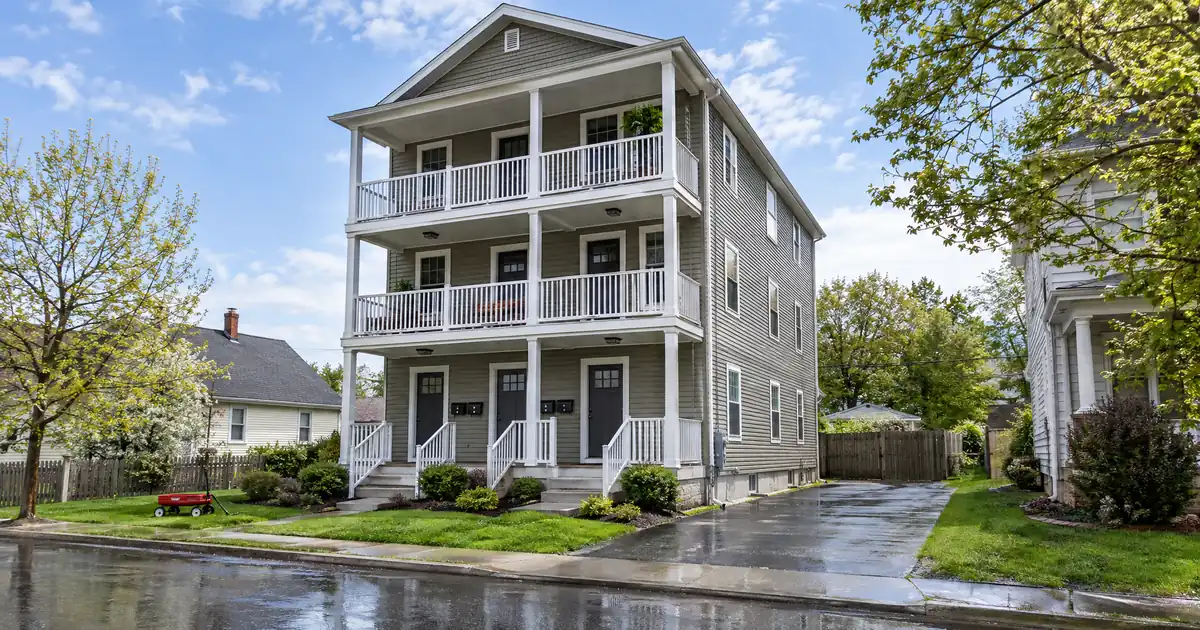
The Quick Read: The two size tiers behave differently on all three fronts: on 2-4 unit rentals, hard money is sized on project cost and capped by after-repair value, draws follow inspected rehab work, and the exit is usually a rental refinance, while 5-10 unit buildings shift to income-based value, heavier draw administration and a commercial-style takeout.
- On 2-4 units, the network’s hard money guidelines size fix-and-flip loans at 85% to 93% of project cost, with every tier capped at 75% of after-repair value.
- Draws on both tiers work as reimbursements against inspected work, so the investor fronts each phase.
- The 5-10 unit tier is valued on income, so the stabilized rent roll can matter more than the purchase price.
- The exit decides whether the bridge makes sense, so plan the takeout before the first draw.
Here is the honest answer. A 2-4 unit hard money loan fits the investor doing a conventional-style rehab who plans to sell or refinance into a long-term rental loan. A 5-10 unit loan fits the investor with a value-add plan, a rent roll to document and the working capital to carry a bigger scope. Neither is better in the abstract. Which one wins depends on the plan, the experience level and the takeout.
DSCR Calculator
Run the numbers in your market
Rate source: Freddie Mac 30-yr average via FRED® — Federal Reserve Bank of St. Louis · effective Oct 15, 2026
Prefilled with starting assumptions — enter your own rent or nightly figures, taxes, insurance, and HOA for a more accurate picture.
Program parameters update from Lendmire’s centralized guideline source. Taxes and insurance are editable estimates.
As of Oct 15, 2026 · General Freddie Mac market benchmark, not a Lendmire loan offer. Rent, nightly rate, occupancy, taxes, and insurance are editable estimates. Short-term rental figures are estimates only and vary significantly by season, property type, management approach, and local short-term-rental rules — confirm local regulations before relying on them. Qualifying income for short-term rentals varies by program — some use appraisal market rent, others use documented STR history or projections — and is confirmed in underwriting. Not a Loan Estimate, approval, or commitment to lend. Program availability and eligibility are subject to lender guidelines, credit approval, property review, and underwriting.
One scope note matters before the table. The 2-4 unit figures here come from the hard money guidelines Lendmire works from through select lenders in its wholesale network, across 41 markets including Washington, D.C. In that program sheet, collateral is non-owner-occupied residential property of one to four units, and ground-up construction can run up to ten units. The 5-10 unit column reflects published industry norms for commercial-style bridge lending, which vary by lender, property and experience.
Side-by-Side
| Factor | 2-4 Unit (network guidelines) | 5-10 Unit (industry norms) |
|---|---|---|
| Review basis | Asset-based: property, plan, exit | Asset-based, plus income analysis |
| Valuation method | Comparable sales and rent schedule | Income approach (NOI and cap rate) |
| Leverage sizing | Loan-to-cost, capped by after-repair value | Cost and stabilized value, more conservative |
| Documentation | Scope, budget, entity papers | Rent roll, operating statements, scope |
| Entity vesting | LLC typical, subject to program eligibility | LLC typical, often with experience review |
| Draws | Inspected phases, reimbursed after work | Same logic, more trades and units |
| Reserve expectations | Vary by lender and experience | Often heavier, varies by lender |
| Usual exit | Sale or DSCR loan refinance | Sale or commercial and agency takeout |
None of these rows is a pricing row, and that is deliberate. Pricing lives in the calculator, and it moves with the property, the borrower and the lender. A cheaper-looking structure that cannot be taken out is the expensive one.
Key Terms Defined
Loan-to-cost (LTC): the loan amount as a share of total project cost, meaning purchase plus rehab budget.
After-repair value (ARV): the estimated value of the property once the planned work is finished.
Holdback: the rehab budget the lender keeps at closing and releases as inspected work is completed.
Net operating income (NOI): rent less operating expenses, before debt service, used to value buildings of five or more units.
Takeout: the longer-term loan or sale that pays off the short-term loan.
DSCR: the ratio of rent to the full monthly obligation of principal, interest, taxes, insurance and any association dues.
How Does Leverage Work at Each Size?
Leverage is a stack, not one number. The initial advance, the rehab holdback, total project cost and the after-repair cap each limit the loan, and the smallest limit wins.
On 2-4 units, the network’s fix-and-flip guidelines tier by documented experience. Investors with five or more completed projects can reach 93% of project cost. Investors with two or more can reach 90%. Investors with fewer than two sit near 85%. Every tier is capped at 75% of after-repair value. A bridge purchase with no rehab runs up to 80% of the purchase price. A cash-out or rate-and-term refinance on a hard money loan runs up to 65% of value. Loan amounts go up to $5,000,000, and larger by exception. All of these vary by lender, property and experience, and none is a commitment to lend.
The cap that binds first is the part many investors miss. On a thin-margin flip, the 75% after-repair cap usually binds before the cost tier does. On a deeper discount purchase with a large scope, the cost tier can bind first. Up to 100% of the rehab budget funds in draws against completed work. That is a rehab-budget figure, and it is never a purchase-price ceiling. There is no true 100% purchase program.
On 5-10 units, the stack has a different weak link. LoopNet notes that valuation moves from comparable sales at 2-4 units to the income approach, NOI divided by cap rate, at five units and above. If the appraiser’s NOI comes in under the investor’s pro forma, the value shrinks and the loan shrinks with it. The investor then covers the gap with equity. Industry norms for commercial bridge loans are generally more conservative than the top 2-4 unit tiers, and they depend on the lender and the borrower’s track record.
Consider a scenario with the same purchase price and the same scope at four units and at eight units. The four-unit file is judged on comparable sales and a rent schedule. The eight-unit file is judged on what the building earns after stabilization. The eight-unit buyer can be right on the plan and still be short on the number.
How Do Draws Differ Between the Two Tiers?
Draws work the same way in principle at both sizes: the lender holds the rehab budget and pays it out against inspected work. The difference at 5-10 units is volume, because more units and more trades mean more draw requests and more ways for one to stall.
A draw-management software provider’s FAQ describes the holdback as the renovation budget kept at closing and paid as inspected work is completed. It also explains that most hard money draws are reimbursements. The borrower pays for a phase, submits a request and is repaid after inspection. If the inspection shows less work than requested, the lender may fund part of the draw, hold it or ask for a revised request.
Practitioner sequence is the same on either tier:
1. Submit a line-item scope and budget before closing.
2. Complete and pay for a phase of work.
3. Submit the draw request with lien waivers and photos.
4. Pass the inspection.
5. Receive the release.
The working-capital point is the one that catches people. Because draws reimburse, the investor fronts each phase. A four-unit scope may be one or two crews. An eight-unit scope can run several trades at once, with occupied units turning over in sequence. Float needs scale with the scope, so an investor who sizes the loan correctly but not the cash cushion can stall mid-project. Missing lien waivers, work that does not match the scope and unrecorded change orders are the usual reasons a draw gets held. Those problems cost more on a bigger job.
Interest-only terms of 6 to 18 months, with no prepayment penalty, are the network’s structure on the hard money sheet. There are no multi-year options on the current program. A larger scope running late is therefore a bigger risk than the same delay on a small one.
When 2-4 Unit Hard Money Is the Better Fit
The 2-4 unit tier is the better fit when the investor wants the highest documented leverage on cost, a simpler valuation and a standard rental refinance as the exit. It also suits first-time and mid-experience investors who qualify at the lower tiers.
Four situations tend to point here:
- The investor is building a track record. Leverage tiers reward completed projects, and a first-time investor can qualify at the lower tier. The top tier is reserved for experienced investors.
- The scope is manageable. One to three trades, units turned over together or in a short sequence, and a budget that one draw schedule can handle.
- The exit is a rental loan. At 2-4 units, LoopNet lists conventional, FHA and VA options for owner-occupants plus investor DSCR financing. For a pure rental, the investor DSCR loan is the practical takeout.
- The numbers depend on the after-repair cap. Comparable sales usually make that value easier to defend.
There is a flip point. If the building has only four units today, but the investor’s pro forma depends on adding a fifth or on a mixed-use conversion, the 2-4 structure may not carry the project. Gray-zone cases such as an accessory unit on a fourplex or an owner occupying one unit change the classification, so confirm them with the lender before relying on any structure. Owner-occupancy also changes the compliance picture, and that is a question for counsel.
When 5-10 Unit Hard Money Is the Better Fit
The 5-10 unit tier is the better fit when the opportunity is a value-add building where the rent roll, not the purchase price, drives value, and when the investor has the experience, reserves and working capital to carry a larger scope.
Industry practice treats five units and above as commercial. A property with five or more units is treated as commercial real estate, and lenders there underwrite property income, coverage, debt yield, NOI trends and rent roll quality. Lenders on 2-4 units focus more on the borrower. In hard money, 2-4 unit files are still largely about the asset and the plan, but the 5-10 file moves further toward the building’s income.
A short business-purpose note applies here. Hard money and DSCR loans are designed for non-owner-occupied investment properties. Because they are business-purpose investor loans, they are reviewed differently from a standard owner-occupied mortgage. The FDIC’s interagency exam procedures say credit extended to acquire or improve non-owner-occupied rental property is business-purpose credit. That treatment applies at both size tiers, so unit count changes the underwriting and the appraisal but not the business-purpose status. Loan classification and tax treatment are also separate questions, and tax treatment varies, so consult a qualified professional.
Three situations tend to point to this tier:
- The deal is a stabilization play. The value comes from fixing vacancy or below-market rents, and the pro forma is credible and documented.
- The investor wants commercial-style takeout options. According to LoopNet, permanent options at 5+ units include bank, agency, HUD and CMBS financing.
- The investor has done this before. Larger scopes reward people who already manage draws, inspections and tenant turnover.
The flip point is the takeout. LoopNet reports a 1.20 minimum coverage ratio on commercial bank and agency loans. By contrast, a DSCR loan in the network typically starts at 1.00 coverage on select programs. A building that stabilizes at 1.05 coverage may fit a DSCR loan but miss a commercial takeout, and the reverse can also be true. The two are different tests, so run both before buying.
Ground-up construction is the one place the network’s hard money sheet reaches ten units. It runs up to 90% of cost and 75% of completed value at three or more completed projects, subject to lender guidelines and experience.
Where Does the Exit Break?
The exit breaks when the stabilized property does not meet the takeout’s test, and the fix is to test the takeout before buying the bridge. For most 2-4 unit rentals, the takeout is a DSCR loan.
The network’s DSCR figures are the ones to use. A DSCR loan on an investment property typically allows cash-out up to 75% LTV with about 6 months of ownership seasoning, counted from title recording. A DSCR rate-and-term refinance on an investment property can run up to 85% LTV, with no cash back at closing. Coverage typically starts at 1.00 on select programs, and a separate select-lender path takes coverage below 1.00 with leverage and terms adjusted. Credit tiers run from a 620 floor up through 700, and most programs want about 660. Reserves are commonly about 6 months of PITIA, stepping up to about 9 months above $1,500,000. Standard programs go up to $3,000,000. Each is subject to lender guidelines. The distinction from hard money is plain: the 65% hard money refinance ceiling is about value on a short-term loan, while the DSCR loan is the permanent exit.
Many investors refinance out of hard money into a DSCR loan once the property is stabilized. Lendmire brokers that path through its hard money exit refinance program, and it is worth reading before choosing the bridge.
Clearing 1.00 does not mean positive cash flow. DSCR compares rent to PITIA only, so repairs, vacancy, management and capex sit outside it. A property can clear the number and still be thin.
Common break points, and the mitigation for each:
- Value comes in below the pro forma at 5-10 units. Underwrite the building on in-place and stabilized NOI before bidding, and keep an equity cushion.
- The takeout coverage misses. Test rent against the full monthly obligation, including taxes and insurance, before closing the bridge.
- The rehab runs late. A 6 to 18 month term has no multi-year fallback, so budget extra months of carry.
- Lease-up lags. A takeout needs a leased property with verifiable income, so lease-up must finish before the refinance, not after.
- Seasoning is not met. A cash-out DSCR refinance generally wants about 6 months of ownership, so a quick exit before that point may not be possible and the timeline should account for it.
How underwriting changes between sizes also affects the takeout. Lendmire’s explanation of how DSCR underwriting shifts between 2-4 unit and 5-10 unit properties walks through that split.
The Balanced Verdict
Neither tier is the safer choice by default. The 2-4 unit tier offers the clearest leverage ladder, a simpler valuation and a familiar rental refinance. The 5-10 unit tier can fit a larger value-add plan, but the leverage depends on income-based value, the draws need more working capital, and the takeout is a commercial-style decision.
Choose 2-4 units if the plan is a manageable rehab with a rental or sale exit and the investor is still building experience. Choose 5-10 units if the thesis rests on stabilizing income and the investor can defend the rent roll, carry the float and test the commercial takeout. If the takeout test is not passing on paper, that is a signal to rework the plan, not the loan. The complete DSCR loans guide covers the long-term side in more depth.
If you are buying, rehabbing or refinancing an investment property on a short timeline and want to see how the numbers work, Lendmire can help you compare hard money options based on the project, the exit plan, leverage, and your goals. Every file is reviewed individually by the lender, and nothing here is a commitment to lend.
Frequently Asked Questions
Is a 5-unit building commercial for lending purposes?
Yes, in most lending practice. Properties with five or more units are treated as commercial real estate. Four units and under are residential. The line is a financing convention, and the building does not change physically at five units.
Can 2-4 unit hard money cover the full rehab?
It can cover up to 100% of the rehab budget through draws against completed work. That is a rehab-budget figure, not a purchase-price figure. Purchase leverage runs 85% to 93% of project cost on fix-and-flips, capped at 75% of after-repair value, varying by lender, property and experience.
Do draws take longer on 5-10 unit projects?
They involve more administration, because there are more units, more trades and often more inspections. The draw logic is the same: pay for a phase, request the draw, pass inspection, get reimbursed. Larger scopes also need more working capital to fund each phase.
Can I refinance a hard money loan into a DSCR loan?
Often, when the property is stabilized and leased. A DSCR loan typically allows up to 75% LTV on a cash-out and up to 85% on a rate-and-term refinance with no cash back, subject to lender guidelines. Coverage typically starts at 1.00 on select programs, and sub-1.00 paths exist through select lenders with adjusted leverage and terms.
What credit score does hard money usually need?
The network’s hard money guidelines start at a 620 minimum, with additional conditions below 660. First-time investors qualify at the lower leverage tiers. Underwriting remains asset-based, so the property, the plan and the exit still carry the file.
About Lendmire
Lendmire, NMLS# 2371349, is a non-QM mortgage broker serving real estate investors in 41 markets, including Washington, D.C., through DSCR investor loan programs. Qualification is generally reviewed around the subject property’s rental income, not the borrower’s W-2 history — a practical fit for LLC-titled portfolios and self-employed investors. All scenarios remain subject to lender review and program guidelines. Two consecutive Scotsman Guide Top Mortgage Workplace recognitions (2025, 2026).
Get Started
Ready to find the right loan for you?
In about 30 seconds you can review financing options available for your investment property. No commitment required.
Informational only. Not a Loan Estimate, approval, or commitment to lend. Program availability and eligibility are subject to lender guidelines, credit approval, property review, and underwriting.
References
1. LoopNet: Is Multifamily Commercial?
2. RAZE construction draw inspection process FAQ
3. LoopNet
4. FDIC TILA interagency exam procedures
This article is part of Lendmire’s hard money loan program — full qualification details, guidelines, and scenarios live on the program page.
Related reading: Can a DSCR Lender Release a Detached Unit From the House? · How to Document Private Loan Money on Your First DSCR Rental Loan · How to Make a DSCR Cash-Out Cover Your Hard Money Note and Rehab Cards
Brandon Miller
Founder & CEO, Mortgage Loan Originator, Lendmire LLC
- Mortgage Loan Originator · NMLS# 1129696 · Verify on NMLS Consumer Access
- North Carolina Real Estate Broker · License# 343312 · Verify on NCREC
- North Carolina Insurance Producer · License# 19053198 · Property, Casualty, Life, Health · Verify on NAIC SBS
- Lendmire LLC · Firm NMLS# 2371349 · Verify firm licensure
Disclosure information. Lendmire is a state-licensed mortgage brokerage under NMLS# 2371349. Lendmire is not a depository institution, direct lender, or financial advisor — all loans referenced are placed through wholesale lender partners and are subject to each lender's underwriting standards. This article is provided for general informational purposes and is not a commitment to lend, nor does it constitute financial, legal, or tax advice. Loan programs, terms, rates, and qualification standards change without notice and depend on borrower profile, property type, and the state in which the subject property is located. Equal Housing Opportunity provider. NMLS Consumer Access: nmlsconsumeraccess.org.