
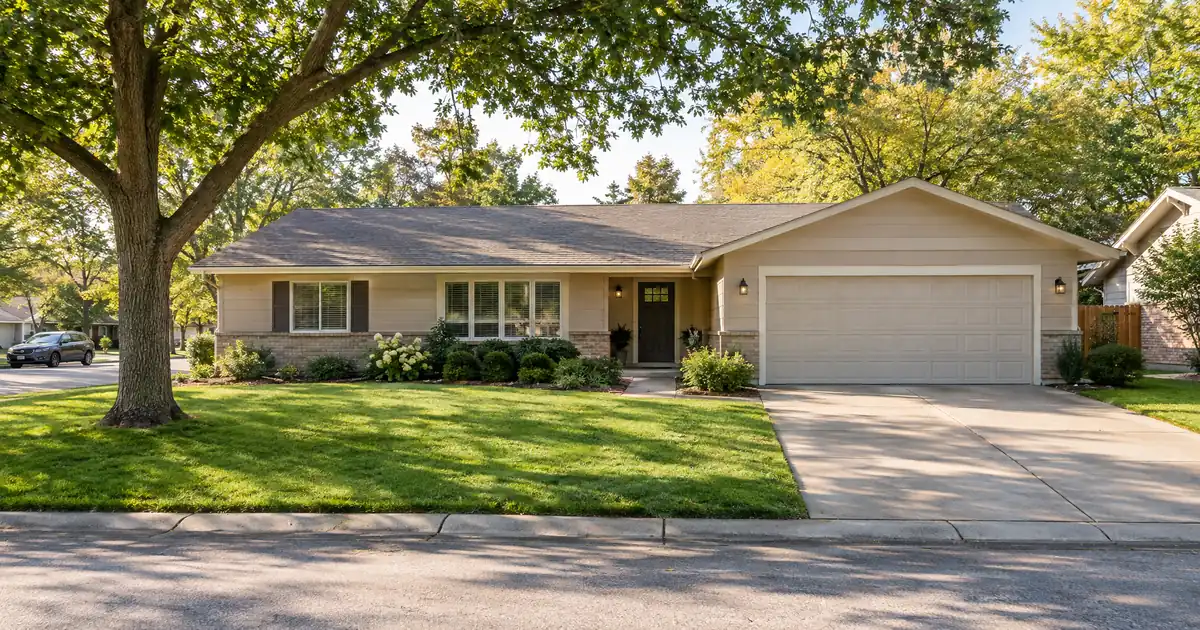
The Quick Read: A DSCR loan is reviewed primarily on property-level rental income covering the payment, subject to lender guidelines. Most Pocono deals come down to one question: can the income you plan to count be documented and legally earned? Standard purchases typically run 75%-80% LTV. Short-term rentals run tighter, and local rules and HOA covenants can change the answer from one property to the next.
Key Takeaways
- DSCR (debt service coverage ratio) compares a property’s rent to its full monthly housing payment. Your personal income is not the test.
- The Poconos are mostly a short-term-rental (STR) underwriting question, because so many buyers plan vacation stays.
- Lenders usually discount projected STR income before counting it. The AirDNA-style number is not your qualifying income.
- Clearing 1.00 does not mean the property cash flows. Repairs, vacancy, management, and utilities sit outside the math.
- Log homes are not offered in the network’s DSCR programs, and the Poconos have plenty of cabins. Check construction type early.
What Actually Decides a Poconos DSCR Deal?
The property’s income decides it. The lender looks at what the building earns against what it costs to carry, and it does not weigh your traditional personal-income documentation. DSCR loans are designed for non-owner-occupied investment properties. Because they are business-purpose investor loans, they are reviewed differently from a standard owner-occupied mortgage.
DSCR Calculator
Run the numbers in Pennsylvania
Rate source: Freddie Mac 30-yr average via FRED® — Federal Reserve Bank of St. Louis · effective Sep 24, 2026
Prefilled with starting assumptions — enter your own rent or nightly figures, taxes, insurance, and HOA for a more accurate picture.
Program parameters update from Lendmire’s centralized guideline source. Taxes and insurance are editable estimates.
As of Sep 24, 2026 · General Freddie Mac market benchmark, not a Lendmire loan offer. Rent, nightly rate, occupancy, taxes, and insurance are editable estimates. Short-term rental figures are estimates only and vary significantly by season, property type, management approach, and local short-term-rental rules — confirm local regulations before relying on them. Qualifying income for short-term rentals varies by program — some use appraisal market rent, others use documented STR history or projections — and is confirmed in underwriting. Not a Loan Estimate, approval, or commitment to lend. Program availability and eligibility are subject to lender guidelines, credit approval, property review, and underwriting.
The income comes from one of three places:
- A signed lease.
- An appraiser’s market rent.
- For short-term rentals, booking-platform history or an AirDNA-style projection.
The Poconos lean toward the third. The region spans Monroe and Pike counties, and it is a vacation market. Local reporting on the Pocono Mountains Association of Realtors’ annual housing report noted that many new listings were former short-term rentals bought by investors during the pandemic. Plenty of sellers and buyers are working the same playbook.
If you are new to the product, the complete DSCR loans guide covers the basics. This article stays on how those basics play out in Pocono deals.
How Does Underwriting Treat Pocono Rental Income, Step by Step?
Underwriting follows a fixed sequence: pick the income basis, run the ratio, discount any projection, confirm the income is allowed, then let the appraisal test it. Each step can move the number. Here is how it runs.
Step 1: Pick the income basis. A long-term rental uses a lease or the appraiser’s rent schedule. The appraisal form depends on the property. A single-family home gets the 1007 rent schedule. A two-to-four-unit building gets the 1025 operating income statement. STR files lean on booking history or a projection tool.
Step 2: Run the ratio. Divide the rent used for lender review by PITIA, which is principal, interest, taxes, insurance, and any HOA dues. Rent that lands right at the payment reads as 1.00x. Rent well above it reads higher, and stronger coverage opens better pricing and leverage.
Step 3: Discount the projection. A projection is a forecast, not a track record. Lenders usually haircut it before counting it, and the size of that haircut varies by program. Many investors get surprised by this. The gap between the AirDNA number and the number the lender counts can be wide.
Step 4: Confirm the income is allowed. Short-term rental rules can vary by city, county, HOA, and property type, so investors should confirm local rules before relying on projected rental income. Pennsylvania has no statewide STR licensing framework, per The Short Term Shop’s Poconos regulations guide, so each municipality sets its own terms. Monroe County even published a model STR ordinance for towns to adopt, with permit prerequisites such as a sales and use tax permit and a recorded deed.
Step 5: Let the appraisal test it. Vacation and remote properties can be harder to value because comparable sales may be sparse. A thin comp set can pull the value below the contract price.
Key Terms Defined
DSCR (debt service coverage ratio): The property’s rent used for lender review divided by its monthly PITIA payment.
PITIA: Principal, interest, taxes, insurance, and association dues, added into one monthly obligation.
LTV (loan-to-value): The loan balance as a percentage of the property’s value.
Reserves: Liquid savings the lender wants you to hold after closing, usually counted in months of PITIA.
Seasoning: The waiting period between owning a property and refinancing it.
Hosting history: A track record of bookings on a platform like Airbnb or VRBO, which lenders use to document STR income.
Where Do the Financing Numbers Land?
Standard rentals and short-term rentals sit on different tiers, and STR files run tighter across the board. These are typical ranges from select programs in the wholesale network Lendmire places files with, subject to lender guidelines. They are not commitments to lend.
| Factor | Standard rental | Short-term rental |
|---|---|---|
| Purchase LTV | Typically 75%-80% | Up to 75% |
| Cash-out ceiling | About 75% | About 70% |
| Credit score | Around 660 typical | 640+ expected |
| Income history | Lease or rent schedule | About 12 months hosting |
A few more parameters matter for Pocono cabins and chalets:
- Coverage floor. Some programs start at 1.00 on STR purchases, and STR refinances carry a 1.00 floor of their own. Stronger ratios earn better terms.
- Credit. A 620 floor exists in parts of the network. Most programs want around 660, and 700+ unlocks the strongest leverage tiers.
- High-leverage purchases. Select programs reach 85% LTV with roughly a 700+ score. These are for standard rentals, not STR collateral.
- Loan size. Standard programs run up to $3,000,000. Above $2,500,000 the network generally holds to 30-year fixed structures.
- Reserves. These vary by lender, leverage, loan size, and transaction type. About 6 months of PITIA is common. Loans above $1,500,000 typically step up to about 9 months. Conservative rate-and-term files at modest leverage under that size can see reserves waived.
- Structures. The 30-year fixed is the spine. Extended terms, interest-only periods, and ARM options are available through select lenders.
A bigger down payment lowers the payment and can lift the coverage number. It never erases leverage caps, credit floors, reserve rules, or property eligibility. The strongest files clear both tests, enough equity and enough rental coverage.
Three Pocono Towns, One Loan, Different Questions
The loan mechanics do not change between Lake Harmony, Stroudsburg, and Milford. The property questions do.
Lake Harmony is resort-flavored vacation territory. Buyers there typically underwrite STR income, so hosting history, projection discounts, and HOA covenants carry the file. Parcel-level zoning matters, so verify it property by property.
Stroudsburg mixes borough streets and surrounding townships. That makes it a decent fit for long-term rental underwriting on a lease or appraiser rent schedule. Borough and township lines matter, because neighboring municipalities write their own rules.
Milford sits in Pike County, a different county from Stroudsburg, with its own municipal rules and a different visitor pattern. The same loan tiers apply in each of these towns. Every state takes the standard purchase tiers above, and the network carries no state-specific LTV overlay.
The takeaway: do not underwrite “the Poconos.” Underwrite the parcel.
Where the General Rule Breaks
Most Pocono surprises come from a short list of edge cases. Here is the list, roughly in order of how often they derail files.
HOA covenants can override the township. A township may allow STRs while the community you are buying into bans short-term rentals, even brief stays. The Short Term Shop guide calls this one of the most common mistakes Poconos investors make. Get the covenants before you go under contract, since timing on any file varies by lender and by how quickly those documents are produced.
Log homes are out. The network’s DSCR programs do not offer log homes. The same goes for manufactured homes (single- and double-wide) and barndominiums. A rustic Pocono cabin that is actually a log home is not offered, however strong its bookings.
Thin comps and turnkey premiums. Local brokers report that proven, turnkey Airbnbs command premium pricing, and that appraisals can come in below the contract price. That is practitioner commentary, not hard data, but it matches what a thin-comp appraisal can do. If the value comes in short, the gap is your cash. Some investors bridge it with private money. Budget for it either way.
Seasonality. Vacation demand swings by month. That is why lenders lean on annualized figures and not on a peak summer month. A file built on a July screenshot will get corrected.
Missing compliance paperwork. If a required license or tax registration is missing, the lender may not count the STR income at all. Line up those documents early.
The fallback is long-term rent. If STR income cannot be documented or is not allowed, the deal may have to qualify on long-term market rent. Vacation-market rents can leave coverage thin. Coverage below 1.00 is available through select lenders in the network, with leverage and terms adjusted.
DSCR vs. conventional financing
Two common ways to finance an investment property in this market. They qualify you differently — here’s how investors weigh them.
Why investors choose it
- Qualifies on the property’s rental income — no personal tax returns, W-2s, or pay stubs needed to document income.
- No personal debt-to-income ceiling to clear, so existing mortgages and obligations don’t cap your borrowing the same way.
- Can be closed in an LLC, keeping the property inside a business entity.
- Built for scaling — not held to the limit on number of financed properties that conventional financing applies.
- Underwriting centers on the deal: generally qualifies when the rent covers the payment, a 1.00x coverage ratio being a common baseline (confirmed in underwriting).
- Designed specifically for investment property, including long-term and, where the program allows, short-term rentals.
Where it’s strong
- Often the lowest ongoing financing cost for a buyer who fully qualifies on personal income — a fit for a first property or a cost-first purchase.
Trade-offs for investors
- Requires full personal income documentation and must fit within a debt-to-income limit — salary, existing debts, and other mortgages all count.
- Typically held in your personal name rather than a business entity.
- Caps how many financed properties you can carry, which can become a ceiling as a portfolio grows.
- Evaluates you as a borrower as much as the property, which usually means more paperwork.
How investors usually choose: a first or single property often optimizes for the lowest financing cost; portfolio builders often optimize for leverage, vesting in an LLC, and scaling past conventional caps. The right answer depends on your goals, the property, and current guidelines — both paths run through select lenders in Lendmire’s wholesale network, with eligibility and terms confirmed in underwriting.
DSCR is not cash flow. Clearing 1.00 only proves rent covers PITIA. Repairs, vacancy, management, utilities, and capex sit outside the ratio. A cabin can clear the test and still lose money after a slow shoulder season.
A Modeled Scenario
Picture an investor buying a chalet-style home in a resort community at 75% LTV as an STR purchase. Assume the borrower has a 700 score and reserves in the normal range. Terms vary by lender guidelines, property type, leverage, credit profile, and full file review.
The projection from a tool like AirDNA looks strong. After the lender discounts it, coverage lands around 1.1x. That clears the 1.00 floor on a select STR purchase program.
Now change one thing. The HOA covenant restricts short-term rentals, so the STR income disappears from the file. Rent used for lender review falls back to the appraiser’s long-term estimate, and coverage slides toward 0.9x.
Same house, same borrower, very different loan. At that point, a sub-1.00 program through select lenders may be worth reviewing, with lower leverage and adjusted terms. Qualification stays subject to lender guidelines, credit approval, and property review.
The buyer who caught the covenant before contract keeps the option to walk. The buyer who found it at appraisal does not.
What the Investor Decision Looks Like in Practice
Work in this order:
1. Confirm the construction type. Log homes, manufactured homes, and barndominiums are not offered.
2. Get the HOA covenants. Read the rental language before anything else.
3. Check local rules for the parcel. Confirm any license, tax registration, or inspection requirement.
4. Decide the income basis. STR history, projection, or long-term lease.
5. Run coverage conservatively. Use the discounted number, not the peak.
6. Size the cash. Down payment, reserves, and a possible appraisal gap.
7. Then compare loan options. Compare leverage, structure, and coverage tiers across lenders.
Tax treatment can depend on how the funds are used and how the property is held; investors should keep clear records and speak with a qualified tax professional before relying on any deduction.
One more practitioner note. DSCR files in vacation markets usually get stronger when the paperwork shows up before the appraisal. The file that arrives with the lease or hosting history, the entity documents (subject to program terms if the property is held in an LLC), and proof of insurance has fewer moving parts. It also has fewer chances to surprise you.
Next Step
If you are buying or refinancing a rental property and want to see how the numbers work, Lendmire, a DSCR-focused mortgage broker with investor programs in 41 markets including Washington, D.C., can help you compare DSCR loan options based on the property income, credit profile, leverage, and investor goals. You can request a quote or call 828-256-2183.
This article is general information, not legal or tax advice. Consult a qualified professional, such as an attorney or CPA, about your own situation.
Frequently Asked Questions
Can I get a DSCR loan on a Pocono Airbnb with no hosting history?
It is sometimes possible. Lenders may accept an AirDNA-style projection, but they usually discount it before counting it. Programs also tend to want about 12 months of hosting history on STR files, so a brand-new listing is a harder fit. Eligibility depends on the lender, the property, and your credit.
How much down payment does a Pocono STR need?
Short-term rental purchases run up to 75% LTV, so plan on at least 25% down. Standard long-term rentals typically run 75%-80% LTV, meaning 20%-25% down. Select high-leverage programs reach 85% LTV for standard rentals with roughly a 700+ score. Reserves and credit standards apply on top of that.
Does clearing 1.00 mean the cabin will make money?
No. The ratio compares rent to PITIA only. Repairs, vacancy, management, utilities, and capex are outside it. Think of 1.00 as the point where rent covers the payment, not the point where you profit.
Will a lender count STR income if the HOA or town restricts rentals?
Often not. If the income cannot be documented as allowed, the file may fall back to long-term market rent.
Can I finance a log cabin in the Poconos with a DSCR loan?
No. Log homes are not offered in the network’s DSCR programs, and neither are manufactured homes or barndominiums. A conventionally built cabin is a different story. Confirm the construction type before you write an offer.
About Lendmire
Lendmire is a non-QM mortgage brokerage (NMLS# 2371349) arranging DSCR investor loans in 41 markets, including Washington, D.C. DSCR eligibility is generally reviewed around property-level rental income rather than personal income, subject to lender and program guidelines, making it a fit for self-employed investors and LLC-owned portfolios. Lendmire was recognized as a Scotsman Guide Top Mortgage Workplace in 2025 and 2026.
Scotsman Guide’s Top Mortgage Workplace lists for 2025 and 2026 document Lendmire’s recognition.
Get Started
Ready to find the right loan for you?
In about 30 seconds you can review financing options available for your investment property. No commitment required.
Informational only. Not a Loan Estimate, approval, or commitment to lend. Program availability and eligibility are subject to lender guidelines, credit approval, property review, and underwriting.
References
1. WNEP, Monroe County housing market trends
2. The Short Term Shop, Poconos short-term rental regulations
3. Monroe County, Short-Term Rental Model Ordinance
This article is part of Lendmire’s DSCR loan program — full qualification details, guidelines, and scenarios live on the program page.
Related reading: Cash Out Refinance Investment Property in Pennsylvania · DSCR Cash Out Refinance Pennsylvania · DSCR Loans in Harrisburg, Pennsylvania: Investor Financing for Midtown, Camp Hill, Mechanicsburg & Real Estate Investors
Guides: DSCR Loans in Pennsylvania
Brandon Miller
Founder & CEO, Mortgage Loan Originator, Lendmire LLC
- Mortgage Loan Originator · NMLS# 1129696 · Verify on NMLS Consumer Access
- North Carolina Real Estate Broker · License# 343312 · Verify on NCREC
- North Carolina Insurance Producer · License# 19053198 · Property, Casualty, Life, Health · Verify on NAIC SBS
- Lendmire LLC · Firm NMLS# 2371349 · Verify firm licensure
Legal disclosures. Lendmire (NMLS# 2371349) is a state-licensed mortgage brokerage that arranges financing through wholesale lender relationships. Lendmire is not a direct lender, depository institution, or registered financial advisor. The discussion above is general informational content about real estate financing — it is not financial, legal, or tax advice, and readers should consult licensed professionals for guidance on their individual circumstances. Loan inquiries are subject to lender underwriting; this article does not represent a commitment to lend. Loan terms, rates, and qualification standards vary by borrower, property, and state, and are subject to change at any time. Equal Housing Opportunity. NMLS Consumer Access: nmlsconsumeraccess.org.