
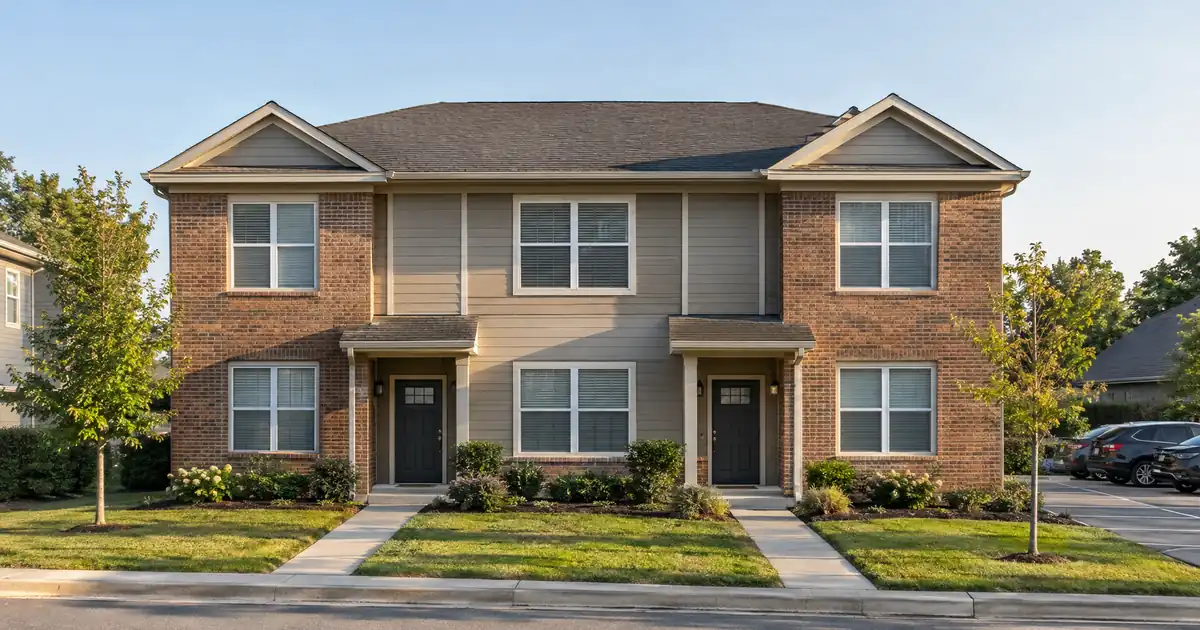
The Quick Read: A DSCR cash-out refinance on a multifamily property pulls equity out of a rented building using the property’s own rent roll, not the owner’s traditional personal-income documentation. Across select lenders in Lendmire’s wholesale network, cash-out on multifamily collateral generally tops out near 75% loan-to-value, asks for roughly six months of ownership seasoning, and runs on a coverage ratio — rent divided by the full monthly housing payment — that starts around 1.00x on select programs. How that file gets built changes sharply once a property crosses from four units into five, and that split runs through almost every step below.
Key Takeaways
- Cash-out proceeds on multifamily rental property are capped near 75% LTV on most of the network’s programs, regardless of how strong the appraisal comes in.
- About six months of ownership, counted from the recorded deed, is the common seasoning window before cash-out funds become available.
- Coverage is measured as rent against principal, interest, taxes, insurance, and HOA dues — not against the operating income a bank uses on a large apartment building.
- A 2-4 unit property is underwritten as small residential income real estate. A 5+ unit property moves into commercial-style underwriting entirely, with a different appraisal instrument and a different income analysis.
- Reserves usually run near six months of the full monthly payment, stepping up toward nine months on loans above $1,500,000.
How the Multifamily Cash-Out Refinance Actually Moves Through Underwriting
Every file starts with unit count, because unit count decides which lane the loan travels down. A duplex, triplex, or fourplex still qualifies as small residential income property. A five-unit building or larger exits that lane and becomes commercial multifamily. This changes the appraisal form, the income analysis, and often the type of lender reviewing the file. Here is the sequence a typical multifamily cash-out file follows.
DSCR Cash-Out Calculator
Run the cash-out numbers in your market
Rate source: Freddie Mac 30-yr average via FRED® — Federal Reserve Bank of St. Louis · effective Sep 17, 2026
Prefilled with starting assumptions — enter your property’s value, balance, taxes, and insurance for a more accurate picture.
Program parameters update from Lendmire’s centralized guideline source. Taxes and insurance are editable estimates.
As of Sep 17, 2026 · General Freddie Mac market benchmark, not a Lendmire loan offer. Property value, balance, taxes, and insurance are editable estimates. Maximum loan-to-value varies by lender, program, property type, and seasoning. Not a Loan Estimate, approval, or commitment to lend. Program availability and eligibility are subject to lender guidelines, credit approval, property review, and underwriting.
1. Property classification. The underwriter sorts the file by unit count first. This single decision sets the appraisal form and the documentation path for everything downstream.
2. Appraisal and rent verification. On a 2-4 unit building, the appraiser typically completes a small residential income property report, which includes its own built-in rent comparison grid rather than relying on a separate rent schedule. On a 5+ unit building, the appraisal shifts toward an income approach built around trailing operating statements, rent rolls, and vacancy history.
3. Coverage calculation. The lender totals rent used for lender review across every unit and divides it by the new loan’s full monthly obligation — principal, interest, taxes, insurance, and HOA where applicable. That ratio is the file’s coverage number, and select programs will start reviewing files at a 1.00x floor, with stronger ratios generally opening better leverage.
4. Seasoning and title check. Cash-out on multifamily property typically requires about six months of ownership, measured from the recorded deed, before the file can pull equity rather than simply refinance the existing balance.
5. Reserves and liquidity. The borrower needs post-closing reserves on hand — commonly around six months of the full monthly payment, sometimes waived on modest-leverage rate-term files under $1,500,000, and stepping up toward nine months above that loan size.
6. Loan sizing at the 75% ceiling. The lender applies the lesser of the appraised value times 75% LTV or the amount the coverage ratio supports. A strong appraisal does not override a weak coverage ratio, and a strong coverage ratio does not override the LTV cap. Exact terms depend on the lender’s guidelines, property type, leverage, and a full review of the borrower’s file.
7. Closing as business-purpose credit. DSCR loans are built for non-owner-occupied investment properties. Because they are business-purpose investor loans, lenders review them differently than a standard owner-occupied mortgage. They also close outside the consumer disclosure process built for owner-occupied refinances. For more detail on this sequence — including how the coverage ratio interacts with credit tier and loan size — see Lendmire’s complete DSCR loans guide.
Key Terms Defined
DSCR (debt-service-coverage ratio): the number produced by dividing the property’s qualifying monthly rent by the full monthly housing payment (PITIA); a ratio above 1.00 means rent covers the payment.
PITIA: principal, interest, taxes, insurance, and association dues — the full monthly obligation the lender measures rent against, not just the loan payment itself.
LTV (loan-to-value): the loan amount expressed as a percentage of the appraised value; on cash-out refinances the network’s ceiling sits near 75%.
Seasoning: the minimum ownership period, measured from the recorded deed, a lender requires before a cash-out refinance is available on a property.
Reserves: liquid funds the borrower must hold after closing, typically expressed in months of PITIA, to cover the property if rent or income temporarily interrupts.
No-ratio loan: a structure that skips the coverage calculation entirely rather than accepting a low one; treated separately from sub-1.00 coverage programs below.
The 2-4 Unit vs. 5+ Unit Divide
This is the biggest structural fork in multifamily DSCR lending. Most investors underestimate how much it changes their file. A fourplex and a five-unit building can sit on the same block and have nearly identical rent rolls. But lenders underwrite them with entirely different playbooks. This business-purpose classification also means DSCR loans are exempt from the standard TRID consumer-mortgage disclosure timeline used on owner-occupied loans. There is no Loan Estimate or Closing Disclosure waiting period attached to the file, unlike on a primary-residence refinance, per the Consumer Financial Protection Bureau’s regulatory text on business-purpose credit.
On the 2-4 unit side, the file behaves like a residential DSCR loan with more units attached. The appraisal uses a small residential income property report with its own rent comparison grid. The coverage math adds up rent across all units and compares it against one blended PITIA figure. Across Lendmire’s wholesale network, most 2-4 unit cash-out files land at or near the 75% LTV ceiling. Credit is generally reviewed around a 620 floor, with stronger tiers at 680 and 700 unlocking better leverage.
Buildings with 5 or more units get a different kind of review. Instead of a simple rent-versus-payment comparison, lenders look at operating statements, vacancy history, and expense ratios. This is similar to how bank examiners are trained to evaluate income-producing commercial real estate under federal supervisory guidance. Files this size often move outside standard DSCR programs entirely. They typically route to dedicated commercial or bank-portfolio lenders instead. The income analysis, loan documents, and reserve structure differ enough that a residential-style DSCR product usually isn’t the right fit. If you’re moving from a fourplex into a larger apartment building for the first time, expect a noticeably different documentation request. Lenders will want trailing twelve-month operating statements and a rent roll with lease-by-lease detail — not just an appraiser’s rent opinion.
This pattern holds fairly consistently across the files that come through select lenders in the network. A well-documented 2-4 unit rent roll with clean, verifiable leases usually clears underwriting with fewer follow-up requests. This is true even compared to a similar file with informal or undocumented rents and a similar raw coverage ratio. Clean paperwork does not raise the ratio. But it does reduce how many times the file bounces back for clarification.
Lendmire’s coverage of multifamily cash-out refinance lenders breaks down how this unit-count split affects which lender type is the right fit for a given property.
What Underwriting Actually Reviews
Beyond unit count and the coverage number itself, several documentation items decide whether a multifamily cash-out file moves cleanly or stalls.
Rent documentation. Underwriters want to see how quoted rent connects to reality — signed leases, a current rent roll, and ideally bank deposits that reconcile against the leases on file. A rent roll listing figures with no lease backup or deposit trail invites a lower, more conservative rent figure from the appraiser.
Vacancy and tenant concentration. On any multifamily file, a unit sitting vacant at application, or one tenant occupying a large share of total rentable space, gets flagged and often adjusted downward in the income analysis rather than taken at face value.
Entity ownership and seasoning credit. Many investors hold rental property inside an LLC, subject to program eligibility. When a property moves from personal name into an LLC shortly before refinancing, some lenders will still credit the prior personal ownership period toward the seasoning clock, while others restart it — this varies by program, so it is worth confirming before assuming credit carries over.
Reserve verification. The lender wants to see reserve funds sitting in a verifiable account, not committed elsewhere or borrowed from another source at the last minute. A useful nuance on cash-out specifically: some lenders will allow a portion of the cash-out proceeds themselves to satisfy the post-closing reserve requirement, which is a wrinkle unique to refinance transactions rather than purchases, according to investor discussion on BiggerPockets. Every figure here varies by lender and program — guidelines, property type, leverage, and credit profile all apply.
Property condition. Deferred maintenance visible at the appraisal — a failing roof, an inoperable unit, obvious code issues — can trigger repair escrows or a reduced as-is value, which lowers the base the 75% LTV ceiling is applied against. Final terms depend on lender guidelines, property type, leverage, and the borrower’s complete credit picture.
Coverage of multifamily cash-out refinance mechanics goes deeper into how these documentation pieces come together on a live file.
DSCR vs. conventional financing
Two common ways to finance an investment property in this market. They qualify you differently — here’s how investors weigh them.
Why investors choose it
- Qualifies on the property’s rental income — no personal tax returns, W-2s, or pay stubs needed to document income.
- No personal debt-to-income ceiling to clear, so existing mortgages and obligations don’t cap your borrowing the same way.
- Can be closed in an LLC, keeping the property inside a business entity.
- Built for scaling — not held to the limit on number of financed properties that conventional financing applies.
- Underwriting centers on the deal: generally qualifies when the rent covers the payment, a 1.00x coverage ratio being a common baseline (confirmed in underwriting).
- Designed specifically for investment property, including long-term and, where the program allows, short-term rentals.
Where it’s strong
- Often the lowest ongoing financing cost for a buyer who fully qualifies on personal income — a fit for a first property or a cost-first purchase.
Trade-offs for investors
- Requires full personal income documentation and must fit within a debt-to-income limit — salary, existing debts, and other mortgages all count.
- Typically held in your personal name rather than a business entity.
- Caps how many financed properties you can carry, which can become a ceiling as a portfolio grows.
- Evaluates you as a borrower as much as the property, which usually means more paperwork.
How investors usually choose: a first or single property often optimizes for the lowest financing cost; portfolio builders often optimize for leverage, vesting in an LLC, and scaling past conventional caps. The right answer depends on your goals, the property, and current guidelines — both paths run through select lenders in Lendmire’s wholesale network, with eligibility and terms confirmed in underwriting.
Structures and Variations: Sub-1.00 Coverage, No-Ratio, and Blended STR Units
Not every multifamily file clears 1.00x, and the market has built real structures around that reality — but they are not interchangeable.
Sub-1.00 coverage. Programs that accept coverage below 1.00 are available through select lenders in the network, with leverage and terms adjusted to offset the weaker ratio — typically a lower LTV, a larger reserve requirement, or both. A property with rent that falls short of the full payment is not automatically disqualified; it is priced and leveraged more conservatively instead.
No-ratio structures. Separately, no-ratio qualification — skipping the coverage calculation entirely — is available only through select lenders in the network, generally for borrowers who already own a primary residence. This is a narrower path than sub-1.00 coverage and is not something every investor profile qualifies for.
Blended short-term and long-term unit mixes. Some multifamily properties run a mix — a few units on long-term leases, one or two on short-term rental platforms. On cash-out refinances, this split matters for leverage: proceeds tied to short-term rental units typically cap near 70% LTV, while the long-term rental units in the same building follow the standard 75% cash-out ceiling. Short-term rental income also generally needs about twelve months of hosting history and a stronger credit profile — commonly 640 or above — before a lender will count it toward coverage at all. Short-term rental rules can also vary by city, county, HOA, and property type, so investors should confirm local rules before relying on projected short-term income.
Term structures. The backbone across the network is the 30-year fixed loan. Extended 40-year terms and interest-only periods are available through select lenders for investors who want a lower required payment during a hold period, and adjustable-rate structures exist for investors who prefer that trade-off. None of these change the underlying LTV or coverage math — they change how the payment is structured once the loan is sized.
Where the General Rule Breaks: Edge Cases
The 75% LTV, 1.00x coverage, six-month seasoning framework above describes most files. It does not describe all of them.
Ineligible property types. Manufactured homes — both single- and double-wide — along with log homes and barndominiums fall outside these DSCR programs entirely. If a multifamily property includes one of these structures, or a unit within it is built this way, that unit’s income generally cannot be counted, and in some cases the whole property becomes ineligible.
State overlays. A handful of states — Connecticut, Florida, Illinois, and New Jersey — see purchase transactions generally capped near 75% LTV even on standard non-cash-out deals, and overlay-state loan amounts often cap around $2,000,000 regardless of what the property would otherwise support. Investors refinancing in these states should confirm the current overlay before assuming the general 75% cash-out ceiling and $3,000,000 loan-size guide apply without adjustment.
Loan size at the top end. Standard programs across the network generally run up to about $3,000,000. Above roughly $2,500,000, the network generally holds to 30-year fixed structures rather than extended-term or interest-only options — the flexibility available on a smaller loan narrows as the loan size grows.
Portfolio-level versus property-by-property review. Investors refinancing one property inside a larger portfolio should expect the lender to review that property’s own coverage ratio independently, not blend it with income from other holdings. A strong-performing property elsewhere in the portfolio does not offset weak coverage on the property being refinanced.
Alternative to a full refinance. For investors who only need a modest amount of equity rather than a full cash-out refinance, an investment-property HELOC line is worth comparing — those lines cap at $500,000 total across the network, with no higher tier available above that threshold. It is a smaller tool, but it avoids resetting the loan on the entire property.
Tax treatment on cash-out proceeds can depend on how the funds are used and how the property is held; investors should keep clear records and speak with a qualified tax professional before relying on any deduction.
Making the Decision: When a Cash-Out Refinance Actually Pencils
The math that matters most is not the appraised value — it’s whether the coverage ratio and the 75% LTV ceiling leave enough room to make the exercise worthwhile after reserves are set aside. A property with strong equity but rent that barely clears 1.00x may only support a modest draw, since the coverage ratio, not the appraisal alone, sets the practical ceiling on how much cash actually comes out. These specifics are subject to lender guidelines and a full review of property, leverage, and credit.
Here’s an example. A fourplex is modeled at a $900,000 appraised value and refinanced at the network’s 75% LTV ceiling. Verified rents across all four units produce a coverage ratio near 1.28x. This combination — solid equity plus coverage comfortably above 1.00x — is the profile that tends to move through underwriting with the fewest follow-up requests. Now take a comparable building with the same appraised value but a coverage ratio near 1.02x. It will still likely qualify on select programs. But it will probably come with reduced leverage or additional reserves layered in. Terms vary by lender guidelines, property type, leverage, credit profile, and full file review.
The honest trade-off: pulling cash out lowers remaining equity and can push the coverage ratio down if the new loan amount grows faster than rent does. Investors who run both numbers before applying — the post-refinance LTV and the post-refinance coverage ratio — walk into underwriting with a much clearer picture of what the lender will actually offer.
Are you buying or refinancing a rental property and want to see how the numbers work? Lendmire can help compare DSCR loan options based on the property’s income, credit profile, leverage, and investment goals. Call the team at 828-256-2183 to talk through a specific file. Lendmire arranges DSCR investor financing through select lenders across 41 markets, including Washington, D.C.
Frequently Asked Questions
Does a higher appraisal automatically mean more cash out?
Not necessarily. The loan amount is set at the lesser of 75% of appraised value or the amount the coverage ratio supports, so a strong appraisal paired with thin rent can still cap the draw well below what the LTV ceiling alone would suggest.
Can a LLC-owned multifamily property refinance with cash out?
Yes, subject to lender program eligibility. Most files in the network accommodate LLC-titled ownership, though how prior ownership history counts toward seasoning can vary if the property recently moved from personal name into the entity.
What happens if one unit in a fourplex is vacant at application?
The appraiser and underwriter typically still credit market rent for that unit based on comparable rents in the small residential income appraisal, rather than treating it as zero income — but a pattern of vacancy across multiple units usually draws closer scrutiny.
Is a 5+ unit apartment building eligible for a residential DSCR cash-out refinance?
Generally no. Once a property reaches five units it moves into commercial-style underwriting with a different appraisal and income analysis, and most residential DSCR programs are built around the 2-4 unit small residential income framework instead.
Do reserves have to sit separate from the cash-out proceeds?
Not always. Some lenders will let a portion of the cash-out proceeds themselves satisfy the post-closing reserve requirement, which is a nuance specific to refinance transactions rather than purchase loans.
Investors weighing their equity options can start with cash-out refinance on an investment property.
For how equity extraction works on an investment property, see cash-out refinance on an investment property.
About Lendmire
Lendmire (NMLS# 2371349), a non-QM mortgage broker serving investors in 41 markets including Washington, D.C., helps structure DSCR scenarios commonly evaluated around a property’s rental income rather than personal income paperwork, subject to lender guidelines. A Scotsman Guide Top Mortgage Workplace in 2025 and 2026, Lendmire places loans through wholesale investor lenders and is not a direct lender.
Scotsman Guide’s Top Mortgage Workplace lists for 2025 and 2026 document Lendmire’s recognition.
Get Started
Ready to find the right loan for you?
In about 30 seconds you can review financing options available for your investment property. No commitment required.
Informational only. Not a Loan Estimate, approval, or commitment to lend. Program availability and eligibility are subject to lender guidelines, credit approval, property review, and underwriting.
References
1. Consumer Financial Protection Bureau — Regulation Z, business-purpose credit
2. BiggerPockets — DSCR loan investor discussion
This article is part of Lendmire’s investment property cash-out refinance program — full qualification details, guidelines, and scenarios live on the program page.
Related reading: Apartment Cash Out Refinance · Multifamily Cash Out Refinance · No-Ratio DSCR Loan on Multifamily Properties: A Complete Guide
Brandon Miller
Founder & CEO, Mortgage Loan Originator, Lendmire LLC
- Mortgage Loan Originator · NMLS# 1129696 · Verify on NMLS Consumer Access
- North Carolina Real Estate Broker · License# 343312 · Verify on NCREC
- North Carolina Insurance Producer · License# 19053198 · Property, Casualty, Life, Health · Verify on NAIC SBS
- Lendmire LLC · Firm NMLS# 2371349 · Verify firm licensure
Legal disclosures. Lendmire (NMLS# 2371349) is a state-licensed mortgage brokerage that arranges financing through wholesale lender relationships. Lendmire is not a direct lender, depository institution, or registered financial advisor. The discussion above is general informational content about real estate financing — it is not financial, legal, or tax advice, and readers should consult licensed professionals for guidance on their individual circumstances. Loan inquiries are subject to lender underwriting; this article does not represent a commitment to lend. Loan terms, rates, and qualification standards vary by borrower, property, and state, and are subject to change at any time. Equal Housing Opportunity. NMLS Consumer Access: nmlsconsumeraccess.org.