
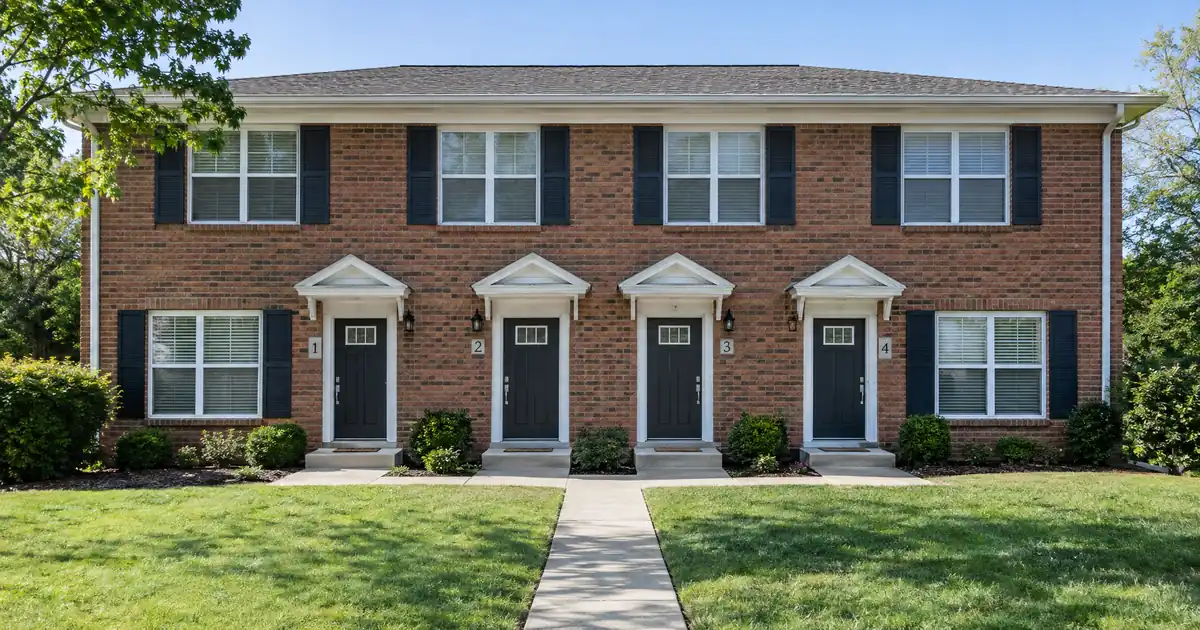
A DSCR loan on a 2-4 unit building qualifies primarily on property-level rental income covering the payment, subject to lender guidelines. Every unit’s rent counts against one PITIA, so small multifamily often produces a stronger ratio than a comparable single-family rental. Most files across the wholesale network run 75%-80% LTV on a purchase, with credit typically around 660 or higher. Sub-1.00 coverage is available through select lenders in the network, with leverage and terms adjusted.
Key Takeaways
- Duplexes, triplexes, and fourplexes are 1-4 unit residential properties. They use residential-style DSCR products, not commercial financing.
- Rent from all units is measured against one payment. That is the whole reason the ratio tends to look better than a single-family rental.
- Most programs use the lower of the in-place lease rent or the appraiser’s market rent.
- The appraisal for 2-4 units is a Form 1025, which carries per-unit rent and value together.
- Clearing 1.00 is not the same as positive cash flow. Repairs, vacancy, management, and capex sit outside the calculation.
What Is a DSCR Loan on a 2-4 Unit Property?
A 2-4 unit DSCR loan is a business-purpose investor loan on a duplex, triplex, or fourplex. It qualifies the property on its rent, not the borrower’s traditional personal-income documentation. Properties with five or more units move into commercial underwriting, which is a different product.
DSCR Calculator
Run the numbers in your market
Rate source: Freddie Mac 30-yr average via FRED® — Federal Reserve Bank of St. Louis · effective Sep 24, 2026
Prefilled with starting assumptions — enter your own rent or nightly figures, taxes, insurance, and HOA for a more accurate picture.
Program parameters update from Lendmire’s centralized guideline source. Taxes and insurance are editable estimates.
As of Sep 24, 2026 · General Freddie Mac market benchmark, not a Lendmire loan offer. Rent, nightly rate, occupancy, taxes, and insurance are editable estimates. Short-term rental figures are estimates only and vary significantly by season, property type, management approach, and local short-term-rental rules — confirm local regulations before relying on them. Qualifying income for short-term rentals varies by program — some use appraisal market rent, others use documented STR history or projections — and is confirmed in underwriting. Not a Loan Estimate, approval, or commitment to lend. Program availability and eligibility are subject to lender guidelines, credit approval, property review, and underwriting.
DSCR loans are designed for non-owner-occupied investment properties. Because they are business-purpose investor loans, they are reviewed differently from a standard owner-occupied mortgage. They are not agency loans either. The only thing they borrow from the agency world is appraisal tooling.
The formula is simple. Monthly rent divided by the full monthly housing cost, which is principal, interest, taxes, insurance, and any association dues. Above 1.00, rent covers the payment on paper. Below 1.00, it doesn’t.
One definition trap. Bank and commercial lending uses a different version, where the ratio is net operating income over debt service, as the OCC’s examination handbook describes it. Residential investor DSCR generally compares gross rent to PITIA. Don’t mix the two when you compare offers.
For the broader program picture, see the complete DSCR loans guide.
How Does Underwriting Treat a Duplex, Triplex, or Fourplex?
Underwriting runs five steps: confirm the property is eligible, order the right appraisal, set the rent, divide by PITIA, then layer on the collateral and borrower checks. The rent conclusion and the payment decide most outcomes.
1. Property eligibility. All units must be investment units. The borrower does not occupy any part of the building. Across the network, that is the base condition for the program.
2. Appraisal order. A 2-4 unit property gets a Form 1025, the Small Residential Income Property Appraisal Report. Appraisal Colorado describes it as the standard report for 2-4 units, with a full interior and exterior inspection, and not for 5+ units. It gives value and per-unit market rent in one document. Single-family rentals use the 1007 instead.
3. Rent determination. Most programs qualify on the lower of the in-place lease rent or the appraiser’s market rent. An above-market lease does not lift the number. A vacant property leans entirely on the appraiser’s rent opinion, because there is no lease to fall back on. Applied per unit, each unit gets its own lower-of figure, and the results are summed.
4. Sum the units, divide by PITIA. Gross rent from occupied units counts. Whether a vacant unit counts on market rent is program-dependent (more on that below). Taxes and insurance on a multi-unit building often run heavier than on a single-family home, and that lands in the denominator.
5. Collateral and borrower layer. The 1025 value sets LTV. Borrowers commonly vest in an LLC, subject to lender program eligibility, and a personal guarantee is common. Credit, reserves, and property type get checked against the program.
The failure mode here is the unit-mix mismatch. If the appraiser pulls comps that don’t match the unit types in the building, say two-bedroom comps for a building of one-bedrooms and a studio, the rent conclusion gets questioned and the file stalls in review. A clean rent roll and a clear unit description help the appraiser get it right the first time.
Why Do Multi-Unit Buildings Often Show a Stronger Ratio?
Because one payment is measured against several rents. A duplex, triplex, or fourplex spreads the debt across more income streams than a single-family rental does. Run the numbers on two buildings at the same purchase price: the one with more doors usually clears a higher coverage number.
Vacancy resilience is the second piece. Picture a fourplex with one empty unit. The other three still produce income, so the ratio may hold. A single-family rental with a vacancy has zero income. That is the structural edge, and it is why investors often step up from single-family to 2-4 units before crossing into commercial.
Each property also is reviewed on its own rent roll. Later purchases are judged the same way as the first, so there is no personal debt-to-income drag building up as the portfolio grows. For the first-purchase angle, Lendmire’s piece on buying a duplex or triplex as a first investment covers that side.
The tradeoff is operating complexity. More tenants, more leases, more maintenance. And here’s the catch: DSCR compares rent to PITIA only. Clearing 1.00 is not positive cash flow. Repairs, vacancy, management, utilities, and capex all sit outside the calculation. Underwrite your own budget separately.
What Leverage, Credit, and Reserves Apply?
Most purchase files on 2-4 units land at 75%-80% LTV, which means 20%-25% down. Select high-leverage programs reach 85% LTV with roughly a 700+ score. Cash-out refinances top out around 75% LTV, with about 6 months of seasoning as the common expectation. All of it is subject to lender guidelines, and nothing here is a commitment to lend.
| Factor | Typical network range |
|---|---|
| Purchase LTV | 75%-80% (85% select, ~700+) |
| Cash-out LTV | Up to 75% on standard rentals |
| Credit score | 620 floor in parts; ~660 common; 700+ best tiers |
| Loan size | Up to $3,000,000 standard |
| Coverage | Sub-1.00 coverage available through select lenders in the network |
Reserves vary by lender, leverage, loan size, and transaction type. About 6 months of PITIA is common. Conservative rate-term files at modest leverage under $1,500,000 can see reserves waived. Loans above that size typically step up to about 9 months. Multi-unit buildings can draw extra scrutiny on reserves as unit count rises, and some lenders limit which unit counts they take at all. A network view helps here, since a broker can route a fourplex to a program that actually wants it.
Above $2,500,000, the network generally holds to 30-year fixed structures. Below that, extended terms and interest-only periods are available through select lenders, and ARMs exist for investors who want them. The 30-year fixed is the spine.
A bigger down payment lowers the payment and can lift the ratio. It does not erase leverage caps, credit floors, reserve rules, or property eligibility. The strongest files clear both tests: enough equity and enough rental coverage.
Not offered in the network: DSCR on manufactured homes (single- and double-wide), log homes, and barndominiums. If your “duplex” is one of those, it falls outside these programs.
Where Does the General Rule Break?
The general rule is “lower of lease or market rent, summed across units, divided by PITIA.” It bends in six places.
Partially vacant buildings. Many programs use the appraiser’s market rent for a vacant unit, so it isn’t counted as zero and every unit doesn’t have to be leased first. Treatment varies by program. Confirm it before you assume it.
Below-market legacy leases. A value-add building with long-term tenants paying under market is reviewed on the lower lease rents today. Qualifying income rises only after leases reset to market. Investors buying these buildings for the upside need to make the ratio work on the current rents.
Sub-1.00 coverage. Available through select lenders in the network, with leverage and terms adjusted. Expect lower LTV and tighter credit. No-ratio structures are a separate path: available only through select lenders, generally for borrowers who already own a primary residence.
Short-term and mixed-use rentals. Standard rent-schedule logic breaks down when a unit is short-term. The short-term rental program runs purchase to 75% LTV, refinance around 70%, and cash-out at 70%. Expect a 640+ score and about 12 months of hosting history. The coverage floor is 1.00 on purchases and 1.00 on refinances. Short-term rental rules can vary by city, county, HOA, and property type, so investors should confirm local rules before relying on projected rental income. Final terms depend on lender guidelines, property type, leverage, and the borrower’s complete credit picture.
Condos, PUDs, and co-ops. The 1025 form covers 2-4 unit properties inside PUD, condo, or co-op projects too, per Stewart Valuation. The project questionnaire then becomes another document to clear.
Five or more units. That’s commercial. Different underwriting, different terms, different article.
DSCR vs. conventional financing
Two common ways to finance an investment property in this market. They qualify you differently — here’s how investors weigh them.
Why investors choose it
- Qualifies on the property’s rental income — no personal tax returns, W-2s, or pay stubs needed to document income.
- No personal debt-to-income ceiling to clear, so existing mortgages and obligations don’t cap your borrowing the same way.
- Can be closed in an LLC, keeping the property inside a business entity.
- Built for scaling — not held to the limit on number of financed properties that conventional financing applies.
- Underwriting centers on the deal: generally qualifies when the rent covers the payment, a 1.00x coverage ratio being a common baseline (confirmed in underwriting).
- Designed specifically for investment property, including long-term and, where the program allows, short-term rentals.
Where it’s strong
- Often the lowest ongoing financing cost for a buyer who fully qualifies on personal income — a fit for a first property or a cost-first purchase.
Trade-offs for investors
- Requires full personal income documentation and must fit within a debt-to-income limit — salary, existing debts, and other mortgages all count.
- Typically held in your personal name rather than a business entity.
- Caps how many financed properties you can carry, which can become a ceiling as a portfolio grows.
- Evaluates you as a borrower as much as the property, which usually means more paperwork.
How investors usually choose: a first or single property often optimizes for the lowest financing cost; portfolio builders often optimize for leverage, vesting in an LLC, and scaling past conventional caps. The right answer depends on your goals, the property, and current guidelines — both paths run through select lenders in Lendmire’s wholesale network, with eligibility and terms confirmed in underwriting.
How Are Appraisal Forms Changing?
Fannie Mae and Freddie Mac are replacing their legacy appraisal forms, including the 1025 and 1007, with a single data-driven report under the Uniform Appraisal Dataset redesign. DSCR loans are not agency products, so this is context, not a rule change for them.
It could touch the appraiser panels that non-QM lenders draw from. Expect rent-schedule documentation to keep serving the same purpose during the transition. Watch it, but don’t build a strategy around a hard date.
What Do Files Need Before Submission?
Clean paperwork removes preventable gaps. It does not guarantee an approval. “No personal income documentation” still leaves a document list, because qualification runs on the property’s income.
- Rent roll by unit. Unit number, bedroom count, current rent, lease end date.
- Leases. Signed, current, and matching the rent roll. Mismatches trigger questions.
- Entity documents. Articles, operating agreement, and EIN if vesting in an LLC, subject to lender program eligibility.
- Insurance quote. A complete quote for the whole building. Multi-unit policies often cost more than single-family, so a stale quote is the classic ratio killer.
- Appraisal access. Tenant contact info and a workable inspection schedule. A 1025 needs interior access to the units.
- Reserves documentation. Statements showing the months of PITIA the program asks for.
- Comp sheet for unit mix. Useful if the building has unusual unit types, so the appraiser’s rent comps match.
Run the ratio unit by unit before you submit. If it only clears with a vacant unit at optimistic rent, the appraiser’s number may not agree with yours. A practitioner habit worth copying: test the file at the lower of lease or market rent for each unit, not the number you hope to hit.
Key Terms Defined
DSCR: Debt service coverage ratio, meaning monthly rent divided by the full monthly housing cost.
PITIA: Principal, interest, taxes, insurance, and any association dues, which together form the monthly payment.
Form 1025: The appraisal report for 2-4 unit income properties, with value and per-unit market rent together.
Market rent: The appraiser’s opinion of what each unit would rent for, used when it is lower than the lease or when no lease exists.
LTV: Loan-to-value, the loan balance as a percentage of the appraised value.
Seasoning: The ownership period a lender expects before allowing cash-out on a recent purchase.
Duplex, Triplex, or Fourplex: How Does the Decision Look?
There is no universal winner. A duplex is the simplest file and the easiest to place. A fourplex spreads vacancy risk across more doors and usually produces the best ratio, but it carries more operating work and, on some programs, closer review on reserves and experience.
This one’s a genuine toss-up for many investors. The fourplex has the stronger income density; the duplex has the lighter file and the wider lender pool. First-time investors often start smaller. Experienced operators with a property manager lined up tend to go for more doors.
Tax treatment can depend on how the funds are used and how the property is held; investors should keep clear records and speak with a qualified tax professional before relying on any deduction.
Frequently Asked Questions
Can I use a DSCR loan on a duplex I plan to live in?
No. DSCR loans are built for non-owner-occupied investment properties, and the borrower doesn’t occupy any unit. Owner-occupied house-hacking of a 2-4 unit building typically runs through a different loan type. Once you move out and the building is a pure rental, DSCR becomes the practical path for a refinance or a next purchase.
Does a vacant unit count as zero income?
Not on many programs. The appraiser’s market rent is often used for the vacant unit, so the building isn’t treated as having zero income there.
Is a fourplex harder to finance than a duplex?
Sometimes, but not always. Unit eligibility, reserve requirements, and experience overlays vary by lender. Some lenders take only smaller unit counts. Broker access across several programs helps match the building to a lender that wants it.
Does a higher lease raise my rent used for lender review?
No. Most programs use the lower of the lease or the appraiser’s market rent. A lease above market doesn’t lift the number, and a lease below market holds it down until the leases reset.
Does clearing 1.00 mean the property cash flows?
No. The ratio compares rent to PITIA only. Repairs, vacancy, management, utilities, and capex aren’t in it. Budget those separately.
If you are buying or refinancing a rental property and want to see how the numbers work, Lendmire, a broker placing DSCR investor loans through select lenders across 41 markets including Washington, D.C., can help you compare DSCR loan options based on the property income, credit profile, leverage, and investor goals. Call 828-256-2183 or request a quote.
The building count matters less than the rent roll behind it: a clean, documented fourplex will often read better to a lender than a messy duplex.
About Lendmire
Lendmire (NMLS# 2371349) is a mortgage brokerage built around DSCR investor lending, with programs available in 41 markets, including Washington, D.C. DSCR lenders commonly evaluate rental-income coverage instead of personal income paperwork — a practical fit for LLC-owned and multi-property investors. Terms vary by lender, property, leverage, and program. Scotsman Guide named Lendmire a Top Mortgage Workplace in both 2025 and 2026.
Get Started
Ready to find the right loan for you?
In about 30 seconds you can review financing options available for your investment property. No commitment required.
Informational only. Not a Loan Estimate, approval, or commitment to lend. Program availability and eligibility are subject to lender guidelines, credit approval, property review, and underwriting.
References
1. OCC/OTS Exam Handbook §210 App. A
2. Appraisal Colorado – Form 1025
3. Stewart Valuation – Form 1025
4. Fannie Mae – Uniform Appraisal Dataset
This article is part of Lendmire’s DSCR loan program — full qualification details, guidelines, and scenarios live on the program page.
Related reading: DSCR Loan for Out-of-State Real Estate Investing · Complete Guide For A DSCR Loan On 2-4 Unit Properties · Complete Guide For An Interest-only DSCR Loan On Multifamily 5+ Properties
Brandon Miller
Founder & CEO, Mortgage Loan Originator, Lendmire LLC
- Mortgage Loan Originator · NMLS# 1129696 · Verify on NMLS Consumer Access
- North Carolina Real Estate Broker · License# 343312 · Verify on NCREC
- North Carolina Insurance Producer · License# 19053198 · Property, Casualty, Life, Health · Verify on NAIC SBS
- Lendmire LLC · Firm NMLS# 2371349 · Verify firm licensure
Required disclosures. Lendmire (NMLS# 2371349) operates as a licensed mortgage broker, not a direct lender or depository. The discussion in this article is general in nature and should not be relied upon as financial, legal, or tax advice — every investment scenario is unique and should be reviewed by a qualified professional. Any loan inquiry is subject to lender underwriting, and this article is not a commitment to lend or a guarantee of approval. Mortgage rates, loan terms, and program guidelines vary by borrower, property, and state, and may change without notice. Equal Housing Opportunity. Verify licensure at NMLS Consumer Access.