
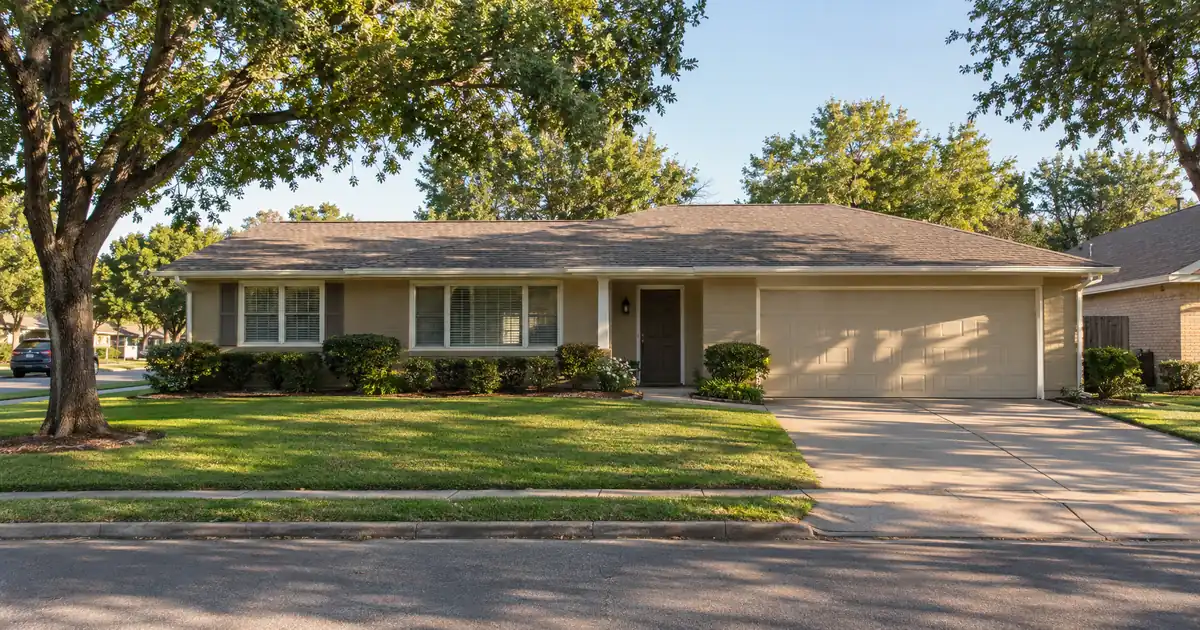
The Quick Read: A DSCR refinance replaces your current loan with a new one, and the property’s rent drives approval instead of your personal income. Cash-out files typically top out around 75% LTV. Most programs also want about six months of ownership first. The lender compares rent to the full monthly payment, and the appraiser’s numbers usually decide the outcome.
What Is an Investment Property Refinance?
You pay off the existing loan on a rental and take a new one. That is the whole idea. What changes is why you do it and how the new loan gets judged.
DSCR Calculator
Run the numbers in your market
Rate source: Freddie Mac 30-yr average via FRED® — Federal Reserve Bank of St. Louis · effective Sep 24, 2026
Prefilled with starting assumptions — enter your own rent or nightly figures, taxes, insurance, and HOA for a more accurate picture.
Program parameters update from Lendmire’s centralized guideline source. Taxes and insurance are editable estimates.
As of Sep 24, 2026 · General Freddie Mac market benchmark, not a Lendmire loan offer. Rent, nightly rate, occupancy, taxes, and insurance are editable estimates. Short-term rental figures are estimates only and vary significantly by season, property type, management approach, and local short-term-rental rules — confirm local regulations before relying on them. Qualifying income for short-term rentals varies by program — some use appraisal market rent, others use documented STR history or projections — and is confirmed in underwriting. Not a Loan Estimate, approval, or commitment to lend. Program availability and eligibility are subject to lender guidelines, credit approval, property review, and underwriting.
DSCR stands for debt service coverage ratio. It divides the property’s monthly rent by PITIA: principal, interest, taxes, insurance, and association dues where they apply. A result of 1.00 means rent equals the payment. Select programs start at 1.00, and stronger ratios open better pricing and leverage.
DSCR loans are designed for non-owner-occupied investment properties. Because they are business-purpose investor loans, they are reviewed differently from a standard owner-occupied mortgage. Approval qualifies primarily on property-level rental income covering the payment, subject to lender guidelines.
Lendmire is a DSCR-focused mortgage broker. It arranges these refinances through select lenders in its wholesale network, across 40 states plus Washington, D.C. Every file is underwritten individually, and nothing here is a commitment to lend.
Key Takeaways
- Two refinance types exist: rate-and-term and cash-out. They follow different rules.
- Cash-out typically tops out around 75% LTV, with about six months of seasoning as the common expectation.
- Underwriting uses the lower of your lease rent and the appraiser’s market rent.
- Clearing 1.00 does not mean the property makes money.
- The prepayment penalty on your current loan can change the whole math.
Key Terms Defined
LTV (loan-to-value): The new loan balance divided by the property’s appraised value.
Seasoning: The waiting period a lender wants between buying (or a prior loan) and the refinance.
Prepayment penalty: A fee for paying off a loan before a set date, often stepping down over time.
Rate-and-term refinance: A new loan that roughly matches your payoff, used to change structure.
Cash-out refinance: A new loan larger than your payoff, where you keep the difference.
Reserves: Liquid savings the lender wants you to hold after closing, counted in months of PITIA.
Form 1007: The appraisal form that documents market rent on a single-family rental.
Rate-and-Term vs. Cash-Out: Which One Are You Doing?
Rate-and-term keeps the balance near your payoff. Investors use it to escape a prepayment penalty, change the term, or leave a loan structure that no longer fits. Cash-out does the opposite: the new balance exceeds the payoff and you pocket the difference.
Here is the catch most people miss. A rate-and-term loan generally can’t exceed your payoff plus closing costs, as HonestCasa notes. If the property has appreciated, you only capture that gain through cash-out.
| Factor | Rate-and-Term | Cash-Out |
|---|---|---|
| New balance | Near payoff | Above payoff |
| Cash to you | None | Yes |
| Leverage ceiling | Varies by program | Around 75% LTV |
| Seasoning | Often lighter | Around 6 months common |
| Main purpose | Fix the structure | Pull equity |
Conventional cash-out on a rental commonly looks at how long the existing first mortgage has been in place. DSCR programs typically look at ownership time instead. That is the only agency contrast you need here.
How Underwriting Treats Your Refinance, Step by Step
Think of it as seven checkpoints. Miss one and the numbers shift.
1. Pre-screen. The broker starts with your existing balance, your rent roll or booking history, and a rough view of what the new loan can support. All of this happens before an appraisal gets ordered. Size the deal conservatively here. An inflated value guess produces a cash-out figure that won’t survive the appraisal.
2. Appraisal. An independent appraiser sets current value, which drives the LTV ceiling. The appraiser also gives an opinion of market rent. For a one-unit rental, that rent opinion comes from Form 1007, built on three rental comparables. Two-to-four unit properties use Form 1025 instead. Fannie Mae describes Form 1007 as how an appraiser documents monthly market rent on a single-family investment property. DSCR loans aren’t agency products, but the form names carry over.
3. Rent used for lender review. For a leased property, underwriting typically uses the lower of the signed lease and the appraiser’s market rent. A below-market lease can drag your ratio down even when the appraiser says the unit could rent for more. Only a vacant or newly purchased property relies on market rent alone. If your lease shows more than the 1007, expect a request for proof the rent is actually collected, such as canceled checks or payout history.
4. Compute the ratio on the new payment. A bigger cash-out loan means a bigger payment, so coverage falls as the loan grows. Long-held rentals with under-market rent often show strong equity on paper but thin coverage. That mismatch is the most common reason a cash-out request gets scaled back.
5. Seasoning. Across most of the network, about six months of ownership is the common expectation for cash-out. Rules vary by lender, so confirm before you plan around a date.
6. Prepayment penalty on the old loan. Payoff of a loan with a penalty can eat into your proceeds. Paying it early can cancel much of the refinance benefit. Many investors wait for the window to close. Pulling equity twice in a short span is where this hurts most.
7. Closing costs. On a cash-out, appraisal, title, and lender fees typically come out of your proceeds. Budget for that before you promise the money to a down payment elsewhere.
The Numbers That Decide the File
Six inputs decide most outcomes: appraised value, rent used for lender review, new payment, seasoning, existing penalty, and your credit and reserves.
Coverage. 1.00 is where select programs start. It’s a floor for specific programs, never a universal standard. Coverage below 1.00 is available through select lenders in the network, with leverage and terms adjusted. No-ratio structures exist too, but only through select lenders, generally for borrowers who already own a primary residence.
Leverage. Purchases typically land at 75%-80% LTV. Cash-out tops out around 75% across most of the network. Short-term-rental collateral runs lower, and that comes up below.
Credit. A 620 floor exists in parts of the network. Most programs want around 660. A 700+ score unlocks the strongest leverage tiers. Tiers also sit at 680 in between.
Loan size. Standard programs run up to $3,000,000. Above $2,500,000 the network generally holds to 30-year fixed structures. Smaller balances route through select lenders.
Reserves. They vary by lender, leverage, loan size, and transaction type. About six months of PITIA is common. Conservative rate-and-term files at modest leverage under $1,500,000 can see reserves waived. Above that size, expect about nine months.
Structure. The spine is the 30-year fixed. Extended terms (40-year) and interest-only periods are available through select lenders. ARM structures exist for investors who want them.
More equity helps, but it doesn’t erase caps, credit floors, or reserve rules. The strongest files clear both tests: enough equity and enough rental coverage.
A Worked Example
Say you bought a duplex years ago and rents have climbed since. You want cash-out at 75% LTV. Your purchase-era coverage sat near 1.05x. Today the appraiser’s market rent is well above your old lease numbers, and the refinance ratio lands near 1.25x. These specifics are subject to lender guidelines and a full review of property, leverage, and credit.
That is the upside of rent growth. It can make a refinance ratio much stronger than the purchase-time number and open a different loan structure.
Now flip it. You kept a long-time tenant at a below-market lease. The lender uses the lower figure, and the same cash-out request pencils near 0.95x. You have options a lender would review: a smaller cash-out, a sub-1.00 program through a select lender with adjusted leverage and terms, or a rate-and-term instead. None is a promise. Each depends on credit, reserves, property review, and lender guidelines.
Experience note: across DSCR files like this, the surprise is rarely the value. It’s the rent. Investors who refreshed below-market leases before applying, once the lease terms allowed, tended to arrive with cleaner files than those who argued with the appraisal afterward.
Where the General Rules Break
Delayed financing and BRRRR. BRRRR means buy, rehab, rent, refinance, repeat. Standard seasoning can slow it down. HonestCasa describes a delayed-financing exception for recent cash purchases. The cash-out is limited to documented purchase price plus closing and receipted renovation costs, and it needs proof of a cash purchase and an arm’s-length deal. Some lenders also let a stabilized rehab refinance out of hard money sooner. Terms differ by lender, so ask before you count on it.
Refinancing out of a hard money or bridge loan. A common move is swapping a short-term loan for a 30-year fixed DSCR loan. It removes balloon risk. Cash-out is the alternative if you also want proceeds.
Short-term rentals. Airbnb-style properties break the standard rent rules. Fannie Mae states Form 1007 was not designed for short-term rentals. It calls for monthly rent from comps leased monthly, not nightly rates. McKissock Learning adds that an appraiser may need another tool, such as AirDNA, for these properties.
In the network, STR refinances run around 70% LTV, and STR cash-out is 70%. Expect a 640+ score and about 12 months of hosting history. Refinances need a 1.00 coverage floor. STR purchases go to 75% LTV with their own 1.00 floor. For the deeper STR angle, see the complete DSCR loans guide. Terms vary by lender guidelines, property type, leverage, credit profile, and full file review.
Not offered. DSCR programs in the network don’t cover manufactured homes (single- and double-wide), log homes, or barndominiums. That’s a property-type limit, not a credit issue.
HELOC alternative. A second lien can preserve a good existing first mortgage. Investment-property HELOC lines cap at $500,000 total. If you’re weighing equity strategies, Lendmire’s guide to using a cash-out refinance to buy investment property covers the acquisition side.
Misconceptions That Cost Investors Money
“The lease amount is what counts.” Underwriting typically uses the lower of lease and market rent.
“Clearing 1.00 means the property makes money.” It doesn’t. DSCR compares rent to PITIA only. Repairs, vacancy, management, utilities, and capex sit outside the calculation. Stress-test your ratio against modest vacancy or softer rent before you commit.
“My appraised value is a given.” It isn’t. Plan for a range.
“Rate-and-term lets me take appreciation.” It generally does not.
“Seasoning is the same everywhere.” It varies by lender and program.
“Tax-free money means use doesn’t matter.” Tax treatment can depend on how the funds are used and how the property is held. Investors should keep clear records and speak with a qualified tax professional before relying on any deduction. A CPA-firm example, ASL CPA, shows a $50,000 rental-refinance pull where only the rental-use portion of interest is deductible.
Should You Refinance? A Decision Frame
Ask these in order.
1. Do you need cash, or a better structure? Cash means cash-out. Structure means rate-and-term.
2. Is the penalty window closed? If not, run the cost against the benefit.
3. Does rent support the new loan? If the ratio is thin, shrink the request first.
4. Have you held long enough? Check seasoning before you spend on an appraisal.
5. What will the money do? Proceeds that buy or improve rental property tend to make more sense than proceeds that fund personal spending.
This one is a real toss-up in some cases. A smaller cash-out with stronger coverage can beat a maximum pull that leaves you with a thin ratio and little cushion. The stronger play is usually the one you can still carry if a tenant leaves for two months.
If you own several rentals, refinance the one with the most rent growth first. Its ratio has improved the most, and that file is the easiest to place. For borrowers weighing options between buying and refinancing, Lendmire’s piece on refinancing a home to buy an investment property frames that tradeoff.
Frequently Asked Questions
How much equity can I pull out of a rental?
Cash-out typically tops out around 75% LTV across most of the network. That is a ceiling, not a target. The actual amount depends on appraised value, the resulting coverage ratio, credit, and reserves. Every file is reviewed individually, subject to lender guidelines.
Do I need to own the property for a set time first?
Usually yes for cash-out. About six months of seasoning is the common expectation across the network. Delayed-financing and stabilized-rehab exceptions exist at some lenders. Confirm the rule for your program before planning around a date.
What if my ratio comes in under 1.00?
Programs below 1.00 are available through select lenders in the network, with leverage and terms adjusted. A smaller loan amount or a rate-and-term structure may also lift the ratio. Whether any option fits depends on credit, reserves, property review, and lender guidelines.
Does a larger down payment help a refinance?
The refinance version of that is more equity. Lower leverage means a smaller payment, which can lift coverage. It won’t override credit floors, reserve rules, or property eligibility. Strong files clear both the equity test and the rental-coverage test.
Can I refinance a short-term rental?
Yes, through select programs. Expect lower leverage than a standard rental, a 640+ score, and about 12 months of actual booking history. Appraisers may need income tools beyond Form 1007. The exact structure depends on the program.
Next Step
If you are buying or refinancing a rental property and want to see how the numbers work, Lendmire can help you compare DSCR loan options based on the property income, credit profile, leverage, and investor goals. Reach the team at 828-256-2183 or request a quote.
Rent that keeps pace with the market is the best refinance asset an investor can own, and it is the one you control the most.
About Lendmire
Lendmire (NMLS# 2371349), a non-QM mortgage broker serving investors in 41 markets including Washington, D.C., helps structure DSCR scenarios commonly evaluated around a property’s rental income rather than personal income paperwork, subject to lender guidelines. A Scotsman Guide Top Mortgage Workplace in 2025 and 2026, Lendmire places loans through wholesale investor lenders and is not a direct lender.
Scotsman Guide’s Top Mortgage Workplace lists for 2025 and 2026 document Lendmire’s recognition.
Get Started
Ready to find the right loan for you?
In about 30 seconds you can review financing options available for your investment property. No commitment required.
Informational only. Not a Loan Estimate, approval, or commitment to lend. Program availability and eligibility are subject to lender guidelines, credit approval, property review, and underwriting.
References
1. HonestCasa: DSCR Loan Seasoning Requirements
2. Fannie Mae Appraiser Update June 2024
3. McKissock Learning: Form 1007 and Short-Term Rental Appraisals
This article is part of Lendmire’s DSCR loan program — full qualification details, guidelines, and scenarios live on the program page.
Related reading: Refinance Rental Property: How DSCR Loans Change the Game · DSCR Loan Refinance: Should You Go Rate-and-Term or Cash-Out? · Refinancing An Investment Property: Options, Timing, And Strategy
Brandon Miller
Founder & CEO, Mortgage Loan Originator, Lendmire LLC
- Mortgage Loan Originator · NMLS# 1129696 · Verify on NMLS Consumer Access
- North Carolina Real Estate Broker · License# 343312 · Verify on NCREC
- North Carolina Insurance Producer · License# 19053198 · Property, Casualty, Life, Health · Verify on NAIC SBS
- Lendmire LLC · Firm NMLS# 2371349 · Verify firm licensure
Important disclosures. Lendmire (NMLS# 2371349) is a licensed mortgage brokerage. Lendmire is not a direct lender, depository institution, or financial advisor. All loan inquiries are subject to lender underwriting; this article does not constitute a commitment to lend. Rates, terms, and program guidelines are subject to change without notice and vary by borrower profile, property type, and state. Information in this article is general in nature and is not financial, legal, or tax advice. Equal Housing Opportunity. NMLS Consumer Access: nmlsconsumeraccess.org.