
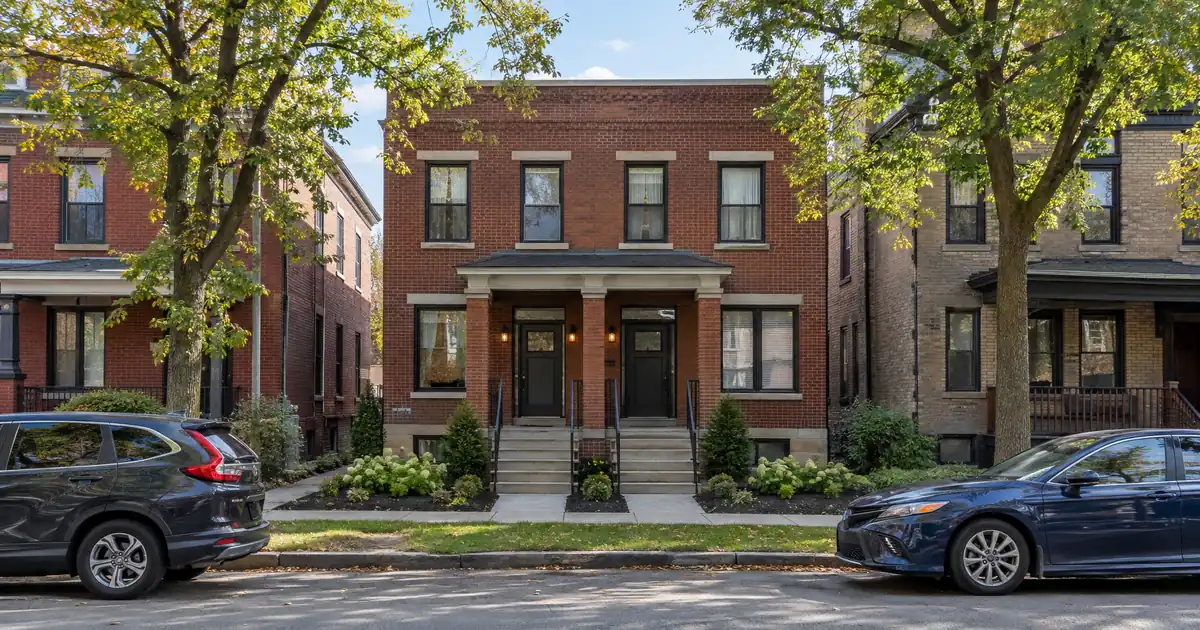
Picture two Columbus investors who bought about the same time. One owns a converted duplex in Franklinton, the other a single-family rental in a first-ring suburb. Both have equity, and both want to pull some out for the next purchase. The duplex owner has the better chance of getting the number to work, because two leases carry the loan while a single lease has to do it alone. In a market where appraisals have outrun rents, that difference decides how much cash comes out.
Lendmire (NMLS# 2371349) is a multi-state mortgage brokerage that helps Columbus, Ohio investors arrange DSCR financing across 41 markets, including Washington, D.C. This article covers the extraction side only: what a cash-out refinance can realistically pull from Columbus rentals you already own, and which submarkets and property types size best.
DSCR Cash-Out Calculator
Run the cash-out numbers in Columbus, OH
Rate source: Freddie Mac 30-yr average via FRED® — Federal Reserve Bank of St. Louis · effective Sep 24, 2026
Prefilled with starting assumptions — enter your property’s value, balance, taxes, and insurance for a more accurate picture.
Program parameters update from Lendmire’s centralized guideline source. Taxes and insurance are editable estimates.
As of Sep 24, 2026 · General Freddie Mac market benchmark, not a Lendmire loan offer. Property value, balance, taxes, and insurance are editable estimates. Maximum loan-to-value varies by lender, program, property type, and seasoning. Not a Loan Estimate, approval, or commitment to lend. Program availability and eligibility are subject to lender guidelines, credit approval, property review, and underwriting.
The Quick Read: A DSCR cash-out refinance in Columbus, Ohio fits investors who own small multifamily or workforce rentals with enough in-place rent to carry a larger balance, because the loan is underwritten primarily on the property’s rental income measured against its full monthly obligation, with proceeds typically capped at 75% of value rather than by appraisal gains alone.
- Metro Columbus added over 21,000 residents, and its 1.0% growth doubled the national pace.
- Central Ohio’s median sale price was $335,000 in the latest Columbus Realtors report, up 4.7% year over year.
- Rents are flat to slightly down: Apartment List shows a $1,300 median, down 0.8%.
- Duplexes through fourplexes stack income under one loan, which is where Columbus coverage math is strongest.
- Programs typically look for about 6 months of ownership before a cash-out, subject to lender guidelines.
Why Columbus Equity Is Real but Rent Is the Limiter
Home values have climbed while rents have barely moved, so the appraisal is not what limits your proceeds. Coverage is. Columbus rewards owners of stacked-unit properties and workforce rentals, and it penalizes anyone who assumes a higher appraisal automatically means a bigger check.
Start with what supports the equity. The Columbus Realtors central Ohio median sat at $335,000 with 1.6 months of supply, a tight-inventory reading. That figure covers the whole region, not just the city. Zillow’s city-level home value index runs lower, at $251,236 and down 0.7% over the past year. The gap reflects methodology: one counts MLS transactions across the region, the other estimates values for the city proper. Neither is wrong.
Now the rent side. RentCafe’s Yardi Matrix data puts average rent at $1,366, up 1.4%, with 2-bedrooms at $1,442 and 3-bedrooms at $1,717. Yardi tracks buildings of 50-plus units, so it under-represents the small properties most cash-out borrowers hold. Apartment List’s $1,300 median is down 0.8%. Whichever you pick, rent growth is somewhere between slightly negative and low single digits.
Supply explains why. Colliers estimates 9,668 apartment units were delivered in the most recent full year, with another 9,160 expected. CoStar-based analysis from Realist Capital puts multifamily vacancy at 10.2%, while Matthews reads it at 4.20%. That spread is a measurement gap between data providers, and it is worth knowing about. The bulk of that new supply is large-scale apartment product, not the older duplexes and workforce houses a typical cash-out borrower owns.
How the Coverage Math Actually Sizes Proceeds
Cash-out proceeds are the smaller of two constraints: 75% of appraised value, or the loan the rent can carry at a 1.00x baseline or better. In Columbus right now, the rent constraint usually binds first. Most standard programs are built around the 1.00x benchmark because rent covers the full monthly obligation at that level. Some lenders will review lower ratios with compensating factors, lower leverage, or more cash in, and eligibility ultimately depends on lender guidelines, credit, reserves, and property review.
Coverage here means monthly rent divided by principal, interest, taxes, insurance, and any HOA dues. A useful shortcut: at 75% leverage with Ohio-average taxes and insurance, monthly rent needs to run roughly two-thirds of one percent of value to reach 1.00x. Here are three modeled examples. The values and rents are assumptions, not sourced market figures, and the coverage numbers include taxes and insurance. These specifics are subject to lender guidelines and a full review of property, leverage, and credit.
| Property (modeled) | Assumed rent | Assumed value | Coverage at 75% LTV |
|---|---|---|---|
| Fourplex, four leases | $4,200/mo | $500,000 | about 1.25x |
| Duplex, two 2-beds | $2,300/mo | $300,000 | about 1.15x |
| Single-family house | $1,795/mo | $290,000 | about 0.9x |
The $4,200 comes from a Whitehall-area fourplex listing on Homes.com advertising that gross income, roughly $1,050 per unit. It is one asking-side listing, not a market rent. The duplex row uses a single Franklinton listing’s $1,150 for a renovated 2-bedroom, again an anecdote. The house row uses Zumper’s listing-based citywide average of $1,795 for houses (apartments average $1,309).
The pattern matters more than the specific numbers. The multi-unit properties clear 1.00x with cushion, and the single-family example lands under it. When a file sits below 1.00x on long-term rent, the paths a lender may review include a sub-1.00 program, interest-only structuring, or a smaller cash-out request that lowers the loan amount. Whether any of them applies depends on lender guidelines, credit approval, and property review. Trimming proceeds is often the cleanest fix, because a lower loan balance raises coverage directly.
Here’s what DSCR files in markets like this one typically look like. The appraisal comes back strong, the rent roll comes back flat, and the borrower’s target cash-out exceeds what coverage supports. The files that go smoothly tend to start with the rent-supported loan size and back into proceeds, rather than starting from a desired cash figure. Leases in place, current rents at or near market, and reserves documented up front keep the file from stalling on the last-minute items.
The Submarkets Where Cash-Out Coverage Holds
Franklinton, Linden, Hilltop, Whitehall, and Eastmoor are the neighborhoods investors most often cite for rent-to-value strength, and small multifamily is the property type that makes them work. The data behind that is qualitative. The research found no reliable neighborhood-level price or rent bands, so treat the neighborhoods as candidates to run your own numbers on, not as guarantees.
Franklinton: Duplex Conversions Near Downtown
Homes.com’s neighborhood guide says nearly 70% of Franklinton’s residents rent and that many older Craftsman-style homes have been converted into duplexes and multifamily units. That is the profile a DSCR cash-out likes: stacked leases, a renter-heavy base, and proximity to downtown employment. Renovation here has come from private investors and nonprofits, and the guide notes single-family prices sit well below nearby neighborhoods such as the Brewery District and Victorian Village. Franklinton is where an owner who bought and renovated a duplex has the best shot at both a strong appraisal and coverage that supports it.
Linden and North Linden: Redevelopment on Cash-Flow Housing
Linden is older, smaller-footprint housing, and it sits inside the ONE Linden redevelopment initiative, which RL Property Management describes as a $50-million-plus investment. Zumper lists North Linden among the city’s more affordable rental pockets at about $1,150. The tension worth naming: redevelopment can push appraisals faster than rents. That helps proceeds only when in-place rent still supports the loan. Underwrite to the leases, not the momentum.
Hilltop, Whitehall, and Eastmoor
RL Property Management’s report groups Hilltop, South Linden, Franklinton, Whitehall, and Eastmoor as the urban neighborhoods with the strongest rent-to-price ratios in the metro. It also points to first-ring suburbs such as Reynoldsburg and the Morse Road and Hamilton Road corridors for entry-level portfolios of one to five units. It is a property manager’s report, so weigh it as moderate-confidence, and it gives no price or rent bands. Hilltop’s appeal is older early-to-mid-century housing with direct access to US 62 and I-70. Whitehall is where the fourplex example above came from. These are the east and west side pockets where the modeled fourplex row looks most plausible.
Weinland Park, Downtown, and Where Coverage Gets Harder
Higher-priced areas are the opposite case: strong appraisals, thin coverage. Marcus & Millichap reports downtown vacancy at a record 8.1% against 4.2% in the suburbs at the end of the most recent full year. If your rental sits in or near the Short North or downtown core, expect the appraisal to look great and the coverage to squeeze proceeds.
Weinland Park and the University District sit next to The Ohio State University, where demand comes from students, staff, and the medical district. WOSU reports fall enrollment above 67,255 across campuses, including 61,326 at the main campus. Zumper lists Weinland Park rent at $1,432. Tenant demand near campus is steady, but the same rent-versus-value squeeze applies, so run coverage before assuming a big check.
This one is a genuine toss-up for an owner with equity in both a campus-adjacent property and a Franklinton duplex. The campus property may carry a higher appraisal. The duplex may carry higher coverage. The stronger cash-out is usually the one that clears 1.00x with room, not the one with the bigger valuation.
Demand Anchors and the Intel Timing Question
Columbus renters are anchored by universities, government, health care, and finance rather than one employer, which is why long-term demand holds up even when rents are flat. CBUStoday puts Ohio State at 47,000-plus employees and the State of Ohio at 21,000-plus. OhioHealth reports 24,662 physicians and associates across its seven-county survey area. According to the same CBUStoday data on the city’s economic mix, no single industry holds more than 18% of employment. Colliers puts metro unemployment at 4.1%, up from 3.6% the prior quarter, a small softening worth watching.
Then there’s Intel. The company’s Ohio One campus in New Albany is a $28 billion investment with two chip factories. Timelines have slipped: the first fab is now expected near the end of the decade, with a second a couple of years behind it, per Hoodline’s reporting. The demand story is real but long-dated. For a cash-out, that points one direction: size the loan on in-place rent today, not on speculation about tomorrow’s tenants.
The metro’s growth is the sturdier story. Per WOSU’s read of Census numbers, metro Columbus gained about 21,000 residents while Cleveland gained roughly 2,000 and Toledo lost 28. Columbus Region puts the metro at 2,242,028 people and credits it with 53% of Ohio’s population growth.
Seasoning, Leverage, and Turning Proceeds Into the Next Deal
Programs on the platform typically cap cash-out at 75% of value, and they generally look for about 6 months of ownership measured from title recording. A few working details:
- Reserves. Expect roughly 6 months of PITIA, more on balances above $1,500,000.
- Credit. Tiers start at a 620 floor and improve pricing and leverage at 660, 680, and 700.
- Loan size. Standard programs run up to $3,000,000, with smaller balances routed through select lenders in the network.
- Entity title. LLC-owned rentals can be reviewed subject to lender program eligibility.
If you bought a property recently and renovated it, the 6-month clock and the appraisal are the two things to plan around. Price growth has slowed to low single digits, so a rehab-and-refinance plan should not assume a big appraisal jump. Recent comps drive how much equity comes out. Homes.com lists 238 multifamily homes for sale citywide, at prices from $50,000 to $5,250,000. That is deep inventory for 2-4 unit comps, though the range includes larger complexes, so filter to true small multifamily before drawing conclusions.
For the mechanics, Lendmire’s DSCR guide explains how the ratio is built, and pulling equity with a DSCR cash-out covers the equity side in detail. If you’re weighing a straight rate-and-term against cash-out, the details of each refinance type are worth comparing side by side. For how the underwriting differs from a bank loan, see the guide “Where DSCR and Conventional Diverge”. The broader state picture is on the Ohio DSCR investor loans page, and you can reach the team at 828-256-2183 to walk through a specific property.
One reminder that applies to every Columbus rental: verify current local rental rules, taxes, and insurance with qualified local professionals, since the city and county are updating several of them. Review details remain subject to lender overlays and program terms.
Frequently Asked Questions
How do you qualify for a DSCR cash-out refinance in Columbus, Ohio?
Qualification centers on the property, not your paystubs. The rent must cover the full monthly obligation (typically at 1.00x or better), the property generally needs about 6 months of ownership, and the loan must fit within the 75% LTV ceiling. Credit starts at a 620 floor and reserves run about 6 months of PITIA. Final eligibility depends on lender guidelines, credit, and property review.
What are the requirements for an investment property loan refinance in Columbus, Ohio?
Expect an appraisal, documented leases or a market rent analysis, proof of reserves, and a credit profile in the tiers noted above. Loan sizes run up to $3,000,000 on standard programs. How much cash comes out depends on rent used for lender review, the monthly obligation, reserves, and the 75% cap, so it is never a guaranteed figure.
DSCR vs. conventional financing
Two common ways to finance an investment property in Columbus, OH. They qualify you differently — here’s how investors weigh them.
Why investors choose it
- Qualifies on the property’s rental income — no personal tax returns, W-2s, or pay stubs needed to document income.
- No personal debt-to-income ceiling to clear, so existing mortgages and obligations don’t cap your borrowing the same way.
- Can be closed in an LLC, keeping the property inside a business entity.
- Built for scaling — not held to the limit on number of financed properties that conventional financing applies.
- Underwriting centers on the deal: generally qualifies when the rent covers the payment, a 1.00x coverage ratio being a common baseline (confirmed in underwriting).
- Designed specifically for investment property, including long-term and, where the program allows, short-term rentals.
Where it’s strong
- Often the lowest ongoing financing cost for a buyer who fully qualifies on personal income — a fit for a first property or a cost-first purchase.
Trade-offs for investors
- Requires full personal income documentation and must fit within a debt-to-income limit — salary, existing debts, and other mortgages all count.
- Typically held in your personal name rather than a business entity.
- Caps how many financed properties you can carry, which can become a ceiling as a portfolio grows.
- Evaluates you as a borrower as much as the property, which usually means more paperwork.
How investors usually choose: a first or single property often optimizes for the lowest financing cost; portfolio builders often optimize for leverage, vesting in an LLC, and scaling past conventional caps. The right answer depends on your goals, the property, and current guidelines — both paths run through select lenders in Lendmire’s wholesale network, with eligibility and terms confirmed in underwriting.
Which Columbus property types pencil best for a cash-out?
Duplexes, triplexes, and fourplexes tend to clear coverage more easily than single-family rentals, because separate leases stack under one loan. A modeled fourplex collecting about $4,200 a month lands in the mid-1.2 range, while a single-family house at Zumper’s $1,795 citywide average can land under 1.00x at the same leverage. Workforce housing has held up better than newer, higher-priced apartments.
Should I underwrite a Columbus cash-out around the Intel project?
No. The New Albany campus is a $28 billion investment, but the first fab is not expected until near the end of the decade. Size the loan on rent already in place, and treat any Intel-driven demand as upside rather than something the file depends on.
Can a LLC-owned Columbus rental be reviewed for DSCR financing?
Yes, subject to lender program eligibility. Lendmire arranges DSCR investor loans, and a key feature is that eligibility is generally reviewed on the property’s rental cash flow rather than traditional personal-income documentation.
Your Next Move in Columbus
Columbus gives you a rising-price, flat-rent market with a deep tenant base and steady population growth. That combination rewards owners who know their coverage number before they ask for a check. So which of your Columbus properties clears 1.00x with room to spare, and which one only looks good on the appraisal?
About Lendmire
A DSCR-focused mortgage broker, Lendmire (NMLS# 2371349) places investor financing across 41 markets, meaning 40 states plus Washington, D.C. Eligibility is generally reviewed by the lender on property cash flow instead of traditional personal-income documentation, subject to lender guidelines. Scotsman Guide named Lendmire a 2026 Scotsman Guide Top Mortgage Workplace and a top-ranked workplace in 2025.
Get Started
Ready to find the right loan for you?
In about 30 seconds you can review financing options available for your investment property. No commitment required.
Informational only. Not a Loan Estimate, approval, or commitment to lend. Program availability and eligibility are subject to lender guidelines, credit approval, property review, and underwriting.
References
1. columbusregion.com — Columbus Metro Growth Doubles National Rate
2. $335,000 in the latest Columbus Realtors report
4. Zillow’s
5. RentCafe’s Yardi Matrix data
6. Colliers
8. Matthews
9. Homes.com
10. Zumper’s
11. Homes.com’s neighborhood guide
14. WOSU
15. OhioHealth
16. Ohio One campus
17. Hoodline’s
18. WOSU’s
19. a 2026 Scotsman Guide Top Mortgage Workplace
20. Scotsman Guide — Top Workplaces 2025
This article is part of Lendmire’s investment property cash-out refinance program — full qualification details, guidelines, and scenarios live on the program page.
Related reading: Luxury Rental DSCR Loans In New Jersey · Jersey Shore Vacation Rental Loans: DSCR Financing In Ocean City, Cape May And Long Beach Island · DSCR Cash-out Refinance In New Jersey: Pulling Equity From A Rental
Guides: Investment Property Cash-Out Refinance in Columbus, OH · Investment Property Cash-Out Refinance in Ohio
Brandon Miller
Founder & CEO, Mortgage Loan Originator, Lendmire LLC
- Mortgage Loan Originator · NMLS# 1129696 · Verify on NMLS Consumer Access
- North Carolina Real Estate Broker · License# 343312 · Verify on NCREC
- North Carolina Insurance Producer · License# 19053198 · Property, Casualty, Life, Health · Verify on NAIC SBS
- Lendmire LLC · Firm NMLS# 2371349 · Verify firm licensure
Disclosures. The information presented in this article is general market commentary, not financial, legal, or tax advice. Lendmire is a mortgage brokerage (NMLS# 2371349) — not a direct lender or depository institution — and loan placement is subject to lender underwriting. Nothing in this content represents a commitment to lend. Loan terms, pricing, and program availability vary based on borrower qualifications, property characteristics, and state of subject property, and are subject to change at any time. Lendmire complies with Equal Housing Opportunity requirements. Consumer access: nmlsconsumeraccess.org.