
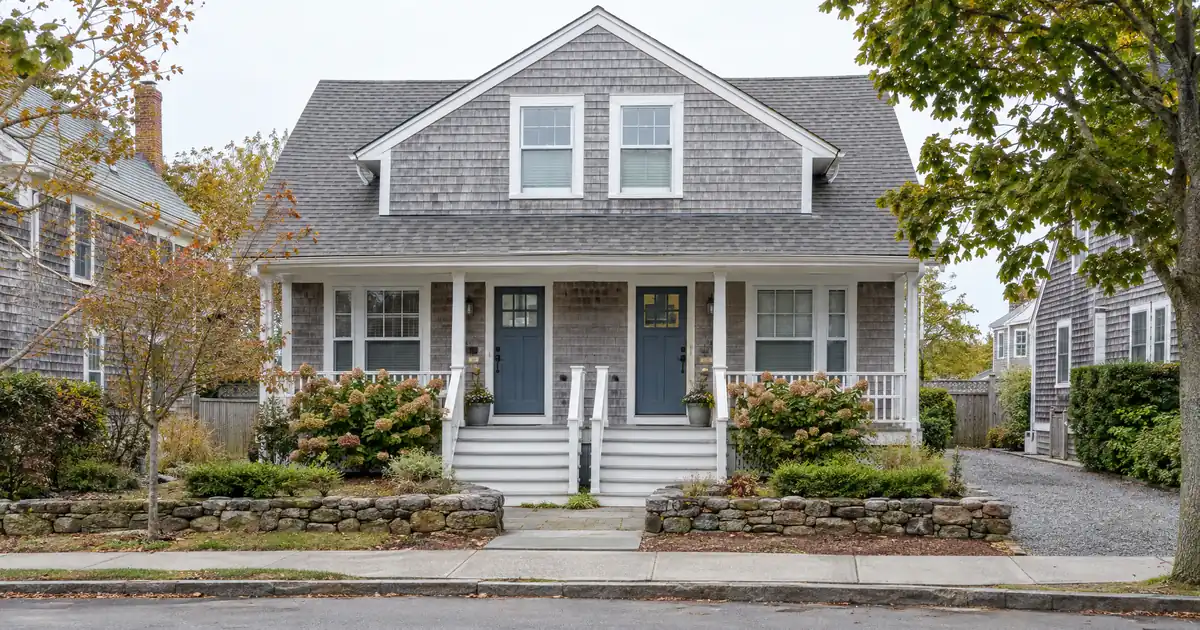
Can a Nantucket property support a cash-out refinance when a 12-month lease covers only a sliver of the carrying cost? Sometimes, but the equity is rarely the problem. Coverage is. Zillow’s home value index puts Nantucket County near $3,158,782, up 7.2 percent over the past year, so seasoned owners tend to hold plenty of paper equity. The open question is whether the rent side of the file, measured against the full monthly obligation, clears the lender’s threshold.
At a Glance: A DSCR cash-out refinance on Nantucket is underwritten primarily on the property’s qualifying rental income measured against its full monthly obligation, with loan size capped by appraised value, seasoning, and reserves rather than by the owner’s personal paycheck.
DSCR Cash-Out Calculator
Run the cash-out numbers in Nantucket, MA
Rate source: Freddie Mac 30-yr average via FRED® — Federal Reserve Bank of St. Louis · effective Sep 24, 2026
Prefilled with starting assumptions — enter your property’s value, balance, taxes, and insurance for a more accurate picture.
Program parameters update from Lendmire’s centralized guideline source. Taxes and insurance are editable estimates.
As of Sep 24, 2026 · General Freddie Mac market benchmark, not a Lendmire loan offer. Property value, balance, taxes, and insurance are editable estimates. Maximum loan-to-value varies by lender, program, property type, and seasoning. Not a Loan Estimate, approval, or commitment to lend. Program availability and eligibility are subject to lender guidelines, credit approval, property review, and underwriting.
- Cash-out LTV tops out at 75 percent, not the 80 percent purchase figure.
- Ownership seasoning of about 6 months from title recording typically applies.
- Balances here often push toward or past the $3,000,000 standard-program guide.
- Year-round rentals have shrunk by roughly one-third, about 600 units, over a decade.
- Reserves run about 9 months of PITIA above $1,500,000, which covers most island balances.
Nantucket Market Snapshot
A quick read on the Nantucket investor landscape — figures come from the cited sources below. Confirm current property-level numbers before underwriting.
| Metric | Detail |
|---|---|
| Home prices | $4.4M median (+26%) (Atlantic East Nantucket Real) |
| Recent appreciation | $4.4M median (+26%) (Atlantic East Nantucket Real) |
| Population | 10,017 population (Census Reporter – Nantucket, MA) |
| Employment | 5,626 jobs (Below Deck Nantucket – “Plenty) |
| Vacancy | 58.3% (ExecutivePulse – Nantucket) |
The Equity Is Real. The Coverage Is the Question.
Start with the price picture, because it sets everything else. Atlantic East’s island market report shows a median sale price of $4.4 million, up 26 percent, and an average of $5.3 million. That is higher than Zillow’s index because the brokerage figure reflects what actually transacted, and the transacted mix skews toward the top of the market. Zillow smooths across the whole stock. Use the index for a conservative read on value and the brokerage median as a ceiling for the ambitious end.
A Housing Nantucket assessment found that HUD-based 50th-percentile year-round rents start around $2,425 a month for an efficiency. Rents have climbed roughly 70 percent since 2015 while year-round household incomes rose about 9 percent, and median home prices rose about 140 percent over the decade. Those numbers describe a market where value growth has lapped rent growth several times over.
The practical result: coverage on a standard 12-month lease, calculated against full PITIA including taxes and insurance, lands well below 1.00 on most island single-family homes. The standard benchmark is 1.00, because that is where rent covers the obligation. Some programs review lower ratios, but usually with lower leverage, stronger credit, more reserves, or different pricing.
This is an appreciation-led market. The cash-out thesis is “hold, let value compound, refinance when the file supports it,” not “buy for day-one cash flow.”
Who Should Do This, and Who Shouldn’t
A DSCR cash-out makes sense for the investor holding a seasoned Nantucket property in an LLC (subject to lender program eligibility) who wants to pull equity without submitting traditional personal-income documentation and W-2 history. It is also a fit for the self-employed owner, and there are plenty on an island where construction employs 1,139 residents and professional services another 795, per Data USA.
Flip the profile and the answer changes. A high-W-2 owner with one primary-adjacent property and clean traditional personal-income documentation may find the comparison favors conventional financing or a home equity line, since the low coverage that hurts a DSCR file matters less when personal income carries the loan. And if the plan is to pull cash and sit on it, skip it. Cash-out proceeds should have a job.
Three Submarkets, Three Different Files
Town, Brant Point, and Cliff. These are the walkable harbor-side neighborhoods with the highest demand and prices. Brant Point and Cliff estates commonly start above $5 million. Value is not in doubt, but coverage on a long-term lease is the weakest anywhere on the island. Equity here is a trophy asset. Extracting it via DSCR means leaning on income structures beyond a plain annual lease, and the 75 percent ceiling still applies.
Mid-island: Tom Nevers, Monomoy, Miacomet. These areas offer the best value per square foot on Nantucket, with larger lots and more privacy. A lower basis means the rent-to-value gap narrows compared with the harbor. Larger lots also raise the odds of a legal secondary dwelling, which is the closest thing the island has to income stacking. This is the submarket where a cash-out file has the best chance of looking like a normal DSCR file.
Sconset, Surfside, and Madaket. Weekly seasonal demand is strong on the eastern, southern, and western shores, with Surfside pricing ranging from the low millions past $10 million. Long-term-lease fit is limited. Investors here should think of cash-out as an equity move on a seasonal-income asset, and expect the file to be reviewed with that income type in mind.
Why Small Units Beat Big Houses on the Math
Here is the counterintuitive part. The highest-value homes are the worst DSCR candidates, and the modest units are the best. Rents on an efficiency already start above $2,400 a month on the island, so a lower-priced entry-level or secondary unit can post a materially better coverage ratio than a luxury single-family home. That is as close to a cash-flow play as Nantucket offers.
Multifamily doesn’t fix it. Island-wide, commercial platforms typically show one or two active multifamily listings, with one tracked example listed near $2,495,000 per Realmo. A town-hosted market study cites extremely high land costs and restrictive zoning as barriers to new year-round rental development. So an investor who already owns a small multi-unit or a house with a legal secondary unit holds something scarce, and the supply-side story protects it from oversupply.
Where Lease to Locals Changes the Math
This is the one lever with no mainland analog. The Town’s Lease to Locals program pays owners cash incentives to convert short-term or underused properties into year-round rentals, and Housing Nantucket reports incentives ranging from $4,500 to $27,000 with 68 qualified tenants at last count.
For a DSCR investor, the interesting part isn’t the incentive. It is the paper trail. A town-verified 12-month lease creates documented, seasoned long-term rental income, which is exactly what a lender looks for when reviewing rent. Picture an owner who converts a mid-island cottage from seasonal use to a Lease to Locals tenancy. After the lease seasons, the file can present a clean rent figure instead of a seasonal estimate. That conversion may also mean giving up some peak-season income, so it is a real tradeoff. It works best for owners whose seasonal income was inconsistent anyway.
It is also a niche. Sixty-eight tenants is not a market segment. Treat it as an optimization for a particular property, not a strategy for the island.
The Mechanics: 75 Percent, Six Months, and Reserves
The cash-out walkthrough covers the general process. Nantucket-specific points:
- LTV ceiling. Cash-out tops out at 75 percent of appraised value. A property that looks like it has 40 percent equity may net less usable proceeds than expected once the cap and existing payoff are applied.
- Seasoning. About 6 months from title recording is the typical benchmark. Recently acquired properties on this island may have been bought at a peak or a discount, so the appraisal, not the purchase price, drives the proceeds.
- Reserves. About 6 months of PITIA, rising to about 9 months above $1,500,000. Given island values, most Nantucket files land in the higher tier. Plan liquidity before applying.
- Loan size. Standard programs guide up to $3,000,000. Because many island properties appraise well above that, balances can sit at or near the top of the guide, and larger requests route to different lenders with their own overlays.
- Credit. Tiers run 620, 660, 680, and 700, with 620 as the floor. Higher tiers typically improve leverage and pricing options.
Everything here is subject to lender guidelines, credit approval, and property review. Equity available is not a guaranteed cash figure.
Thin Comps, Thick Consequences
One risk deserves its own space. Redfin’s three-month window through July showed a median of $5.2 million on only three homes sold in that month. Headline appreciation percentages on the island are driven by a handful of transactions. Sometimes they spike, sometimes they collapse.
For a cash-out, that means the appraisal is the pivot. Expect wider comp radii and possibly appraiser pushback. An investor counting on a specific value to hit a specific proceeds number is taking real risk. It is also why the brokerage median, the Zillow index, and Census-derived values ($1.47 million median property value) can all be true at once and still diverge by millions. Underwrite to the conservative end.
When the Number Falls Short of 1.00
Say coverage on a long-term lease comes in below 1.00, which on many island properties it will. What then?
A sub-1.00 program may be available through select lenders, typically with lower LTV, stronger credit, and more reserves. Interest-only structuring can improve the ratio on paper. Blended seasonal income can support the file where the property has a real operating history. A lender would review each of these on its merits, and none is a promise.
The question worth asking first is whether a sub-1.00 structure should be used. If the property has a strong appreciation story and the investor has ample liquidity, sub-1.00 can be defensible. If the investor is stretching to pull cash for a purchase elsewhere at thin coverage, the problem is the next deal, not the loan type.
What a Typical Island File Looks Like
DSCR files in markets like this one typically look lopsided: high appraised value, modest documented rent, and a reserve requirement that becomes the real gating item. The stronger files tend to show a seasoned, documented income stream, whether a long-term lease or a properly documented seasonal history. They also come with a clear plan for the proceeds. Files that stall are usually the ones with big equity, no income documentation, and no defined use of funds. Lenders review the whole picture, and a clean narrative helps.
DSCR vs. conventional financing
Two common ways to finance an investment property in Nantucket, MA. They qualify you differently — here’s how investors weigh them.
Why investors choose it
- Qualifies on the property’s rental income — no personal tax returns, W-2s, or pay stubs needed to document income.
- No personal debt-to-income ceiling to clear, so existing mortgages and obligations don’t cap your borrowing the same way.
- Can be closed in an LLC, keeping the property inside a business entity.
- Built for scaling — not held to the limit on number of financed properties that conventional financing applies.
- Underwriting centers on the deal: generally qualifies when the rent covers the payment, a 1.00x coverage ratio being a common baseline (confirmed in underwriting).
- Designed specifically for investment property, including long-term and, where the program allows, short-term rentals.
Where it’s strong
- Often the lowest ongoing financing cost for a buyer who fully qualifies on personal income — a fit for a first property or a cost-first purchase.
Trade-offs for investors
- Requires full personal income documentation and must fit within a debt-to-income limit — salary, existing debts, and other mortgages all count.
- Typically held in your personal name rather than a business entity.
- Caps how many financed properties you can carry, which can become a ceiling as a portfolio grows.
- Evaluates you as a borrower as much as the property, which usually means more paperwork.
How investors usually choose: a first or single property often optimizes for the lowest financing cost; portfolio builders often optimize for leverage, vesting in an LLC, and scaling past conventional caps. The right answer depends on your goals, the property, and current guidelines — both paths run through select lenders in Lendmire’s wholesale network, with eligibility and terms confirmed in underwriting.
Unlike balance-sheet lenders that treat investor files as portfolio-risk exercises, Lendmire works as a broker placing files across multiple wholesale lending channels, so a Nantucket property that doesn’t fit one program’s overlays can be shopped to another. Investors comparing paths can also read the investor refinance options and the state hub for DSCR loans in Massachusetts.
Where Proceeds Go
The cash-out argument is straightforward when proceeds fund a second small, income-producing unit, or improvements that add a legal secondary dwelling. Both raise rent used for lender review.
It is weaker when proceeds go to a mainland market where the coverage math is easier but the investor has no operating edge, or when they simply fund lifestyle spending against an appreciating asset. Nantucket rewards patience: the island has under 4 percent of land unbuilt and nearly 60 percent protected, so supply is capped by geography. That protects value but doesn’t guarantee it. Price growth has outrun income growth for a decade, and that gap can’t widen forever (though the timing is anyone’s guess).
Frequently Asked Questions
How do you qualify for a DSCR cash-out refinance in Nantucket, Massachusetts?
Qualification centers on the property’s rent used for lender review against its full monthly obligation, with a typical 1.00 benchmark. Lenders also review credit (620 floor), roughly 6 months of seasoning, and reserves. Cash-out LTV tops out at 75 percent. Details vary by lender and are subject to guidelines and property review.
What are the requirements for an investment property cash-out loan on Nantucket?
Expect a 75 percent LTV ceiling, about 6 months of ownership, and reserves of about 6 months of PITIA, or about 9 months above $1,500,000. Standard programs guide up to $3,000,000, and larger island balances may route to different lenders. Ineligible property types such as manufactured homes, log homes, and barndominiums fall outside these programs.
Does the Lease to Locals program help a cash-out refinance?
It can. A town-verified 12-month lease creates documented long-term rent, which strengthens the income side of a file. Incentives range from $4,500 to $27,000, but the program is small, with 68 qualified tenants reported. It suits specific properties, not the whole island.
Why is coverage so low on Nantucket compared with mainland markets?
Prices have risen about 140 percent over a decade while rents rose roughly 70 percent. With an island median sale price of $4.4 million against year-round rents that start near $2,425 for an efficiency, the ratio structurally compresses. Small units and secondary dwellings usually show better coverage than large single-family homes.
The Next Step
Before any lender conversation, pull the full payoff and a conservative value estimate for the property, then compare a Zillow-style index reading against the two or three most recent nearby sales. If the gap is large, that gap, not the loan program, will decide your proceeds.
For current guidelines and terms, see Lendmire’s DSCR loan programs page.
About Lendmire
Lendmire, NMLS# 2371349, is a non-QM mortgage broker arranging DSCR investor loans in 41 markets, including Washington, D.C. Files are generally reviewed around the subject property’s rental income instead of the borrower’s W-2 history, which suits LLC-titled portfolios and self-employed investors. Every scenario stays subject to program review and program guidelines. The firm is recognized as a 2026 Scotsman Guide Top Workplace and a 2025 Scotsman Guide Top Workplace.
Get Started
Ready to find the right loan for you?
In about 30 seconds you can review financing options available for your investment property. No commitment required.
Informational only. Not a Loan Estimate, approval, or commitment to lend. Program availability and eligibility are subject to lender guidelines, credit approval, property review, and underwriting.
References
1. Zillow Home Value Index, Nantucket County
2. Atlantic East Nantucket Real Estate market report
3. Census Reporter – Nantucket, MA
4. Below Deck Nantucket – “Plenty
6. Housing Nantucket housing assessment
7. Data USA, Nantucket profile
8. Realmo
9. Town of Nantucket, Lease to Locals
10. Housing Nantucket, Lease to Locals update
11. a 2026 Scotsman Guide Top Workplace
12. a 2025 Scotsman Guide Top Workplace
This article is part of Lendmire’s investment property cash-out refinance program — full qualification details, guidelines, and scenarios live on the program page.
Related reading: Cash Out Refinance Investment Property Nantucket Massachusetts · Investment Property Loans in Nantucket, MA: Does the Rent Cover the Note Here? · Luxury Rental DSCR Loans In Nantucket: Seasonality And Coverage
Guides: Investment Property Cash-Out Refinance in Nantucket, MA · Investment Property Cash-Out Refinance in Massachusetts
Brandon Miller
Founder & CEO, Mortgage Loan Originator, Lendmire LLC
- Mortgage Loan Originator · NMLS# 1129696 · Verify on NMLS Consumer Access
- North Carolina Real Estate Broker · License# 343312 · Verify on NCREC
- North Carolina Insurance Producer · License# 19053198 · Property, Casualty, Life, Health · Verify on NAIC SBS
- Lendmire LLC · Firm NMLS# 2371349 · Verify firm licensure
Disclosure information. Lendmire is a state-licensed mortgage brokerage under NMLS# 2371349. Lendmire is not a depository institution, direct lender, or financial advisor — all loans referenced are placed through wholesale lender partners and are subject to each lender's underwriting standards. This article is provided for general informational purposes and is not a commitment to lend, nor does it constitute financial, legal, or tax advice. Loan programs, terms, rates, and qualification standards change without notice and depend on borrower profile, property type, and the state in which the subject property is located. Equal Housing Opportunity provider. NMLS Consumer Access: nmlsconsumeraccess.org.