
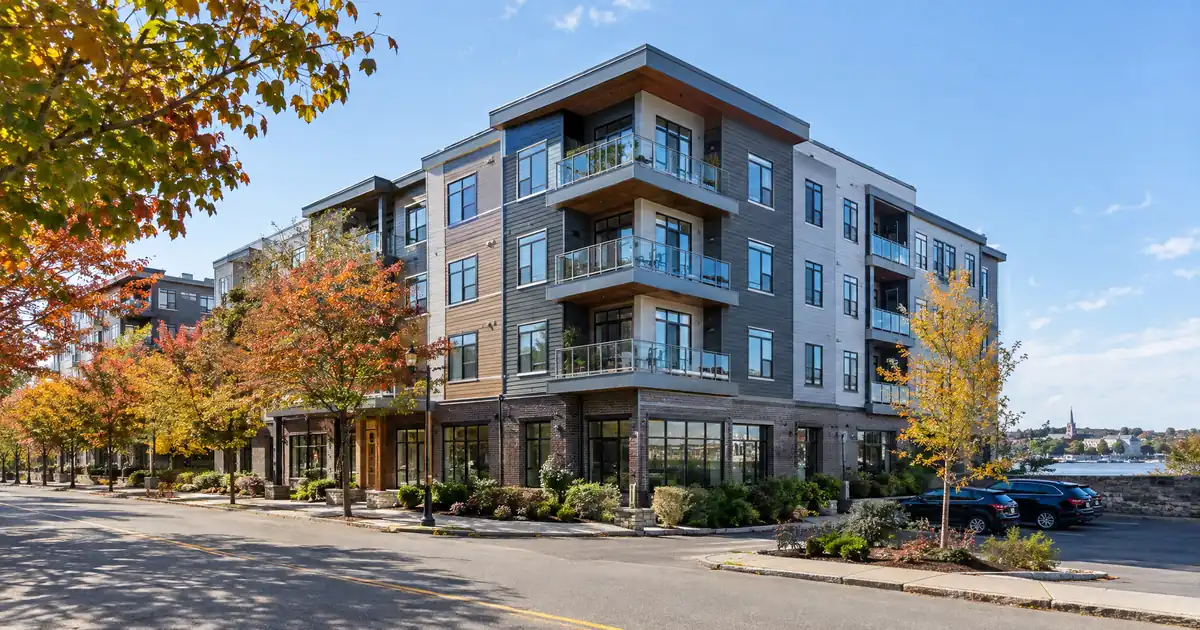
A cash-out refinance on an investment property in Salem starts with one constraint: the loan tops out at 75 percent of appraised value, and the rent then has to cover the full monthly obligation, taxes and insurance included. That is where Salem splits in two. A single-family rental near the Redfin median sale price of $603K, renting near the Homes.com median of $2,600 a month, models at roughly 0.7x coverage with taxes and insurance included. A stabilized multi-unit clears 1.00 with room to spare. For Salem, Massachusetts rental property financing, Lendmire (NMLS# 2371349) helps arrange DSCR loans through lenders operating in 41 markets, including Washington, D.C.
TL;DR: A DSCR cash-out refinance on a Salem, Massachusetts investment property is underwritten primarily on the rental income the property produces measured against its full monthly obligation, with proceeds sized by value, leverage caps, and reserves rather than traditional personal-income documentation.
DSCR Cash-Out Calculator
Run the cash-out numbers in Salem, MA
Rate source: Freddie Mac 30-yr average via FRED® — Federal Reserve Bank of St. Louis · effective Sep 24, 2026
Prefilled with starting assumptions — enter your property’s value, balance, taxes, and insurance for a more accurate picture.
Program parameters update from Lendmire’s centralized guideline source. Taxes and insurance are editable estimates.
As of Sep 24, 2026 · General Freddie Mac market benchmark, not a Lendmire loan offer. Property value, balance, taxes, and insurance are editable estimates. Maximum loan-to-value varies by lender, program, property type, and seasoning. Not a Loan Estimate, approval, or commitment to lend. Program availability and eligibility are subject to lender guidelines, credit approval, property review, and underwriting.
- Cash-out loans typically cap at 75 percent LTV, with about six months of seasoning from title recording.
- South Salem multi-unit stock models far stronger than single-family at Salem’s $603K median.
- Salem’s rental vacancy sits at 1.9 percent, per the City of Salem.
- Price growth has flattened, so rent growth now carries the refinance case.
Salem Market Snapshot
A quick read on the Salem investor landscape — figures come from the cited sources below. Confirm current property-level numbers before underwriting.
| Metric | Detail |
|---|---|
| Home prices | $602,500-$603K median (Redfin Salem Housing Market) |
| Typical rents | $2,600/month median (Homes.com Salem Rentals) |
| Cap rates | 9.81% cap rate (Redfin South Salem Multi-Family) |
| University enrollment | 6,230 total (Data USA) |
| Population | 44,795 population (Census Reporter (ACS profile)) |
| Vacancy | 0.3% owner (City of Salem Housing Roadmap) |
South Salem Is Where the Cash-Out Math Clears
South Salem is the strongest cash-out submarket in the city, and the reason is multi-unit stock paired with a student-heavy tenant base. A live Redfin listing shows a six-unit building (two 4-bedroom and four 3-bedroom units) with gross annual income and stated NOI that the listing presents as a high cap rate against a seven-figure asking price. Treat that as a listing, not a comp. Sellers market NOI generously, so the stated figures deserve independent verification before anyone underwrites to them.
Run the numbers on it as a modeled assumption. At 75 percent LTV, with principal, interest, taxes, and insurance all included, coverage on the listing’s stated NOI lands around 1.3x, and higher on gross rent. That clears the 1.00 baseline most standard DSCR programs are built around. Exact eligibility still depends on lender guidelines, credit, reserves, and property review. Above $1.5 million, reserve expectations typically step up from about six months of payments to about nine.
Who rents these units? Salem State University sits in the neighborhood, and Data USA puts total enrollment at 6,230 students. An older Patch report described roughly 2,000 students living on campus, so most of the student body rents off campus. ApartmentList shows average rent near campus at $2,860, above the citywide median. Zumper reports the 4+ bedroom segment rising 30.4 percent year over year, against 3.9 percent citywide.
Here’s the catch. Large-bedroom units are rented by the bedroom, and that demand follows the academic calendar. An investor leaning on a roommate-style rent roll should look at how the leases actually run before trusting the gross figure.
Downtown, The Point, and North Salem: Small Multi-Unit Territory
Downtown Salem, The Point, and North Salem are where 2-4 unit buildings (triple-deckers, converted Federal-era homes) make the most sense for a cash-out. They are also where the comp problem shows up.
Redfin puts the Downtown Salem median at $458K, which tells you more about condos and small units than about a whole triple-decker. Commuter rail to Boston is the demand engine here. Rentable.co shows one-bedrooms near The Point around $2,180 and two-bedrooms around $2,520. Stack three units at those levels and the gross rent rolls up well. That is the core appeal of a triple-decker for DSCR purposes: three rent streams instead of one tenant, so a single vacancy doesn’t sink the coverage number.
Two cautions. First, thin transaction depth. Redfin’s citywide multi-family page showed only nine multi-family sales in a recent month, against 40 single-family homes and 36 condos. Fewer comps means wider appraisal variance on a cash-out, and the appraisal sets your proceeds. Second, utility structure. One turnkey four-unit listing includes heat and hot water in rent. That compresses net margin compared with separately metered units, so stress the NOI below gross rent before you assume coverage.
Working DSCR brokers see a recurring pattern in small-multifamily markets with thin comps: the rent roll looks fine, and the appraisal is the variable that moves the proceeds. Investors who pull their own sold comps before ordering anything tend to set more realistic expectations about how much equity is actually available.
What Single-Family Looks Like at Salem Prices
Single-family is the weak spot for cash-out coverage. The modeled band sits around 0.7x near the median price and median rent, including taxes and insurance. That is well under the standard benchmark.
| Property profile | Modeled coverage | Read |
|---|---|---|
| Single-family near the median | About 0.7x | Needs lower leverage or another structure |
| South Salem six-unit (NOI basis) | About 1.3x | Clears 1.00 with cushion |
| Historic-district single-family | Well below 1.00 | Appreciation play, not cash flow |
Take the McIntire and Chestnut Street area. Homes.com shows a median single-family price of $1,585,000 there, while Rentable.co puts two-bedroom rents near $2,575. That is a beautiful asset and a poor coverage profile.
If a sub-1.00 file is what you have, a few paths may apply. Some lenders offer sub-1.00 programs, typically with lower leverage and stronger credit. Interest-only structures change the payment math. Bringing the loan amount down also works. All of it is subject to lender guidelines, credit approval, and property review. But the honest question is whether you should use them. If the only way to pull cash is to stretch below 1.00 on a property that doesn’t have a real appreciation story, that is a signal about the asset, not the loan.
The flip point is worth stating. A single-family owner with strong traditional employment income and one or two financed properties may find conventional financing carries the lower cost, even with slower paperwork. The key differences start to favor DSCR when the portfolio grows, the borrower is self-employed, or property income is the cleaner story on paper.
Seasoning: Six Months From Recording
About six months of ownership, measured from title recording. That is the typical seasoning window before a cash-out, and the clock runs from the recorded deed, not the purchase contract.
The bigger question is what the appraisal will say when the clock runs out. Salem’s price momentum has cooled. A mid-year Rocket Homes report showed the median up 9.0 percent year over year, while Redfin’s later figure was up just 0.8 percent. Zillow’s typical-value index reads lower at $556,169 (a different methodology), up 1.8 percent. Together that points to deceleration, not reversal.
So build the thesis on rent, not price. The city’s own report says average rent rose 34.8 percent over a five-year stretch, from $2,000 to $2,695, outpacing the Boston region’s 26.6 percent. Condo prices rose 36.8 percent over the same period. A property bought a few years ago may already cover its debt better than it did on day one, even if the value hasn’t moved much lately.
Amounts available depend on rent used for lender review, the full payment, reserves, and the 75 percent ceiling. Nothing here is a guaranteed cash figure. The equity-extraction mechanics page walks through how those pieces interact, and the loan amount range on standard programs runs up to $3,000,000, with credit tiers starting at a 620 floor.
Why Vacancy Numbers Matter More Than Comps Here
Salem’s own housing report found 1.9 percent of rental units vacant, against a healthy-market benchmark of about 6 percent, and 0.3 percent of owned properties vacant. That is a structurally tight market. Lenders underwriting a rent schedule tend to be more comfortable when vacancy is low, though they will still apply their own vacancy and rent-verification standards.
The demand anchors are not cyclical. Data USA shows 4,044 Salem residents working in health care and social assistance and 3,069 in educational services, in a city of 44,795 per Census Bureau QuickFacts. Salem Hospital, part of Mass General Brigham, is a Level III trauma center with nearly 800 affiliated physicians. Those are long-lease tenants, not seasonal ones.
Where the Proceeds Go (and Where They Shouldn’t)
An investor might pull equity from a paid-down triple-decker in The Point to buy another small multi-unit in South Salem. That is straightforward. Coverage is already proven in this market, the tenant base is the same, and the rent growth story applies to both.
Sending that equity to an out-of-state market where the coverage number doesn’t pencil is a different decision, and one worth stress-testing before committing. Same for using cash-out proceeds to fund a renovation that the thin multi-family comps may not reward at the next appraisal.
This one’s a genuine toss-up for some owners. A 1.3x multi-unit might support a cash-out today, but a hold-and-let-rents-rise approach could produce a larger, cleaner cash-out later. The tradeoff is carrying the idle equity in the meantime.
LLC-owned portfolios are common here and can work, subject to lender program eligibility. For the broader framework, the guide “What Is a DSCR Loan” covers the basics, and the refinance side compares rate-and-term against cash-out. Massachusetts-specific program details live on the page for DSCR loans in Massachusetts. Investors who want to talk through the numbers on a specific Salem property can also call 828-256-2183. Verify local rental rules, taxes, and insurance with qualified local professionals before you commit.
What to Watch Over the Next Quarter
Three indicators will tell you whether to move now or wait:
- Appraisal behavior on 2-4 unit sales. With only nine multi-family sales in a recent month, a few new closings will show whether values are holding near the current median.
- Rent growth versus price growth. If the 4+ bedroom segment keeps outpacing the citywide rent change, South Salem coverage keeps improving. A slowdown there weakens the thesis.
- Listing repricing in South Salem. The six-unit asset already repriced to $1.999M. Further cuts would suggest buyers are pushing back on the cap rate.
Frequently Asked Questions
How do you qualify for a DSCR loan in Salem, Massachusetts?
The lender looks at the property’s rent used for lender review against its full monthly payment, including taxes and insurance. Most standard programs are built around a 1.00 coverage baseline, with credit starting at a 620 floor and reserves typically about six months. Exact eligibility depends on lender guidelines, credit profile, property review, and state overlays.
DSCR vs. conventional financing
Two common ways to finance an investment property in Salem, MA. They qualify you differently — here’s how investors weigh them.
Why investors choose it
- Qualifies on the property’s rental income — no personal tax returns, W-2s, or pay stubs needed to document income.
- No personal debt-to-income ceiling to clear, so existing mortgages and obligations don’t cap your borrowing the same way.
- Can be closed in an LLC, keeping the property inside a business entity.
- Built for scaling — not held to the limit on number of financed properties that conventional financing applies.
- Underwriting centers on the deal: generally qualifies when the rent covers the payment, a 1.00x coverage ratio being a common baseline (confirmed in underwriting).
- Designed specifically for investment property, including long-term and, where the program allows, short-term rentals.
Where it’s strong
- Often the lowest ongoing financing cost for a buyer who fully qualifies on personal income — a fit for a first property or a cost-first purchase.
Trade-offs for investors
- Requires full personal income documentation and must fit within a debt-to-income limit — salary, existing debts, and other mortgages all count.
- Typically held in your personal name rather than a business entity.
- Caps how many financed properties you can carry, which can become a ceiling as a portfolio grows.
- Evaluates you as a borrower as much as the property, which usually means more paperwork.
How investors usually choose: a first or single property often optimizes for the lowest financing cost; portfolio builders often optimize for leverage, vesting in an LLC, and scaling past conventional caps. The right answer depends on your goals, the property, and current guidelines — both paths run through select lenders in Lendmire’s wholesale network, with eligibility and terms confirmed in underwriting.
What are the requirements for an investment property loan in Salem, MA?
Expect a cash-out ceiling of about 75 percent LTV, roughly six months of seasoning from title recording, and reserves of about six months of payments (more above $1,500,000). Loan amounts run up to $3,000,000 on standard programs. The property needs a rent schedule that supports coverage, and lenders review each file individually.
Can a self-employed investor buying in Salem be reviewed for DSCR financing?
Yes, the file is reviewed primarily on the property’s rental income, not personal income. Lendmire arranges DSCR investor loans through wholesale lending channels. Qualification is subject to lender guidelines and credit approval.
Does a triple-decker in Salem work better than a single-family for a cash-out?
Usually, yes, on coverage. Three rent streams against one payment typically produce a stronger number than one rent against one payment, while a single-family near Salem’s $603K median models closer to 0.7x. The tradeoff is appraisal depth, since multi-family comps are thinner.
Is Salem’s price slowdown a problem for a cash-out refinance?
Not necessarily, but it changes the thesis. With the median up only 0.8 percent year over year, the appraisal may not add much equity beyond what you have already built. Properties bought a few years ago, combined with strong rent growth, may still support the loan, but sizing is always subject to the appraisal.
For current guidelines and terms, see Lendmire’s DSCR loan programs page.
About Lendmire
Lendmire is a non-QM mortgage brokerage (NMLS# 2371349) arranging DSCR investor loans in 41 markets, including Washington, D.C., through wholesale and investor-lending channels. The lender evaluates DSCR loans mainly on rental income rather than personal income, subject to lender guidelines. That makes them a fit for LLC-owned portfolios, self-employed investors, and operators scaling beyond conventional loan caps. Lendmire was recognized as a 2025 Scotsman Guide Top Mortgage Workplace and a 2026 Scotsman Guide Top Mortgage Workplace. See recent Lendmire news and press releases.
Get Started
Ready to find the right loan for you?
In about 30 seconds you can review financing options available for your investment property. No commitment required.
Informational only. Not a Loan Estimate, approval, or commitment to lend. Program availability and eligibility are subject to lender guidelines, credit approval, property review, and underwriting.
References
1. Redfin: Salem Housing Market
2. Homes.com
3. City of Salem Housing Roadmap Report Card
4. Redfin
5. Data USA: Salem State University
6. Census Reporter (ACS profile)
7. Patch
9. Zumper
10. Redfin
11. Rentable.co
12. Redfin’s citywide multi-family page
13. Homes.com
14. Rentable.co
17. a 2025 Scotsman Guide Top Mortgage Workplace
18. a 2026 Scotsman Guide Top Mortgage Workplace
This article is part of Lendmire’s investment property cash-out refinance program — full qualification details, guidelines, and scenarios live on the program page.
Related reading: Luxury Rental DSCR Loans In New Jersey · Jersey Shore Vacation Rental Loans: DSCR Financing In Ocean City, Cape May And Long Beach Island · DSCR Cash-out Refinance In New Jersey: Pulling Equity From A Rental
Guides: Investment Property Cash-Out Refinance in Salem, MA · Investment Property Cash-Out Refinance in Massachusetts
Brandon Miller
Founder & CEO, Mortgage Loan Originator, Lendmire LLC
- Mortgage Loan Originator · NMLS# 1129696 · Verify on NMLS Consumer Access
- North Carolina Real Estate Broker · License# 343312 · Verify on NCREC
- North Carolina Insurance Producer · License# 19053198 · Property, Casualty, Life, Health · Verify on NAIC SBS
- Lendmire LLC · Firm NMLS# 2371349 · Verify firm licensure
Compliance and disclosures. Lendmire (NMLS# 2371349) is a licensed mortgage broker and is not a direct lender, depository institution, financial advisor, or tax professional. Content in this article is general market analysis and educational information — not financial, legal, or tax advice for any specific situation. Lendmire does not guarantee loan approval; every transaction is subject to underwriting by the funding lender. Mortgage pricing and loan program guidelines are subject to change at any time without notice and vary by borrower characteristics, property type, and state regulations. Lendmire complies with Equal Housing Opportunity. Licensure verification: NMLS Consumer Access.