
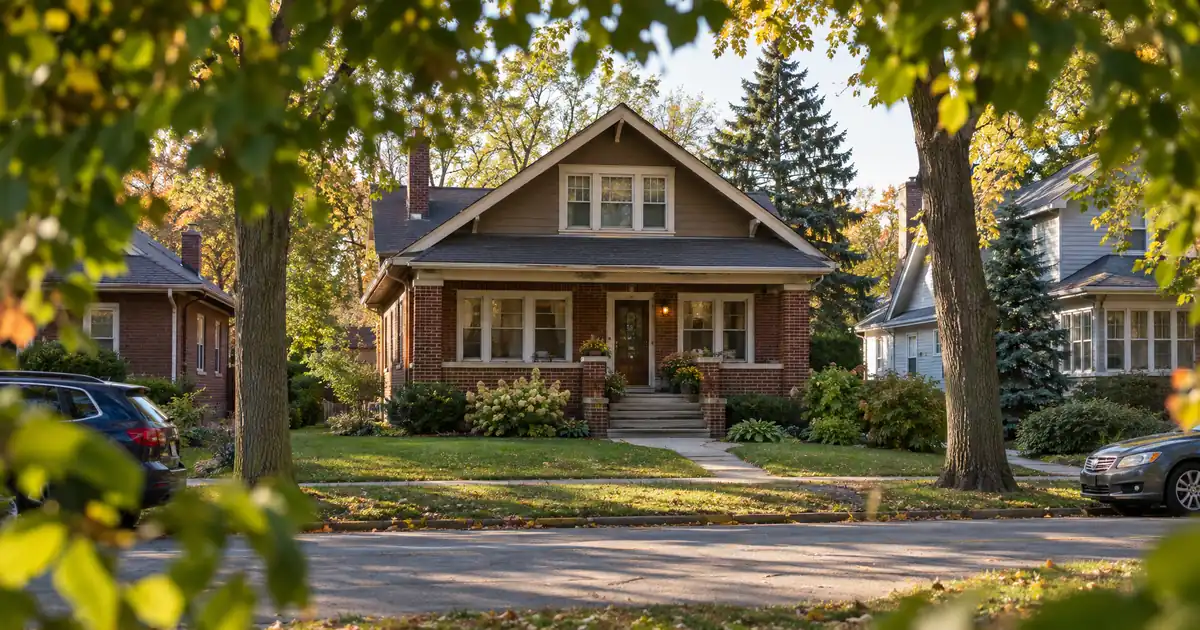
Picture an investor holding a three-bedroom rental on the south side of Appleton, bought a couple of years back and now sitting on a lease that renewed at a higher rent. The listing next door sold for more than the investor paid, and a cash-out refinance on that investment property looks like the obvious next move. The question is whether the file will actually clear underwriting once the appraisal, the lease, and the full monthly obligation are on the table. That is the plumbing this article walks through.
The Short Version: A DSCR cash-out refinance in Appleton, Wisconsin is underwritten primarily on the property’s rental income measured against its full monthly obligation, with the appraised value and a 75% loan-to-value ceiling setting how much equity can come out. The work is in the documents, not the pitch.
DSCR Cash-Out Calculator
Run the cash-out numbers in Appleton, WI
Rate source: Freddie Mac 30-yr average via FRED® — Federal Reserve Bank of St. Louis · effective Sep 24, 2026
Prefilled with starting assumptions — enter your property’s value, balance, taxes, and insurance for a more accurate picture.
Program parameters update from Lendmire’s centralized guideline source. Taxes and insurance are editable estimates.
As of Sep 24, 2026 · General Freddie Mac market benchmark, not a Lendmire loan offer. Property value, balance, taxes, and insurance are editable estimates. Maximum loan-to-value varies by lender, program, property type, and seasoning. Not a Loan Estimate, approval, or commitment to lend. Program availability and eligibility are subject to lender guidelines, credit approval, property review, and underwriting.
- Citywide, tracked closings sit near a $304,500 median, so most files are single-family.
- Downtown’s $358K median is appreciation-led, not cash-flow-led.
- Cash-out typically requires about 6 months of ownership, measured from title recording.
- Single-family coverage at median prices runs thin once taxes and insurance are included.
Lendmire (NMLS# 2371349), a DSCR-focused mortgage broker, structures DSCR scenarios for investors targeting Appleton, Wisconsin and places them with wholesale lenders across 41 markets, including D.C. The brokerage does not lend or approve anything. Lenders review each file against their own guidelines, and everything below is written with that in mind. For investors pulling equity, the order of operations matters: value first, coverage second, reserves third.
What the Lender Reads First
The lender reads three things before anything else: the appraised value, the rent used for lender review against full PITIA (principal, interest, taxes, insurance, and any HOA dues), and how long the borrower has held title. Everything else supports one of those three.
On parameters, most standard programs treat 1.00 as the baseline coverage number, because rent covers the obligation at that level. Some lenders will look below it, but that usually means lower leverage, stronger credit, more reserves, or different pricing. Cash-out leverage typically tops out at 75% of value. That is the cap for refinances, and it is lower than the purchase cap, so investors who bought at 80% should not assume the same ceiling applies on the way out. Seasoning typically runs about 6 months from title recording. Reserves generally land around 6 months of PITIA, stepping up on larger balances. Credit tiers commonly start at a 620 floor and improve in steps through 700. All of this is subject to lender guidelines and varies by borrower, property, and loan scenario. For the general mechanics, the guide “What Is a DSCR Loan” covers the base case, and the cash-out refinance details page covers the structure specific to pulling equity.
Here’s the part investors skip. The 75% cap applies to the appraised value, not to what the investor thinks the house is worth. In a market where comp depth is thin, that distinction decides the deal.
Where the Equity Actually Is
Appleton’s equity story splits into two very different pictures: a cooling citywide market and a downtown submarket that has run hot on what is probably a small sample. The conservative read is to underwrite to the citywide picture.
Start with the citywide numbers. Resideline’s tracked closings show a $304,500 median across 652 closings, with the middle half of sales landing between $250,000 and $395,000. About 85% of those closings were single-family houses. Zillow’s home value index reads a bit higher, at $305,415, and shows 7.0% growth over the past year (a different methodology from closed sales, so the two won’t match exactly). Redfin’s citywide figure sits around $300K with 3.4% growth. One more aggregator, Houzeo, shows price growth nearly flat year over year, and reports the share of homes selling above asking falling meaningfully from the prior year.
Those sources disagree on momentum, which is the point. Investors who bought in the last year or two should model modest appreciation. Redfin describes the market as one where prices have begun to grow more slowly, and a cash-out thesis that depends on another double-digit leg up is a thesis built on the weakest data in the pile.
Downtown is the outlier. Redfin’s neighborhood page shows Downtown Appleton at a $358K median, up 35.0% year over year. That is a striking number, and also a number that deserves suspicion. Neighborhood medians built on few sales swing hard, and an appraiser will not simply apply a 35% trend to a subject property. If the subject sits in or near downtown, underwrite the cash-out on a conservative value and treat anything above that as upside, not as proceeds already in hand.
The flip point: if the appraisal comes in at or above the investor’s expected value, the refinance works as planned. If it comes in light, the 75% cap does the damage, because every dollar of lost value shrinks the maximum loan by 75 cents. Order the appraisal assuming the low case, and plan the next acquisition around that number.
The Coverage Math (Modeled, Not Promised)
At median citywide prices, single-family rentals in Appleton cover thinly. That is the honest read, and it shapes which properties are good cash-out candidates and which are better held.
The rent-to-price ratios explain why. RentCafe’s Yardi Matrix data puts the average 2BR at $1,292 and the 3BR at $1,686. Against the $304,500 median, that works out to roughly 0.42% for a 2BR and 0.55% for a 3BR. Those ratios are simple arithmetic on cited figures, not published yields. RentCafe tracks only buildings with 50 or more units, so it likely misstates single-family rents. Zillow’s rental data shows a higher 3BR average of $1,990, which would lift the ratio to about 0.65%. Real rent comps on the specific property beat any of these.
Now run the numbers on modeled scenarios. These are assumptions for illustration, built on rent divided by full PITIA (including taxes and insurance at Wisconsin-average levels), not quotes:
| Modeled scenario | Rent assumption | Approx. coverage |
|---|---|---|
| $300K value, 75% LTV, 3BR | $1,686 | About 0.85 |
| $300K value, 75% LTV, 3BR | $1,990 | Just under 1.00 |
| $250K value, 75% LTV, 3BR | $1,686 | About 1.00 |
| $250K value, 75% LTV, 3BR | $1,990 | About 1.15-1.20 |
| $358K value, 75% LTV, one downtown unit | $1,340 | Below 0.65 |
The pattern is clear. Coverage clears 1.00 only toward the low end of the modeled value band, or with rents toward the top of the observed range. A single downtown unit valued at the neighborhood’s median, using the Redfin rent figure shown in the table above, cannot carry a 75% cash-out on its own rent. That is not a knock on downtown as an asset. It is a knock on single-unit math at that price. These specifics are subject to lender guidelines and a full review of property, leverage, and credit.
When a scenario lands below 1.00 on long-term rent, the structures a lender may review include a sub-1.00 program, an interest-only period, or a lower leverage tier that improves the ratio. Each trades something away: a lower cash-out amount, stronger credit requirements, more reserves, or different pricing. Eligibility review depends on lender guidelines, credit approval, and property review, so none of these is a given. If the investor is reaching for a sub-1.00 structure because the numbers don’t work at any property they own, that points to a portfolio-selection question, not a loan-selection question.
DSCR files in markets like this one typically look like a mid-priced single-family rental with a solid lease, adequate but not generous coverage, and an appraisal that decides the outcome. The files that move cleanly tend to arrive with a current lease or rent schedule, a fresh insurance quote that reflects the actual dwelling, entity documents in order, and reserves already seasoned in an account. The files that stall usually have a missing lease, a coverage number that only works on an optimistic rent assumption, or an appraisal that leaned on a thin comp set.
Which Side of the River Carries the Math?
South Appleton and the older central neighborhoods carry the best cash-out math, while downtown and Appleton Heights lean toward appreciation and mixed-unit stock. No source provided per-neighborhood sale prices, so what follows is qualitative on price and anchored on rent and demand.
South Appleton. Apartments.com ranks South Appleton, Crosswinds Estates, and Applecreek Estates among the most affordable neighborhoods, and the area is anchored by the Ascension St. Elizabeth campus (a Level III trauma center that has operated since 1899). Lower entry prices are what push the rent-to-value ratio up, so this is the submarket where workforce 2-3 bedroom rentals are most likely to clear 1.00. The tradeoff is thinner appreciation upside and, probably, thinner comps.
Downtown and the College Avenue corridor. The same Apartments.com data lists Downtown Appleton, the College Avenue Historic District, and Butte des Morts Heights among the priciest neighborhoods, while also naming downtown and College Avenue among the areas with the most available apartments. Redfin’s rental page shows a downtown median rent of $1,340. Demand here draws from the walkable core around the performing arts center and from Lawrence University, with about 1,500 undergraduates, much of it on-campus. Small 2-4 unit buildings are the natural fit for cash-out here, because stacked rents against a single appraised value fix the math that single units can’t. No sourced data exists on triplex or fourplex stock in Appleton, so treat that as a search task, not an assumption.
North Appleton. ThedaCare Regional Medical Center sits on North Meade Street, and healthcare employment supports steady tenant demand on the north side. No neighborhood-level price data was found. Workforce single-family rentals near the hospital are a reasonable place to look, with the same coverage caution as everywhere else.
Appleton Heights and Chain O’Lakes. Rentometer puts commonly observed rents for the area’s 2-3 bedroom units between $1,300 and $1,600. That is aggregator data, so treat it as approximate.
Grand Chute. Technically a neighboring municipality, but it functions as part of the same rental pool: a retail node anchored by the 1.21 million square foot Fox River Mall, with Fox Valley Technical College’s main campus nearby. Service-sector and technical-college renters make it a reasonable comp source even if the subject property sits inside Appleton.
The stronger play for cash flow is probably south or central over downtown, though an investor with a multi-unit building near College Avenue could argue the other way. Honestly, that one is a toss-up until the appraisal and the actual rent roll are in hand.
Demand Anchors That Support the Rent Roll
Tenant demand in Appleton rests on a diversified employment base rather than one dominant employer, which helps with the vacancy assumptions a lender’s market-rent review relies on.
Per Census Reporter’s ACS data, the city has 74,439 residents and a median household income of $82,155, within a metro of 248,992 people. Data USA shows resident employment led by manufacturing (8,196 people), then health care and social assistance (5,377), then retail trade (4,375). Pierce Manufacturing, the fire and rescue apparatus maker, is based in Appleton, and ThedaCare and Ascension both operate hospital campuses in or beside the city. Fox Valley Technical College adds a trades-oriented tenant base. Employer headcounts from available sources are dated or approximate, so this article leans on the sector numbers instead.
On the supply side, RentCafe finds about a third of Appleton households rent (33%), and 72% of the rentals it tracks fall between $1,001 and $1,500 a month. That clustering gives an appraiser a reference band when estimating market rent. No current vacancy figure came out of the research, and the older numbers are stale, so the market is best described as tight rather than assigned a number. Winter softness is real in a cold-climate market, and one rental source notes a seasonal winter dip. Leases that renew ahead of the appraisal window make the file cleaner.
Documentation Friction: Where Files Actually Stall
Most cash-out delays in a market like Appleton come from documents and appraisals, not from the borrower. A short checklist of what the lender’s reviewer will want:
- A current lease or rent schedule that matches the rent used in the coverage calculation. Month-to-month tenancy or an expired lease invites a market-rent opinion from the appraiser instead.
- Entity paperwork for LLC-held property, with vesting and operating documents consistent with the title, subject to lender program eligibility.
- Title recording date to confirm the roughly 6-month seasoning requirement. Investors who bought off-market or via a quitclaim sometimes find the clock started later than they thought.
- A property-specific insurance quote, since the coverage number includes it.
- Reserve documentation showing about six months of PITIA seasoned in an account, per typical program guidelines.
- Property-type check. Manufactured homes, log homes, and barndominiums fall outside these DSCR programs, which matters in the outer Fox Cities where such stock exists.
With thin comp depth, appraisal friction is the one to watch. Redfin’s data shows a market where homes draw about two offers on average, with sales volume down year over year. Fewer recent sales means appraisers may lean on a short comp list, and one off-pattern comp can move the value. Pulling the best comps ahead of time (same bedroom count, similar condition, within the same neighborhood) gives the appraiser something to work from.
For investors weighing this against a conventional refinance, the guide “Where DSCR and Conventional Diverge” explains that the differences come down to documentation: conventional leans on traditional personal-income documentation, DSCR leans on the property. Conventional may carry lower cost for a single personally held rental with a strong W-2 borrower. DSCR typically pencils better for LLC-held portfolios, self-employed investors, or anyone whose financed count has outgrown the conventional lane.
DSCR vs. conventional financing
There are two common ways to finance an investment property in Appleton, WI, and they qualify you differently — here’s how investors weigh them.
Why investors choose it
- Qualifies on the property’s rental income — no personal tax returns, W-2s, or pay stubs needed to document income.
- No personal debt-to-income ceiling to clear, so existing mortgages and obligations don’t cap your borrowing the same way.
- Can be closed in an LLC, keeping the property inside a business entity.
- Built for scaling — not held to the limit on number of financed properties that conventional financing applies.
- Underwriting centers on the deal: generally qualifies when the rent covers the payment, a 1.00x coverage ratio being a common baseline (confirmed in underwriting).
- Designed specifically for investment property, including long-term and, where the program allows, short-term rentals.
Where it’s strong
- Often the lowest ongoing financing cost for a buyer who fully qualifies on personal income — a fit for a first property or a cost-first purchase.
Trade-offs for investors
- Requires full personal income documentation and must fit within a debt-to-income limit — salary, existing debts, and other mortgages all count.
- Typically held in your personal name rather than a business entity.
- Caps how many financed properties you can carry, which can become a ceiling as a portfolio grows.
- Evaluates you as a borrower as much as the property, which usually means more paperwork.
How investors usually choose: a first or single property often optimizes for the lowest financing cost; portfolio builders often optimize for leverage, vesting in an LLC, and scaling past conventional caps. The right answer depends on your goals, the property, and current guidelines — both paths run through select lenders in Lendmire’s wholesale network, with eligibility and terms confirmed in underwriting.
What the Proceeds Are For
Cash-out proceeds are worth pulling only if the next acquisition’s coverage clears on its own. That is the test, and it is easy to skip.
Say an investor in South Appleton pulls equity to buy a second rental in the lower half of the $250K-$395K band. If the new property’s modeled coverage sits near 1.00-1.15 including taxes and insurance, the plan works as a portfolio move. If the plan requires a $395K property to hit its rents, the second loan strains the same math that made the first one tight, and the investor has simply moved leverage around.
The more cautious path is to pull less than the 75% ceiling allows. A smaller cash-out leaves coverage on the refinanced property healthier and gives the file more margin if the appraisal comes in light. This is a genuine tradeoff: maximum proceeds versus durable coverage. Investors with a portfolio of three or four financed properties and a clear next target often take the full amount. Investors with a single rental and no acquisition identified are usually better served leaving equity in place until a deal exists.
As with any market, investors should verify current local rental rules, property taxes, and insurance with qualified local professionals before sizing the plan. To model the specifics, see how the math pencils, or call Lendmire at 828-256-2183. For the broader state picture, Wisconsin DSCR financing covers how these programs apply across the state.
Frequently Asked Questions
How do you qualify for a DSCR cash-out refinance in Appleton?
The lender looks at the property’s rent used for lender review against its full PITIA, a seasoned title (typically about 6 months), a credit score at or above the program floor (commonly 620), and reserves of roughly six months. Leverage caps at 75% of appraised value on cash-out. Exact eligibility depends on lender guidelines, credit approval, and property review, and personal income documentation is generally not the center of the file.
What are the requirements for an investment property loan in Appleton, Wisconsin?
Expect a lease or rent schedule, a property appraisal, an insurance quote, entity documents if the property is LLC-held, and proof of reserves. Coverage is typically measured against a 1.00 baseline, though some lenders will review lower ratios with offsetting factors. Loan sizes run up to $3,000,000 on standard programs, with smaller balances routed through select lenders in the network.
Why does appraisal risk matter more in Appleton than in a deeper market?
Sales volume has been thinning and competition for listings is high, which means fewer recent comparable sales for an appraiser to draw on. A single unusual comp can move the value, and the 75% LTV cap then moves the maximum loan with it. Gathering well-matched comps before the appraisal is the cleanest defense. Terms vary by lender guidelines, property type, leverage, credit profile, and full file review.
Does Downtown Appleton’s 35% price jump change how much equity I can pull?
Not by itself. That figure comes from a neighborhood median that probably reflects a small number of sales, and an appraiser values the specific property, not the trend line. Underwrite to a conservative value and treat any appraisal above it as a bonus. Citywide growth reads much lower, at 7.0% on Zillow’s home value index.
What property types work best for DSCR cash-out in Appleton?
Workforce 2-3 bedroom single-family rentals in South Appleton and near the hospital campuses, and small 2-4 unit buildings near downtown and College Avenue, tend to fit best. Lendmire arranges DSCR investor loans, and a standard program feature is qualification based on rental income rather than personal income, subject to lender guidelines.
For current guidelines and terms, see Lendmire’s DSCR loan programs page.
Before You Order the Appraisal
Appleton’s rental market is steady rather than spectacular: a diversified employer base, a renter share near a third of households, and price growth that is cooling while downtown posts headline numbers that few appraisers will take at face value. If your property sits on the south side with a current lease and a conservative value, does the equity you’re about to pull fund a next deal that covers itself, or just move the same thin margin to a second address?
About Lendmire
Lendmire (NMLS# 2371349) is a mortgage brokerage focused on DSCR investor financing, helping arrange programs through wholesale and investor-lending channels in 41 markets, including Washington, D.C. DSCR loans are evaluated by the lender on property cash flow rather than personal income, subject to lender guidelines, supporting LLC closings and accommodating investors with four or more financed properties. Scotsman Guide named Lendmire a Top Mortgage Workplace in both 2025 and 2026.
Get Started
Ready to find the right loan for you?
In about 30 seconds you can review financing options available for your investment property. No commitment required.
Informational only. Not a Loan Estimate, approval, or commitment to lend. Program availability and eligibility are subject to lender guidelines, credit approval, property review, and underwriting.
References
1. resideline.com — Appleton WI Housing Market
2. $358K median
5. RentCafe’s Yardi Matrix data
10. ThedaCare Regional Medical Center
11. Data USA
12. 2025
13. 2026
This article is part of Lendmire’s investment property cash-out refinance program — full qualification details, guidelines, and scenarios live on the program page.
Related reading: DSCR Cash Out Refinance in Menomonee Falls, Wisconsin: The 2026 DSCR Refi Guide to Main Street · Cash Out Refinance Investment Property in Menomonee Falls, Wisconsin: The 2026 DSCR Guide to Main Street · DSCR Cash Out Refinance in Kenosha, Wisconsin: The 2026 DSCR Financing Guide to Uptown Rentals
Guides: Investment Property Cash-Out Refinance in Appleton, WI · Investment Property Cash-Out Refinance in Wisconsin
Brandon Miller
Founder & CEO, Mortgage Loan Originator, Lendmire LLC
- Mortgage Loan Originator · NMLS# 1129696 · Verify on NMLS Consumer Access
- North Carolina Real Estate Broker · License# 343312 · Verify on NCREC
- North Carolina Insurance Producer · License# 19053198 · Property, Casualty, Life, Health · Verify on NAIC SBS
- Lendmire LLC · Firm NMLS# 2371349 · Verify firm licensure
Disclosures. The information presented in this article is general market commentary, not financial, legal, or tax advice. Lendmire is a mortgage brokerage (NMLS# 2371349) — not a direct lender or depository institution — and loan placement is subject to lender underwriting. Nothing in this content represents a commitment to lend. Loan terms, pricing, and program availability vary based on borrower qualifications, property characteristics, and state of subject property, and are subject to change at any time. Lendmire complies with Equal Housing Opportunity requirements. Consumer access: nmlsconsumeraccess.org.