
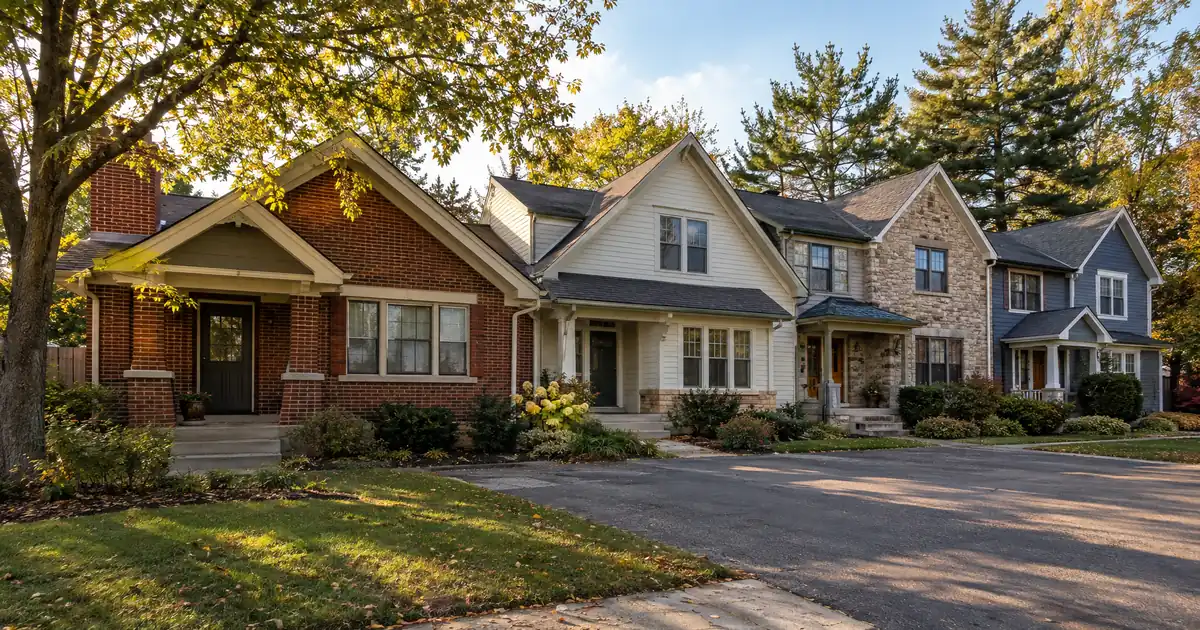
An appraiser working a cash-out file on a Waukesha duplex has almost nothing to compare it against. Waukesha County currently shows only seven multi-family listings countywide at a median price near $450,000, and most of those homes move in about 32 days after fielding nine offers apiece (Redfin). That thin comp pool is the first thing an investor pulling equity out of a Waukesha rental needs to understand — the appraisal isn’t the formality it is in a market flush with inventory.
TL;DR: A cash-out refinance on a Waukesha rental is underwritten against the property’s rental income measured versus its full monthly obligation, capped at a 75 percent loan-to-value ceiling after roughly six months of seasoning, with appraisal comps often stretched thin because Waukesha County shows just seven multi-family listings on market (Redfin).
DSCR Cash-Out Calculator
Run the cash-out numbers in Waukesha, WI
Rate source: Freddie Mac 30-yr average via FRED® — Federal Reserve Bank of St. Louis · effective Sep 17, 2026
Prefilled with starting assumptions — enter your property’s value, balance, taxes, and insurance for a more accurate picture.
Program parameters update from Lendmire’s centralized guideline source. Taxes and insurance are editable estimates.
As of Sep 17, 2026 · General Freddie Mac market benchmark, not a Lendmire loan offer. Property value, balance, taxes, and insurance are editable estimates. Maximum loan-to-value varies by lender, program, property type, and seasoning. Not a Loan Estimate, approval, or commitment to lend. Program availability and eligibility are subject to lender guidelines, credit approval, property review, and underwriting.
- Waukesha County multi-family comp pool: seven listings, $450,000 median, per Redfin
- Standard cash-out ceiling: 75 percent LTV, roughly six months seasoning from title recording
- County rental vacancy sits near 4 percent, tighter than national norms (Affordable Housing Online)
- Carroll University enrollment: 3,138 students for the 2024-2025 academic year, feeding steady small-unit demand
- GE HealthCare is relocating roughly 1,000 workers onto its Waukesha campus by 2026
Waukesha Market Snapshot
A quick read on the Waukesha investor landscape — figures come from the cited sources below. Confirm current property-level numbers before underwriting.
| Metric | Detail |
|---|---|
| Home prices | $421,000 median (Redfin: Waukesha city housing) |
| Typical rents | $1,100/unit (Redfin Waukesha multi-family) |
| Recent appreciation | +3.3% yoy (Zillow: Waukesha, WI home values) |
| University enrollment | 3,283 students (fall 2022) (Wikipedia: Carroll University) |
| Population | 2020 census population reference (U.S. Census Bureau QuickFacts) |
| Employment | 5,000+ employees (ProHealth Care official site) |
Appraisal Friction Is the Real Bottleneck Here
Waukesha’s cash-out refinance market runs into a structural problem before it runs into a pricing problem: there simply aren’t enough comparable multi-unit sales for an appraiser to lean on. That scarcity cuts both ways for an investor sitting on equity.
The upside is that scarcity supports value. One Waukesha listing description flagged the point directly, noting how hard it is to find a four-unit property with off-street parking in a quiet residential setting — a comment that reads like marketing copy but reflects a real supply gap. Fourplex stock barely turns over in this city, and when it does, buyers compete hard for it. The downside is that an appraiser assigned to a Waukesha duplex or triplex refinance file may need to reach outside city limits, or even outside the county, to build a defensible comp set. Investors should expect that reach-out and shouldn’t be surprised if the appraisal takes an extra round of lender review to resolve.
This is where documentation discipline matters more than in a comp-rich market. A clean rent roll, signed leases and a property condition report that anticipates appraiser questions can shortcut a lot of back-and-forth. Sloppy paperwork on a file that’s already fighting a thin comp set tends to compound the friction rather than get waved through.
The Seasoning Clock and the 75 Percent Ceiling
Cash-out proceeds on a Waukesha rental are governed by two hard numbers: roughly six months of ownership seasoning from the date title records, and a 75 percent loan-to-value ceiling on the refinanced loan. Waukesha’s appreciation trend makes that seasoning period matter more than it might in a flatter market.
Redfin puts the city’s median sale price at $421,000 as of its most recent reporting, up 8.5 percent year over year (Redfin). Zillow’s home value index runs a touch lower at $406,111, up 3.3 percent over the past year (Zillow). Widen the lens to Waukesha County and the median climbs to roughly $495,000. An investor who closed on a Waukesha rental six to twelve months ago and has watched value build during that window is often sitting on more usable equity than the purchase-day numbers suggested — subject, always, to what a fresh appraisal actually supports and to the 75 percent LTV cap that governs how much of that equity a lender will let out.
Inventory context matters too. Houzeo reports only 122 homes on market as of its most recent count, with months of supply sitting near 1.5 — tight enough that pricing has stayed firm even as broader Wisconsin appreciation has cooled in places. That tightness is a double-edged sword for DSCR math, which is the next problem worth addressing honestly.
Where the Rent-to-Price Math Gets Uncomfortable
Waukesha is an appreciation market first and a cash-flow market second, and any investor running cash-out numbers here should plan around that fact rather than fight it. Two-bedroom rents cluster around $1,531 per month and three-bedrooms around $2,088, per RentCafe’s Yardi Matrix panel (RentCafe). Set against a $421,000 median sale price, that puts gross rent-to-price ratios well under the 0.8 to 1 percent range DSCR investors generally want to see for comfortable coverage.
What that means in practice: a single-family rental refinanced in Waukesha will often land its DSCR below the 1.00 benchmark most standard programs are built on, not comfortably above it. Run the numbers on a workforce single-family home priced near $355,000 with a modeled three-bedroom rent of $2,088 a month. Using a modeled 30-year structure at a rate in the high-6s, plus Wisconsin-typical property tax near 1.61 percent annually and insurance near 0.35 percent annually of the price, the coverage ratio comes out in the high-0.80s — below the 1.00 floor most lenders use as their baseline. That’s not a dealbreaker on its own, but it’s a signal the property alone may not clear standard underwriting without adjustment.
This is exactly why sub-1.00 files aren’t automatically dead in Waukesha — they just require a different conversation. Some lenders in the network will review sub-1.00 scenarios with compensating structure: reduced leverage, stronger borrower credit, additional reserves or an interest-only payment structure that lowers the qualifying obligation. None of that is guaranteed and it depends entirely on lender guidelines, credit profile and property review, but it’s the path worth exploring before writing off a Waukesha SFR refinance because the number came in light.
The Duplex Math Actually Looks Different
Multi-unit product changes this picture meaningfully, and Waukesha has a live example of why. One duplex currently on the market near Frame Park and downtown shows a lower unit and upper unit each renting for $1,100 a month — a combined $2,200 a month on one tax parcel (Redfin).
Model that same rent roll against a $350,000 valuation at the 75 percent cash-out ceiling using the same modeled high-6s rate structure plus Wisconsin tax and insurance assumptions, and the coverage ratio lands in the high-0.90s — still technically shy of 1.00 but materially stronger than the single-family scenario on comparable price. Stack a third or fourth unit onto that same tax parcel, assuming the property allows it, and the math tends to clear the 1.00 line without needing a compensating structure. This is the core reason duplex, triplex and small fourplex product outperforms single-family workforce rentals for DSCR purposes in this specific market — multiple rent rolls against one loan does more for the ratio than a single higher rent ever will at Waukesha’s current price points.
The catch is availability. Four-unit properties with the layout investors actually want are described in local listings as genuinely hard to find, and county-wide multi-family inventory sits at just seven active listings. This is a hold-for-rarity-value asset class here, not a repeat-acquisition strategy. An investor who already owns Waukesha multi-family and is considering the refi options is often better positioned than one hunting for the next deal to buy.
Downtown, Carroll University and Sunset Heights
Downtown Waukesha’s historic district — anchored by the Fox River Riverwalk, Cutler Park and the Les Paul Performance Center, home to Riverfest and JazzFest through the summer — pulls in young professionals and downtown workers who want walkability over yard space. One-bedroom rents in the district run in the $1,227 to $1,328 range. The National Register historic districts recognized by the City of Waukesha include Block C, Five Points Downtown and East Broadway, which keeps a lot of this housing stock in older Victorian-era buildings — attractive for character, worth a closer look on mechanical systems and deferred maintenance before underwriting a refinance around it.
The Carroll University corridor sits adjacent and functions as its own demand engine. Carroll University, founded in 1846 and the oldest four-year institution in Wisconsin per its Wikipedia entry, enrolled 3,138 students for the most recent academic year, including 2,581 undergraduates (Univstats). That’s not a Madison-scale demand base, but 3,100 students concentrated around a fixed downtown-adjacent campus produces a recurring renter pool for small multi-unit and shared-housing product that doesn’t swing with the broader Milwaukee job market.
Sunset Heights is worth a specific caution. CoStar-sourced neighborhood data shows Downtown Waukesha and Sunset Heights showing up as both the most affordable and the most expensive submarkets in the same dataset, depending on unit vintage and mix (Apartments.com). That dual designation means the neighborhood label tells an investor almost nothing on its own — a renovated three-bedroom and a dated one-bedroom two blocks apart can produce wildly different rent-to-value outcomes. Underwrite the unit, not the zip code.
Lendmire’s deal desk sees this pattern repeat across secondary Midwest metros with thin appraisal comp pools and appreciation running ahead of rent growth: the cleanest files tend to come in with a fully documented rent roll, recent comparable lease agreements and a straight answer on any deferred maintenance up front, because a lender reviewing a file with shallow comps will lean harder on everything else in the package to fill that gap.
GE HealthCare and ProHealth Are Adding Real Demand, Not Legacy Demand
This is the part of the Waukesha story that separates it from a typical stagnant Midwest suburb: two of its largest employers are actively expanding on a fixed timeline right now, not coasting on decades-old headcount. GE HealthCare employs roughly 5,200 workers across Wisconsin and is consolidating operations from Milwaukee and Wauwatosa onto its Waukesha campus, moving about 1,000 workers in phases with a full exit from its Research Park offices expected by 2026 as product registrations finalize (Urban Milwaukee). That’s a dated, contractually-driven worker migration landing in Waukesha over a defined window — a stronger and more time-bound tenant demand signal than a generic “major employer nearby” mention.
ProHealth Care, founded in 1914 and employing more than 5,000 people and providers across southeastern Wisconsin, is mid-construction on a $125 million surgical services expansion at Waukesha Memorial Hospital and separately purchased nearly eight acres in Waukesha to land-bank a future medical campus. Two concurrent capital-committed expansions from the region’s dominant health system point to a growing local workforce, not a static one — a durable tailwind for rental demand independent of the broader housing cycle.
Layer in a county rental vacancy rate near 4 percent, with roughly 1.03 rental units for every renter household (Affordable Housing Online), and the absorption risk on a newly refinanced Waukesha rental is lower than in many comparably-sized metros. That matters directly for cash-out qualification, since a thin trailing rent history from extended vacancy is one of the more common reasons a refinance file comes in weaker than expected.
What Actually Slows a Waukesha Cash-Out File Down
Beyond the appraisal comp issue already covered, the recurring friction points on Waukesha refinance files tend to be documentation gaps rather than property problems. A rent roll that doesn’t match the lease dates on file, a missing insurance binder update after a refinance triggers a new policy requirement, or a seasoning date that gets miscounted from closing versus recording — these are the small things that push a file back for another round of underwriter review rather than the DSCR ratio itself.
Credit tiers on the program side run in bands — 620, 660, 680 and 700 — with the floor generally set at 620, though pricing and leverage shift meaningfully across those tiers subject to lender guidelines. Reserve requirements typically run around six months of PITIA, moving to roughly nine months on loan amounts above $1.5 million. None of these are guarantees of approval — they’re the guideline ranges a lender uses to shape the file, and the final structure depends on credit, property condition and the appraisal that comes back on a market with limited comps to draw from.
Lendmire arranges DSCR cash-out refinancing for investors working through exactly this kind of documentation-heavy market, and Lendmire’s Wisconsin DSCR loan programs are structured around property-level rent review rather than personal income documentation. Investors weighing whether their equity position clears the 75 percent ceiling can request a quote or call 828-256-2183 to walk through what a specific file looks like before an appraisal gets ordered.
Frequently Asked Questions
How do you qualify for a DSCR cash-out refinance in Waukesha, Wisconsin?
Qualification centers on the property’s rent measured against its full monthly obligation — taxes, insurance and any HOA dues included alongside principal and interest — rather than the borrower’s personal income documents. A property clearing a 1.00 coverage ratio on modeled numbers sits in stronger position, though some lenders may review below-1.00 files with compensating factors like reduced leverage or added reserves, subject to lender guidelines and credit approval.
DSCR vs. conventional financing
Two common ways to finance an investment property in Waukesha, WI. They qualify you differently — here’s how investors weigh them.
Why investors choose it
- Qualifies on the property’s rental income — no personal tax returns, W-2s, or pay stubs needed to document income.
- No personal debt-to-income ceiling to clear, so existing mortgages and obligations don’t cap your borrowing the same way.
- Can be closed in an LLC, keeping the property inside a business entity.
- Built for scaling — not held to the limit on number of financed properties that conventional financing applies.
- Underwriting centers on the deal: generally qualifies when the rent covers the payment, a 1.00x coverage ratio being a common baseline (confirmed in underwriting).
- Designed specifically for investment property, including long-term and, where the program allows, short-term rentals.
Where it’s strong
- Often the lowest ongoing financing cost for a buyer who fully qualifies on personal income — a fit for a first property or a cost-first purchase.
Trade-offs for investors
- Requires full personal income documentation and must fit within a debt-to-income limit — salary, existing debts, and other mortgages all count.
- Typically held in your personal name rather than a business entity.
- Caps how many financed properties you can carry, which can become a ceiling as a portfolio grows.
- Evaluates you as a borrower as much as the property, which usually means more paperwork.
How investors usually choose: a first or single property often optimizes for the lowest financing cost; portfolio builders often optimize for leverage, vesting in an LLC, and scaling past conventional caps. The right answer depends on your goals, the property, and current guidelines — both paths run through select lenders in Lendmire’s wholesale network, with eligibility and terms confirmed in underwriting.
What are the requirements for an investment property loan in Waukesha, Wisconsin?
Most files need roughly six months of ownership seasoning before a cash-out refinance, a loan-to-value no higher than 75 percent, and credit generally in the 620 to 700-plus range depending on the pricing tier a borrower lands in. Reserve requirements typically run near six months of the monthly obligation, higher on larger loan balances, all subject to program guidelines.
Why is the appraisal harder to get through on a Waukesha multi-family refinance?
Waukesha County shows only about seven multi-family listings on market at any given time, which limits the comparable sales an appraiser can pull from within city limits. Appraisers often need to widen the search radius, which can add a review cycle to the file — not a dealbreaker, but worth planning for on the front end.
Does Carroll University or GE HealthCare actually move the needle on rental demand?
Both do, in different ways. Carroll’s roughly 3,100 students anchor steady small-unit demand near downtown, while GE HealthCare’s phased relocation of about 1,000 workers onto its Waukesha campus through 2026 is a dated, ongoing source of incoming renters tied to a corporate consolidation rather than seasonal turnover.
For current guidelines and terms, see Lendmire’s DSCR loan programs page.
About Lendmire
Lendmire — NMLS# 2371349 — is a DSCR and non-QM mortgage brokerage with investor loan programs in 41 markets, including Washington D.C. DSCR eligibility is commonly reviewed by the lender on property-level rent rather than personal income documentation, subject to lender guidelines, and the brokerage helps arrange financing for LLC-owned portfolios beyond conventional financed-property limits, depending on program eligibility. Lendmire has been recognized by Scotsman Guide as a 2025 Scotsman Guide Top Workplace and a 2026 Top Workplace.
Lendmire works with investors buying or refinancing in Waukesha, Wisconsin, helping place DSCR financing across 41 markets including Washington D.C. For a broader look at the DSCR qualification mechanics or at how DSCR compares against conventional financing, both pillar pages walk through the mechanics in more depth than fits here.
Get Started
Ready to find the right loan for you?
In about 30 seconds you can review financing options available for your investment property. No commitment required.
Informational only. Not a Loan Estimate, approval, or commitment to lend. Program availability and eligibility are subject to lender guidelines, credit approval, property review, and underwriting.
References
1. Redfin — Waukesha County Multi-Family Listings
2. Affordable Housing Online — Waukesha County
3. Redfin — Waukesha Housing Market
4. Redfin
5. Zillow — Waukesha Home Values
6. Wikipedia: Carroll University
7. U.S. Census Bureau QuickFacts:
9. RentCafe — Waukesha Rent Trends
10. City of Waukesha Landmarks
12. Univstats — Carroll University Enrollment
13. Apartments.com — Waukesha Rent Market Trends
14. GE HealthCare
15. Urban Milwaukee — GE HealthCare Consolidation
16. a 2025 Scotsman Guide Top Workplace
17. recognized by Scotsman Guide as a 2026 Top Workplace
This article is part of Lendmire’s investment property cash-out refinance program — full qualification details, guidelines, and scenarios live on the program page.
Related reading: Cash Out Refinance Investment Property in Waukesha WI · DSCR Cash Out Refinance Brookfield Wisconsin · Cash Out Refinance Investment Property in Wauwatosa, Wisconsin: The 2026 DSCR Financing Guide to East Tosa
Guides: Investment Property Cash-Out Refinance in Waukesha, WI · Investment Property Cash-Out Refinance in Wisconsin
Brandon Miller
Founder & CEO, Mortgage Loan Originator, Lendmire LLC
- Mortgage Loan Originator · NMLS# 1129696 · Verify on NMLS Consumer Access
- North Carolina Real Estate Broker · License# 343312 · Verify on NCREC
- North Carolina Insurance Producer · License# 19053198 · Property, Casualty, Life, Health · Verify on NAIC SBS
- Lendmire LLC · Firm NMLS# 2371349 · Verify firm licensure
Legal disclosures. Lendmire (NMLS# 2371349) is a state-licensed mortgage brokerage that arranges financing through wholesale lender relationships. Lendmire is not a direct lender, depository institution, or registered financial advisor. The discussion above is general informational content about real estate financing — it is not financial, legal, or tax advice, and readers should consult licensed professionals for guidance on their individual circumstances. Loan inquiries are subject to lender underwriting; this article does not represent a commitment to lend. Loan terms, rates, and qualification standards vary by borrower, property, and state, and are subject to change at any time. Equal Housing Opportunity. NMLS Consumer Access: nmlsconsumeraccess.org.