
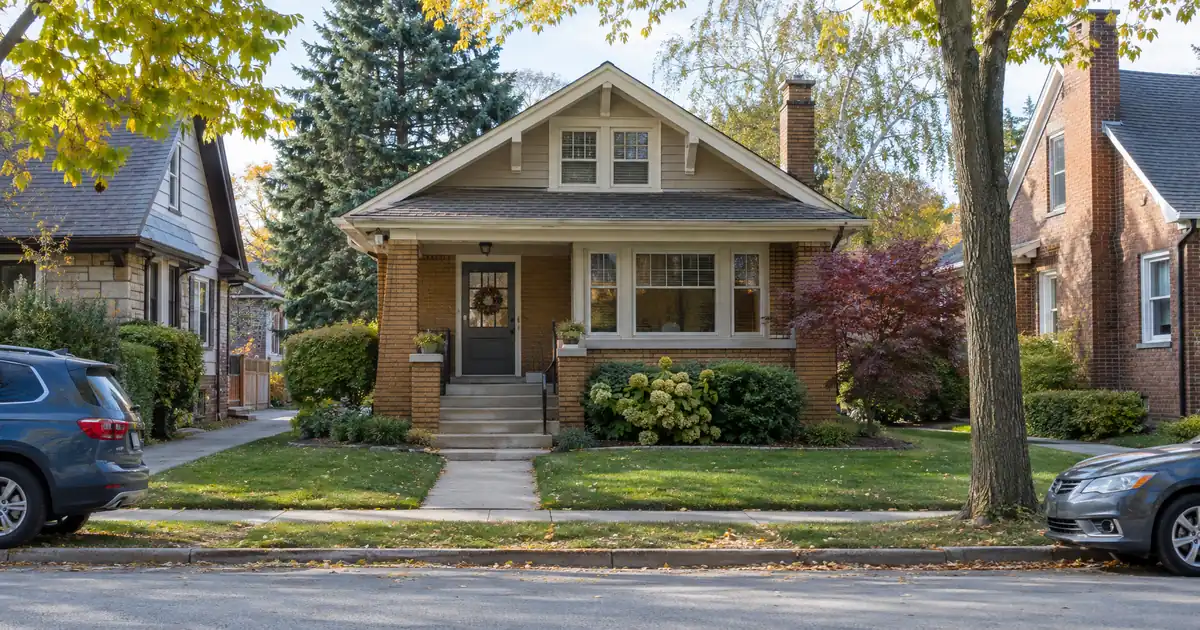
Picture two Brookfield landlords. The first holds a house bought near the lower quartile of local sales, where closed prices run from about $427,900 at the bottom of the middle half up to $720,000 at the top, per Resideline’s closed-sale data. The second owns a house at the $547,500 citywide median. Both have watched values climb. Only the first can pull meaningful equity on a rental-income basis, because the rent-to-price ratio there sits near breakeven while the median-priced house falls short. That gap is the whole story of a DSCR cash-out refinance in this city.
TL;DR: A DSCR cash-out refinance in Brookfield, Wisconsin is underwritten primarily on the property’s rental income measured against its full monthly obligation, so proceeds depend on how much rent the house carries, not on how much value it gained. The citywide median closed price is about $547,500.
DSCR Cash-Out Calculator
Run the cash-out numbers in Brookfield, WI
Rate source: Freddie Mac 30-yr average via FRED® — Federal Reserve Bank of St. Louis · effective Sep 24, 2026
Prefilled with starting assumptions — enter your property’s value, balance, taxes, and insurance for a more accurate picture.
Program parameters update from Lendmire’s centralized guideline source. Taxes and insurance are editable estimates.
As of Sep 24, 2026 · General Freddie Mac market benchmark, not a Lendmire loan offer. Property value, balance, taxes, and insurance are editable estimates. Maximum loan-to-value varies by lender, program, property type, and seasoning. Not a Loan Estimate, approval, or commitment to lend. Program availability and eligibility are subject to lender guidelines, credit approval, property review, and underwriting.
- Appreciation is strong, but rents have lagged, so coverage is the binding constraint, not LTV.
- Lower-basis houses and condos clear the coverage test more easily than median-priced homes.
- Cash-out is capped at 75 percent LTV and generally needs about six months of ownership.
- Expect a reserve requirement of roughly six months of PITIA on most files.
The Lisbon Road Corridor: Where the Tenant Base Actually Sits
The northeast side around W. Lisbon Road is the most defensible rental pocket in Brookfield, and the reason is one employer. Milwaukee Tool’s press materials confirm the Brookfield headquarters remains the central location for corporate operations, and Hunzinger Construction documents a 200,000-square-foot office addition at the Lisbon Road campus. The SEWRPC economic profile puts Milwaukee Tool at 1,000-plus employees, the largest private employer on its list.
That matters for a refinance because lenders and appraisers care about lease durability. A house rented to a corporate-campus professional tends to renew. A house rented to someone who commutes from elsewhere does not carry the same pull.
Is this a rent-to-price bargain? No. Nothing in Brookfield is. But employment concentration gives the long-term tenant thesis a real anchor, and that supports holding the asset rather than selling it.
The Core Problem: Appreciation Is Outrunning Rent
Brookfield is an appreciation-led market, not a cash-flow-led one, and cash-out proceeds are sized by the weaker of those two forces. Redfin shows a median sale price of $559,630, up 6.6 percent year over year, while Zillow’s home value index sits at $533,966, up 4.7 percent. The sources differ on method, so this article anchors on the $547,500 closed-sale median from Resideline and treats the others as a range. Meanwhile Zumper reports average rent down about 3 percent year over year.
Rising values and softening rents make the appraisal easier and the coverage test harder. Investors who assume a large gain automatically becomes large proceeds are reading the wrong constraint.
The asking-rent data shows why. Apartments.com lists the average 3-bedroom house at $2,967, with a range of $2,150 to $3,995, though that page is older than the others. Homes.com puts the median home rent at $2,695. Zumper averages houses at $2,400 and all units at $1,695. These are asking rents from listing sites, not leases in place, and a lender will want the actual lease or a market-rent appraisal.
Run the Numbers on Two Houses
Here is a modeled comparison. The rent figure and prices are assumptions drawn from the ranges above, not a cited market fact for any one property, and coverage is computed on full payment including taxes and insurance.
House A: median basis. Assume a $547,500 home rented at about $2,967 and refinanced at the 75 percent LTV ceiling. Coverage lands around 0.8x, comfortably below the 1.00x benchmark most standard programs are built around. Dropping the rent assumption to the Homes.com median worsens it.
House B: lower-quartile basis. Assume a $428,000 home at the same rent and the same 75 percent LTV. Coverage moves to roughly 1.0x, right at the benchmark. No cushion, but workable on paper.
The point is sensitivity. A price difference of about $120,000 swings coverage by more than 0.2x, which is larger than any realistic rent bump.
What if House A lands below 1.00x? The options a lender may review include stepping down the LTV so the loan sits at a lower balance, an interest-only structure that reduces the monthly obligation in the ratio, or a program that allows sub-1.00 coverage with compensating factors such as stronger credit, more reserves, or different pricing. Whether any of those apply depends on lender guidelines, credit review, and the property itself. At a lower-LTV structure, this same house may approach breakeven, but the extractable cash shrinks with it. (That trade is the real cost of a thin-rent market.)
Why Multi-Unit and Condo Stock Change the Equation
Conventional wisdom says stack units to improve coverage. In Brookfield that advice runs into supply. NeighborhoodScout reports single-family detached homes at 76.32 percent of housing units, and Point2Homes counts 2,645 renter-occupied units against 13,415 owner-occupied, about 16 percent renters. Duplexes, triplexes, and fourplexes exist but are scarce.
City-Data shows mean sale values of $572,879 for detached homes, $455,590 for 2-unit structures, and $348,331 for 3-to-4-unit structures. Those are directional means, not comps, and the research did not support a unit-level rent figure for small multifamily here. Still, the direction is clear: per-unit basis falls sharply as unit count rises. An investor who already owns a small multi-unit building has the strongest refinance profile in town, because income is underwritten unit by unit.
For everyone else, condos and townhomes are the realistic lower-basis play. Investors should not expect to buy a new fourplex in Brookfield to run this strategy. They would more likely refinance one they already hold.
Seasoning, Appraisal Risk, and the 75 Percent Ceiling
A DSCR cash-out generally requires about six months of ownership measured from title recording, and the ceiling is 75 percent LTV, not the 80 percent used on purchases. Brookfield’s comp base is adequate, with a healthy volume of closed sales over recent months. Movoto also shows homes spending less time on the market than a year earlier, though timing on any individual file still varies by property and lender.
But the price signals are mixed. Movoto also shows listed price per square foot at $223, down 2 percent year over year, while Redfin shows the median up 6.6 percent. An appraiser working from a cautious comp set can land below what the owner expects. Don’t assume paper gains clear 75 percent on their own.
Reserves are the other gate. Most files call for about six months of PITIA in liquid reserves, and the requirement rises for larger balances. Pricing and available terms vary by lender, borrower profile, property type, and full underwriting review. Loan sizes run up to $3,000,000 on standard programs, well above anything the typical Brookfield house needs. All of it is subject to lender guidelines and credit approval. The rate-and-term and cash-out refi details and pulling equity with a DSCR cash-out pages lay out the mechanics.
Working DSCR brokers see a recurring pattern in high-value, owner-heavy suburbs like this one: the equity is large, the rent is ordinary, and the file is sized by coverage rather than by appraised value. The cleanest files arrive with complete leases, entity documents, title, and property details ready for lender review. The messiest arrive with a gain-driven cash target and no rent-side plan.
Skip the Median (Where Most Investors Get It Wrong)
The instinct in a rising market is to refinance the most valuable asset for the most cash. In Brookfield that is backwards.
The stronger play is to refinance the lowest-basis asset in the portfolio first. Zumper names Kinseys Garvendale ($1,545 a month), Weston Hills ($1,565), and The Sanctuary ($1,594) as the most affordable named neighborhoods. Those are average rents across unit types, not house rents, and the research found no neighborhood-level sale prices. They show where entry-level tenant demand clusters, nothing more.
The Bluemound Road and Brookfield Square corridor draws retail and commuter demand, and it is where the newer apartment communities (The Ruby, Six65, and Norhardt Crossing) cluster, per Apartments.com. That cuts both ways. New supply shows up in move-in specials on listing sites, such as one month free, which signals softness at the top of the apartment market. Small landlords compete with amenity-rich complexes, and RentCafe puts 39 percent of the apartment stock as built since 2000. The edge for a single-family rental is garage parking and proximity to I-94, since residents here are largely car-dependent.
This one is genuinely a toss-up: houses near the I-94 office parks have a professional-workforce tenant pool, but the Fiserv question (below) makes that pocket harder to underwrite than Lisbon Road.
The Headquarters Drift Risk
Brookfield’s anchors are partly pulling toward downtown. WISN reported that Fiserv, founded in Brookfield in 1984, relocated its global headquarters to downtown Milwaukee, though the company said it would keep its Brookfield data center. The post-move headcount is unconfirmed. Milwaukee Tool built a downtown office too, yet kept Brookfield as its central corporate location.
Treat this as a moderate headwind for office-adjacent rental demand, not a collapse. The SEWRPC profile lists the city’s largest private employers across health services, manufacturing, and retail, with almost a dozen industrial and office parks covering over 1,000 acres. Ascension’s Elmbrook campus adds 500 to 999 jobs on the health side. The diversification is real. It is just not immune to corporate consolidation.
Demographics support the tenant profile. StateDemographics, built on ACS data, reports median household income of $129,548 and a 3.2 percent poverty level across roughly 41,273 residents. The U.S. Census Bureau’s QuickFacts page is the official source to verify those figures. The population has been flat, around 41,448 by the latest estimate, so growth will not bail out a thin-coverage deal.
Investors should verify current local rental rules, taxes, and insurance with qualified local professionals before sizing any refinance.
How the Proceeds Get Used
Cash-out proceeds are only useful if they buy something that clears coverage on its own. A Brookfield owner pulling capital from a low-basis house has two realistic destinations. One is a condo or lower-priced house in the same metro where rent-to-price runs better. The other is a small multi-unit building elsewhere in the region, since the local supply is so tight. Lendmire, a DSCR-focused mortgage broker, arranges these files through wholesale investor channels, and DSCR loan options for Wisconsin investors covers the statewide picture. LLC-titled properties are accepted subject to lender program eligibility.
Investors who want to test a specific property can see what the numbers look like or call 828-256-2183. For a primer on the ratio itself, the guide “What Is a DSCR Loan” walks through rent divided by the full monthly obligation, and the program-to-program comparison contrasts it with conventional underwriting.
DSCR vs. conventional financing
There are two common ways to finance an investment property in Brookfield, WI, and they qualify you differently — here’s how investors weigh them.
Why investors choose it
- Qualifies on the property’s rental income — no personal tax returns, W-2s, or pay stubs needed to document income.
- No personal debt-to-income ceiling to clear, so existing mortgages and obligations don’t cap your borrowing the same way.
- Can be closed in an LLC, keeping the property inside a business entity.
- Built for scaling — not held to the limit on number of financed properties that conventional financing applies.
- Underwriting centers on the deal: generally qualifies when the rent covers the payment, a 1.00x coverage ratio being a common baseline (confirmed in underwriting).
- Designed specifically for investment property, including long-term and, where the program allows, short-term rentals.
Where it’s strong
- Often the lowest ongoing financing cost for a buyer who fully qualifies on personal income — a fit for a first property or a cost-first purchase.
Trade-offs for investors
- Requires full personal income documentation and must fit within a debt-to-income limit — salary, existing debts, and other mortgages all count.
- Typically held in your personal name rather than a business entity.
- Caps how many financed properties you can carry, which can become a ceiling as a portfolio grows.
- Evaluates you as a borrower as much as the property, which usually means more paperwork.
How investors usually choose: a first or single property often optimizes for the lowest financing cost; portfolio builders often optimize for leverage, vesting in an LLC, and scaling past conventional caps. The right answer depends on your goals, the property, and current guidelines — both paths run through select lenders in Lendmire’s wholesale network, with eligibility and terms confirmed in underwriting.
Frequently Asked Questions
How do you qualify for a DSCR cash-out refinance in Brookfield, Wisconsin?
Qualification rests on the property’s rent measured against its full monthly obligation, typically with a 1.00x benchmark, plus a credit score in the range of 620 and up and reserves around six months of PITIA. The house must also have been owned for about six months. Brookfield’s high prices mean many median-priced houses will need lower LTV or an alternative structure. Final eligibility depends on lender guidelines.
What are the requirements for an investment property loan refinance in Brookfield?
Expect a lease or market-rent appraisal, title and entity documents for LLC ownership, a property appraisal, and proof of reserves. The LTV ceiling on cash-out is 75 percent. Smaller balances route through select lenders in the network, while standard programs run up to $3,000,000. Requirements vary by borrower, property, and loan scenario.
Will the Fiserv headquarters move hurt my Brookfield rental’s value?
It is a moderate headwind, not a structural break. Fiserv said it would keep its Brookfield data center, and Milwaukee Tool’s 1,000-plus employee headquarters remains the city’s largest private anchor on the SEWRPC list. Rentals near I-94 office parks carry more exposure than those on the Lisbon Road side.
Why is cash-out harder on a Brookfield house than a duplex?
Because single-family rents sit low against a $547,500 median price, coverage often falls below 1.00x at full leverage. Multi-unit buildings carry lower per-unit basis, with 3-to-4-unit structures averaging about $348,331, but they make up a small share of the city’s housing stock.
The Next 6 to 24 Months
Expect the gap between rent and price to stay the defining feature of Brookfield refinances. Values are still rising, and rents are flat to slightly down. Unless those lines converge, coverage, not LTV, will set proceeds, and the lower-basis houses and condos will keep outperforming at the median. The safest market call is selective: investors holding below-median assets near the Lisbon Road employment base are best positioned to extract capital, while those at the top of the price band will find the 75 percent ceiling academic.
For current guidelines and terms, see Lendmire’s DSCR loan programs page.
About Lendmire
As a non-QM mortgage broker (NMLS# 2371349), Lendmire facilitates DSCR investor loans across 41 markets, including Washington, D.C. Eligibility is generally reviewed around a property’s rental income instead of personal income documentation, subject to lender guidelines, which serves LLC-structured portfolios and self-employed borrowers who don’t fit conventional boxes. The firm is recognized by Scotsman Guide as a 2026 Top Workplace and a 2025 Scotsman Guide Top Workplace.
Get Started
Ready to find the right loan for you?
In about 30 seconds you can review financing options available for your investment property. No commitment required.
Informational only. Not a Loan Estimate, approval, or commitment to lend. Program availability and eligibility are subject to lender guidelines, credit approval, property review, and underwriting.
References
1. Resideline, Brookfield housing market
2. Milwaukee Tool press release
4. SEWRPC City of Brookfield Economic Profile
5. Redfin shows a median sale price of $559,630
6. Zillow’s home value index sits at $533,966
7. Zumper reports average rent down about 3 percent year over year
9. Homes.com
10. Zumper, Brookfield rent research
12. Point2Homes
13. Movoto
14. Apartments.com
15. RentCafe
16. WISN, Fiserv headquarters relocation
18. U.S. Census Bureau QuickFacts, Brookfield
19. recognized by Scotsman Guide as a 2026 Top Workplace
20. a 2025 Scotsman Guide Top Workplace
This article is part of Lendmire’s investment property cash-out refinance program — full qualification details, guidelines, and scenarios live on the program page.
Related reading: Cash Out Refinance Investment Property in Brookfield, Wisconsin: The 2026 DSCR Guide to Bluemound Road · DSCR Cash Out Refinance in Janesville, Wisconsin: Downtown Equity After the GM Era · DSCR Cash Out Refinance in Lake Geneva, Wisconsin: The 2026 DSCR Refi Guide to Geneva Street
Guides: Investment Property Cash-Out Refinance in Wisconsin
Brandon Miller
Founder & CEO, Mortgage Loan Originator, Lendmire LLC
- Mortgage Loan Originator · NMLS# 1129696 · Verify on NMLS Consumer Access
- North Carolina Real Estate Broker · License# 343312 · Verify on NCREC
- North Carolina Insurance Producer · License# 19053198 · Property, Casualty, Life, Health · Verify on NAIC SBS
- Lendmire LLC · Firm NMLS# 2371349 · Verify firm licensure
Required disclosures. Lendmire (NMLS# 2371349) operates as a licensed mortgage broker, not a direct lender or depository. The discussion in this article is general in nature and should not be relied upon as financial, legal, or tax advice — every investment scenario is unique and should be reviewed by a qualified professional. Any loan inquiry is subject to lender underwriting, and this article is not a commitment to lend or a guarantee of approval. Mortgage rates, loan terms, and program guidelines vary by borrower, property, and state, and may change without notice. Equal Housing Opportunity. Verify licensure at NMLS Consumer Access.